
Finding the right pillow for a pregnant woman depends heavily on your current trimester, changing body mechanics, and preferred sleep position. While there is no single shape that suits everyone, U-shaped pillows offer full-body wrap for later stages, C-shaped pillows provide contoured alignment for consistent side sleepers, and wedges deliver targeted, portable relief for early pregnancy. This guide compares these three primary shapes to help you match your specific physical needs and bed space constraints.
As your pregnancy progresses, your body undergoes rapid changes that directly impact how comfortably you sleep. In the early weeks, you might only need minor adjustments to stay comfortable. However, as your belly grows and your center of gravity shifts, finding a sleeping position that does not strain your back or hips becomes a daily challenge. A dedicated pillow for a pregnant woman is designed to address these specific structural shifts, helping you maintain a comfortable posture throughout the night.
Choosing the right shape is not just about comfort; it is also about adapting to the unique climate and living conditions in the Philippines. With warm, humid nights being the norm, the size, material, and breathability of your bedding play a massive role in how well you rest. Balancing the physical support you need with the practical realities of your bedroom setup—such as bed size and airflow—will ensure you make a practical investment for your pregnancy journey.
Products mentioned in this guide

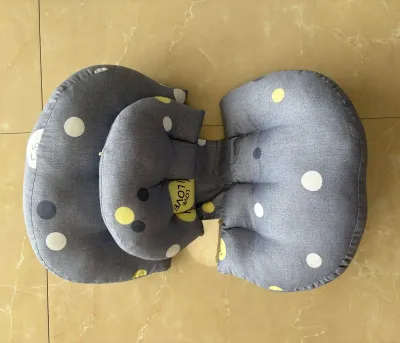
Prices are valid at publication and may change. Please refer to the product page for the latest price.
How to Match Pillow Shapes to Your Trimester and Sleep Position
During the first trimester, physical changes are largely internal, but hormonal shifts can still leave you feeling fatigued. As you enter the second and third trimesters, the physical weight of the growing fetus shifts your center of gravity forward. This shift pulls on your lower spine, often resulting in lower back strain and hip misalignment when you lie down.
Medical professionals generally recommend transitioning to side sleeping, specifically on your left side, as your pregnancy advances. Side sleeping helps optimize blood flow and keeps the weight of the uterus off major blood vessels. However, staying on your side for hours can put pressure on your hips and knees, making a supportive cushion between your legs essential to keep your pelvis aligned.
Your choice of pillow must also account for your actual sleeping environment. A massive cushion might seem cozy, but it can quickly overcrowd a standard double or queen-sized bed, leaving little room for your partner. Additionally, in tropical climates, larger pillows can trap body heat, making it crucial to weigh the physical support of a bulky shape against the need for a cool, ventilated sleeping space.
U-Shaped Pillows: Full-Body Support for Later Stages
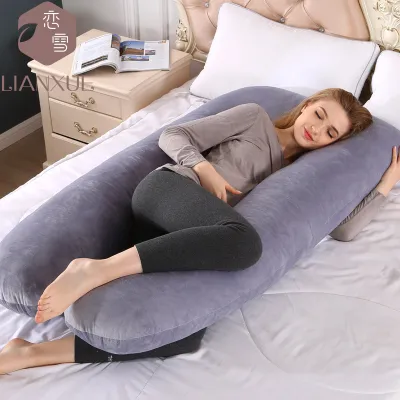
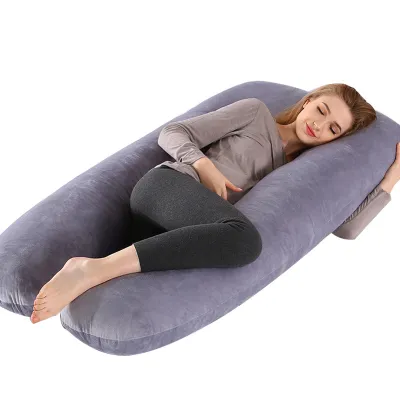
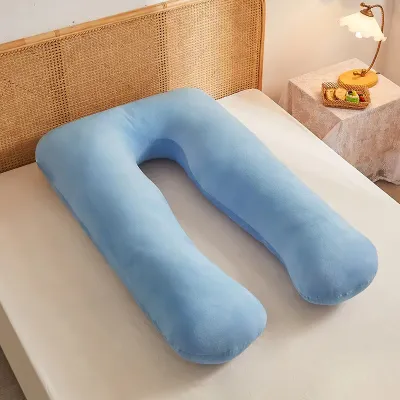
A U-shaped pillow is designed to offer symmetrical, dual-side support that wraps around your entire body. This shape features two long parallel arms connected by a curved top, allowing you to rest your head on the curve while tucking one arm between your knees and leaning your back against the other. It acts as a complete sleep system, cradling your front and back simultaneously.

This dual-sided design is particularly beneficial during the late second and third trimesters when belly weight is at its peak. If you are someone who tosses and turns, a U-shaped pillow allows you to switch sides without having to drag or reposition the cushion. You simply turn over within the center of the “U” and immediately find the same level of support on your other side.
However, the comprehensive support of a U-shaped pillow comes with significant practical trade-offs. These pillows are exceptionally large and can easily take up more than half of a standard bed, which might feel restrictive if you share a bed. Their bulk also makes them difficult to move, store, or wash, and the extensive fabric surface can trap heat during warm, humid Philippine nights.
C-Shaped Pillows: Contoured Alignment for Side Sleepers
A C-shaped pillow offers a more contoured, single-sided approach to full-body support. The curve of the “C” is designed to wrap around your body, with the top portion supporting your head and neck, the middle section cradling your back or belly, and the bottom hook tucking comfortably between your thighs. This shape focuses on aligning your spine from head to toe along a single curve.
This design is well-suited for consistent side sleepers who tend to stay on one side throughout the night. By placing the spine of the “C” behind you, you get firm back support that prevents you from rolling onto your back. Alternatively, facing the curve allows you to tuck the middle section directly under your growing belly to relieve downward pulling forces.
Compared to U-shaped options, C-shaped pillows are generally more manageable and take up less bed space. They offer a balanced compromise for mothers who want head-to-toe support without completely crowding their partners out of the bed. Because they use less material, they are also slightly easier to maneuver and can be more comfortable in warmer sleeping environments.
Wedge Pillows: Targeted Relief for Early Stages and Localized Aches
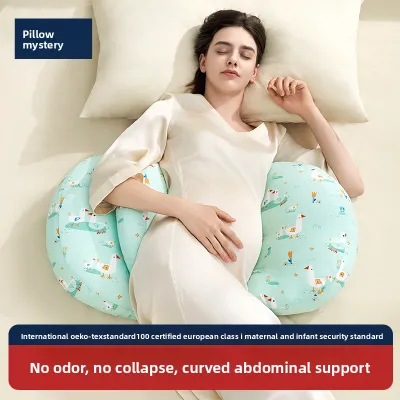
A wedge pillow is a compact, triangular cushion designed to provide firm, localized support exactly where you need it. Unlike full-body pillows, a wedge does not attempt to support your entire frame at once. Instead, it is placed strategically under specific pressure points, such as directly beneath your belly to prevent sagging, or behind your lower back to prevent rolling.
During the first trimester and early second trimester, a wedge is often all you need to stay comfortable. It provides just enough lift to ease minor backaches or support a slightly rounding belly without adding unnecessary bulk to your bed. Its small footprint makes it a practical entry-level option before you decide if a larger pillow is necessary.
The primary advantage of a wedge pillow is its high portability and versatility. You can easily pack it in a suitcase for travel, use it on an office chair for lumbar support, or keep it on the sofa. After giving birth, a wedge can transition into a supportive prop for postpartum recovery or a convenient incline cushion during nursing sessions. However, it will not provide full-body alignment and must be used alongside your standard head pillows.
Shape Comparison and Decision Matrix
To help you decide which option fits your current stage and bedroom setup, it is helpful to compare their primary characteristics side by side. Each shape serves a distinct purpose, and your choice should align with your physical needs, bed size, and budget.
| Pillow Shape | Recommended Trimester | Ideal Sleep Position | Space Required | Primary Benefit |
|---|---|---|---|---|
| U-Shaped | Second & Third | Active side-switchers | Very High | Symmetrical front and back support without moving the pillow |
| C-Shaped | Second & Third | Consistent side sleepers | Moderate to High | Contoured head-to-toe alignment along a single side |
| Wedge | First & Second | Back or side sleepers | Very Low | Compact, portable, and targeted pressure relief |
If you find yourself waking up frequently to adjust your position or experiencing severe hip and back strain in your third trimester, a U-shaped pillow is highly suitable if your bed space allows. If you prefer to stay on one side and want to keep your bed relatively open, a C-shaped pillow offers a great balance of support and space. For those in the early stages of pregnancy, or if you are on a tight budget, starting with a wedge pillow is a practical choice. You can easily combine a wedge with your existing household pillows—placing one under your head, one between your knees, and the wedge under your belly—to create a customizable and budget-friendly sleep setup.
Verifying Safety, Materials, and Care Instructions
When shopping for a pillow for a pregnant woman on local ecommerce platforms, it is essential to look past the aesthetic designs and carefully verify the product specifications. Because you will be spending hours in close contact with the pillow, the materials must support both your physical comfort and your hygiene needs.
First, check the cover materials for breathability and ease of cleaning. Look for covers made from natural fibers like cotton or bamboo, which are highly breathable and help wick away sweat during warm nights. Ensure the cover features a durable, recessed zipper so you can easily remove it for regular machine washing, keeping your sleeping environment hygienic and free from allergens.
Second, verify the filling type to ensure it matches your firmness preferences. Memory foam fillings offer effective contouring and pressure relief but tend to retain more body heat, which can be uncomfortable in tropical climates. Polyester fiberfill is generally cooler and more breathable, though it may require occasional fluffing to maintain its loft. Always consult the manufacturer’s guidelines for specific care instructions, and stop using the pillow if you experience any unusual numbness, increased pain, or restricted circulation.
Frequently Asked Questions (FAQ)
Can I use regular pillows instead of a specialized pregnancy pillow?
Yes, you can certainly use standard household pillows to support your body during pregnancy, especially in the early stages. By placing one standard pillow under your head, another between your knees to align your hips, and a smaller cushion under your belly, you can mimic the support of a specialized pillow. However, as your belly grows, these individual pillows can easily slide out of place during the night. A specialized pregnancy pillow offers a single, cohesive structure that stays secured against your body, reducing the need to constantly readjust your bedding.
When should I stop using a pregnancy pillow after giving birth?
There is no set timeline for when you must stop using your pregnancy pillow, and many mothers continue to use them long after giving birth. During the postpartum recovery phase, these pillows can provide helpful support for your back and abdomen as your body heals. They are also highly useful as nursing props to help position your baby comfortably during feeding sessions. You can transition back to standard bedding whenever you feel your body has recovered its strength and you no longer require the extra structural support to sleep comfortably.

Community discussion
Share your experience or ask a question. Comments are reviewed before publication.