
Selecting the right toothbrush for your baby is a foundational step in establishing lifelong oral hygiene. To find the ideal Nature to Nature toothbrush, you must align the product’s design with your baby’s current age and physical teething milestones. Because infant oral development progresses rapidly from simple gum stimulation to active plaque removal, a single brush style cannot serve your child throughout their entire infancy. Caregivers must carefully evaluate the physical signs of teething, inspect product packaging for age-appropriate safety features, and follow the manufacturer’s precise usage guidelines to ensure a safe and effective cleaning routine.
Identifying Your Baby's Current Teething and Developmental Stage
Recognizing where your baby stands in their oral development journey is the first step in selecting the correct oral care tool. Long before the first white crown breaks through the gums, infants experience physiological changes that signal the onset of teething. You may notice your baby drooling more than usual, frequently rubbing their gums with their fingers or toys, and showing signs of mild irritability or fussiness. These early behaviors indicate that the primary teeth are beginning to move beneath the gum tissue, creating pressure that causes natural discomfort. During this pre-teething phase, the primary goal of oral care is not plaque removal, but rather soothing the gums and introducing the sensation of oral cleaning.
As development progresses, active tooth eruption begins. For most infants, the lower central incisors are the first to emerge, followed closely by the upper central incisors. While general developmental timelines suggest these first teeth typically appear between six and twelve months of age, every baby develops at their own unique pace. Some infants may show their first tooth as early as four months, while others might not experience eruption until after their first birthday. Because of this natural variability, caregivers should use age ranges only as a general reference point and rely primarily on direct observation of the baby’s mouth to determine their current stage.
Products mentioned in this guide
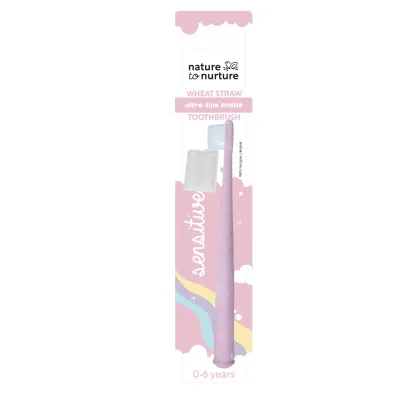
Prices are valid at publication and may change. Please refer to the product page for the latest price.
The transition from gum stimulation to active tooth brushing represents a significant shift in oral care requirements. When your baby’s mouth is still toothless, the oral environment requires gentle massage to keep the gums clean and relieve teething pressure. Once the first tooth breaks through the gum line, however, the risk of plaque accumulation begins. Erupted teeth have hard enamel surfaces that require physical sweeping to remove milk residue and prevent early childhood caries. Understanding this distinction ensures you do not introduce a bristled brush too early, which could irritate sensitive gums, or delay the transition to bristles once teeth are present.
Essential Features to Verify on Nature to Nature Packaging
When shopping for a Nature to Nature toothbrush, the product packaging serves as your primary source of safety and suitability information. The first physical specification to inspect is the softness of the bristles and the overall dimensions of the brush head. For infants and toddlers, bristles must be labeled as ultra-soft or extra-soft to protect delicate gum tissue and developing enamel from abrasive wear. Additionally, the brush head must be compact enough to fit comfortably inside a small infant mouth without bumping against the cheeks or triggering a gag reflex. Check the manufacturer’s packaging for explicit age recommendations, which are designed to match these physical dimensions to average oral cavity sizes.

Handle ergonomics and grip design are equally critical features to evaluate on the packaging. Infant toothbrushes generally fall into two design categories: those intended for caregiver-assisted brushing and those designed for independent baby exploration. Caregiver-focused handles are typically longer, allowing an adult to maintain a secure grip and control the brushing angle precisely. Conversely, brushes designed for babies to hold themselves feature wider, textured, or loop-shaped handles that accommodate a child’s limited palmar grasp. Evaluating these design elements helps you choose a brush that aligns with your planned brushing routine, whether you are performing the cleaning yourself or encouraging early self-care habits.
Material safety is a paramount concern for any product that enters a baby’s mouth, making it essential to verify safety indicators printed on the box. Look for clear markings indicating that the toothbrush is free from Bisphenol A (BPA), phthalates, and other potentially harmful chemical additives. If the brush features silicone components, verify that the packaging specifies the use of food-grade or medical-grade silicone. Because safety standards and certifications can vary, caregivers should actively look for recognized regulatory compliance marks on the packaging to ensure the product has undergone appropriate quality testing before it reaches retail shelves.
Finally, inspect the packaging for built-in safety barriers, such as choke guards or protective shields. These design elements are particularly important for training toothbrushes intended for babies who are learning to hold the brush themselves. A choke guard is a wide collar or shield that attaches to the neck of the toothbrush, physically preventing the baby from inserting the brush too deeply into their throat. When reviewing product options, check the packaging illustrations or descriptions to confirm if a safety shield is included and whether it is removable or permanently integrated into the brush structure.
Matching Brush Styles to Your Baby's Oral Milestones
To establish a safe and effective oral care routine, caregivers must match the specific style of the toothbrush to the baby’s current developmental milestone. During the pre-teething and early gum massage phase, when no teeth have erupted, standard bristled brushes are generally unsuitable. Instead, look for silicone finger brushes or soft, textured gum massagers. These tools are designed to fit over a caregiver’s finger or feature easy-to-hold shapes that allow for gentle rubbing of the gums. This process helps clean away milk film while providing soothing pressure to inflamed gums, preparing the infant for the sensation of daily oral care.
Once the first teeth begin to emerge, typically between six and twelve months, your baby’s oral care needs transition to active cleaning. At this milestone, you should transition to a small-headed toothbrush equipped with ultra-soft nylon bristles or specialized training brushes. These brushes are designed to gently sweep away plaque from the newly erupted incisors without damaging the sensitive surrounding gums. Many training brushes for this stage feature integrated safety guards to prevent over-insertion, making them ideal for babies who show an interest in mimicking their parents’ brushing motions under close supervision.
As your child enters the toddler stage, usually around twelve months and older, they will begin to develop a full set of primary teeth, including molars. This milestone requires a transition to standard infant toothbrushes with slightly larger brush heads and robust, easy-grip handles. The larger head allows for more efficient coverage of multiple teeth, while the structured handle supports guided brushing routines where the caregiver performs the primary cleaning and the toddler practices their grip. At this stage, the focus shifts toward thorough plaque removal across all tooth surfaces, including the hard-to-reach back molars.
While general developmental milestones provide an excellent guide, the critical final step is always to cross-reference the brand’s explicit age and stage grading printed on the product label. Manufacturers design their products to meet specific safety and functional criteria that correspond to their stated age brackets. Relying solely on general assumptions about your baby’s development can lead to using a brush that is too large, too abrasive, or lacking necessary safety features. Always verify that the specific Nature to Nature model you select is explicitly rated for your baby’s current age and physical teething stage before introducing it to their routine.
Daily Cleaning, Safety Checks, and Replacement Rules
Maintaining the hygiene and structural integrity of your baby’s toothbrush is essential for preventing bacterial growth and avoiding physical injury. After every use, the toothbrush must be thoroughly rinsed under warm running water to remove all traces of toothpaste and food debris. In tropical climates like the Philippines, high humidity can encourage mold and bacterial proliferation on damp surfaces. To mitigate this risk, store the toothbrush upright in a clean, dry holder where it can air-dry completely, ensuring it does not touch other family members’ toothbrushes. Avoid storing the brush in closed containers or damp cabinets, which trap moisture and create an environment ripe for microbial growth.
Regular visual inspection routines are vital for ensuring the physical safety of the toothbrush. Before every brushing session, take a moment to examine the brush head and handle for signs of wear and tear. Check for frayed, loose, or missing bristles, which can detach during brushing and pose a choking hazard. For silicone brushes or training models, inspect the material closely for chew marks, tears, or structural weakness caused by the baby biting down on the head. If you observe any splitting, peeling, or loose parts, discard the toothbrush immediately and replace it with a new one.
Even if a toothbrush appears to be in good condition, standard replacement timelines must be followed to maintain optimal hygiene. Pediatric dental guidelines generally recommend replacing an infant toothbrush every three months, as bristles naturally lose their effectiveness and accumulate microscopic buildup over time. Additionally, you should replace the toothbrush immediately after your baby recovers from an illness, such as a cold, flu, or throat infection, to prevent reinfection. Keeping a spare, unopened toothbrush in your household inventory ensures you can make these replacements promptly without disrupting your baby’s daily routine.
Caregivers must also recognize clear stopping conditions that require professional guidance. If your baby exhibits persistent oral discomfort, bleeding gums during brushing, or if you notice any unusual discoloration on their teeth, discontinue use of the current brush and consult a pediatric dentist. Furthermore, if your baby shows no signs of tooth eruption by their first birthday, scheduling a professional dental visit is highly recommended. A pediatric dentist can evaluate your baby’s oral development, verify that their teething progress is on track, and provide personalized recommendations for their ongoing oral care routine.
Frequently Asked Questions (FAQ)
Can I use a regular infant toothbrush instead of a specialized teething brush?
Using a regular infant toothbrush instead of a specialized teething brush depends entirely on your baby’s current oral development and the manufacturer’s intended use. Regular infant toothbrushes feature nylon bristles designed specifically for plaque removal on erupted teeth, making them too abrasive for bare gums. Specialized teething brushes, often made of textured silicone, are designed to soothe sore gums and provide gentle massage during the pre-teething phase. Always check the packaging to ensure the tool you choose matches your baby’s current stage, as using a bristled brush on toothless gums can cause irritation, while using a soft silicone massager on fully erupted teeth may not provide sufficient cleaning power.
How much toothpaste should I use with a Nature to Nature toothbrush?
The amount of toothpaste you should use depends on your child’s age and their ability to spit out excess product. For babies and toddlers under three years of age, pediatric dental guidelines recommend using a tiny smear of toothpaste, roughly the size of a single grain of rice. Once your child reaches three years of age and can reliably spit out the toothpaste, you can transition to a pea-sized amount. Always verify the specific instructions on both the toothpaste and the Nature to Nature toothbrush packaging, as some training brushes are designed to be used with water alone during the initial learning phases, while others accommodate specific gel formulations.

Community discussion
Share your experience or ask a question. Comments are reviewed before publication.