
Selecting the right graco booster seat is a critical decision that directly impacts your child’s safety during every journey. The transition from a forward-facing car seat with a five-point harness to a booster seat is not determined by age alone. Instead, it requires a careful evaluation of your child’s weight, height, physical development, and behavioral maturity.
In the Philippines, where family road trips can range from navigating congested urban streets to driving along winding provincial highways, ensuring a secure car seat fit is paramount. High humidity and tropical temperatures also mean that choosing a seat with appropriate ventilation and easily washable fabrics is highly practical for daily use.
To make the safest choice, parents must understand the structural differences between booster types, locate and verify specific manufacturer limits, and perform regular fit checks as their child grows. This guide outlines how to navigate Graco’s booster seat options to find the perfect match for your vehicle and your child’s developmental stage.
Products mentioned in this guide
Prices are valid at publication and may change. Please refer to the product page for the latest price.
Graco Booster Seat Types: High-Back vs. Backless and Convertibles
Booster seats are designed to elevate a child so that the vehicle’s adult lap and shoulder belts fit safely across their stronger skeletal structures. Graco offers three primary configurations, each serving a distinct role in a child’s safety progression.
High-Back Boosters
High-back booster seats are the recommended first step when a child outgrows their forward-facing car seat with a five-point harness. These models feature an integrated seat back with built-in shoulder belt guides and adjustable head support.
This structure provides essential head, neck, and side-impact protection, which is particularly crucial in vehicles that do not have active rear headrests. The high-back design also helps keep the vehicle’s shoulder belt positioned correctly across the center of the chest, even if the child falls asleep and slumps to the side during long drives.
Backless Boosters
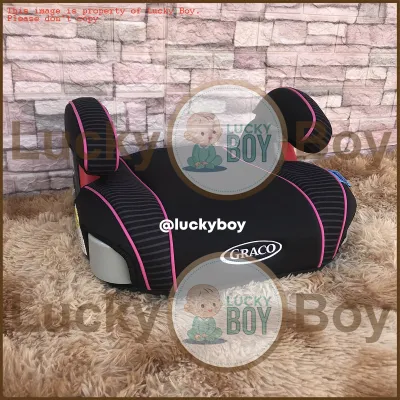
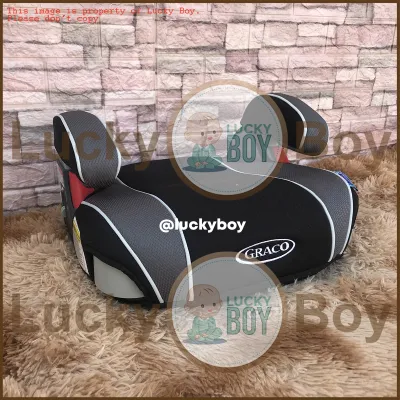
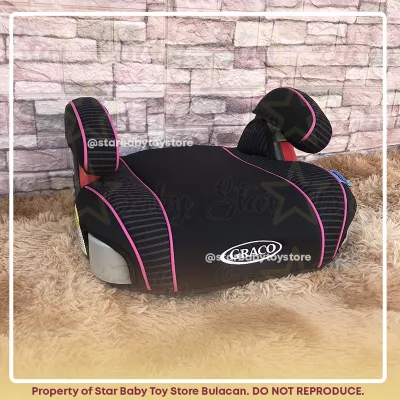
Backless booster seats consist solely of a cushioned base with lap belt guides and positioning clips. They are designed for older, taller children who have outgrown the high-back portion but still need extra height to achieve a safe seat belt fit.
Because backless boosters rely entirely on the vehicle’s own seat back and headrest to protect the child’s head and neck, they must only be used in seating positions equipped with adequate vehicle head support. They are highly portable, lightweight, and easy to transfer between different family vehicles or taxis.
Multi-Stage Convertibles
Multi-stage convertibles, often marketed as 2-in-1 or 3-in-1 seats, are designed to grow alongside your child over several years. These seats typically transition from a forward-facing harness seat to a high-back booster, and eventually to a backless booster.
While these models represent a significant long-term investment, they tend to be heavier and bulkier than dedicated boosters. They are ideal for parents who plan to keep the seat installed in a single primary vehicle for the duration of its usable lifespan.
Decision Guidance
When deciding between these types, evaluate both your child’s physical development and your vehicle’s interior. If your vehicle’s rear seats lack adjustable headrests, a high-back booster is a necessity. If your child is highly active or prone to slouching, a high-back model or a multi-stage seat with a harness should be used until they can sit upright consistently.
How to Match Your Child’s Size to Graco Seat Limits
Many parents mistakenly rely on age as the sole indicator for transitioning their child to a booster seat. However, physical measurements and behavioral readiness are the true safety metrics that dictate when it is safe to move to the next stage.

The Measurement Hierarchy
Weight and height are the primary safety limits established by manufacturers and safety regulators. Age serves as a secondary guideline because children of the same age can vary drastically in physical build.
Even if a child has reached the minimum age listed on a booster seat package, they must also meet the minimum weight and height requirements before they can safely use the seat. Prematurely transitioning a child to a booster seat reduces the protection provided by the vehicle’s restraint system.
Locating Graco Specifications
To find the precise limits for your specific graco booster seat, look for the manufacturer’s instruction manual or the physical labels adhered to the seat itself. Graco places highly visible stickers, typically white, silver, or color-coded, on the side or bottom of the plastic seat shell.
These labels list the minimum and maximum weight and height capacities for each configuration of the seat. Because safety standards and model designs can change, never assume the limits of one model apply to another; always verify the exact specifications of your unique model number.
Transition Signals
Your child is ready to transition from a forward-facing harness to a high-back booster when they meet all of the following criteria:
- They have reached the maximum weight or height limit of their forward-facing harness seat.
- Their shoulders are above the highest harness slot in their current seat.
- They are at least four years old and possess the behavioral maturity to sit properly for the entire ride without slouching, leaning forward, or playing with the seat belt.
Conversely, you should transition from a high-back booster to a backless booster only when the child’s ears rise above the top of the high-back headrest at its highest adjustment point, provided the vehicle seat offers adequate head support.
Avoiding Premature Transitions
Keep your child in each safety stage for as long as possible until they fully outgrow the maximum limits of that stage. Rushing to remove the back support or transitioning to the vehicle seat belt alone before the child is physically ready exposes them to a higher risk of injury in a collision. The lap belt must rest low on the hips and the shoulder belt must cross the collarbone; if the belt rides up onto the soft abdomen or neck, the child must remain in a booster.
Comparing Popular Graco Booster Seat Series
Graco offers several distinct booster seat product lines designed to cater to different family needs, budgets, and vehicle configurations. When shopping in the Philippines, price bands can range from approximately ₱3,500 for basic backless models to over ₱15,000 for premium multi-stage convertible systems.
Graco TurboBooster Series
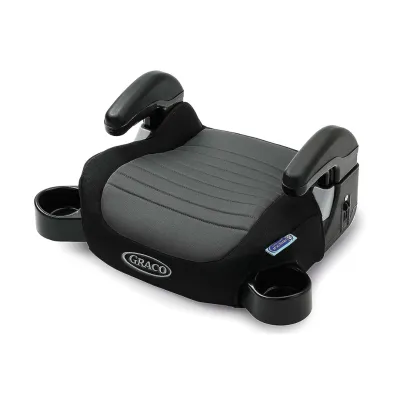
The TurboBooster series is one of the most recognizable lines in the booster category. Known for its lightweight construction and user-friendly design, this series includes both dedicated high-back-to-backless models and standalone backless options.
Key features often include height-adjustable headrests, padded armrests, and dual hideaway cup holders—which are highly convenient for keeping water bottles within reach during warm commutes. The TurboBooster is an excellent choice for families seeking a straightforward, portable, and cost-effective transition seat.
Graco Affix Series
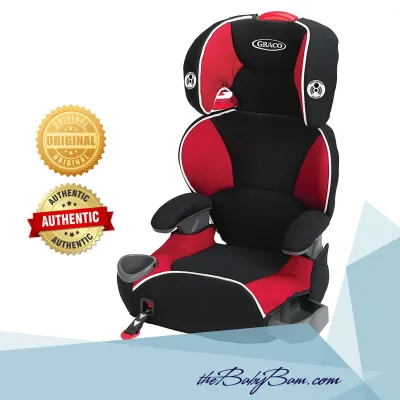
The Affix series builds upon the classic booster design by integrating a LATCH (Lower Anchors and Tethers for Children) system. This system features front-adjusting connectors that secure the booster seat directly to the vehicle’s lower anchor points.
While the LATCH system does not restrain the child (the vehicle’s seat belt performs this duty), it keeps the booster seat firmly in place when it is unoccupied. This prevents the empty booster from sliding around or becoming a dangerous projectile inside the cabin during sudden stops or turns.
Graco Nautilus and Tranzitions Series
For parents seeking a single seat to cover the transition from toddlerhood to the school-age years, the Nautilus and Tranzitions series offer multi-stage utility. These are combination seats that begin as forward-facing five-point harness seats and later convert into high-back and backless boosters.
The Nautilus series typically features a steel-reinforced frame for enhanced durability, though this makes the seat heavier and less suitable for frequent vehicle swapping. The Tranzitions series offers a more lightweight, space-saving profile, making it a practical option for smaller vehicles or three-across seating configurations.
Verification Reminder
Because product features, exact dimensions, and weight limits can vary depending on the specific model number, manufacturing year, and regional safety standards, always read the product packaging and official Graco documentation before making a purchase. Do not rely solely on online descriptions, which may reference international models with different specifications.
Installation and Seat Belt Fit Checks for Maximum Safety
A booster seat can only protect your child if it is installed correctly and the vehicle seat belt is routed properly. Follow these essential safety steps to ensure maximum protection.
Proper Belt Routing
When securing your child in a graco booster seat, the vehicle’s seat belt must be routed through the designated color-coded belt paths on the seat.
- The Shoulder Belt: Must lie snugly across the center of the child's shoulder and chest. It should never rest against the child's neck, face, or slip off the outer edge of the shoulder. Never allow your child to place the shoulder belt behind their back or under their arm.
- The Lap Belt: Must sit low and flat across the child's upper thighs and hips, making contact with the pelvic bones. It must never rest across the soft tissue of the stomach, as this can cause severe internal injuries in a crash.
High-Back Adjustments
If you are using a high-back booster, you must adjust the headrest to match your child’s height. Graco high-back boosters feature a squeeze handle on the back of the headrest that allows you to slide it up or down.
Adjust the headrest so that the shoulder belt guides are positioned slightly above your child’s shoulders. This ensures the seat belt feeds smoothly through the guide and rests naturally across the collarbone without pulling downward or binding.
Understanding LATCH in Boosters
It is vital to understand that when a seat is used in booster mode, the LATCH system serves a different purpose than it does in a harness seat. In booster mode, the vehicle’s seat belt is the sole mechanism restraining your child.
Using the LATCH connectors on models like the Graco Affix simply secures the booster seat to the vehicle chassis. This keeps the seat stable while the child climbs in and out, and prevents the seat from shifting during transit when empty. Always consult both your Graco manual and your vehicle’s owner manual to ensure compatible installation.
The 5-Step Fit Test
Before you stop using a booster seat entirely, your child must pass the standard 5-step fit test. This test determines if they can safely transition to using the vehicle’s seat belt alone:
- Back against the seat: Does the child sit all the way back against the vehicle seat back without slouching?
- Knees bend at the edge: Do the child's knees bend comfortably over the front edge of the vehicle seat cushion?
- Shoulder belt fit: Does the shoulder belt cross the center of the shoulder and chest, resting between the neck and the arm?
- Lap belt fit: Does the lap belt sit low and snug across the upper thighs and hips?
- Behavioral endurance: Can the child maintain this exact seating position comfortably for the entire duration of the ride?
If the answer to any of these questions is no, the child is not yet ready to ride without a booster seat and must continue using one.
Frequently Asked Questions (FAQ)
Can I use a backless Graco booster if my car has low seat backs or no headrests?
No, you should not use a backless booster seat in a vehicle seating position that lacks adequate head support. Backless boosters do not have a rear shell to support the child’s upper body. If the vehicle seat back is lower than the top of your child’s ears, their head and neck will be exposed to severe whiplash injuries in a rear-end collision. In such vehicles, you must use a high-back booster to provide the necessary head and neck protection.
How do I know if my child is mature enough for a backless booster?
Behavioral maturity is just as important as physical size. To use a backless booster safely, your child must be able to sit relatively still for the entire trip. They must not slouch, lean over to reach toys on the floor, tuck the shoulder belt under their arm, or slide down in the seat. If your child frequently moves out of position or falls asleep and slumps over, they lack the maturity for a backless model and should remain in a high-back booster or a five-point harness.
Do Graco booster seats have an expiration date?
Yes, all Graco booster seats have an expiration date. Over time, the plastic shell, webbing, and internal components degrade due to exposure to extreme heat, sunlight, and humidity—conditions that are especially common in tropical climates like the Philippines. Additionally, safety standards and technology evolve over time.
To find the expiration date, locate the white sticker on the underside or back of the booster seat. This sticker lists the model number and the exact date of manufacture. Graco booster seats generally expire 10 years from the date of manufacture, though some multi-stage models may vary. Always consult your specific user manual to confirm the lifespan of your model.

Community discussion
Share your experience or ask a question. Comments are reviewed before publication.