
Selecting the right Chicco sterilizer is not about finding a single, universally perfect model, but rather identifying the specific configuration that fits your daily bottle turnover, available kitchen counter space, and preference for automated drying. In a busy household, the efficiency of your sanitizing routine directly impacts your daily stress levels. By matching your baby’s feeding volume to the appropriate sterilizer type—ranging from rapid microwave units to high-capacity multi-function electric models—you can streamline your kitchen chores and avoid paying for extra features you might not actually use.
Every family’s feeding journey is unique, whether you are exclusively breastfeeding, formula feeding, or navigating a combination of both. The ideal appliance should seamlessly integrate into your existing kitchen setup without causing clutter or electrical issues. To make an informed decision, you must evaluate your daily bottle usage, understand the physical footprint of different models, and verify key technical specifications before making a purchase.
Assessing Your Daily Feeding Routine and Bottle Volume
To determine which sterilizer configuration will serve your household best, start by calculating your actual daily bottle turnover. Newborns typically feed every two to three hours, which can translate to eight to twelve bottles a day, alongside various breast pump components, pacifiers, and soothing toys. If you prefer to run the sterilizer only once or twice a day, you will require a high-capacity unit that can handle a large batch of items simultaneously. Conversely, if you do not mind running multiple quick cycles throughout the day, a smaller, more compact model may suit your routine perfectly.
Products mentioned in this guide
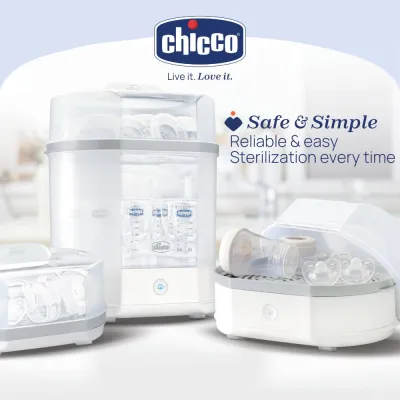
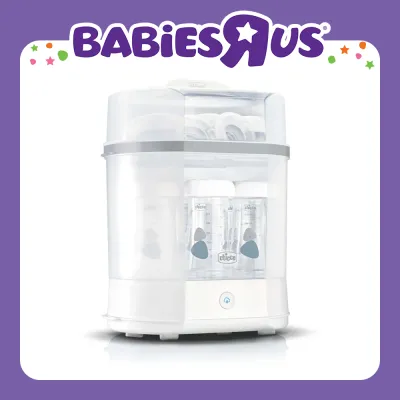
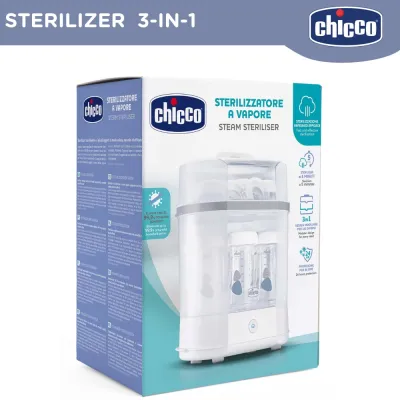
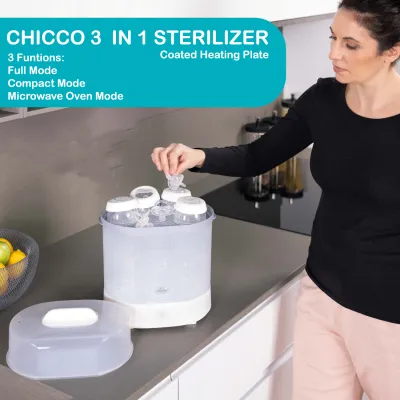
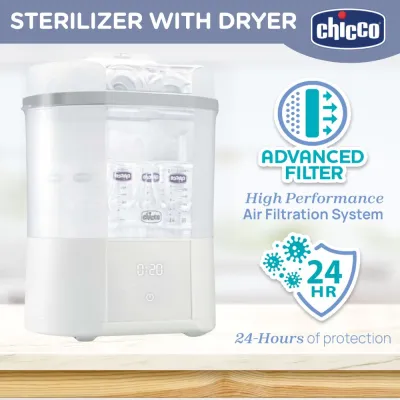
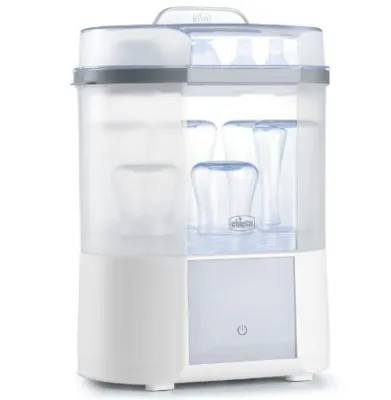
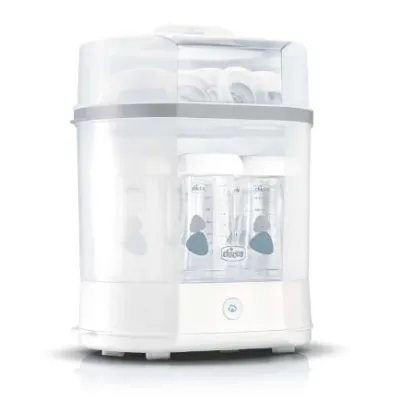
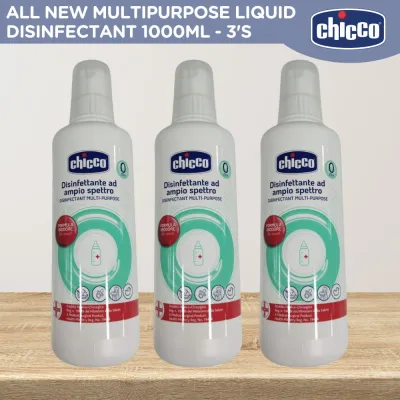
Prices are valid at publication and may change. Please refer to the product page for the latest price.
As your baby grows and transitions to solid foods, their feeding frequency will naturally decrease, shifting your sterilization needs. An older infant might only use four to six bottles a day, but you will find yourself needing to sanitize transition cups, small bowls, and silicone feeding spoons. Additionally, if you are actively pumping, breast pump shields, valves, and connectors must be sanitized regularly. These parts often have irregular shapes and take up significant space, meaning a sterilizer with flexible internal compartments or dedicated accessory trays will be highly beneficial.
Kitchen space and layout are equally critical factors when choosing an appliance. In many homes, counter space is at a premium, and finding a permanent spot near a reliable power outlet is essential for electric models. You must measure your intended storage or operating area, keeping in mind that steam sterilizers release hot vapor during operation and should not be placed directly under low-hanging wooden cabinets. If your kitchen lacks counter space, a compact model that can be easily stored in a cabinet between uses might be the most practical choice.
Finally, consider your drying preferences, especially when living in a warm, humid tropical climate like the Philippines. High humidity levels can significantly prolong the time it takes for bottles to air-dry naturally on a standard countertop rack. Slow air-drying can sometimes expose clean bottles to airborne dust, insects, or household moisture. If you prefer to have dry, ready-to-use bottles immediately after a cycle, investing in an electric model with an integrated drying phase is highly advantageous. If you already have a dedicated, hygienic drying area and do not mind waiting, a basic steam-only model will suffice.
Matching Chicco Sterilizer Types to Your Household Size
Chicco offers distinct functional configurations designed to cater to different family dynamics and spatial limitations rather than a single, one-size-fits-all device. Choosing the right category requires balancing the physical size of the unit against its daily convenience. While a larger model might seem like the most versatile choice, it may not be practical if you only need to sanitize a few items at a time or if your kitchen cannot accommodate its footprint.

By understanding the trade-offs of each category, you can select a model that aligns with your household’s daily rhythm. The primary differences lie in capacity, cycle duration, power requirements, and whether the unit includes an active drying mechanism. Evaluating these factors ensures you select an appliance that simplifies your routine rather than adding unnecessary complexity to your countertop.
Microwave and Compact Electric Models
Microwave and compact electric sterilizers are streamlined options designed primarily for smaller families, exclusive pumpers who handle small batches, or households with limited kitchen space. These models typically accommodate one to three bottles per cycle, making them excellent for quick, on-the-go sanitizing of pacifiers, teething toys, and essential breast pump parts. Because of their smaller physical footprint, they can be easily tucked away in a drawer or cabinet when not in use, keeping your countertops clear.
Microwave sterilizers rely entirely on the steam generated by heating water inside the unit using your existing microwave’s power. Before choosing this option, you must verify that your microwave’s internal dimensions can comfortably accommodate the sterilizer’s height and width, and that its wattage is sufficient to generate steam within the manufacturer’s recommended timeframe. Compact electric models, on the other hand, feature a basic plug-and-use design with an integrated heating element, requiring only a standard electrical outlet and a small amount of water to run a cycle.
The primary limitation of these smaller configurations is the lack of a built-in drying function. Once the sterilization cycle is complete, the items inside will remain wet with condensation. In a humid environment, you must exercise extra care when transferring these wet items to a clean, designated drying rack to prevent recontamination. If your daily routine demands dry bottles on short notice, or if you prefer a completely automated hands-off process, you may find the manual drying step of these compact models less convenient over time.
Multi-Function and 3-in-1 Electric Models
For larger families, parents of twins, or caregivers who prefer a highly automated wash-to-dry routine, multi-function and 3-in-1 electric sterilizers offer the highest level of convenience. These high-capacity units are designed to accommodate four to six or more large-volume bottles, along with their corresponding nipples, collars, and caps, in a single cycle. This makes them ideal for managing a high daily bottle turnover with minimal effort, allowing you to run a single comprehensive cycle at the end of the day.
A key advantage of these multi-function models is their modular design, which often includes adjustable racks or separate, stackable compartments. This flexibility allows you to configure the unit as a full-size sterilizer for a complete load of bottles, a compact version for a few small items, or a dedicated accessory tray for pacifiers and pump parts. By adjusting the size of the unit to match your immediate needs, you can save both counter space and electrical energy during smaller runs.
However, these advanced units do come with a larger physical footprint, requiring a dedicated and permanent spot on your kitchen counter. Additionally, because they often feature integrated drying cycles that use warm, filtered air to dry the bottles after steaming, you must verify the total cycle duration on the product label. Some drying cycles can take significantly longer than the sterilization phase itself, so ensuring the overall run time fits into your daily schedule is crucial for maintaining a smooth feeding routine.
Key Specifications to Verify Before Purchase
Because product lineups, model names, and specific features are updated periodically, you should always verify the exact specifications on the product packaging or official online listings before making your purchase. First, check the maximum bottle capacity and layout compatibility. Some sterilizers are optimized for standard narrow-neck bottles, while others feature wider configurations that can easily accommodate wide-neck or high-capacity glass and plastic bottles. Ensure that the internal height of the sterilizer chamber can accommodate the specific brand and size of the bottles you plan to use.
Second, verify the sterilization cycle duration and confirm whether a dedicated, automated drying phase is included in the model you are considering. If a drying function is present, check if it uses a replaceable filter to purify the air blown into the chamber, as this will require periodic replacement and maintenance. Understanding the total time required for a full sterilize-and-dry cycle helps you plan your prep work, especially during late-night or early-morning feeding sessions.
Third, confirm the electrical specifications, including the power rating, plug type, and voltage compatibility. In the Philippines, the standard household voltage is 220V at 60Hz. Purchasing a model designed for a different voltage without using a proper step-down transformer can damage the appliance’s heating element and pose a safety hazard. Always check the product label to ensure it is rated for local electrical standards and features a compatible plug type for your home’s outlets.
Finally, compare prices in ₱ across authorized online retailers and official brand stores to ensure you are getting a fair deal. Be cautious of unusually low prices from unauthorized sellers, as these products may lack a valid local warranty or may not comply with local electrical safety standards. Purchasing from an authorized dealer ensures that you have access to customer support, replacement parts, and a reliable warranty should the unit require servicing or repair.
Safe Usage, Descaling, and Maintenance
To keep your sterilizer operating safely and efficiently, you must adhere strictly to the manufacturer’s usage and maintenance guidelines. Always use the exact volume of water specified in the user manual or indicated by the fill lines on the heating plate. Adding too little water can cause the unit to run dry before completing the sterilization cycle, potentially overheating and damaging the heating element. Conversely, overfilling the reservoir can lead to boiling water spilling over into the electrical components, creating a short-circuit hazard.
Over time, you will notice white, grey, or brownish spots forming on the metal heating plate. This is a natural result of mineral deposits, commonly known as limescale, left behind when tap water is boiled. In areas with hard water, this buildup can occur rapidly. Limescale acts as an insulating layer, reducing the heating efficiency of the plate and potentially causing the unit to shut off prematurely. To prevent this, you should descale the heating plate regularly using manufacturer-approved methods, such as a mixture of white vinegar and water, allowing it to soak before wiping it clean with a soft cloth.
When cleaning the appliance, never submerge the main electrical base in water or expose the power cord to moisture. The base contains sensitive electronic components that can be permanently damaged by water ingress. Additionally, avoid using abrasive scrubbers, steel wool, or harsh chemical cleaners on the heating plate, as these can scratch the surface and accelerate mineral buildup or corrosion. Always unplug the unit and allow it to cool completely before performing any cleaning or maintenance.
If your sterilizer displays persistent error codes, fails to heat up, emits unusual burning odors, or shows signs of water leakage from the base, stop using the appliance immediately. Do not attempt to disassemble or repair the electrical components yourself. Instead, consult the manufacturer’s customer service department or an authorized service center to address the issue safely and preserve your warranty coverage.
Frequently Asked Questions (FAQ)
Can I sterilize plastic, glass, and silicone bottles together?
Yes, standard baby bottle materials, including polypropylene (PP), polyphenylene sulfone (PPSU), borosilicate glass, and food-grade silicone, are generally safe to sterilize together in a steam sterilizer. However, you must always verify the individual manufacturer labels on your bottles, nipples, and pump parts to confirm their maximum heat tolerance and specific cleaning instructions. To ensure thorough sanitization, completely disassemble all bottle components—including collars, nipples, and valves—before placing them in the unit. Keep small silicone parts, such as valves and pacifiers, in the provided accessory tray to prevent them from falling onto the heating plate or blocking the steam vents.
Why does the heating plate develop white spots after use?
The white, grey, or light brown spots that appear on the heating plate after a few cycles are harmless mineral deposits, commonly referred to as limescale. When water is heated and converted into steam, the minerals naturally present in tap water—such as calcium and magnesium—are left behind on the metal surface. This is a normal occurrence and is not an indication of mold, rust, or melting plastic. To maintain optimal heating efficiency and ensure proper steam generation, refer to your user manual for the recommended descaling procedure, which typically involves soaking the plate in a mild solution of water and white vinegar before rinsing and wiping it clean.

Community discussion
Share your experience or ask a question. Comments are reviewed before publication.