
Your child’s weight and height, not their age alone, determine which car seat they need. Between the ages of 2 and 6, children typically transition from a rear-facing seat to a forward-facing harness seat, then to a combination seat, and eventually to a belt-positioning booster. Comparing your child’s current measurements against the manufacturer’s limits is the only way to decide when to make these transitions safely.
Navigating this process requires understanding the physical and behavioral milestones of each stage. In the Philippines, where long commutes in dense traffic and tropical heat are common, ensuring a secure and comfortable fit is essential for every journey. This guide will help you measure your child accurately, check your current seat’s limits, and identify the exact moment to transition.
The 3 Car Seat Stages for Children Aged 2 to 6
To keep your child safe on the road, you must understand the three primary types of car seats designed for this age group. Each stage offers a different level of restraint and physical support tailored to a child’s growing body.
Products mentioned in this guide
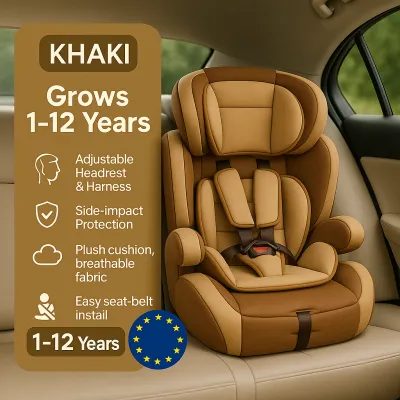
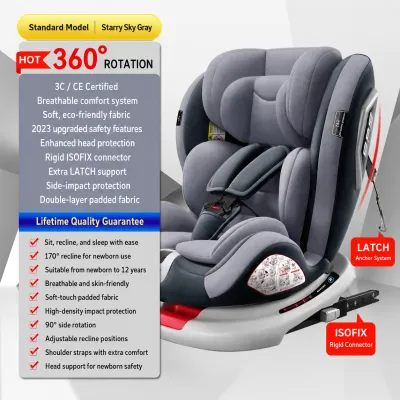
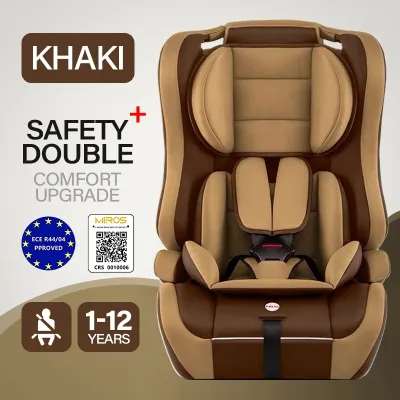
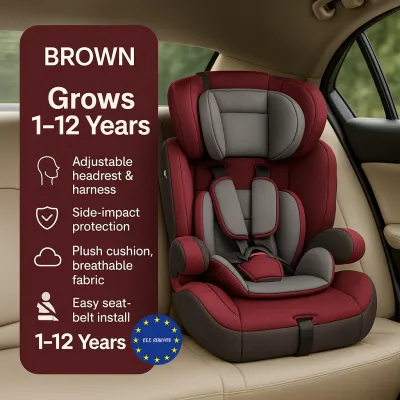
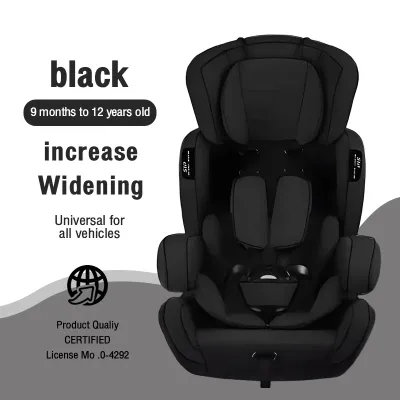
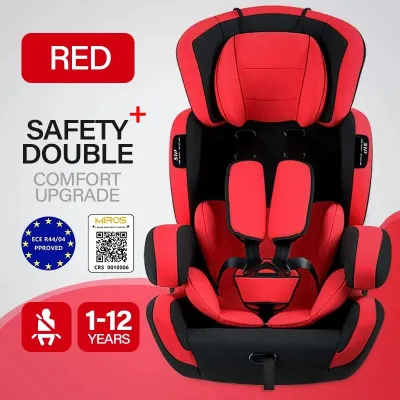

Prices are valid at publication and may change. Please refer to the product page for the latest price.
The first stage is the forward-facing harness seat. This seat secures your child with an internal five-point harness system that anchors at the shoulders, hips, and between the legs. This design distributes crash forces across the strongest parts of the child’s skeletal frame, making it the safest option for toddlers who have outgrown their rear-facing seats.
The second stage is the combination seat, often referred to as a harness-to-booster seat. This versatile gear starts as a forward-facing seat with an internal harness. Once your child outgrows the harness weight or height limits, you can remove the harness straps and convert the seat into a belt-positioning booster. This option provides excellent long-term value for growing children.
The third stage is the belt-positioning booster seat. Unlike harnessed seats, a booster does not have its own straps. Instead, it raises your child up so that the vehicle’s standard lap and shoulder seatbelts align correctly across their body. Boosters are available in high-back and backless models, depending on the support your child needs.
While age is a convenient milestone, it is only a general guideline. Children grow at vastly different rates, meaning weight, height, and physical maturity are the actual decision-defining dimensions for transitions. Keeping your child in a harnessed seat for as long as they fit within the manufacturer’s specified limits is the safest approach before moving to a booster.
How to Measure Your Child and Check Current Seat Limits
Before making any transitions, you must gather accurate data regarding your child’s physical measurements and your current seat’s capabilities. Guessing your child’s size can lead to premature transitions, which significantly compromises their safety in a collision.

To measure your child’s weight accurately, use a digital scale while they are wearing light clothing. Avoid weighing them while they are wearing heavy jackets, thick sweaters, or bulky shoes, as these can artificially inflate the reading. For height, have your child stand barefoot with their back flat against a wall, heels touching the baseboard, and looking straight ahead. Use a flat ruler or book resting on their head to mark the wall, then measure from the floor to the mark.
Once you have these measurements, locate the manufacturer’s label on your current car seat. This label is typically a sticker affixed to the side or back of the plastic shell. It contains critical information, including the maximum weight and height limits allowed for the harness mode. These limits vary widely by brand and model, so you must never assume one seat’s limits apply to another.
Alongside the sticker, consult the user manual for specific physical markers that dictate when a child has outgrown the seat. For forward-facing harnessed seats, the harness straps must always emerge from the seat shell at or above the child’s shoulders. If the child’s shoulders are higher than the top harness slot, the seat is outgrown, even if the child is still under the weight limit. The top of the child’s ears must also remain below the top of the seat shell to ensure adequate head protection.
Diagnostic Guide: Which Seat Type Matches Your Child's Growth?
Selecting the correct car seat requires matching your child’s current measurements and physical development to the right stage. This diagnostic guide will help you determine whether to maintain your current setup or upgrade to a new seat.
Signs to Stay in a Forward-Facing Harness Seat
Many parents are eager to move their children to the next stage, but keeping your child in a forward-facing harness seat for as long as possible is the safest choice. You should continue using your current forward-facing harnessed seat if your child’s shoulders are still at or below the top harness slots, their ears are well below the top of the seat shell, and their weight is within the manufacturer’s specified harness limit.
The five-point harness offers superior protection by securing the child firmly in the seat shell, preventing them from moving out of position during a sudden stop or crash. This system distributes crash forces across the shoulders and pelvis, which are the strongest parts of a young child’s body. For children between ages 2 and 4, whose bones are still developing and hardening, this extra containment is vital.
If your child meets these physical criteria, there is no safety benefit to transitioning them to a booster. Your action path is simple: continue using the current seat, ensuring that the harness is adjusted snugly and that the chest clip is positioned correctly at the level of the child’s armpits to keep the shoulder straps secure.
Signs to Transition to a Combination Seat
A combination seat is the logical next step when your child has outgrown their convertible or dedicated forward-facing seat’s height or weight limits but is not yet ready for a booster. This scenario is common for tall toddlers who exceed height limits before they reach the weight or maturity required for a seatbelt-positioning booster.
The primary transition point occurs when you need a seat that can accommodate extended harness use. A combination seat provides a higher weight and height limit for its internal five-point harness, allowing your child to remain harnessed longer. Once they eventually exceed those higher limits, the seat can be converted into a belt-positioning booster, utilizing the vehicle’s seatbelt.
If your child’s shoulders are above the top slots of their current seat, or if they have reached the maximum harness weight limit, look for a combination seat. This purchase ensures your child remains safely harnessed until they possess the physical size and behavioral maturity to transition to a booster mode.
Signs Your Child is Ready for a Belt-Positioning Booster
Transitioning to a belt-positioning booster seat is a major milestone that requires meeting strict physical and behavioral requirements. Moving a child to a booster too early is a common safety mistake that leaves them vulnerable to severe injuries because a vehicle’s seatbelt is designed for adult bodies.
To meet the physical readiness criteria, your child must first meet the booster manufacturer’s minimum weight and height requirements. When seated in the booster, the vehicle’s lap belt must sit low and flat across their upper thighs, touching the hip bones, rather than riding up onto the soft tissue of the stomach. The shoulder belt must cross the center of the child’s chest and collarbone, staying away from their neck and not slipping off their shoulder.
Behavioral maturity is equally critical. Your child must be mature enough to sit properly for the entire ride, even when they are tired or restless. They must not slouch, lean forward to reach for toys, tuck the shoulder belt under their arm, or play with the seatbelt buckle. If a child cannot maintain this correct posture for the entire journey, they are not ready for a booster, regardless of their size.
Your action path is to transition to a high-back or backless booster only when both physical fit and behavioral maturity are fully confirmed. If your child still struggles to sit still, continue using a harnessed seat with higher limits.
How to Verify the Fit and Installation of the New Seat
Acquiring the correct seat is only half the battle; ensuring it is properly installed and fitted to your child is what saves lives. Incorrect installation is incredibly common, but you can avoid it by performing a few simple checks.
For seats used in harness mode, verify that the straps are positioned at or above the child’s shoulders for forward-facing installations. Once the harness is buckled, perform the “pinch test” to check for snugness. Try to pinch the harness webbing horizontally at the child’s collarbone. If you can pinch any excess fabric between your fingers, the harness is too loose and must be tightened until your fingers slide smoothly over the webbing without gripping any slack.
For booster seats, verify the lap and shoulder belt routing. Ensure the seatbelt passes through the booster’s designated, color-coded belt guides (usually marked in red). The lap belt must lie flat across the upper thighs, and the shoulder belt must rest securely across the middle of the collarbone. Never allow the belt to ride up on the child’s neck or slide down their arm.
To check the installation security of any harnessed seat, perform the “inch test” at the belt path. Grab the car seat near the path where the vehicle seatbelt or LATCH/ISOFIX straps pass through. Pull the seat firmly from side to side and front to back. The seat should not move more than one inch (2.5 cm) in any direction. If it moves more than this, tighten the straps or reinstall the seat.
While proper installation drastically reduces the risk of injury, no car seat can guarantee absolute safety in every crash scenario. If you are unsure of the fit or are struggling with installation, stop use and consult a certified child passenger safety technician (CPST) or a qualified professional for guidance. Always cross-reference your car seat’s instruction manual with your specific vehicle owner’s manual to verify installation compatibility.
Critical Safety Mistakes to Avoid During the Transition
When managing car seat transitions for children aged 2 to 6, avoiding common pitfalls can make a life-saving difference. Recognizing these mistakes helps ensure your child remains fully protected on every journey.
The most frequent error is premature boosting. Parents often move their child to a booster seat simply because the child has reached a certain age or because their peers have transitioned. Doing so ignores the child’s actual weight, height, and behavioral maturity, exposing them to severe seatbelt-inflicted injuries during a crash if they slouch or wiggle out of position.
Another critical mistake is ignoring expiration dates and the history of second-hand seats. Car seat plastic degrades over time, especially when exposed to the high temperatures and intense humidity typical of tropical climates like the Philippines. Never use a second-hand seat if you do not know its full history, as it may have been involved in a collision, which can cause unseen structural damage. Always check the expiration date, which is usually stamped on the bottom or back of the seat shell.
Finally, never skip using the top tether for forward-facing harnessed installations. The top tether is a strap that secures the top of the car seat to an anchor point in your vehicle’s cargo area, seatback, or ceiling. It is designed to limit forward head movement during a crash, reducing the risk of severe head and neck injuries. Failing to connect and tighten the top tether is a highly common installation mistake that significantly reduces the seat’s effectiveness.
Frequently Asked Questions (FAQ)
Can my 3-year-old use a booster seat if they are tall for their age?
No, a 3-year-old should not use a booster seat, regardless of their height. Toddlers at this age lack the skeletal development and behavioral maturity required to use a vehicle seatbelt safely. If a tall 3-year-old outgrows their current forward-facing seat’s height limits, the correct action is to transition them to a forward-facing seat or a combination seat with higher internal harness limits, keeping them safely secured in a five-point harness.
What if my child's weight exceeds the harness limit but they are under 4 years old?
If your child exceeds their current seat’s harness weight limit but is under 4 years old, they are still too young and likely lack the behavioral maturity for a booster seat. In this scenario, you should look for a combination seat or a dedicated forward-facing seat that features a higher internal harness weight capacity. Keeping your child in a five-point harness is essential until they are physically and behaviorally ready for a booster.

Community discussion
Share your experience or ask a question. Comments are reviewed before publication.