
Choosing the correct car seat for baby is one of the most critical decisions you will make to protect your child during every journey. The right seat is not determined by a single factor but by a combination of your child’s age, weight, height, and physical development. Because every child grows at a unique pace, transitioning to a new stage must always be guided by the physical limits specified by the seat’s manufacturer rather than general milestones.
Understanding these stages ensures that your child is supported by the correct safety mechanisms during a sudden stop or collision. In the Philippines, navigating busy roads and varied tropical driving conditions makes proper installation and selection even more vital. Let us break down the specific car seat types, how to identify when your baby has outgrown their current model, and the essential safety checks you must perform.
Quick Diagnostic: Which Car Seat Stage Is Right for Your Child Now?
To help you quickly identify the appropriate category for your child, the table below maps the three main car seat stages to their typical physical ranges. These ranges serve as general industry benchmarks, but you must always verify the exact limits printed on your specific car seat’s safety labels, as specifications vary significantly by brand and model.
Products mentioned in this guide
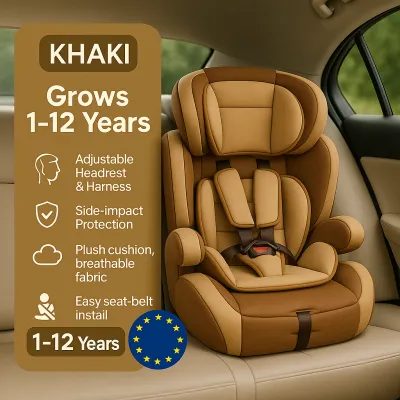
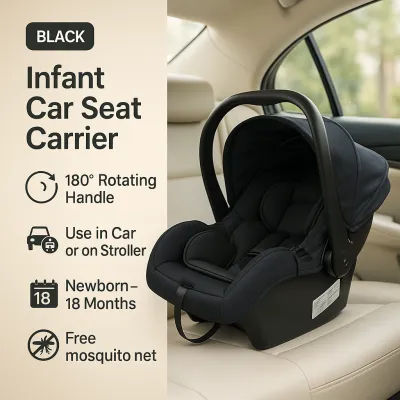
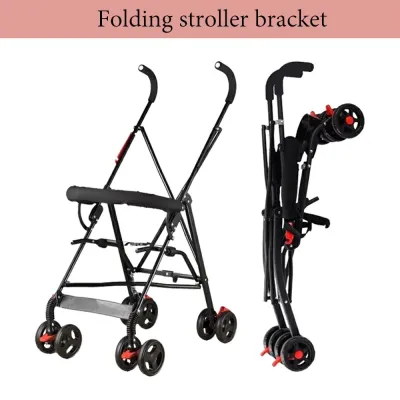
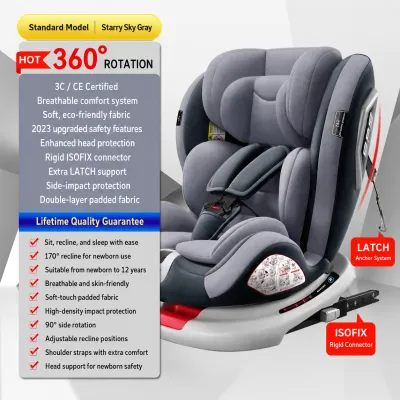
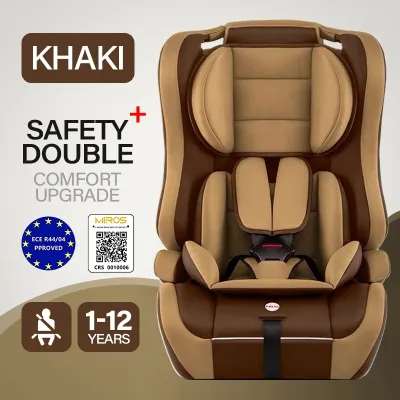
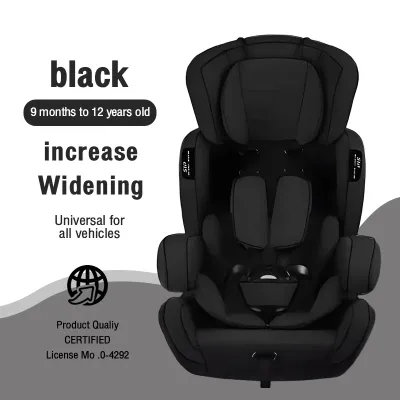
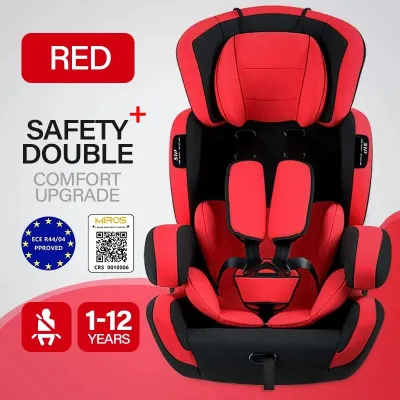

Prices are valid at publication and may change. Please refer to the product page for the latest price.
| Car Seat Stage | Typical Age Range | Typical Weight Range | Key Developmental Indicator |
|---|---|---|---|
| Rear-Facing Infant Car Seat | Birth to 12–15 months | Birth to 13 kg | Head must be at least 1 inch below the top of the hard plastic shell. |
| Convertible Car Seat | Birth to 4 years or older | Up to 18–25 kg | Remains rear-facing as long as possible, then converts to forward-facing. |
| Booster Seat (High-Back/Backless) | 4 years to 12 years | 15 kg to 36 kg | Child must sit flat against the seat back with knees bending comfortably over the edge. |
While age provides a general starting point, physical fit and weight are much more reliable metrics for safety. A child should only transition to the next stage when they have fully outgrown the maximum limits of their current seat. Prematurely moving a child to a different stage can significantly reduce the level of protection provided during travel.
Stage 1: Rear-Facing Infant Car Seats (Birth to ~13 kg)
Infant car seats are designed specifically for newborns and younger babies, offering a highly specialized protective cocoon. These seats typically feature a distinct bucket-style design, a convenient carrying handle, and a detachable base that remains semi-permanently installed in your vehicle. This design allows you to lift the seat and your sleeping baby out of the car without disturbing them, making it a highly practical choice for the first year of life.

Most infant seats are rated for babies from birth up to approximately 13 kilograms, though you must verify the exact upper limit printed on your specific model’s safety label. The seat is always installed in a rear-facing position, which is critical for protecting a baby’s fragile anatomy. In a collision, the hard shell of a rear-facing seat acts as a shield, absorbing the impact forces and distributing them evenly across the baby’s back, while supporting their disproportionately heavy head and delicate neck.
To ensure the seat performs as intended, caregivers must pay close attention to the harness fit and the installation angle. The integrated harness straps must emerge from the slots at or slightly below your baby’s shoulders when rear-facing, and the chest clip must always be positioned at armpit level to keep the straps securely on the shoulders. Additionally, you must check the seat’s built-in recline angle indicator—such as a bubble level or color-coded dial—to ensure the seat is reclined sufficiently to keep your newborn’s heavy head from falling forward, which could restrict their sensitive airway.
Stage 2: Convertible Car Seats (Rear-Facing to Forward-Facing)
As your child outgrows their infant carrier, a convertible car seat serves as the next logical step, offering extended usability by adapting to your growing child. Unlike infant-only seats, convertible models are designed to remain installed in the vehicle and are too heavy and bulky to be used as portable carriers. Their primary advantage lies in their dual-mode functionality: they can be installed rear-facing for infants and toddlers, and later reconfigured to face forward once the child reaches the appropriate physical limits.
Safety experts and pediatric organizations strongly recommend keeping your child in the rear-facing position for as long as possible, up to the maximum rear-facing height or weight limit allowed by the car seat manufacturer. Many modern convertible seats allow children to remain rear-facing until they weigh 18 kilograms or more, providing superior head, neck, and spinal protection well into the toddler years. Only when your child has fully outgrown the rear-facing limits of the convertible seat should you transition the seat to the forward-facing position.
Transitioning a convertible seat from rear-facing to forward-facing requires careful adjustment of the seat’s internal mechanics. You will need to reroute the vehicle seat belt or ISOFIX straps through the designated forward-facing belt path, adjust the recline angle to a more upright position as specified by the manufacturer, and raise the shoulder harness straps so they emerge at or slightly above your child’s shoulders. Always consult both your car seat manual and your vehicle’s owner manual to ensure the new configuration is securely locked into place.
Stage 3: Booster Seats (Transitioning from Harness to Seat Belt)
Booster seats represent the final stage of specialized child passenger safety, designed for older children who have outgrown the forward-facing harness limits of their convertible seats. The primary purpose of a booster seat is not to hold the child in place with an internal harness, but rather to lift the child up so that the vehicle’s adult lap-and-shoulder seat belt fits safely and correctly across their body. Without a booster, an adult seat belt sits too high, resting dangerously against a child’s soft stomach and neck, which can cause severe internal injuries during a sudden stop.
When selecting a booster, parents can choose between high-back and backless models. High-back boosters are highly recommended for vehicles with low seat backs or those lacking headrests, as they provide crucial neck and head support while helping to guide the shoulder belt into the perfect position. Backless boosters are more compact and portable, making them convenient for carpooling or tight spaces, but they require your vehicle’s seat to have a built-in headrest that extends at least to the top of your child’s ears.
Before making the transition to a booster, you must verify that your child meets both the physical requirements and the developmental maturity milestones. A child is only ready for a booster seat when they can sit properly for the entire duration of every trip without slouching, leaning over, or playing with the seat belt. If your child is still within the weight and height limits of their convertible seat’s 5-point harness, keeping them in that harness is generally safer, as it distributes crash forces across five points of the body rather than three.
5 Clear Signs It Is Time to Move to the Next Car Seat Stage
Knowing exactly when to transition your child to the next stage requires looking at physical indicators rather than relying on age alone. Here are five clear, verifiable checkpoints to help you decide when it is time to upgrade or adjust your child’s seat:
- Reaching the Maximum Weight Limit: Check the manufacturer's label printed on the side or bottom of the seat shell. Once your child's weight matches or exceeds the stated limit for their current configuration, they must transition to the next stage or setup.
- Outgrowing the Height Limit: For rear-facing seats, your child has outgrown the seat when the top of their head is less than 1 inch (2.5 cm) from the top of the hard plastic shell. For forward-facing seats, they have outgrown the harness when their shoulders sit higher than the highest harness slots, or when the tops of their ears reach the top of the seat back.
- Inability to Achieve a Proper Harness Fit: If the harness straps can no longer be tightened snugly or if they emerge from slots that are too low (below the shoulders for rear-facing, or too far below the shoulders for forward-facing), the seat is no longer safe for continued use in that mode.
- Development of Physical Maturity: Transitioning to a booster seat requires the child to sit still without slouching or pulling the shoulder belt behind their back. If your child lacks this maturity, they must remain in a 5-point harness, even if they meet the minimum weight requirements for a booster.
- Reaching the Manufacturer Expiration Date: Car seats do not last forever. You must inspect the seat's plastic shell for an embossed expiration date or a manufacture date sticker; most seats expire within 6 to 10 years due to material degradation, which is accelerated by the intense heat and humidity of the tropical Philippine climate.
Essential Safety, Installation, and Maintenance Checks
Even the highest-rated car seat for baby cannot provide optimal protection if it is installed incorrectly. Caregivers should choose between two main installation methods: the ISOFIX system (or LATCH) or the vehicle’s active seat belt system. Both methods are equally safe when executed properly, but you must never use both systems simultaneously unless explicitly permitted by both the car seat and vehicle manufacturers, as this can place unintended stress on the seat’s frame during an impact.
To verify that your installation is secure, always perform the “inch test” at the belt path. Grasp the car seat near the area where the seat belt or ISOFIX straps pass through and pull it firmly from side to side and front to back; the seat should not move more than one inch (2.5 cm) in any direction. If the seat slides or wobbles beyond this limit, you must tighten the straps further, adjust the vehicle seat angle, or try a different seating position in your vehicle.
Next, perform the “pinch test” on the harness straps to ensure they are sufficiently snug against your baby’s body. Once the harness is buckled and the chest clip is positioned at armpit level, try to pinch the webbing of the strap horizontally at your child’s collarbone using your thumb and forefinger. If you can pinch any excess fabric between your fingers, the harness is too loose and must be tightened until your fingers slip off the smooth webbing.
Maintaining your car seat also requires strict adherence to the manufacturer’s care instructions to avoid compromising its structural integrity. Never use harsh chemical detergents, bleach, or abrasive brushes to clean the harness straps, as these substances can weaken the synthetic fibers and cause them to fail under tension. Additionally, avoid using unapproved aftermarket accessories—such as thick infant head supports, strap covers, or seat protectors—that did not come in the original box, as they have not been crash-tested with your specific seat and could interfere with its safety mechanisms. If you are ever unsure about your installation, consult a certified child passenger safety technician or contact the manufacturer’s customer support for guidance.
Frequently Asked Questions (FAQ)
When is it safe to turn my baby's car seat to face forward?
You should keep your child in a rear-facing car seat for as long as possible, until they reach the maximum weight or height limit specified by the seat’s manufacturer. Many modern convertible seats support rear-facing up to 18 kilograms or more. Turning a child forward too early exposes their relatively heavy head and weak neck muscles to severe whiplash forces during a sudden stop, whereas a rear-facing seat cradles and protects these vulnerable areas.
Is it safe to use a second-hand or expired car seat?
Using a second-hand car seat is highly risky and generally discouraged unless you can verify its complete history, including confirming it has never been in an accident, has no missing parts, and has not been recalled. Furthermore, car seats have a strict expiration date—typically 6 to 10 years from manufacture—because plastic degrades over time. In the Philippines, constant exposure to high cabin temperatures and tropical humidity can accelerate this structural weakening, making an expired seat unsafe.
What should I do if my baby falls asleep in the car seat outside the car?
Car seats are designed and safety-tested specifically for travel inside a vehicle at a very precise angle. When a car seat is placed on a flat floor or table outside the car, its angle changes, which can cause a sleeping baby’s heavy head to flop forward onto their chest. This position can restrict their airway and lead to positional asphyxiation. Always supervise your baby while they are in the seat, and transfer them to a firm, flat crib or bassinet as soon as you reach your destination.
Community discussion
Share your experience or ask a question. Comments are reviewed before publication.