
Securing your home with a reliable safety barrier, or harang, is one of the most practical steps you can take as your child becomes mobile. The right choice depends entirely on where you plan to install the barrier, the structural materials of your walls, and your child’s physical development.
Choosing the wrong type of gate for a specific area, such as using a tension-based model at the top of a staircase, can introduce serious safety hazards. By matching the specific layout of your home to the appropriate mounting style, you can create a secure environment that allows your little one to explore safely under your supervision.
Assess Your Home Layout and Baby’s Mobility
Before purchasing any safety barrier, you must evaluate the physical dimensions and structural characteristics of the spaces you need to block. Use a reliable measuring tape to record the exact width of the opening at both the floor level and the top of where the gate will sit, as walls are not always perfectly plumb.
Products mentioned in this guide
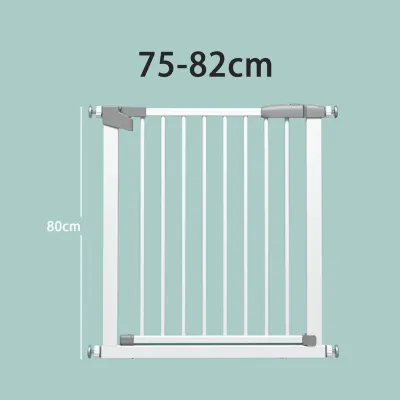
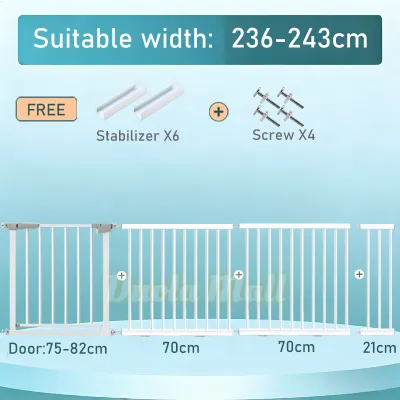
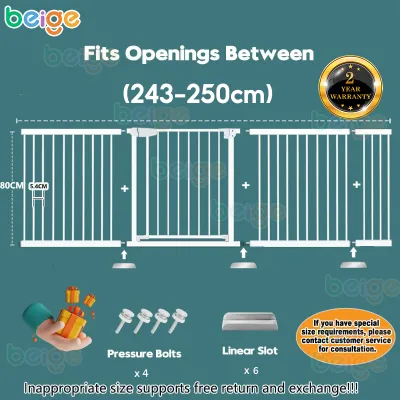
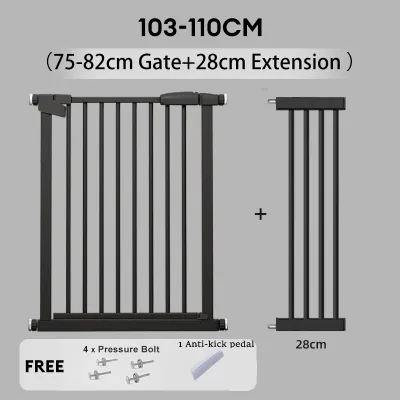
Prices are valid at publication and may change. Please refer to the product page for the latest price.
Take close note of your wall materials, as this dictates how you will secure the barrier. Many homes in the Philippines feature solid concrete or hollow block walls, which require masonry drill bits and wall anchors for permanent installations, while wooden door frames or drywall require different hardware.
You also need to inspect the baseboards along the floor. Thick or decorative baseboards can create uneven gaps, which might require specialized spacers or adapters to ensure the gate sits completely flush and secure against the vertical surfaces.
Your child’s current physical abilities are equally important when selecting a barrier. A crawling baby has different physical limits than a toddler who is already walking, running, or attempting to climb furniture.
Observe how your child interacts with boundaries. If your little one is highly active and prone to leaning heavily against structures, you will require a much more rigid and securely anchored barrier than if they are just beginning to sit up and roll.
Identify the high-risk zones in your household that require immediate isolation. Kitchens with hot appliances, bathrooms with wet floors, and open staircases are primary areas where access must be strictly controlled to prevent accidents.
Hardware-Mounted Gates for Stairs and High-Risk Areas
Hardware-mounted gates are permanently anchored to your home’s structure using screws and brackets. This mounting style offers the highest level of structural integrity because it does not rely on friction to stay in place.

You must install a hardware-mounted gate at the top of any staircase. Because these gates are screwed directly into the wall or banister, they can withstand a child’s full body weight leaning or pushing against them without dislodging.
Installing these barriers requires careful preparation and the right tools. If you are mounting the gate to concrete or masonry walls, you must use a hammer drill and appropriate wall plugs to ensure the screws remain firmly anchored over time.
When mounting to wooden posts or wall studs, ensure the screws penetrate deep into the solid wood rather than just the outer plaster or decorative trim. Always use a stud finder to locate the structural framing behind drywall before drilling.
Refer closely to the manufacturer’s installation manual to verify the correct mounting height and alignment. The gap between the bottom of the gate and the floor must be small enough to prevent a child from slipping underneath or getting their head trapped.
Regularly check the structural integrity of the mounting points. Over time, frequent swinging and latching can cause screws to loosen, especially in high-traffic areas, requiring occasional tightening to maintain safety.
Pressure-Mounted Gates for Standard Doorways and Hallways
Pressure-mounted gates rely on tension exerted outward against the opposing walls or door frames to stay in place. They are highly popular because they do not require drilling holes, making them convenient for temporary setups or rental properties.
These barriers are ideal for flat, level surfaces between rooms, such as blocking access to a bedroom, a playroom, or a level hallway. They work best when placed between solid, parallel surfaces that can withstand continuous outward pressure.
You must never use a pressure-mounted gate at the top of a staircase. Because these gates rely solely on friction, a child leaning heavily or pushing against the barrier can cause the entire unit to slip and give way, leading to a dangerous fall.
Additionally, many pressure-mounted models feature a solid bottom bar that remains on the floor even when the gate door is open. This bottom bar presents a severe tripping hazard, which is highly dangerous at the top of any flight of stairs.
The humid tropical climate can cause wooden door frames to expand and contract slightly throughout the year. This natural movement can gradually reduce the tension of a pressure gate, making regular checks essential.
Inspect the rubber pressure pads weekly to ensure they have not slipped or degraded. Clean the wall surfaces and the rubber pads regularly to remove dust and oils, which can cause the barrier to slide out of position under pressure.
Retractable and Wide-Opening Gates for Flexible Spaces
Standard swinging gates may not fit wide archways, open-plan living areas, or irregularly shaped openings. For these spacious layouts, retractable mesh barriers or multi-panel wide-opening gates offer a highly adaptable solution.
Retractable gates utilize a flexible, heavy-duty mesh fabric that rolls up into a wall-mounted housing when opened. This design is excellent for high-traffic areas because it leaves the walkway completely clear of thresholds and obstacles when retracted.
When selecting a retractable model, you must verify the reliability of its locking mechanism. The lock should require a two-step action that is easy for an adult to operate with one hand but impossible for a toddler to figure out or release.
Examine the durability of the mesh material carefully. The fabric must be strong enough to resist stretching, tearing, or sagging when a child presses against it, and it should not have loose threads that could pose a hazard.
Multi-panel hardware gates are another option for wide spaces, allowing you to section off entire areas of a room, such as keeping a child away from an entertainment center or indoor plants. These systems can be angled to fit non-standard layouts.
Keep in mind the trade-offs of flexible barriers. While retractable mesh gates are highly convenient and visually unobtrusive, they lack the rigid vertical bars of traditional metal or wood gates, which some active children may find easier to push against.
Safety Checks and Maintenance for Installed Gates
An installed safety barrier is only effective if it is maintained in peak working condition. Establish a weekly routine to inspect all the gates in your home, paying close attention to the latching mechanisms and hinges.
Test the automatic locking feature, if your gate has one, to ensure it clicks securely into place every single time the gate swings shut. Dust, pet hair, or minor alignment shifts can prevent latches from engaging fully, leaving the gate deceptively open.
Keep the area surrounding your safety gates completely clear of climbable objects. Toddlers are creative problem solvers and will quickly learn to drag small chairs, toy boxes, or large plastic storage bins over to a gate to use as a stepping stool.
Be mindful of the placement of nearby household items. Never position a gate close to electric fans, power strips, or low-hanging window cords that a child could reach by stretching through or over the barrier.
As your child grows, you must continuously assess whether the current barrier is still safe. When your child reaches the height or weight limits specified in the manufacturer’s manual, or shows the ability to climb over the gate, the barrier must be retired.
Transitioning your child to understand household boundaries is a gradual process. While physical barriers provide essential protection during the early years, active supervision and consistent safety instruction remain the foundation of home safety.
Frequently Asked Questions (FAQ)
Can I use a pressure-mounted gate at the bottom of the stairs?
You can use a pressure-mounted gate at the bottom of the stairs, provided it is installed on the lowest landing floor and not on an actual step. The surrounding walls must be solid and parallel to ensure the rubber tension pads can grip securely without slipping.
However, you must evaluate the risk of your child pushing against the gate from the stair side. If a child climbs up a couple of steps and leans against a pressure gate, their weight could dislodge it, causing them to fall backward onto the stairs.
If your child is highly active or shows a strong interest in climbing the stairs, installing a hardware-mounted gate at the bottom landing is a much safer, more stable alternative that eliminates the risk of the barrier slipping.
At what age or height should I stop using baby gates?
Most manufacturers recommend discontinuing the use of safety gates when a child’s chest height is level with the top of the barrier. Always consult your specific product’s instruction manual to verify the exact height and weight limits.
Developmental milestones are often more reliable indicators than age alone. If your child has figured out how to operate the latch, or if they actively attempt to climb over the frame, the gate can become a climbing hazard rather than a safety barrier.
Once you remove the physical barriers, focus on teaching your child how to navigate stairs safely. Practice walking down the stairs together while holding the handrail, and establish clear household rules about which areas remain off-limits without adult supervision.

Community discussion
Share your experience or ask a question. Comments are reviewed before publication.