
As your little one transitions from a quiet newborn to an active explorer, your home suddenly presents a brand-new set of challenges. Deciding whether you need a baby gate depends heavily on your child’s developmental milestones and the unique layout of your living space. While some open-plan homes can be managed with close supervision and targeted baby-proofing, structural features like staircases and high-risk rooms often make a physical barrier essential. Choosing the right gate is not just about blocking a doorway; it requires matching the barrier’s mounting mechanism to your home’s structural surfaces and your child’s growing physical capabilities.
Signs Your Home Needs a Baby Gate
The moment your baby begins to show signs of independent mobility, the clock starts ticking on home safety. Early indicators such as rolling, scooting, or attempting to crawl suggest that their reach is expanding daily. Once they begin pulling themselves up to stand or cruising along furniture, their curiosity will naturally lead them toward open doorways. These physical milestones are your primary signal that passive supervision alone may no longer prevent access to household hazards.
Evaluating your home’s layout reveals specific high-risk zones where a baby gate becomes a critical line of defense. Staircases are the most urgent areas, requiring reliable barriers at both the top and bottom to prevent serious fall injuries. Kitchens and bathrooms also present significant risks due to hot appliances, standing water, and cleaning chemicals. Additionally, rooms containing heavy, unsecured furniture are best kept off-limits until your child is old enough to understand basic safety boundaries.
Products mentioned in this guide
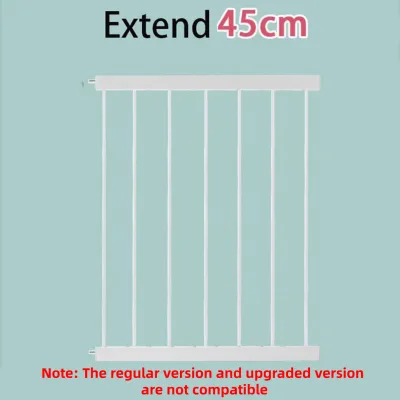
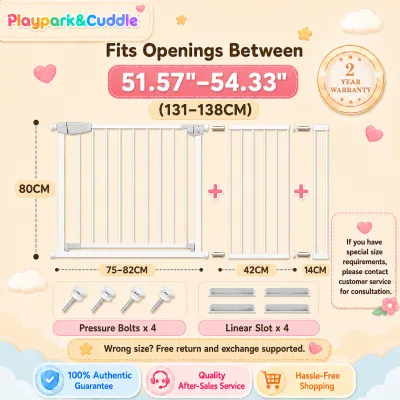
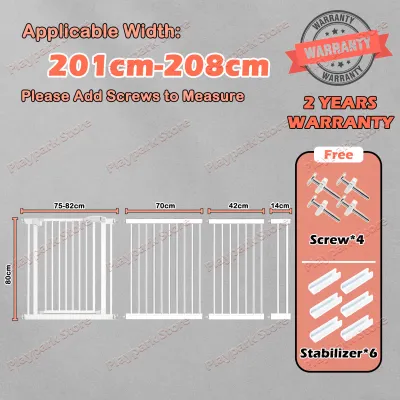
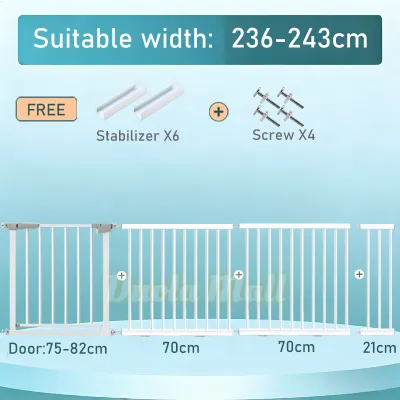
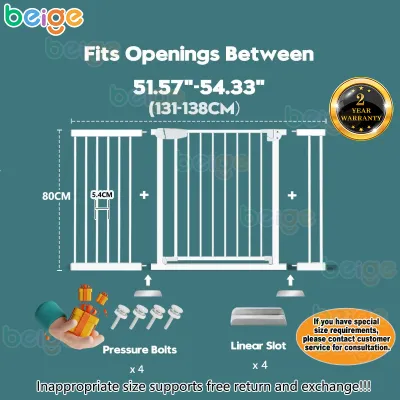
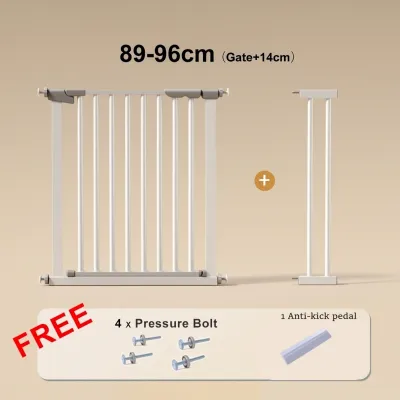
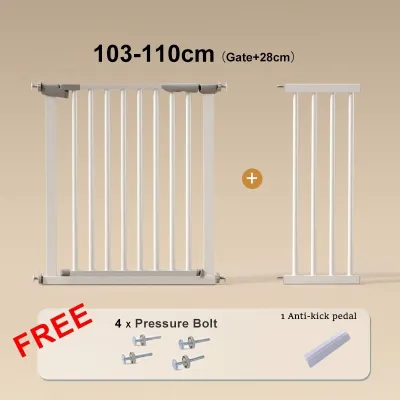
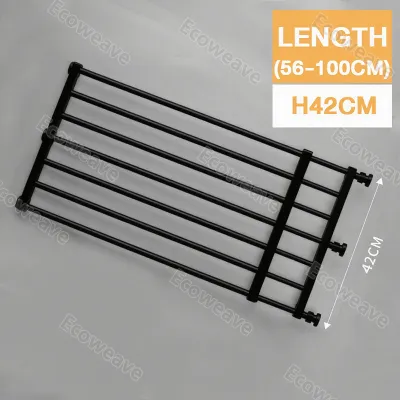
Prices are valid at publication and may change. Please refer to the product page for the latest price.
In some living situations, alternative baby-proofing strategies can temporarily delay the need for a gate. For instance, if you live in a single-level apartment with wide, open spaces, you might successfully secure all heavy furniture to the walls, install cabinet locks, and remove low-level hazards. This “yes space” approach allows your baby to explore freely under your watchful eye. However, once your child develops the strength to climb or shows persistent interest in restricted areas, these temporary measures must yield to a secure safety barrier that meets current safety standards as verified on the product packaging.
Pressure-Mounted vs. Hardware-Mounted: Choosing the Right Fit
Selecting the correct baby gate requires understanding the fundamental differences between pressure-mounted and hardware-mounted systems. Pressure-mounted gates operate much like a tension shower rod, utilizing outward force against opposing walls or door frames to stay in place. These gates are highly convenient because they do not require drilling, making them an attractive option for renters or for temporary use between flat-surfaced rooms and hallways. However, they rely entirely on friction, which means they can slip if subjected to a heavy impact or if the wall surface is slick or uneven.

Because pressure-mounted gates can be dislodged with enough force, they carry strict limitations. They are generally unsuitable for blocking off areas where a failure could result in a fall, and they often feature a bottom threshold bar that can present a tripping hazard in high-traffic walkways. Additionally, constant pressure can cause drywall to bow or paint to peel over time, especially in humid tropical environments where plaster and wood may expand and contract. If you use a pressure-mounted model, you must regularly check that the tension remains tight and that the rubber pads have not slipped.
Hardware-mounted gates, by contrast, are permanently anchored into the structural framing of your home using screws and brackets. This mounting style is mandatory for high-risk locations, particularly at the top of staircases, where a gate must never give way under a child’s weight. Hardware-mounted models do not have a bottom threshold bar, eliminating the risk of tripping at the edge of a step. They are also the preferred choice for wide or irregular openings, angled walls, and plaster or drywall surfaces that cannot withstand the concentrated lateral force of a pressure-mounted gate.
To decide which type fits your home, map your specific layout against a clear safety framework. For doorways between level rooms, such as a nursery and a hallway, a pressure-mounted gate offers flexible, damage-free protection. For any elevated transition, structural opening near stairs, or heavy-use partition, always opt for a hardware-mounted gate anchored directly into wooden wall studs or solid masonry. If your walls are uneven or feature decorative molding, look for hardware-mounted models with adjustable brackets that can compensate for these structural variations.
How to Measure and Prepare Your Space
A baby gate can only perform its job if it fits your specific opening precisely, leaving no dangerous gaps where a child’s head or limbs could become trapped. Before purchasing any gate, grab a tape measure and record the width of the opening at three distinct points: the floor level, the middle, and the expected top height of the gate. Walls are rarely perfectly plumb, and baseboards or decorative door frames can significantly reduce the actual clearance at the bottom compared to the top.
Next, evaluate the structural integrity of the mounting surfaces. If you plan to install a hardware-mounted gate, use a stud finder to locate the wooden studs behind your drywall, as anchoring screws into hollow drywall alone will not hold up against a child pushing on the gate. For homes with concrete or masonry walls, which are common in many tropical regions, you will need appropriate wall anchors and a masonry drill bit to ensure a secure fit. If you are installing a pressure-mounted gate, verify that the opposing walls are solid and flat enough to distribute the pressure evenly without slipping.
Finally, consider the daily flow of foot traffic and the physical clearance required for the gate to operate. Ensure there is ample space for the gate door to swing fully open without hitting furniture, light fixtures, or nearby doors. If the gate swings outward over a step or into a narrow corridor, it can create a hazardous bottleneck or a tripping point. Choose a model with a swing direction that aligns with your daily movement, and verify that the locking mechanism is easy for adults to operate with one hand while carrying a baby, yet complex enough to resist a toddler’s curious fingers.
Daily Safety Checks and Maintenance
Installing your baby gate is only the first step; maintaining its structural integrity requires a consistent routine of visual and physical inspections. Over time, the daily opening, closing, and inevitable shaking from an active toddler can loosen even the most secure installations. Once a week, physically shake the gate to ensure it remains firmly anchored. For pressure-mounted models, pay close attention to the tension indicators or adjustment wheels, as changes in indoor humidity can cause wooden door frames to shift, reducing the gate’s holding power.
If you notice any play or movement during your checks, adjust the tension or tighten the mounting hardware immediately, strictly following the manufacturer’s instructions. Avoid over-tightening pressure gates, which can damage your walls, but never allow them to become loose enough to slide. Inspect the latching mechanism to ensure it automatically clicks into place and locks securely when closed. If the latch becomes sticky, worn, or fails to engage smoothly, consult the manufacturer’s guide for troubleshooting or replace the gate entirely to prevent accidental openings.
Caregivers must also recognize when a baby gate has outlived its usefulness and must be retired. As children grow, their physical capabilities and problem-solving skills rapidly advance. Once your child reaches the maximum height or weight limit specified on the product label, or if they demonstrate the ability to climb over the barrier, the gate transitions from a safety device to a climbing hazard. Similarly, if your child figures out how to operate the locking mechanism, the gate can no longer be relied upon to restrict access, and you should transition to other supervision and safety strategies.
Frequently Asked Questions (FAQ)
Can I use a pressure-mounted gate at the top of the stairs?
No, you should never use a pressure-mounted gate at the top of any staircase. Because these gates rely solely on friction and outward pressure to stay in place, a child pushing, leaning, or falling against the gate can cause the entire unit to slip and dislodge, leading to a dangerous fall. Always install a hardware-mounted gate that is securely screwed into the wall studs or banisters at the top of stairs, and verify that the gate is adjusted to swing away from the steps rather than over them.
At what age or height should I remove the baby gate?
You should generally plan to remove or stop using a baby gate when your child reaches approximately two years of age, or when their chest height aligns with the top of the gate. However, the most reliable guide is your child’s physical behavior and the specific limits printed on the product label. If your child attempts to climb over the gate, can successfully operate the latch, or exceeds the manufacturer’s stated height and weight thresholds, the gate should be removed immediately to prevent climbing-related falls.
Community discussion
Share your experience or ask a question. Comments are reviewed before publication.