
When searching for a nursing pillow with a nipple or breast-like contour—frequently referred to as a boob pillow—your primary focus should be on how well the physical design supports ergonomic positioning and a secure latch. Unlike standard flat cushions, these specialized pillows feature distinct anatomical curves designed to position your baby at the optimal height and angle relative to your breast. A well-designed contoured pillow reduces the physical strain on your neck, shoulders, and arms while helping your baby maintain a stable, comfortable feeding posture.
To make an informed purchase, you must evaluate several critical factors, including the firmness of the inner support core, the adjustability of the security straps, and the breathability of the fabrics. Because infant feeding is a highly tactile and repetitive process, the materials must withstand frequent washing while remaining gentle on sensitive newborn skin. By understanding how these design elements interact with your body shape and your baby’s feeding style, you can select a pillow that serves as a reliable tool throughout your breastfeeding journey.
Is a Nipple-Design Nursing Pillow Right for Your Feeding Journey?
A contoured nursing pillow with a breast-like or nipple design is specifically engineered to address the physical challenges of early breastfeeding. The unique curves of the pillow are molded to mimic the natural slope of a mother’s breast, providing a physical guide that helps position the baby’s head in direct alignment with the nipple. This anatomical positioning is particularly beneficial during the first few weeks postpartum, when both mother and baby are adjusting to the mechanics of latching. By elevating the baby’s head slightly higher than their torso, the contour helps prevent gravity from pulling the baby away from the breast, allowing for a more secure and continuous hold.
Products mentioned in this guide
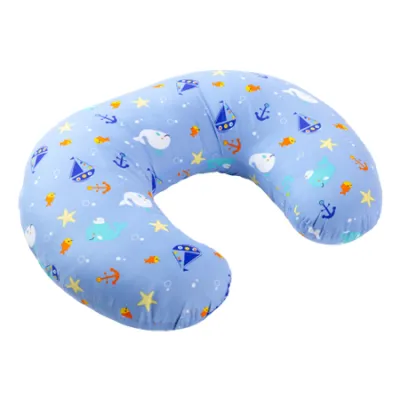
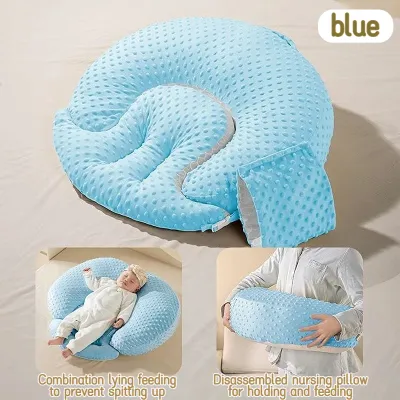
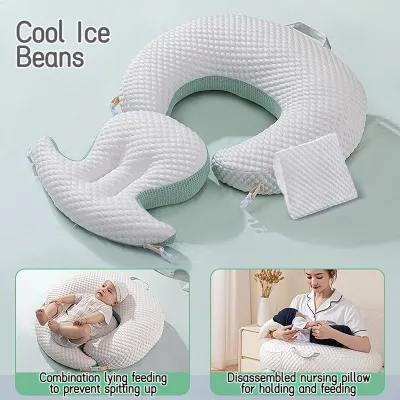
Prices are valid at publication and may change. Please refer to the product page for the latest price.
This specialized design is highly advantageous for specific feeding scenarios, such as when a newborn is struggling with a shallow latch or when parents are navigating the transition between breast and bottle feeding. For babies who experience nipple confusion or difficulty transitioning, the familiar shape and firm support of a contoured pillow can create a consistent feeding environment that reduces frustration. The physical elevation also assists babies who suffer from mild infant reflux, as keeping the head elevated during and immediately after feeding can help ease digestion.
However, a highly contoured pillow may not be necessary for every family. If your baby already latches easily and you have established a comfortable feeding routine, a standard flat or U-shaped nursing pillow may provide all the support you need. Standard pillows offer a broader, more uniform surface that accommodates various feeding positions, such as the football hold or cradle hold, without restricting the baby to a specific molded groove. Before investing in a specialized nipple-design pillow, assess whether your primary challenge is general physical fatigue—which a standard pillow can resolve—or specific positioning and latching difficulties, which are better addressed by a contoured design.
Key Design Features That Impact Latch and Comfort
The effectiveness of a contoured nursing pillow depends heavily on its physical dimensions, firmness, and structural integrity. The shape and placement of the breast-like contour must align naturally with your baby’s mouth when the pillow is buckled around your waist. If the contour is positioned too far to the side or is too low, it can force your baby into an awkward angle, straining their neck and hindering a deep latch. When evaluating different models, look for a design where the raised contour is positioned to support the baby’s head and neck while keeping their spine in a straight, neutral line.

Pillow firmness is another critical factor that directly impacts both safety and comfort. A pillow that is too soft will compress under your baby’s weight, causing them to sink into the cushion and roll inward toward your body. This sinking not only disrupts the latch but also poses a safety risk by potentially blocking the baby’s airway. A high-quality nursing pillow must be firm enough to maintain its shape and height throughout a feeding session, ensuring the baby remains elevated at breast level without requiring you to hunch forward.
Adjustability features are essential for accommodating different body types and feeding environments. Look for pillows equipped with adjustable waist straps and secure buckles that allow you to fasten the pillow tightly against your torso. This prevents the pillow from shifting or sliding away from your lap during a feeding session, which can create dangerous gaps between your body and the cushion. Some advanced designs also feature adjustable height inserts or modular foam layers, allowing you to customize the elevation as your baby grows and their positioning needs change.
The overall wrap-around support of the pillow should hug your waist comfortably without pinching or restricting your movement. A secure fit ensures that the weight of the baby is distributed evenly across your hips and lower back, rather than concentrating pressure on your shoulders and neck. If you are recovering from a cesarean delivery, a pillow with a soft, adjustable back support panel can help protect your incision site from accidental pressure while still providing the necessary stability for front-positioned feeding.
Material Safety and Daily Maintenance Requirements
Because nursing pillows come into direct contact with your baby’s delicate skin and are subject to frequent spills, spit-up, and leaks, material safety and ease of maintenance are paramount. The inner fill of the pillow must provide long-term structural support while remaining highly breathable. In warm and humid tropical climates, such as in the Philippines, heat retention can cause both mother and baby to sweat excessively during feeding sessions, leading to skin irritation and discomfort. Opt for inner materials like high-density, open-cell foam or breathable polyester fiberfill that allow air to circulate and resist trapping moisture.
The outer cover of the pillow must be crafted from hypoallergenic, skin-friendly fabrics that do not irritate sensitive newborn skin. Natural fibers like organic cotton or bamboo-derived viscose are excellent choices, as they are soft to the touch, highly absorbent, and naturally breathable. Avoid synthetic covers that feel rough or trap heat, as these can exacerbate infant heat rash and make feeding sessions uncomfortable. Ensure that any dyes or finishes used on the fabric are certified safe for infant contact, as babies frequently rest their faces directly against the pillow cover.
Daily maintenance requires a design that features a fully removable, machine-washable outer cover. The zipper or fastening mechanism should be recessed or covered by a fabric flap to prevent it from scratching your baby’s skin or snagging your clothing. It is highly recommended to choose a pillow that offers replacement covers, allowing you to use one while the other is in the wash. The inner core should also be easy to spot-clean or hand-wash, as liquid spills can occasionally penetrate the outer cover and lead to mold or mildew growth if left untreated in humid environments.
Before finalizing your purchase, carefully verify all manufacturer warnings, age or weight limits, and safe use instructions printed on the product label. Some pillows are designed strictly for the newborn stage, while others can be adapted for older infants as they learn to sit up or practice tummy time. Always adhere to the manufacturer’s specified weight limits to ensure the pillow’s internal structure does not degrade prematurely, which could compromise the support and safety it provides to your baby.
How to Build Your Shortlist Before Buying
To build a practical shortlist of contoured nursing pillows, begin by measuring your waist and comparing it to the strap lengths and dimensions of the models you are considering. A pillow that fits perfectly on one mother may be too tight or too loose on another, rendering the adjustable straps ineffective. Ensure the inner curve of the pillow matches your body shape so that there are no gaps where your baby could slip down between your lap and the cushion. If possible, test the fit of different styles while sitting in your preferred nursing chair to ensure the pillow does not clash with the armrests.
Next, assess the durability of the cover’s removal and washing process. Look for heavy-duty zippers and reinforced seams that can withstand weekly machine washing without fraying, shrinking, or losing their shape. A cover that shrinks even slightly in the wash can become incredibly difficult to stretch back over the firm inner core, which can warp the pillow’s shape and ruin the alignment of the nipple contour. Reading user manuals or product specifications online can help you verify if the cover requires air-drying or if it can be safely tumble-dried on low heat.
It is also wise to review the return and exchange policies of the retailer or manufacturer before making your purchase. Because every baby has a unique feeding style and every mother has a distinct anatomy, a pillow that looks perfect on paper may not work for you in practice. Choosing a seller that offers a flexible return window or a satisfaction guarantee allows you to try the pillow at home and return it if the contour does not align correctly with your baby’s latching position.
Finally, analyze verified buyer feedback on online marketplaces and specialty baby store websites, paying close attention to recurring complaints rather than overall star ratings. Look for specific mentions of strap slippage, foam degradation, or fabric pilling after repeated washes. If multiple reviews note that the adjustable buckle slips under the weight of the baby or that the contoured foam loses its firmness within a few weeks, it is a strong indication that the pillow may not provide the long-term reliability you need for your breastfeeding journey.
Frequently Asked Questions (FAQ)
Can a nipple-design pillow fix a poor latch?
While a contoured nursing pillow with a nipple design can significantly improve your baby’s positioning and alignment, it is not a cure for underlying latch issues. The pillow acts as a physical support tool to help you hold your baby at the correct height and angle, which can make it easier for them to take a deep latch. However, if your baby is struggling to latch due to anatomical factors such as a tongue-tie, or if you are experiencing persistent pain, cracked nipples, or low milk supply, a pillow alone will not resolve the problem.
If you experience ongoing latch difficulties or physical pain during feeding, you should stop relying solely on positioning aids and consult a qualified lactation specialist or pediatrician. Signs that indicate you need professional medical support include your baby failing to gain weight, consistently fussy behavior during feeds, or a pinching sensation that lasts throughout the feeding session. A lactation consultant can assess your baby’s oral anatomy and provide personalized guidance that goes beyond physical cushioning.
Is it safe to leave a baby sleeping on a nursing pillow?
No, it is never safe to leave a baby sleeping unsupervised on a nursing pillow, regardless of its shape or contour. Nursing pillows are designed strictly as active feeding supports and are not approved for infant sleep. The soft, contoured surface of a boob pillow poses a severe risk of suffocation or positional asphyxia if a baby rolls over, slumps down, or chin-tucks into the fabric, which can quickly block their airway.
To ensure your baby’s safety, always move them to a firm, flat sleep surface, such as a crib or bassinet, as soon as they fall asleep during or after a feeding session. Never leave an infant unattended on a nursing pillow, even for a few moments, and do not use these pillows inside a crib, playpen, or co-sleeper. Adhering to safe sleep guidelines is the most effective way to protect your baby from sleep-related accidents.

Community discussion
Share your experience or ask a question. Comments are reviewed before publication.