
Preparing a nursery for a newborn is an exciting milestone, but choosing the right furniture requires balancing safety, functionality, and style. A coordinated wooden crib and changing table set offers a cohesive look that simplifies your design process. However, before you fall in love with a specific aesthetic, you must evaluate how these pieces are constructed, how they fit into your home, and how they will serve your growing child. In tropical climates like the Philippines, where high humidity and temperature fluctuations can affect wooden furniture, selecting high-quality materials and finishes is especially critical for long-term durability and safety.
When shopping for a wooden crib for baby and a matching changing table, safety standards must always be your primary filter. Beyond the visual appeal of matching wood grains, you need to inspect structural elements like slat spacing, mattress support, guardrail heights, and the stability of the changing station. This guide outlines the essential safety checks, spatial considerations, material differences, and maintenance routines to help you build a safe, functional, and beautiful nursery.
Safety Standards and Structural Checks for Nursery Furniture
The safety of your newborn is the single most important factor when selecting nursery furniture. For the crib, start by measuring the distance between the side slats. The gap between slats must never exceed 6 centimeters to prevent your baby’s head or limbs from becoming trapped. Additionally, inspect the mattress fit within the crib frame; there should be no gap wider than two fingers between the edge of the mattress and the crib sides. Modern safety standards have banned the manufacture and sale of drop-side cribs due to structural failures that pose severe entrapment risks, so ensure the crib you choose features fixed sides on all four walls.
Products mentioned in this guide





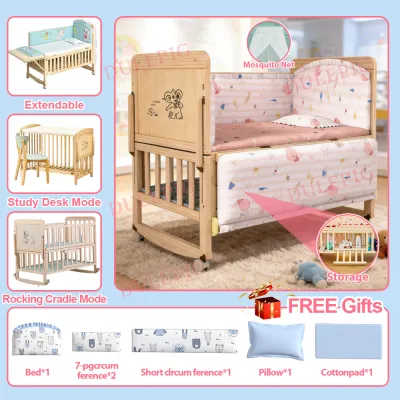
Prices are valid at publication and may change. Please refer to the product page for the latest price.
The changing table requires equally rigorous structural scrutiny. Look for a table that features sturdy guardrails on all four sides, with a minimum height of 5 centimeters to prevent your baby from rolling off. The changing pad must be secured to the table using a safety strap that anchors directly to the wooden frame rather than just the pad itself. Stability is paramount; gently shake the changing table in the showroom or upon delivery to ensure it does not wobble or tip under pressure.
Finally, examine the wood finishes and construction details of both pieces. Babies frequently explore their environment with their mouths, especially during teething phases, making non-toxic finishes non-negotiable. Verify that the manufacturer explicitly labels the paint, stain, or varnish as lead-free and non-toxic. Run your hands along every surface, corner, and edge of the furniture to check for splinters, rough patches, or sharp hardware. Every edge should be smoothly rounded to protect your baby’s delicate skin from accidental scratches.
Evaluating the Coordinated Set: Space, Workflow, and Longevity
A coordinated furniture set can elevate the look of your nursery, but it must fit comfortably within your physical space and support your daily routine. Before purchasing, measure your nursery dimensions carefully and map out a floor plan. You need to maintain a clear walking path and ensure there is at least 60 to 90 centimeters of clearance around both the crib and the changing table. This clearance allows you to navigate the room safely in the dark during late-night feedings and diaper changes. In many Philippine homes where bedrooms may be compact, choosing a set with a smaller footprint or a convertible design can prevent the room from feeling cramped and humid.

Your changing table is the command center for diapering, meaning its storage capacity directly impacts your daily workflow. Evaluate the shelving or drawer configuration beneath the changing surface. You need enough space to store diapers, wipes, swaddles, and changes of clothes within arm’s reach. The ideal setup allows you to keep one hand on your baby at all times while easily reaching for supplies with your other hand. If the changing table lacks sufficient storage, you may find yourself stepping away from the table, which creates a dangerous fall hazard.
Longevity is another major advantage of high-quality wooden sets. Look for a convertible crib that can transition as your baby grows. Many models convert from a newborn crib to a toddler bed, a daybed, and eventually a full-sized headboard and footboard. Similarly, evaluate whether the changing table can transition into a standard dresser or shelving unit once your child outgrows diapers. A changing table with a removable top barrier is highly versatile, allowing you to use the underlying chest of drawers well into your child’s school years.
Material Quality and Maintenance for Wooden Furniture Sets
The choice of wood determines both the durability and the maintenance requirements of your nursery set. Solid wood, such as mahogany, pine, beech, or rubberwood, is highly durable and offers excellent structural integrity. However, solid wood is heavy and can be sensitive to high humidity levels, which may cause the wood to expand, contract, or warp over time if not properly sealed. Engineered wood, such as high-density fiberboard (HDF) or furniture-grade plywood, is often more resistant to humidity-induced warping and is lighter to move. If you select engineered wood, verify that the manufacturer uses low-emission glues and meets strict safety standards for formaldehyde emissions.
The quality of the hardware holding the furniture together is just as critical as the wood itself. Look for heavy-duty metal bolts and screws rather than plastic connectors, which can degrade and crack over time. Changing tables and dressers must always include robust anti-tip wall anchors to secure the furniture to the wall, preventing accidental tipping if a toddler attempts to climb the drawers. Drawer glides should operate smoothly and feature built-in safety stops to prevent drawers from being pulled completely out of the frame.
Maintaining your wooden nursery set ensures its safety and preserves its appearance for years. Because wood reacts to environmental changes, make it a habit to check and tighten all joints, screws, and bolts every few months. To clean the furniture, avoid harsh chemical sprays or abrasive scrubbers that can strip the protective finish or leave behind chemical residues. Instead, wipe the surfaces with a soft, damp microfiber cloth and a mild, baby-safe soap solution, then dry the wood immediately with a clean towel to prevent moisture from soaking into the grain.
Building Your Shortlist: What to Verify Before Purchase
Before finalizing your purchase of a wooden crib and changing table set, there are several practical logistics to verify. Confirm that the manufacturer provides clear, step-by-step assembly instructions and that all necessary hardware is included in the packaging. If you are not confident in your assembly skills, inquire if the retailer offers professional assembly services, as incorrect assembly can compromise the structural safety of both the crib and the changing table.
Review the manufacturer’s warranty coverage in detail. A reliable warranty should cover structural defects, premature wood warping, and hardware failures for at least one to two years. Be sure to read the fine print to understand what actions, such as using unauthorized replacement parts or modifying the furniture, might void the warranty.
Finally, clarify the delivery timelines and return policies for bulky furniture sets. Coordinated sets are heavy and shipped in multiple large boxes, so confirm whether the delivery service includes carrying the items into your home or nursery room. Inspect all boxes upon arrival for signs of transit damage, and verify the retailer’s policy for replacing damaged or missing parts quickly so your nursery is fully prepared well before your newborn arrives.
Frequently Asked Questions (FAQ)
Is it better to buy a matching set or separate pieces?
Buying a matching set is generally the easiest way to ensure visual cohesion, as the wood species, grain pattern, and paint or stain finish will match perfectly. Sets are also frequently bundled at a slightly lower total price than purchasing the items individually. However, buying separate pieces offers greater flexibility if you have an irregularly shaped nursery or a limited budget. Purchasing separately allows you to invest more of your budget into a premium, long-lasting convertible crib while opting for a simpler, space-saving changing solution, such as a changing pad secured on top of an existing sturdy dresser.
When should I stop using the changing table?
You should stop using the changing table as soon as your baby reaches the manufacturer’s specified weight or height limit, which is typically around 13 to 15 kilograms. However, developmental milestones are often more critical than weight limits. You must stop using the changing table immediately once your baby begins to roll over actively, sit up, or attempt to pull themselves up. These mobility milestones make diaper changes on an elevated surface highly risky due to the danger of sudden falls. Once your baby becomes active, transitioning to diaper changes on a clean mat on the floor is the safest practice.

Community discussion
Share your experience or ask a question. Comments are reviewed before publication.