
Quick Answer: Key Features for Beginner Self-Feeders
When introducing your toddler to their first spoon and fork set, prioritize ergonomics, safety, and sensory comfort. The ideal starter set features short, chunky handles that accommodate a toddler’s natural palmar grasp, allowing them to hold the utensil securely without frustration. Look for shallow spoon bowls that prevent overfilling and gagging, alongside blunt, rounded fork tines that can pierce soft foods safely without injuring delicate gums.
Material safety is equally critical, requiring food-grade, toxin-free materials that can withstand frequent cleaning and sanitizing. Non-slip grips made of textured silicone or contoured plastic ensure the utensils stay in tiny hands even when wet or oily. By selecting a set tailored to these developmental needs, you support your child’s fine motor skills and foster confidence during their transition to independent eating.
Crucial Design Features for Little Hands
During the early stages of self-feeding, children do not possess the fine motor control required for a mature pencil-like grip. Instead, they rely on a palmar grasp, wrapping their entire fist around the handle. Utensils with long, slender handles are difficult for toddlers to balance, often leading to food spilling before it reaches their mouth. Short, bulbous, or spherical handles fit naturally into the hollow of a small palm, reducing the leverage needed to lift and direct the food.
Products mentioned in this guide
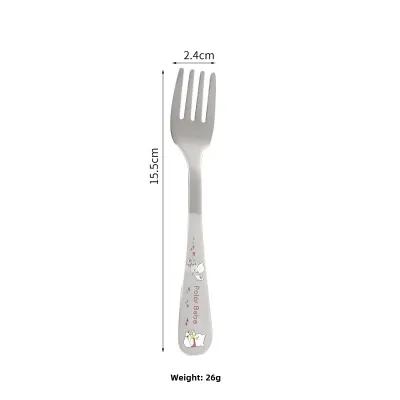
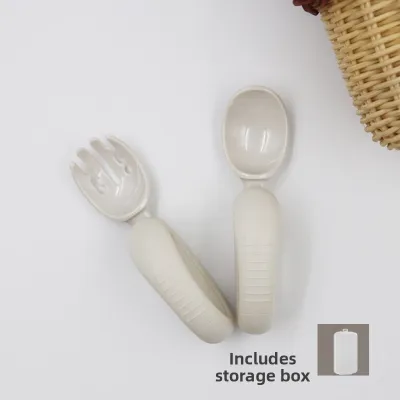

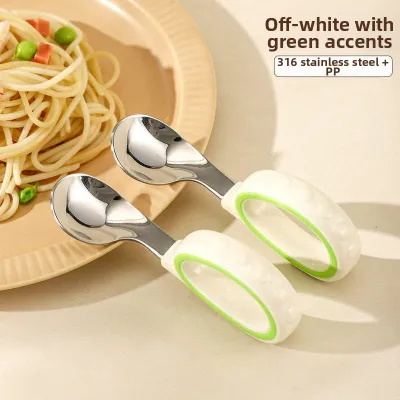
Prices are valid at publication and may change. Please refer to the product page for the latest price.

The depth and angle of the spoon bowl play a significant role in how easily a toddler can feed themselves. Deep spoon bowls often trap food, making it difficult for a beginner to clear the contents using only their upper lip. This can lead to frustration or cause the child to shove the spoon too far into their mouth, triggering the gag reflex. A shallow, wide bowl allows for easy access and encourages proper lip clearance. Furthermore, some training spoons feature slightly angled necks. These curved designs compensate for a toddler’s limited wrist rotation, helping them guide food directly into their mouth without needing to twist their arm awkwardly.
Fork tines require a delicate balance between safety and functionality. Standard adult forks have sharp, pointed tines that are dangerous for a toddler who is still developing hand-eye coordination. Conversely, if the tines are too thick, blunt, or flexible, they will fail to pierce even the softest foods, such as steamed carrots or banana slices. Look for forks with rounded, smoothed tines made of rigid materials like high-quality plastic or stainless steel. The tines should be spaced widely enough to allow easy cleaning but close enough to hold food securely without it slipping off during transit.
If a utensil is too heavy, it will quickly fatigue a toddler’s wrist, leading them to abandon the tool. However, a completely weightless plastic utensil can lack the sensory feedback a child needs to understand where the tool is in space. A well-balanced utensil often features a slightly weighted handle base. This bottom-heavy design helps keep the spoon bowl upright, minimizing spills as they navigate the distance between the plate and their mouth.
Finally, non-slip textures are indispensable for keeping utensils in active hands. Toddlers explore food with all their senses, meaning their hands are frequently covered in purees, oils, and water. Smooth plastic or polished metal handles can easily slip out of their grasp, leading to constant drops and mealtime disruptions. Look for handles featuring textured silicone sleeves, raised ridges, or ergonomic finger contours. These tactile features provide the necessary friction for a secure hold, boosting your child’s confidence as they practice their new skills.
Material Safety and Label Checks
When shopping for toddler tableware, verifying material safety is a non-negotiable step. Look for explicit labels indicating that the product is free from harmful chemicals such as Bisphenol A (BPA), polyvinyl chloride (PVC), phthalates, and lead. In the Philippines, where many baby products are imported, relying on vague marketing claims is not enough. Parents should look for compliance with recognized international standards, such as food-grade certifications from the European Union (LFGB) or the United States Food and Drug Administration (FDA).
Temperature tolerance is another critical factor to verify on the product label. Toddler utensils undergo rigorous cleaning routines, including exposure to high-heat dishwashers, steam sterilizers, and boiling water. Some low-grade plastics can warp, crack, or leach chemical compounds when subjected to high temperatures. Always check the manufacturer’s instructions to see if the utensils are dishwasher-safe, microwave-safe, or sterilizer-compatible. If a product label advises against high-heat exposure, it is best to reserve those utensils for hand-washing with mild soap and lukewarm water to preserve their structural integrity.
Choking hazards must be carefully assessed, particularly with mixed-material utensils. Sets that combine different materials, such as silicone tips bonded to plastic or wooden handles, require close inspection. Over time, repeated washing and exposure to moisture can weaken the adhesive or mechanical joints holding these parts together. In humid tropical climates, moisture can easily become trapped within these tiny seams, creating a breeding ground for mold and bacteria. Before each use, parents should gently tug on the different parts of the utensil to ensure they remain securely attached and show no signs of separation or wear.
Sensory preferences can significantly influence whether a toddler accepts or rejects a utensil. Metal utensils, while durable, conduct temperature rapidly and can feel uncomfortably cold or hot against sensitive gums and teeth. Soft, food-grade silicone is highly popular because it remains neutral in temperature and is gentle on teething gums. However, some toddlers dislike the flexible, slightly sticky texture of silicone and prefer the smooth, rigid feel of high-quality, BPA-free plastic. Observing how your child reacts to different textures during play or early feeding sessions can guide you toward the material they will find most comfortable.
Types of Utensil Sets to Consider for Different Stages
As your child progresses from purees to complex textures, their utensil needs will evolve. Understanding the different types of sets available allows you to match the tool to your toddler’s current developmental stage.
Full Silicone Sets
Made entirely of soft, flexible, food-grade silicone, these utensils are incredibly gentle on sensitive, teething gums. Many starter spoons in this category feature textured heads or micro-ridges designed to hold purees and mashed foods through surface tension alone, eliminating the need for complex scooping motions. Because they are soft, there is zero risk of injury if a child accidentally pokes themselves. However, their flexibility means they are not suitable for piercing solid foods or scooping heavier, denser meals.
Silicone-Tipped with Rigid Cores
Silicone-tipped utensils with rigid inner cores are an excellent transition for toddlers who have mastered the basic motion of bringing a spoon to their mouth but still need a soft texture. These utensils feature a sturdy nylon, plastic, or metal frame fully encased in soft silicone. This design provides the safety of silicone while offering the structural rigidity needed to scoop heavier foods like oatmeal or mashed potatoes. The firm core prevents the spoon bowl from bending under pressure, giving the toddler more control.
Stainless Steel with Ergonomic Grips
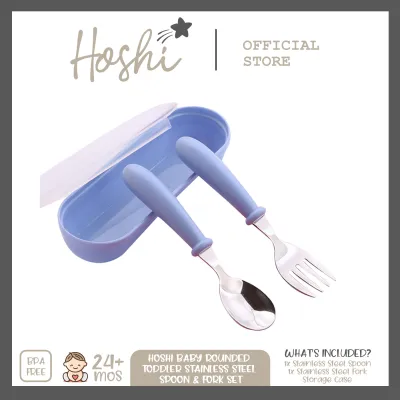
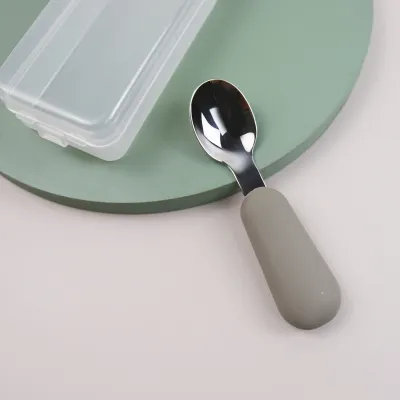
As toddlers approach their second year, their fine motor skills improve significantly. At this stage, they are ready to transition to utensils that mimic adult cutlery but are scaled down for small hands. Stainless steel sets with thick, easy-to-grip silicone or plastic handles offer the perfect balance of durability and functionality. The metal spoon bowls are thin enough to scoop food efficiently, and the blunt stainless steel fork tines can easily pierce a wide variety of textures. These sets are highly durable, stain-resistant, and designed to last.
Sensory and Exploratory Sets
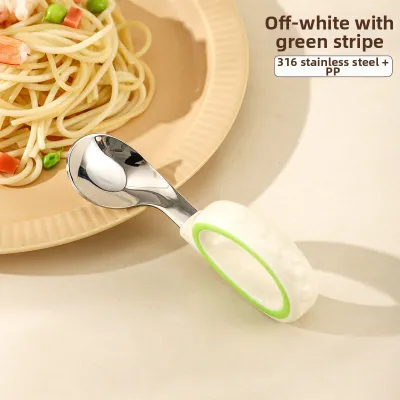
Some toddlers benefit from utensils designed specifically to stimulate tactile learning. These sets often feature unique shapes, such as circular handles, loop grips, or playful designs that encourage exploration. Some exploratory spoons have open, slotted bowls that allow purees to pass through, helping the child understand the relationship between the utensil and the food. These sets are particularly helpful for children with sensory processing sensitivities or those who show reluctance during mealtimes, turning eating into an interactive experience.
Building Your Shortlist: A Pre-Purchase Checklist
Creating a shortlist of potential utensil sets helps streamline your buying decision, ensuring you select a product that is safe, practical, and suited to your household routine. Use this step-by-step checklist when browsing online marketplaces or visiting local baby boutiques.
- Verify Age Recommendations: Always check the manufacturer's age guidelines printed on the packaging. A set designed for an eighteen-month-old may have tines or bowls that are too large or rigid for a six-month-old beginner.
- Confirm Material Safety: Look for explicit certifications on the label. Ensure the product is certified BPA-free, phthalate-free, and made from food-grade materials. Avoid products with vague safety claims that lack official certification details.
- Assess Cleaning Requirements: Match the utensil's care instructions with your daily routine. If you rely on a dishwasher or steam sterilizer, verify that all components of the set can withstand high temperatures without warping or degrading.
- Inspect Seams and Joints: If choosing a mixed-material set, examine the joints where different materials meet. Ensure there are no deep crevices where food particles or moisture can accumulate, especially in humid environments where mold grows quickly.
- Evaluate Grip and Ergonomics: Look for non-slip features such as textured silicone sleeves, ridges, or contoured handles. Ensure the handle is short and thick enough to accommodate a palmar grasp comfortably.
- Check Return and Warranty Policies: Because toddlers can be highly selective about textures and shapes, review the return policy of the retailer. Some brands offer satisfaction guarantees, allowing you to return or exchange the product if your child rejects it.
Frequently Asked Questions (FAQ)
When should I introduce a fork alongside a spoon?
You can introduce a toddler-safe fork as soon as your child shows interest in piercing food or begins to master the scooping motion with a spoon, typically around 12 to 15 months of age. Look for signs of developmental readiness, such as the ability to bring objects directly to their mouth without dropping them and an interest in using their fingers to pick up small, solid pieces of food. Introducing the fork alongside the spoon allows them to explore different mechanics, though they may continue to rely primarily on their hands or spoon for most of the meal.
Are angled or curved utensils better for beginners?
Angled or curved utensils can be highly beneficial for beginners who are still developing wrist rotation and hand-eye coordination. These specialized designs allow toddlers to bring food directly to their mouths using a straight, forward motion, bypassing the need to twist their wrists. However, while they reduce frustration in the short term, they can create a slight learning curve when transitioning to standard, straight utensils later on. Many parents find success using angled utensils as a temporary training tool before moving to traditional straight designs.
How do I clean and maintain mixed-material utensil sets?
Mixed-material utensils, such as those combining wood, silicone, or metal, require careful maintenance to prevent bacterial growth and material degradation. Always wash these items immediately after use, paying close attention to the seams and joints where different materials meet, as food particles and moisture can easily become trapped. Avoid soaking mixed-material utensils in water for extended periods, as this can weaken adhesives and cause wood to warp or split. Allow them to air-dry completely in a well-ventilated area, which is particularly important in humid tropical climates to prevent mold.

Community discussion
Share your experience or ask a question. Comments are reviewed before publication.