
Setting up a nursery for your baby girl is a deeply personal and exciting milestone. As you begin planning the layout, the crib and changing table will undoubtedly stand out as the two most critical pieces of furniture you will select. These items serve as the anchors of the room, hosting thousands of hours of sleep, diaper changes, and quiet bonding moments over the coming years.
However, walking into a showroom or browsing online marketplaces can quickly become overwhelming. With countless styles, configurations, and price points available, it is easy to lose sight of what truly matters. To make an investment that protects your child and serves your family efficiently, you must look beyond surface aesthetics and evaluate structural integrity, safety certifications, and long-term adaptability.
By focusing on a systematic evaluation process, you can cut through the marketing noise. The ideal furniture set should not only complement your design vision but also withstand the practical demands of daily caregiving. This guide will walk you through the essential safety standards, functional features, spatial requirements, and design choices to help you build a reliable shortlist for your baby girl’s nursery.
Products mentioned in this guide
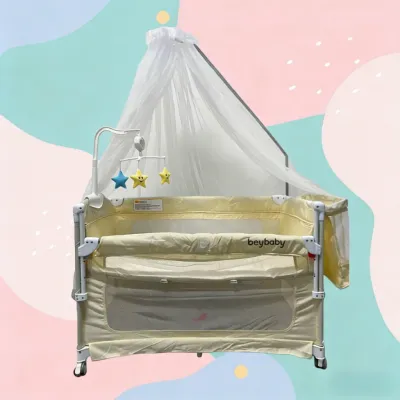

Prices are valid at publication and may change. Please refer to the product page for the latest price.
Safety First: Non-Negotiable Standards for Cribs and Changing Tables
When it comes to nursery furniture, safety is the absolute foundation of your decision. Babies spend unsupervised hours sleeping in their cribs, making it vital to verify that every component meets rigorous safety benchmarks. Before falling in love with a specific design, you must inspect the physical specifications of the crib to ensure it creates a secure sleep environment.
Start by examining the spacing of the crib slats. The distance between individual slats must be narrow enough to prevent a baby’s head or limbs from becoming trapped. A reliable way to verify this is to check if a standard 6-centimeter sphere can pass between the slats; if it can, the spacing is too wide and poses a hazard. Additionally, ensure that all slats are completely secure, with no signs of splitting or loose joints.
The fit of the mattress is equally critical to prevent accidental entrapment. When you place a standard crib mattress inside the frame, there should be virtually no gap between the edge of the mattress and the crib walls. You can test this using the two-finger rule: if you can fit more than two fingers between the mattress and the crib frame, the mattress is too small, creating a dangerous space where a baby could slip and become wedged.
As your baby girl grows, her physical capabilities will change rapidly. A crib with adjustable mattress heights is essential for preventing falls. In the early weeks, a higher mattress setting allows you to lay your newborn down gently without straining your back. However, the moment your baby shows signs of sitting up, rolling over, or pulling herself up, you must lower the mattress to its lowest setting to keep her safely contained within the high protective walls of the crib.
Changing tables require an equally strict safety assessment, as they elevate your baby well above the ground. Look for a changing table or dresser combo that features sturdy, raised edge guards on all four sides to prevent rolling. The changing pad itself should be contoured and equipped with a secure safety strap that buckles over the baby’s torso. Never rely on the strap alone; caregiver supervision must remain constant during every diaper change.
Structural stability is paramount, especially in homes with tiled or polished wooden floors. A top-heavy changing table or dresser can easily tip over if a child attempts to climb the drawers. Always verify that the furniture set includes a heavy-duty anti-tip anchoring kit, and commit to securing the unit firmly to the wall studs immediately upon installation.
Finally, pay close attention to the chemical safety of the materials. Babies frequently explore their environment with their mouths, particularly when teething on crib rails. Inspect the product packaging, manufacturer labels, or online specifications to verify that the paint, stains, and finishes are certified non-toxic, lead-free, and low in volatile organic compounds (VOCs). This is especially important in tropical climates where high humidity and closed, air-conditioned rooms can trap airborne chemical emissions.
Evaluating Functionality and Long-Term Usability
A beautiful nursery set is only as good as its daily usability. Diaper changes, outfit swaps, and middle-of-the-night feedings require a highly functional setup where everything you need is within arm’s reach. When evaluating changing tables, pay close attention to the storage configuration and how it aligns with your daily routine.

Open shelving units offer the advantage of immediate visibility and quick access. During a messy diaper change, being able to grab a fresh diaper, a pack of wipes, or a tube of barrier cream with one hand is incredibly convenient. However, open shelves tend to collect dust quickly and offer no protection against the high humidity common in tropical environments, which can compromise the hygiene of stored items.
In contrast, closed drawers keep baby clothes, bedding, and extra supplies clean, dry, and organized. Drawers also hide the inevitable clutter of baby care products, maintaining a serene aesthetic in the nursery. The ideal setup often combines both: a top open shelf or caddy for immediate daily essentials, paired with deep drawers below for bulk storage and clothing.
Ergonomics should also play a major role in your choice of changing table height. A surface that is too low forces you to bend forward repeatedly, leading to severe back strain over months of frequent changes. Test the height of the changing surface in relation to your own body; it should ideally align near your waist or hip level, allowing you to stand comfortably with your shoulders relaxed.
Because babies outgrow their nursery furniture surprisingly fast, long-term usability is a key factor in maximizing your investment. Look for a convertible crib that can adapt to your daughter’s developmental stages. Many modern cribs offer 3-in-1 or 4-in-1 conversion options, transitioning from a baby crib to a toddler bed, a daybed, and eventually a full-size headboard and footboard.
Before purchasing a convertible model, always clarify what is included in the box. Many manufacturers advertise convertibility but require you to purchase the toddler guardrails and full-size bed conversion kits separately. Buying these kits upfront alongside the crib is highly recommended, as manufacturers frequently discontinue specific color finishes and models by the time your child is ready for the transition.
The durability of the construction materials determines whether the set will survive these transitions. Solid hardwoods, such as rubberwood, beech, or mahogany, offer superior longevity and structural strength compared to cheap particleboard. If you select engineered wood or MDF, verify that all edges are completely sealed with high-quality laminates to prevent moisture absorption, swelling, and warping in humid tropical weather.
Do not overlook the quality of the hardware. Open and close the drawers of display models repeatedly to test the glides. Look for smooth, ball-bearing drawer glides with safety stops that prevent the drawers from being pulled completely out of the frame. Soft-close mechanisms are an excellent bonus, preventing pinched fingers and ensuring that closing a drawer does not wake a sleeping baby.
Space Planning and Dimension Checks
Before committing to a specific crib and changing table set, you must carefully measure your nursery space. A set that looks perfectly proportioned in a spacious retail showroom can easily overwhelm a standard residential bedroom, leaving you with cramped walkways and restricted movement.
Start by deciding between a compact combo unit and separate freestanding pieces. A combo unit, which features a changing table attached directly to one end of the crib, is an exceptional space-saver for smaller rooms. However, these units are heavy, difficult to rearrange, and offer less flexibility once your child outgrows the changing portion. Freestanding pieces require more floor space but allow you to position the crib and changing table on opposite walls, distributing the visual weight of the furniture.
When measuring the room, do not just focus on the static footprint of the furniture. You must calculate the clearance space required for daily operations. Ensure there is ample room to fully extend every drawer and open any wardrobe doors without hitting the crib or blocking your path. You also need comfortable standing room—at least 60 to 90 centimeters of clear floor space—directly in front of the changing table so you can work without feeling squeezed.
The physical placement of the furniture within the room layout is critical for safety and comfort. Avoid placing the crib directly under or adjacent to a window. Windows pose multiple hazards, including direct tropical sunlight that can cause overheating, drafts from sudden weather changes, and dangerous cords from blinds or curtains that present a strangulation risk.
Keep the crib away from heavy wall decor, floating shelves, or framed pictures that could fall during minor tremors or structural vibrations. Additionally, ensure the crib is positioned far enough from electrical outlets, baby monitor cords, and air conditioning units to prevent your growing baby from reaching dangerous items or experiencing direct, cold drafts. Maintain clear, unobstructed pathways from the crib to the door to ensure quick access during nighttime check-ins or emergencies.
Design and Aesthetic Considerations for a Baby Girl's Nursery
Creating a beautiful, welcoming space for your baby girl is one of the most enjoyable aspects of preparing for her arrival. While it is tempting to lean into highly specific, whimsical themes or bright pink color schemes, choosing a versatile design foundation will save you time and money as your daughter grows.
Opting for neutral base finishes for the large furniture pieces is a highly practical strategy. Warm whites, soft grays, cream tones, or natural wood finishes provide a timeless backdrop that can easily adapt to changing tastes. You can introduce feminine touches, color, and personality through easily replaceable elements like crib sheets, curtains, wall decals, rugs, and storage baskets. As your baby girl transitions into a toddler and young child, you can update the room’s theme without needing to replace expensive furniture.
The quality and durability of the furniture’s finish are just as important as the color. Nursery furniture is subjected to frequent spills, spit-up, and cleaning solutions. Look for high-quality, multi-layered painted or stained finishes that resist chipping and scratching. A semi-gloss or satin finish is generally easier to wipe clean than a flat matte finish, which tends to hold onto oils and smudges.
In tropical regions, moisture resistance is a key factor in finish durability. Poorly finished wood can trap humidity, leading to mold growth or peeling paint. Ensure that all surfaces, including the undersides of shelves and the interiors of drawers, are smoothly finished and sealed to create an effective barrier against moisture.
When evaluating the design details, balance aesthetics with practical safety. Ornate carvings, deep grooves, and intricate scrollwork can look stunning, but they also serve as major dust traps that require constant, detailed cleaning to prevent allergy triggers. Furthermore, ensure that any decorative hardware, such as drawer knobs or handles, has smooth, rounded edges with no sharp points or narrow gaps that could snag your clothing or scratch your baby’s delicate skin.
Building Your Shortlist: A Pre-Purchase Checklist
With a clear understanding of safety, functionality, and design, you are ready to build your shortlist. Having a structured verification process ensures that you do not overlook critical details when comparing different brands and models online or in physical retail stores.
Begin your evaluation by checking for physical safety labels and certifications on the product packaging or manual. Verify that the crib and changing table comply with recognized international safety standards, such as those from ASTM International or the Consumer Product Safety Commission (CPSC). If shopping online, look for clear close-up photos of these safety labels or contact the seller directly to request verification.
Next, perform a thorough dimensional check. Map out the exact dimensions of the crib and changing table on your nursery floor using painter’s tape. This physical representation will help you visualize the remaining floor space and ensure that all doors, drawers, and walkways have adequate clearance.
When you are ready to contact retailers or visit a showroom, prepare a list of targeted questions to ask the sales representatives. Inquire about the specific warranty coverage, ensuring it covers structural defects and hardware failures for at least one year. Ask about return policies, delivery timelines, and whether professional assembly services are available. Professional assembly is highly recommended for heavy, solid wood furniture sets, as incorrect home assembly can compromise the structural safety of the crib.
Be vigilant for immediate red flags when inspecting display models or reading customer reviews. Wobbly joints, rough or un-sanded wooden edges, drawers that stick or screech when opened, and vague material descriptions (such as “wood materials” instead of specifying solid wood or MDF) are clear indicators of poor quality.
Finally, calculate the total cost of ownership in ₱. The initial price tag of a furniture set can be misleading. Be sure to factor in the cost of a high-quality crib mattress, any necessary toddler bed conversion rails, the changing pad, delivery fees, and assembly charges. Comparing the complete, all-inclusive cost in ₱ will help you make an accurate budget comparison and choose a set that offers genuine, long-term value for your growing family.
Frequently Asked Questions (FAQ)
Is it better to buy a combo crib and changing table or separate pieces? (FAQ)
Choosing between a combo unit and separate pieces depends primarily on your nursery’s floor plan and your long-term storage needs. A combo unit is highly efficient for compact rooms, as it integrates the changing surface and shelving directly onto the crib frame, reducing the overall footprint. This option is often more budget-friendly upfront in ₱ compared to buying two individual pieces of furniture.
However, freestanding pieces offer far greater flexibility. Separate furniture allows you to rearrange the nursery layout as your child grows, and a freestanding changing table or dresser can easily be repurposed as a standard bedroom dresser, toy storage, or a bookshelf once your baby outgrows diapers. If your budget and room dimensions allow, separate pieces generally provide better long-term utility.
How long can my baby safely use the changing table? (FAQ)
Most elevated changing tables are designed to support babies up to a specific weight limit, typically ranging between 13 and 15 kilograms. However, you must always verify the exact weight capacity specified in your product’s instruction manual, as limits vary by design and material.
Beyond weight, your baby’s physical development is the most critical factor in determining when to stop using an elevated changing surface. Once your baby girl reaches mobility milestones—such as rolling over actively, sitting up independently, or attempting to pull herself up—the risk of accidental falls increases dramatically. At this stage, even with safety straps and constant supervision, it is safest to transition to changing diapers on a clean pad placed directly on the floor.

Community discussion
Share your experience or ask a question. Comments are reviewed before publication.