
Starting your baby on solid foods is an exciting milestone that marks a transition in their physical development and sensory exploration. As you prepare to introduce purees, mashed fruits, and infant cereals, having the right tools on hand is essential for a smooth and hygienic experience. A baby spoon with a protective case is a highly practical investment, especially for families who need to feed their little ones while running errands, traveling, or visiting relatives. However, not all baby spoons are created equal, and a protective case is only useful if it is designed to keep the utensil truly sanitary. To make an informed choice, you must look beyond attractive colors and marketing buzzwords, focusing instead on material safety, ergonomic design, case ventilation, and long-term durability.
Essential Safety and Material Checks
When selecting any feeding utensil, your primary concern must be the safety and chemical integrity of the materials that enter your baby’s mouth. Because infants frequently chew on their spoons to soothe teething gums, the materials must be completely free of harmful substances. Look for clear product labels indicating that the spoon is made from 100% food-grade silicone or high-quality, BPA-free plastic. Avoid products that do not explicitly state their material composition on the packaging or the manufacturer’s official website. It is also wise to verify that the product complies with recognized international safety standards for children’s feeding products, which are often indicated by compliance marks on the packaging.
Beyond chemical safety, you must carefully inspect the physical structure of the spoon to prevent choking hazards. Examine the joint where the soft spoon tip meets the firmer handle. In many multi-material spoons, this joint can weaken over time, potentially allowing the tip to detach during use. Choose spoons with a solid, unified construction or those with highly secure, molded joints that do not flex or gap when pulled. Avoid spoons with small decorative elements, detachable characters, or loose parts on the handle, as these can easily break off and pose an immediate danger to an infant.
Products mentioned in this guide
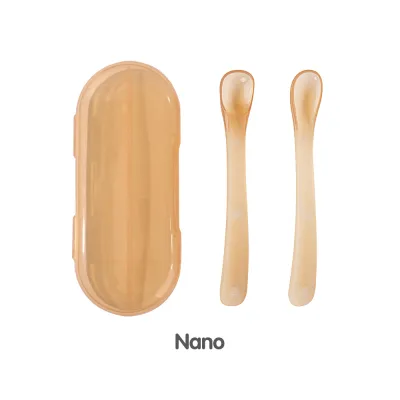
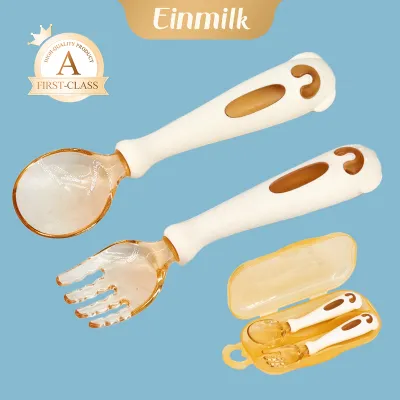
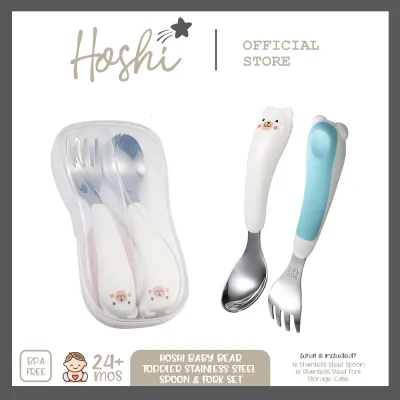
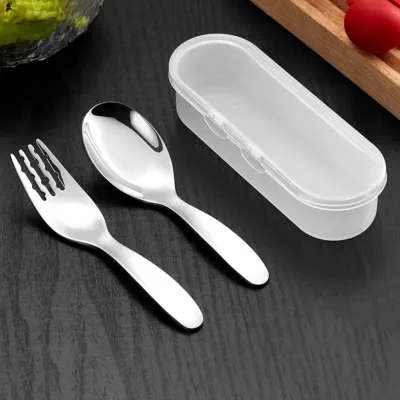
Prices are valid at publication and may change. Please refer to the product page for the latest price.
Always check the manufacturer’s age and developmental stage recommendations before purchasing. Spoons designed for infants starting solids at around six months of age are significantly different from those intended for older toddlers who are practicing self-feeding. A spoon that is too large or has sharp edges can cause discomfort or injury to a young baby’s sensitive gums. By aligning the product specifications with your baby’s current age and physical readiness, you ensure a safer and more comfortable introduction to solid foods.
Spoon Design Features for Early Feeders
The anatomical structure of an infant’s mouth requires a spoon specifically designed to accommodate their developing oral motor skills. When babies first transition from breast milk or formula to solid foods, they are still adapting to the physical sensation of swallowing from a utensil. A spoon bowl that is too deep or too wide can overwhelm their small mouth, trigger a strong gag reflex, or hold more food than they can safely manage. Look for a spoon with a shallow, narrow bowl that allows your baby to easily clear the food using their upper lip, promoting natural swallowing patterns.

The texture and flexibility of the spoon tip play a crucial role in protecting your baby’s delicate oral cavity. Soft, flexible silicone tips are highly recommended for early feeders because they are gentle on sensitive, teething gums and prevent accidental bruising if the baby suddenly moves during a feeding session. However, while the tip should be soft, the handle must offer sufficient rigidity. A firm, ergonomically shaped handle provides the caregiver with the control needed to guide the spoon smoothly, preventing spills and ensuring a steady hand during those initial, messy feeding attempts.
Many modern baby spoons feature heat-sensitive, color-changing technology designed to warn parents if the food is too hot. While this feature can be a helpful visual aid, it has distinct limitations and safety conditions that you must understand. The color-changing mechanism can degrade over time, especially after repeated exposure to high sterilization temperatures or UV light. Therefore, you should never rely solely on the spoon’s color change to determine food safety. Always manually test the temperature of the food on the inside of your wrist before offering it to your baby to prevent painful burns.
Evaluating the Protective Case for Hygiene and Travel
A protective case is a valuable accessory for maintaining hygiene on the go, but its design must be carefully evaluated to ensure it does not inadvertently compromise cleanliness. In tropical climates characterized by high humidity, such as the Philippines, trapped moisture inside a sealed container creates an ideal breeding ground for mold, mildew, and harmful bacteria. To prevent this, look for a protective case that features built-in ventilation holes. These small openings allow air to circulate, helping any residual moisture on the spoon to evaporate safely even when the case is closed inside a diaper bag.
The mechanical design of the case’s closure system is another critical factor for practical daily use. A high-quality case should feature a secure, durable latching mechanism, such as a robust snap-fit or a reliable slide lock, that will not accidentally pop open when jostled inside a crowded bag. Inspect the hinge of the case as well; living hinges made of thin plastic can easily crack or split after repeated opening and closing, rendering the entire case useless. A sturdy, pinned hinge or a reinforced flexible joint will offer much better longevity.
Finally, examine the interior design of the case to ensure it can be cleaned thoroughly without hassle. Avoid cases with intricate internal structures, deep crevices, or sharp corners where food residue, dust, or moisture can become trapped. A smooth, rounded interior allows you to easily wipe down or wash the case, ensuring that the environment housing your baby’s spoon remains genuinely sanitary. If the case itself cannot be easily sanitized, it defeats the purpose of protecting the utensil from external contamination.
Building Your Shortlist: What to Verify Before Buying
When you are ready to purchase a baby spoon with a case, building a reliable shortlist requires careful verification of product quality and seller credibility. Whether you are shopping in physical baby boutiques or browsing online marketplaces, do not rely solely on polished product photos and promotional descriptions. Take the time to read actual user reviews, paying close attention to feedback regarding the long-term durability of the case hinges, the flexibility of the spoon tip, and whether the materials retain strong food odors or stains. Real-world feedback often reveals practical limitations that are not mentioned in the manufacturer’s description.
Evaluating the price-to-value ratio in ₱ is also essential for making a smart purchase. While it may be tempting to opt for the cheapest available option, extremely low-priced feeding sets often compromise on material safety, structural integrity, or case durability. Consider the overall value of the package: does it include multiple spoons, a highly durable case, or other useful accessories? Investing a bit more in a reputable brand that uses certified food-grade materials and offers a robust, ventilated case will save you money in the long run by avoiding frequent replacements.
To protect your baby’s health, always prioritize buying from verified sellers, official brand stores, or reputable local retailers. Avoid unverified listings on e-commerce platforms that lack clear manufacturer details, ingredient lists, or safety compliance statements. If a seller cannot provide clear information about where the product was manufactured or what safety standards it meets, it is best to remove that option from your shortlist. A trustworthy manufacturer will always be transparent about their materials and safety testing.
Cleaning and Maintenance for Long-Term Safety
Proper cleaning and maintenance are vital to preserving the hygiene and structural integrity of both the baby spoon and its protective case. Always consult the manufacturer’s instructions regarding specific cleaning methods, as different materials have varying tolerances for heat and chemical exposure. While many silicone spoons can withstand high-temperature sterilization, boiling, or top-rack dishwasher cycles, the accompanying plastic case may warp or degrade under the same conditions. Knowing the maximum temperature thresholds for each component prevents accidental damage and ensures thorough sanitization.
Regularly inspect both the spoon and the case for signs of wear and tear, and be prepared to stop using them immediately if you detect any damage. Over time, repeated chewing can cause silicone tips to develop small tears or deep scratches, which can harbor bacteria that regular washing cannot remove. Similarly, a cracked plastic handle or a compromised case hinge can create sharp edges or allow contaminants to enter. If you notice any structural degradation, discoloration that does not wash out, or a persistent unpleasant odor, discard the item and replace it to ensure your baby’s safety. If your baby experiences persistent feeding difficulties, gagging, or discomfort during meals, stop using the utensil and consult a pediatrician or a pediatric feeding specialist for professional guidance.
After washing, always allow both the spoon and the case to air-dry completely in a well-ventilated area before sealing them together. Placing a damp spoon inside a closed case, even one with ventilation holes, can still encourage fungal growth if left in a dark diaper bag for an extended period. By ensuring everything is bone-dry before storage, you maintain a clean, safe feeding environment for your little one’s next meal.
Frequently Asked Questions (FAQ)
When should I transition from a baby spoon to a regular toddler spoon?
You can begin transitioning your child to a regular toddler spoon when they demonstrate increased grip strength, improved hand-eye coordination, and a strong desire for self-feeding independence. Look for signs such as your baby attempting to grab the spoon from your hand, successfully bringing an empty spoon to their mouth, or showing frustration when being fed. When making the switch, consult the manufacturer’s age and size guidelines on toddler utensils to ensure the new spoon fits their larger grip and mouth size comfortably.
Are silicone spoons always better than plastic for first solid foods?
Neither material is universally superior, as both silicone and plastic have distinct trade-offs that depend on your specific needs and the product’s design. Silicone is highly flexible, gentle on sensitive gums, and exceptionally heat-resistant, making it excellent for early feeding and easy sterilization, though it can sometimes retain food stains and odors. Food-grade plastic spoons are often firmer, providing better control for caregivers, and are highly durable, but they lack the soft cushioning of silicone. Ultimately, the most important factor is verifying that whichever material you choose meets official food-grade safety standards and is completely free of harmful chemicals.

Community discussion
Share your experience or ask a question. Comments are reviewed before publication.