
Quick Answer: Is the Unilove Materna Right for You?
Choosing a breast pump in the Philippines involves balancing your daily schedule, your milk supply goals, and your budget. While the Unilove Materna has gained attention as an accessible option for local mothers, determining if it is the right fit for your specific breastfeeding journey requires looking closely at its design, features, and limitations. There is no single breast pump that serves as a perfect solution for every parent, as individual physical comfort and daily routines vary widely.
A standard personal electric pump like the Unilove Materna typically excels if you need a reliable device for daily home use, moderate portability, and routine maintenance of an established milk supply. It offers a practical middle ground for mothers who pump a few times a day and have access to a stable seating area. However, it may not be the ideal choice if you require hospital-grade suction to address severe supply issues, or if your active lifestyle requires a completely hands-free, wearable design that fits entirely inside your bra.
Core Specifications to Check on the Unilove Materna
Before purchasing any breast pump, it is essential to verify the technical specifications listed on the product packaging, user manual, or official brand listings. These details directly impact your daily comfort, the efficiency of your pumping sessions, and the overall longevity of the device.
Products mentioned in this guide
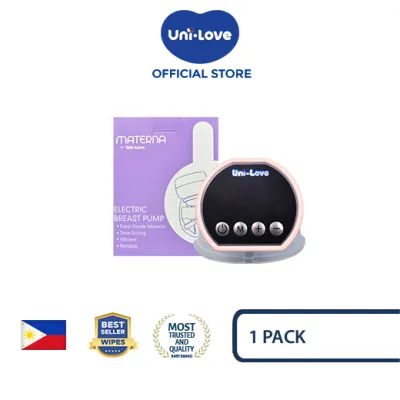
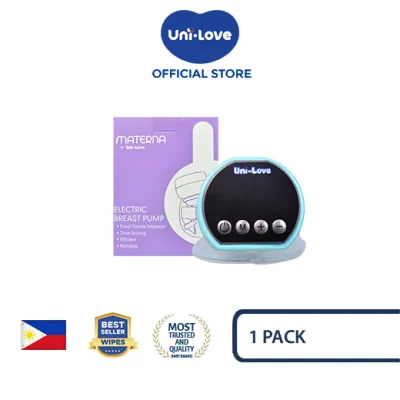
Prices are valid at publication and may change. Please refer to the product page for the latest price.

Suction and Modes
When evaluating the Unilove Materna, check the number of expression modes and the range of adjustable suction levels. Most modern personal electric pumps offer at least two distinct modes: a stimulation mode and an expression mode. The stimulation mode uses fast, shallow cycles to mimic a baby’s initial latch and trigger the letdown reflex. The expression mode features slower, deeper draws to maximize milk flow. Verify that the pump offers multiple adjustable levels within these modes so you can customize the strength to your personal comfort threshold, as excessive suction can cause tissue damage and actually decrease milk output.
Flange Compatibility
Flange fit is one of the most critical factors in successful milk expression. Check the standard flange size included in the box, which is commonly 24mm or 28mm. Because nipple sizes vary greatly, you must verify whether the manufacturer offers compatible silicone inserts or alternative flange sizes. Using a flange that is too large or too small can lead to friction, pain, and inefficient emptying of the breast. If the brand does not provide alternative sizes, check if the pump shields are compatible with standard third-party silicone inserts available on local online marketplaces.
Power and Portability
Consider how and where you plan to use the pump. Check whether the model features a built-in rechargeable lithium-ion battery or if it requires a constant connection to a USB power source or wall outlet. For mothers in the Philippines, a built-in rechargeable battery is highly practical, especially when managing frequent travel or potential power interruptions. Look at the expected runtime per full charge, which is ideally expressed in the number of 20-minute pumping sessions it can support, and check the physical weight of the motor unit to ensure it fits comfortably in your diaper bag.
Noise Level and Cleaning
If you plan to pump during the night or while working in an office, motor noise is a major consideration. Check the manufacturer’s specifications for decibel levels, aiming for a quiet motor that will not disturb a sleeping baby. Additionally, review the cleaning instructions in the user manual. Verify which parts are dishwasher-safe and check the sterilization temperature limits. In a warm, humid tropical climate, ensuring that all parts can be thoroughly washed, sterilized, and dried quickly is essential to prevent mold and bacterial growth. Confirm whether the silicone and plastic components can withstand steam sterilization, boiling water, or UV sterilizers.
Comparing Pump Categories: Where Does Materna Fit?
Understanding where the Unilove Materna fits within the broader landscape of breast pumps helps you make a more informed comparison against other popular options in the market.
Personal Electric vs. Hospital-Grade
Personal electric breast pumps are designed for single-user daily use, offering a compact footprint and affordable pricing. They are excellent for maintaining an established milk supply and providing flexibility for working mothers. In contrast, hospital-grade breast pumps are heavy-duty machines equipped with powerful, highly durable motors and precise vacuum controls. Hospital-grade pumps are typically recommended for mothers who need to initiate supply for premature infants, those experiencing severe supply challenges, or exclusive pumpers who require maximum efficiency. While personal pumps are highly convenient, they do not match the motor durability or clinical-grade suction profiles of hospital-grade units.
Single vs. Double Pumping
Double pumping allows you to express milk from both breasts simultaneously, which can cut your pumping time in half and potentially stimulate higher prolactin levels to support overall milk production. Single pumping, while taking longer, is often more compact, lower in cost, and allows you to keep one hand free to massage the breast or hold your baby. When looking at the Unilove Materna, verify if the specific package is configured for double pumping or if it is a single-pump setup. Many double electric pumps can also be used as a single pump by blocking one of the air ports, offering excellent versatility.
Wearable vs. Traditional Portable
Wearable breast pumps are completely tubeless, cordless devices that slip directly into your nursing bra, allowing you to pump hands-free while moving around the house or working at a desk. Traditional portable pumps, like the Unilove Materna, feature a separate motor unit connected to the collection bottles via silicone tubing. While wearable pumps offer unmatched discretion and mobility, traditional portable pumps generally provide stronger and more consistent suction, larger bottle capacities, and more durable motors. If your priority is maximum milk extraction and customizable settings, a traditional portable pump is often the more reliable choice, whereas wearables are best suited as secondary pumps for occasional active use.
Evaluating Price, Warranty, and Local Support
When purchasing a breast pump in the Philippines, the initial retail price is only one part of the value equation. Long-term satisfaction depends heavily on warranty coverage and the availability of customer support and replacement parts.
Price Verification
Compare the retail price of the Unilove Materna across official brand flagship stores and authorized e-commerce platforms. Be cautious of unauthorized third-party sellers offering steep discounts, as these products may be older models, parallel imports lacking local warranties, or counterfeit units that do not meet safety standards. Investing in an official unit ensures you receive food-grade, BPA-free materials that are safe for storing breast milk.
Warranty Terms
An electric breast pump is a mechanical device subjected to heavy daily use, making a reliable warranty essential. Verify the duration of the manufacturer’s warranty on the motor unit, which typically ranges from 6 to 12 months. Read the warranty terms carefully to understand how to register your purchase and what actions might void your coverage. Common actions that void warranties include using non-original charging adapters, allowing liquid to backflow into a non-closed system motor, or attempting to open and repair the motor unit yourself.
Replacement Parts Availability
Consumable parts such as silicone duckbill valves, diaphragms, tubing, and breast shields wear out over time due to regular use and frequent sterilization. When these parts stretch or tear, the pump will lose suction. Before committing to a specific brand, search local online marketplaces to confirm that replacement parts for your exact model are readily available and reasonably priced. A pump that is highly affordable initially can become expensive or unusable if replacement valves are difficult to source or must be shipped from overseas.
Final Decision Guide: Matching the Pump to Your Routine
To finalize your choice, match your daily routine, physical needs, and budget to the appropriate pump category.
- Choose the Unilove Materna (or a similar personal electric pump) if: You need a reliable, budget-friendly daily pump for home or office use, have an established milk supply, and prefer a traditional setup with consistent suction and standard bottle collection.
- Consider a Hospital-Grade or Premium Alternative if: You are exclusively pumping, working to build a low milk supply, or require a highly durable motor designed to withstand eight or more sessions a day without losing efficiency.
- Consider a Manual or Basic Wearable if: You only pump occasionally to relieve engorgement, need a silent and cordless option for quick outings, or are working with a very limited budget.
- Verify First if: You experience physical discomfort, nipple pain, or sudden drops in milk output. Always consult a certified lactation consultant or healthcare professional to receive personalized guidance tailored to your body and lactation journey.
Frequently Asked Questions (FAQ)
How do I know if the breast pump flange size is correct?
A correct flange fit is indicated by physical comfort and efficient milk flow during and after your pumping session. When the pump is active, your nipple should move freely back and forth in the flange tunnel without rubbing against the sides, and very little of your surrounding areola should be drawn into the tunnel. If you experience pain, friction, or notice that your breasts still feel heavy and full after pumping, your flange size may be incorrect. Using the wrong size can lead to blocked milk ducts and tissue damage. Because nipple size can change throughout your breastfeeding journey, consider consulting a lactation specialist for an accurate measurement rather than relying solely on the standard sizes included in the box.
What should I check before buying a breast pump on an e-commerce platform?
When purchasing a breast pump online, prioritize buying from official brand flagship stores or authorized local distributors to ensure you receive a genuine, safe product. Check the product listing for clear indications of a local warranty and verify that the seller provides responsive customer service. Upon delivery, inspect the packaging to ensure the factory seal is intact, and confirm that all accessories, instruction manuals, and warranty cards are included. Avoid listings with suspiciously low prices or those from unverified overseas sellers, as these units may lack proper electrical safety certifications, may be made with non-food-grade plastics, or may not be eligible for local warranty support if the motor fails.

Community discussion
Share your experience or ask a question. Comments are reviewed before publication.