
Diaper rash is a common challenge for parents, especially in warm, humid tropical climates like the Philippines, where heat and moisture can quickly irritate a baby’s delicate skin. When browsing the baby care aisle or searching online marketplaces, you will likely encounter various options, including standard diaper creams and specialized formulations like triple paste diaper cream. Understanding what these products are made of and how they function is key to keeping your baby comfortable and protecting their skin barrier.
Triple paste diaper cream is a heavy-duty, highly concentrated barrier ointment designed to address stubborn redness and severe irritation. Unlike regular diaper creams, which are typically lighter and formulated for daily prevention, a triple paste formulation combines multiple active and supportive ingredients to create a thick, resilient shield. This physical barrier prevents moisture, enzymes, and friction from making contact with already compromised skin, allowing the natural healing process to occur undisturbed.
Identifying the Core Ingredients in Triple Paste Formulations
The term “triple paste” generally refers to a heavy-duty diaper care formulation designed to deliver three primary benefits: creating a physical barrier, soothing irritated skin, and conditioning the skin barrier. To achieve this, these formulations typically combine a high concentration of a physical barrier agent, such as zinc oxide, with rich emollients and occlusives like petrolatum or mineral oil. Some formulations also incorporate soothing or moisture-absorbing ingredients like oat extract, glycerin, or lanolin to help calm inflamed skin.
Products mentioned in this guide
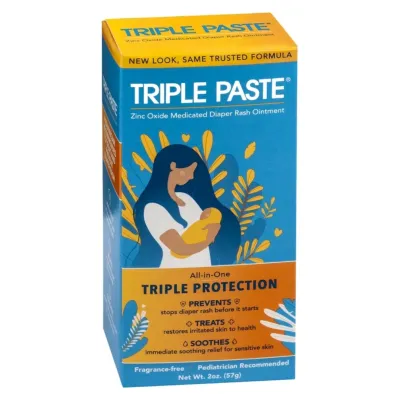
Prices are valid at publication and may change. Please refer to the product page for the latest price.
When selecting a product, caregivers should carefully read the active and inactive ingredient lists on the packaging. The active ingredient, often zinc oxide, is responsible for the primary protective shield and is usually listed with its percentage concentration. Inactive ingredients, which make up the base of the paste, determine the product’s texture, spreadability, and how easily it adheres to the skin.
It is important to clarify that “Triple Paste” is a specific, well-known brand name famous for its hypoallergenic, fragrance-free formula. However, the term is also used colloquially by parents and healthcare professionals to describe any thick, multi-ingredient barrier paste. Because of this, you should always verify the exact formula on the packaging rather than relying on the product name alone, as different brands may use varying ingredients and concentrations.
In tropical environments, understanding these ingredients is particularly useful. High humidity means that heavy occlusive ingredients like petrolatum must be applied with care. If moisture is trapped underneath a thick layer of petrolatum, it can worsen irritation, making it essential to ensure the skin is completely dry before application.
Triple Paste vs. Regular Diaper Cream: Functional Differences
The most immediate difference between a triple paste and a regular diaper cream is their physical texture and staying power. Regular diaper creams are often lighter, water-based emulsions that spread easily and absorb partially into the skin. They are typically semi-translucent and can be wiped away with minimal effort. In contrast, triple pastes are incredibly thick, opaque white, and designed to stay exactly where you apply them, resisting moisture and friction.

These physical differences reflect their distinct primary mechanisms. Standard diaper creams are designed for daily, routine prevention, providing a light moisture barrier while keeping the skin soft. Triple pastes, however, are formulated to act as a robust physical wall. They do not easily rub off onto the diaper, ensuring that the protective layer remains intact even during long periods between changes, such as overnight.
This high level of protection comes with practical daily trade-offs. Because triple pastes are designed to adhere strongly to the skin, they require more effort to clean off during diaper changes. Aggressive wiping to remove every trace of a thick paste can cause friction and further irritate a baby’s already raw skin. Regular creams, being lighter, are much easier to wipe away quickly, making them more convenient for routine use when the skin is healthy.
When to Use a Triple Paste for Your Baby's Skin
Deciding whether to use a regular diaper cream or a heavy-duty triple paste depends on the observable condition of your baby’s skin. A triple paste is highly beneficial when you notice signs of moderate to severe diaper rash, such as persistent bright red patches, raised bumps, or raw, chafed areas. It is also excellent for situations involving prolonged moisture exposure, such as during long car rides, overnight sleep, or when your baby is experiencing diarrhea.
For routine, preventative maintenance, a lighter, regular diaper cream is usually sufficient. Applying a thin layer of a standard cream during regular diaper changes helps maintain the skin’s natural moisture barrier and prevents minor irritation without the heavy buildup of a thick paste. Using a lighter cream when the skin is clear makes daily cleanups simpler and more comfortable for your baby.
Before introducing any new multi-ingredient paste, it is crucial to check for specific ingredient sensitivities. Some formulations contain lanolin, beeswax, or botanical extracts that, while natural, can trigger allergic reactions in babies with highly sensitive skin or eczema. To ensure safety, perform a patch test by applying a tiny amount of the paste to a small area of healthy skin on your baby’s arm or leg and monitoring it for 24 hours for any signs of redness or irritation.
Safe Application and Removal Techniques for Thick Pastes
Applying a thick barrier paste requires a gentle touch to avoid aggravating inflamed skin. The best approach is often compared to “frosting a cake.” Instead of rubbing or massaging the paste into the skin like a standard lotion, pat or spread a thick, even layer over the affected areas. The paste should remain visible as a white protective layer, acting as a physical shield between the skin and the diaper.
Removing a thick paste during diaper changes must also be done carefully to prevent skin friction. If the leftover paste is clean and free of stool, you do not need to scrub it off completely; you can simply apply a fresh layer on top. When cleanup is necessary, avoid dry wiping. Instead, use a soft cloth or cotton pad saturated with a gentle baby oil, or use a fragrance-free, water-based baby wipe to gently lift the paste away without stripping the skin’s natural moisture.
While thick barrier pastes are highly effective for standard diaper irritation, they are not a cure for all skin conditions. Caregivers must monitor the rash closely and know when to seek professional help. Stop using the product and consult a pediatrician immediately if the rash worsens, spreads to the abdomen or thighs, develops blisters, peeling, or pus, or if your baby develops a fever, as these symptoms may indicate a bacterial or yeast infection requiring prescription treatment.
Frequently Asked Questions (FAQ)
Is zinc oxide safe for daily use in diaper creams?
Yes, zinc oxide is widely considered safe for daily use in diaper care products. It is an inert mineral that sits on top of the skin to reflect moisture and block irritants rather than being absorbed into the body. While it is exceptionally gentle and suitable for regular use, caregivers should always monitor their baby’s skin for any rare localized sensitivities and follow the specific age and usage guidelines provided on the product label.
Can I use triple paste diaper cream on newborns?
Newborn skin is incredibly delicate, thin, and highly sensitive, making it essential to exercise caution. You should always check the manufacturer’s packaging for specific age recommendations and newborn suitability before application. Because newborn skin is highly permeable, it is best to consult your pediatrician before introducing any multi-ingredient barrier pastes or medicated products to ensure they are safe for your baby’s developmental stage.
Does a thicker paste mean it works faster?
A thicker paste provides a more durable and resilient physical shield against moisture and friction, but it does not inherently speed up the biological healing process on its own. The paste acts as a protective support to prevent further irritation, while the actual healing is driven by keeping the skin clean, dry, and exposed to fresh air. Frequent diaper changes, gentle cleansing, and allowing the skin to air-dry completely are the most critical factors in resolving diaper rash.

Community discussion
Share your experience or ask a question. Comments are reviewed before publication.