
Quick Answer: How to Choose Your Pregnancy Pillow Shape
Finding comfortable sleep during pregnancy can feel like an ongoing challenge as your body undergoes rapid changes. Investing in a supportive pregnant pillow can dramatically improve your sleep quality by aligning your spine and cradling your growing bump. The ideal shape for you depends on your preferred sleeping position, the size of your bed, and how much portability you require.
Here is a clear conditional decision framework to help you choose:
- Choose a U-shaped pillow if you are an active sleeper who frequently tosses and turns, require simultaneous support for both your back and front, and have a large bed (such as a queen or king-sized mattress) with ample space.
- Choose a C-shaped pillow if you want comprehensive head-to-toe support but need to conserve horizontal space, sleep on a smaller mattress, or share your bed with a partner.
- Choose a wedge pillow if you only need targeted support under your belly or behind your lower back, have a compact bedroom, travel frequently, or prefer to continue using your standard head pillows.
While these supportive shapes can significantly alleviate physical pressure, you should always consult your OB-GYN or midwife to verify the safest sleep positions for your specific stage of pregnancy.
Products mentioned in this guide
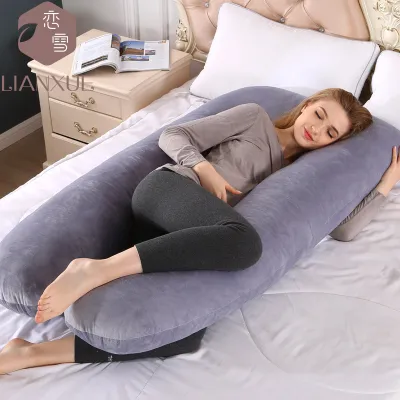
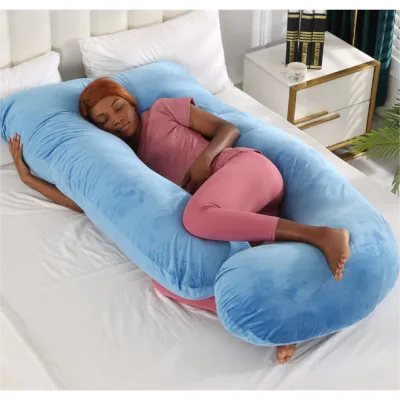
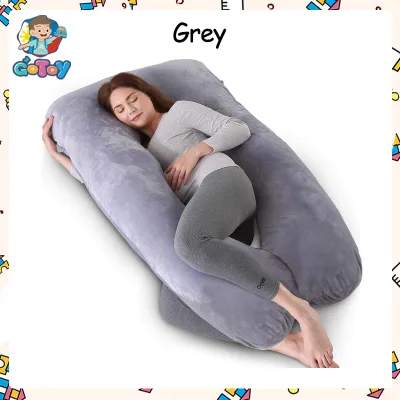
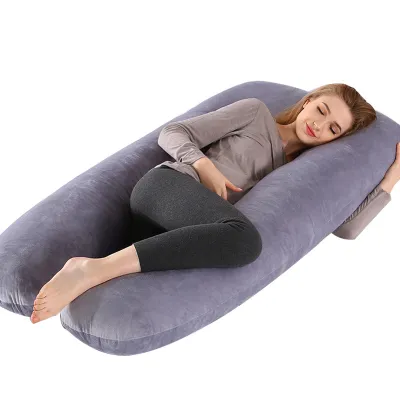
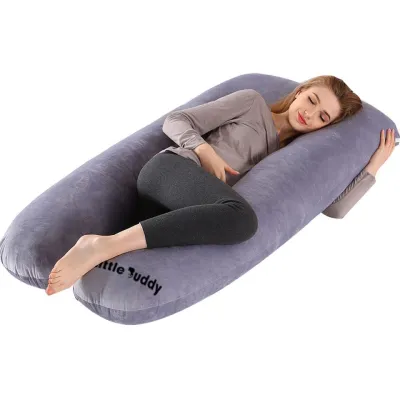
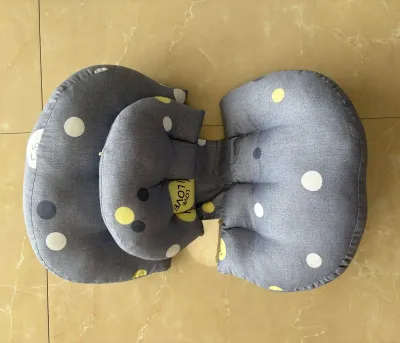
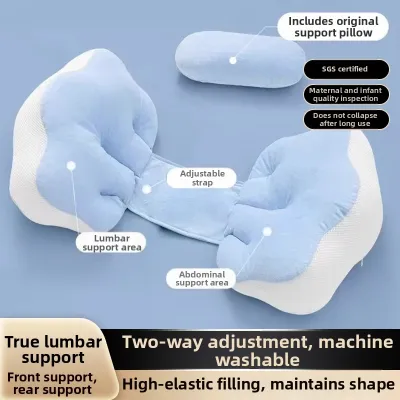
Prices are valid at publication and may change. Please refer to the product page for the latest price.
U-Shaped vs C-Shaped vs Wedge: A Detailed Breakdown
To find the perfect fit, it helps to understand how each of these three primary designs functions in a real-world bedroom setting.

U-Shaped Full-Body Pillows
The U-shaped design is a large, symmetrical, double-sided pillow that completely wraps around your body. It features two long legs connected by a curved top portion, allowing you to rest your head at the bend while the parallel sides cradle your front and back simultaneously.
The primary advantage of this shape is its convenience for active sleepers. If you turn from your left side to your right side during the night, you do not have to drag or flip a bulky pillow with you; a supportive cushion is already waiting on both sides to keep your knees, belly, and spine aligned.
However, this comprehensive support comes with a significant spatial trade-off. These pillows have a very large footprint and can easily crowd a standard mattress, which may leave your sleeping partner with very little room.
This design is ideal for side sleepers who have plenty of bed space and want a cocoon-like, uninterrupted sleep experience without having to adjust their bedding every time they shift positions.
C-Shaped Pregnancy Pillows
The C-shaped pillow offers a streamlined alternative to the U-shape while still providing full-body support. It is designed as a single continuous curve that mimics the letter “C,” wrapping around your head, curving down along your back or belly, and tucking between your thighs.
The main benefit of this shape is its space-saving design. Because it only hugs one side of your body, it leaves the opposite side of the bed completely open, making it much easier to share a mattress with a partner or sleep comfortably on a smaller bed.
The drawback is that if you decide to roll over to the other side during the night, you must manually reposition the entire pillow to maintain support for your belly or back. This extra movement can disrupt deep sleep cycles for some individuals.
This option is best suited for side sleepers who want the luxurious feel of a full-body pillow but need to preserve valuable mattress real estate for their partner or a smaller bedroom layout.
Wedge Pregnancy Pillows
A wedge pillow is a compact, firm cushion shaped like a triangle or a gentle crescent. Instead of trying to support your entire body at once, it is designed for highly localized, targeted pressure relief.
The standout feature of the wedge is its exceptional versatility and portability. It is lightweight, takes up almost no space in your bed, and can be slipped exactly where you need it most—whether that is directly under your expanding abdomen to prevent pulling, behind your lower back to prevent rolling, or between your knees to keep your pelvis level.
On the downside, a wedge does not offer integrated head, neck, or back support. You will still need to rely on your standard regular pillows to support your upper body and head.
This design is the perfect match for those living in compact homes, frequent travelers who need a portable sleep aid, or individuals who are generally comfortable with their current pillow setup but require targeted relief for a specific pressure point.
Choosing a Pregnant Pillow by Sleeping Style and Bedroom Space
Support for Side Sleepers and Belly Relief
As pregnancy progresses, healthcare providers generally recommend sleeping on your side—particularly the left side—to optimize blood circulation and kidney function. However, maintaining this posture for eight hours can place immense strain on your hips, lower back, and abdominal ligaments. A high-quality pregnant pillow acts as a physical bolster to make side sleeping comfortable and sustainable.
U-shaped and C-shaped pillows are highly effective at locking your body into a stable side-sleeping position, physically preventing you from rolling onto your back or stomach during deep sleep. A wedge pillow, while smaller, provides an excellent upward lift for your abdomen when placed underneath your belly, which directly relieves the downward gravitational pull on your uterine ligaments. When selecting any shape, always check the pillow’s loft (thickness) and firmness; it should support your joints comfortably without being so firm that it creates painful pressure points or so soft that it collapses under your weight.
Navigating Compact Bedrooms and Bed Sharing
In many homes across the Philippines, bedroom layouts are cozy, and mattresses are often limited to standard double or queen sizes. Introducing a massive full-body pillow into this setup can dramatically alter your sleeping environment and affect your partner’s rest.
A U-shaped pillow will dominate a standard double bed, often pushing your partner to the very edge or requiring you to upgrade your mattress size. In contrast, a C-shaped pillow offers a balanced compromise, providing the head-to-knee support you need while leaving the other half of the mattress completely free for your partner. If your bedroom space is highly restricted, or if you share a smaller bed, the wedge pillow is the ultimate space-saver, offering targeted relief without encroaching on your partner’s sleeping area. We highly recommend measuring your available mattress surface before purchasing a full-body model to ensure everyone can sleep comfortably.
Portability for Travel and Lounging
Your comfort needs do not stop at the edge of your bed, and considering how you will use your pillow throughout the day can guide your choice. If you travel frequently for work, visit family in the provinces, or spend long hours sitting at an office desk, a wedge pillow is incredibly easy to pack into a tote bag or car trunk, and it can double as a supportive lumbar cushion for your office chair.
In contrast, U-shaped and C-shaped pillows are bulky, heavy, and difficult to compress, making them highly impractical for travel and largely confining them to your primary bedroom. However, C-shaped pillows offer excellent postpartum utility; their curved design can easily wrap around your waist to support your baby during nursing or serve as a comfortable prop while reading in bed, whereas U-shaped pillows are generally too large and unwieldy for daytime lounging outside of sleep.
What to Check on the Label: Materials and Climate Comfort
When shopping for a pillow, it is crucial to read the manufacturer’s label carefully to evaluate the fill materials and cover fabrics, especially given the warm and humid tropical climate of the Philippines. The fill material directly determines the pillow’s overall feel and support: memory foam offers contouring support but tends to retain body heat; polyester fiberfill is plush, lightweight, and highly adjustable; while microbeads allow the pillow to shift and mold easily to your body shape.
Because night sweats and high humidity are common, the outer cover is just as important as the fill. Look for a cover that is fully removable and machine-washable so you can keep your sleeping environment clean and hygienic. Prioritize highly breathable, moisture-wicking fabrics such as natural cotton or bamboo-derived viscose, which help promote airflow and keep you comfortable during warm nights. Always verify the care instructions on the tag before washing your pillow or cover, as improper cleaning methods can clump the fill or void the product warranty. Be sure to check the manufacturer’s official specifications and certifications to verify any claims of hypoallergenic properties or specialized cooling technologies.
Safety Boundaries: When to Adjust or Consult Your Doctor
While a high-quality pillow can significantly improve your daily comfort and sleep quality, it is important to remember that these are consumer comfort products, not medical devices. They are not designed to cure or treat severe medical conditions such as severe pelvic girdle pain, symphysis pubis dysfunction, sciatica, or sleep apnea.
You should immediately adjust your setup or stop using a pillow if it causes new joint pain, restricts your circulation, forces your neck or spine into an awkward and uncomfortable angle, or causes you to overheat excessively during the night. If you experience persistent, throbbing pain, numbness in your limbs, or if you have a high-risk pregnancy, consult your OB-GYN, midwife, or a physical therapist for specialized guidance. Always prioritize the professional medical advice of your healthcare provider regarding safe sleep positions and the use of supportive sleep aids.
Frequently Asked Questions (FAQ)
Can I use a regular pillow instead of a pregnancy pillow?
Yes, you can absolutely use standard household pillows to mimic the support of a dedicated pregnancy pillow. By placing one pillow under your head, another tucked securely between your knees, and a third wedged gently under your belly or behind your back, you can achieve a similar level of spinal alignment. The primary drawback to this DIY approach is that regular pillows tend to shift, slide, and separate as you move throughout the night, which often forces you to wake up repeatedly to readjust them. A dedicated C-shaped or U-shaped pillow is designed to stay unified and locked in place, providing continuous, uninterrupted support.
Is it safe to sleep on my back with a wedge pillow?
Sleeping completely flat on your back during the second and third trimesters is generally discouraged by healthcare providers because the weight of the growing uterus can compress the inferior vena cava, a major blood vessel, potentially restricting blood flow to both you and your baby. However, a wedge pillow can be highly useful for back support when used correctly. By placing a wedge pillow behind your back, you can prop yourself up at a semi-reclined angle (usually around 30 degrees) which prevents you from rolling flat onto your back while you sleep. Always consult your OB-GYN or midwife to verify the exact safe angles and positioning for your body.

Community discussion
Share your experience or ask a question. Comments are reviewed before publication.