
Quick Answer: Which Maternity Pillow Shape Is Right for You?
Finding comfortable sleep during pregnancy can feel like an ongoing challenge as your body undergoes rapid changes. The ideal maternity support pillow shape depends entirely on your dominant sleep position, available bed space, and specific physical discomforts.
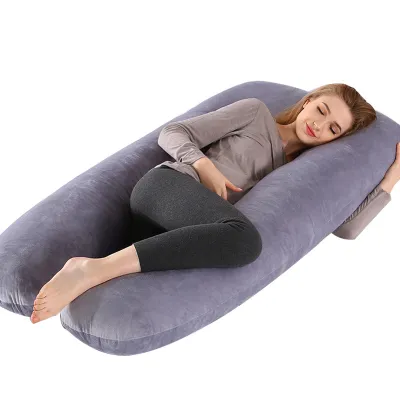
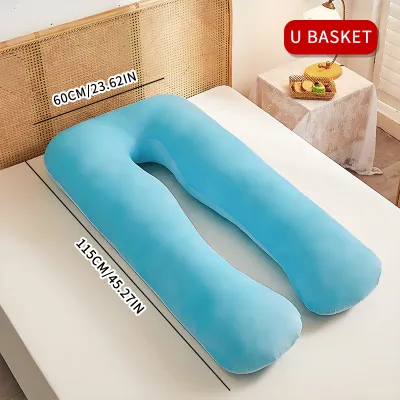
If you frequently toss and turn and need full-body support from head to toe, a U-shaped pillow is often the most accommodating option. It encloses your body on both sides, allowing you to switch positions without moving the pillow itself.
For those who strictly sleep on one side and want targeted alignment for the head, belly, and knees without overtaking the entire mattress, a C-shaped pillow offers an excellent balance. Meanwhile, if you have limited bed space, travel often, or simply need localized support under your belly or behind your back, a compact wedge pillow is highly efficient and easy to position.
Products mentioned in this guide


Prices are valid at publication and may change. Please refer to the product page for the latest price.
Understanding the Core Shapes: U-Shaped, C-Shaped, and Wedge
To choose the right support, it helps to understand how these three primary designs differ in physical structure and intent. Each shape addresses different spatial and physical needs throughout your pregnancy journey.

The U-shaped maternity support pillow is a symmetrical, full-body wrap design. It features two long legs connected at the top, enclosing your body on both sides. Because of this dual-sided structure, it occupies significant space on the mattress, which is an important consideration if you share a bed. However, its primary advantage is that it allows you to turn from side to side during the night without having to drag or reposition the pillow with you; you simply turn within the center cavity.
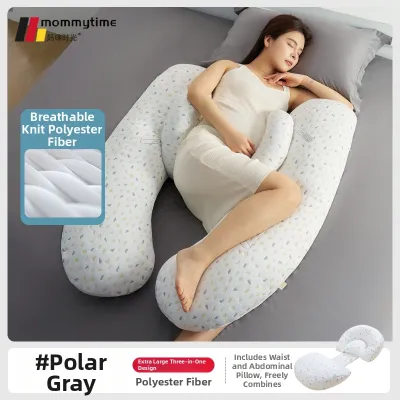
The C-shaped maternity support pillow utilizes an asymmetrical, curved design that resembles the letter C. It is engineered to support your head at the top curve, tuck under your belly or support your back along the middle spine, and slide between your knees at the bottom curve. This shape provides comprehensive support along one side of your body. It takes up less mattress space than a U-shaped model, making it a practical choice for standard double or queen-sized beds.
The wedge maternity support pillow is a compact, triangular or contoured cushion. Unlike full-body options, it is designed strictly for localized support. You can slide it under your growing belly to prevent pulling, place it behind your lower back to prevent rolling onto your spine, or tuck it between your knees to relieve hip pressure. Its small footprint makes it highly portable, easy to store, and ideal for warm tropical climates where minimizing body contact with large, heat-retaining cushions is a priority.
Matching Pillow Shapes to Sleep Positions and Pain Points
As your pregnancy progresses, sleep positions must adapt to support both your comfort and your physical safety. Choosing a pillow that aligns with your natural sleeping habits can significantly improve your rest.
For dedicated side sleepers, maintaining proper spinal and pelvic alignment is crucial to preventing morning stiffness. Both C-shaped and U-shaped pillows excel here by providing a dedicated cushion to place between your knees, which helps keep your hips stacked and reduces strain on the pelvis. Additionally, the middle sections of these pillows gently cradle the belly, preventing it from pulling forward and straining the lower back muscles. If you already have a preferred head pillow, a wedge can be used as a targeted gap-filler, tucked directly under the slope of your belly or behind your hips to keep you comfortably tilted on your side.
Transitioning away from back or stomach sleeping is a common requirement during the second and third trimesters. If you struggle to stay on your side, a wedge pillow placed firmly behind your back acts as a physical barrier, gently preventing you from rolling onto your spine during deep sleep. Alternatively, you can use a wedge to prop up your upper body at a gentle incline, which can help manage pregnancy-related acid reflux or heartburn. Always check manufacturer guidelines regarding the correct placement of these supports, and consult your obstetrician or prenatal care provider for personalized advice on safe sleep angles and back-sleeping limitations.
Specific physical discomforts also dictate which shape will serve you best. Lower back pain and pelvic girdle pain often require the pelvic alignment provided by the lower leg of a U-shaped or C-shaped pillow. If you experience severe hip pressure, a thicker knee support is essential. For localized round ligament pain—the sharp stretching sensation on the sides of the lower abdomen—the gentle, firm elevation of a wedge pillow placed directly under the belly can offer immediate, targeted relief by reducing the downward pull of gravity.
For individuals experiencing pelvic girdle pain (PGP) or symphysis pubis dysfunction (SPD), keeping the knees and ankles aligned at the same width as the hips is highly beneficial. A full-body pillow like the U-shape or C-shape provides a long, continuous cushion that supports both the knee and the ankle, preventing the upper leg from dropping forward and twisting the pelvis. If using a wedge, you may need to pair it with a standard firm pillow between your knees to achieve this same level of pelvic stabilization.
Key Factors to Verify Before Buying a Maternity Support Pillow
Before purchasing a maternity support pillow, evaluating several practical specifications will ensure the product fits your home, lifestyle, and climate. When browsing local ecommerce platforms, comparing prices in ₱ can help you find a durable option that fits your budget without compromising on material quality.
Bed size and space constraints are critical, especially when considering larger models. A U-shaped pillow can easily dominate a standard double or queen mattress, leaving very little room for a partner. Measure your mattress dimensions and discuss the layout with your partner before choosing a full-body design. If space is limited, a C-shaped pillow or a modular wedge system will keep the bed functional for both occupants.
Cover and fill materials require careful inspection, particularly in warm and humid tropical environments. Look for product labels specifying breathable, moisture-wicking outer covers made from natural fibers like cotton or bamboo. Ensure the cover is fully removable and machine-washable to maintain hygiene. For the interior, check for hypoallergenic fills, such as high-density memory foam in wedges or adjustable polyester fiberfill in full-body pillows, which resist flattening and do not trap excessive body heat.
Durability and shape retention are also vital factors to verify before making a purchase. Over weeks of continuous use, lower-quality fills can clump or flatten, reducing the therapeutic support they provide. Look for products that feature high-resilience polyester fiberfill or solid memory foam cores. Reading user reviews on local online marketplaces can provide valuable insights into how well a specific pillow maintains its loft and support over several months of daily use.
Adjustability and postpartum use add significant value to your purchase. Some maternity pillows feature zippered compartments that allow you to add or remove fiberfill to customize the firmness. Others offer modular designs where sections can be unzipped and detached. Consider how the pillow might function after pregnancy; C-shaped and U-shaped pillows can often be repurposed as supportive nursing cushions or as a safe barrier to help prop up your baby during supervised floor play, while wedges can continue to serve as comfortable lumbar supports for office chairs. Always verify the manufacturer’s age and safety warnings regarding infant use, ensuring any postpartum baby support is strictly supervised.
Decision Framework: Which Maternity Pillow Should You Choose?
To finalize your decision, match your daily habits and physical needs to the following guidelines:
- Choose a U-shaped pillow if you have ample bed space, find yourself tossing and turning frequently throughout the night, and require equal, continuous support on both your front and back without needing to adjust the cushion manually.
- Choose a C-shaped pillow if you prefer to sleep primarily on one side, want integrated support for your head, belly, and knees, and need to conserve mattress space for a partner.
- Choose a wedge pillow if you sleep in a warm room, travel frequently, prefer to use your existing head pillow, or only require targeted, firm support under your belly or behind your back.
Before relying solely on any maternity support pillow for pain relief, verify your symptoms with a healthcare professional. If you experience severe pelvic pain, persistent backaches, or have a high-risk pregnancy, professional medical guidance is essential to ensure your sleep setup is safe and therapeutic.
Frequently Asked Questions (FAQ)
Can I use a regular pillow instead of a specialized maternity support pillow?
Yes, you can use standard household pillows, but replicating the continuous support of a specialized maternity pillow typically requires three or four separate cushions. You would need one for your head, one under your belly, one between your knees, and potentially another behind your back. Throughout the night, these individual pillows tend to shift, slide apart, or lose their loft, requiring constant manual readjustment every time you turn.
A specialized maternity support pillow integrates these support zones into a single, structurally stable unit, helping you maintain proper spinal and pelvic alignment with far less disruption to your sleep.
When is the best time to start using a maternity pillow during pregnancy?
There is no universal timeline, as the transition depends entirely on your personal comfort, belly growth, and the onset of physical discomforts. Many individuals begin looking for extra support around the start of the second trimester, when the belly begins to expand and side sleeping becomes more highly recommended.
If you begin experiencing lower back strain, round ligament pain, or difficulty finding a comfortable sleeping position, it is a practical time to introduce a support pillow. Monitor your sleep quality and consult your prenatal care provider for personalized advice on sleep positioning as your pregnancy progresses.

Community discussion
Share your experience or ask a question. Comments are reviewed before publication.