
Choosing the right pregnancy pillow comes down to mapping your sleep habits, your bed size, and where your body needs the most relief. As your pregnancy progresses, finding a comfortable sleeping position becomes a daily challenge, especially when transitioning to side sleeping. U-shaped, C-shaped, and J-shaped pillows each offer distinct support configurations designed to cradle your changing body, but the best option depends on whether you prioritize full-body coverage, space-saving designs, or targeted joint alignment. By understanding how each shape interacts with your body and your sleeping environment, you can make an informed choice that promotes restful sleep throughout your pregnancy journey.
Identifying Your Sleep and Support Needs
Before selecting a pregnancy pillow, evaluate your current sleep patterns and identify where your body requires the most assistance. During pregnancy, especially as you enter the second and third trimesters, side sleeping is widely recommended to optimize blood flow. However, maintaining this position for hours can place unusual strain on your hips, pelvis, and lower back.
Take note of where you feel the most tension when you wake up. A dull ache in your lower back suggests you need support behind your spine to prevent rolling backward. If you feel a pulling sensation in your abdomen, your growing belly requires a supportive cushion underneath it to prevent muscle strain. Hip and knee pain usually indicates that your pelvis is misaligned, which can be corrected by placing a pillow between your knees to keep them parallel.
Products mentioned in this guide
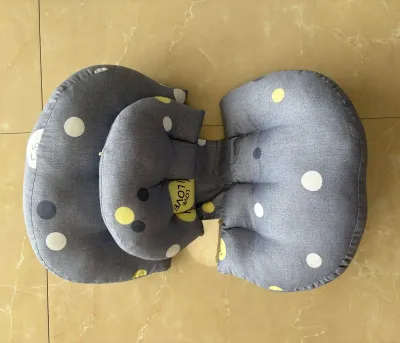


Prices are valid at publication and may change. Please refer to the product page for the latest price.
Beyond physical comfort, practical constraints play a major role in your decision. Consider the size of your mattress and whether you share your bed. A massive pillow might offer excellent support but leave very little room for a partner. Additionally, in tropical climates where humidity and heat are constant factors, a pillow that wraps entirely around your body can trap heat, making breathability and fabric choice critical.
U-Shaped Pillows: Full-Body Support for Restless Sleepers
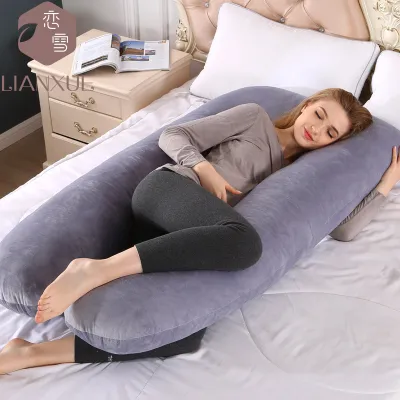
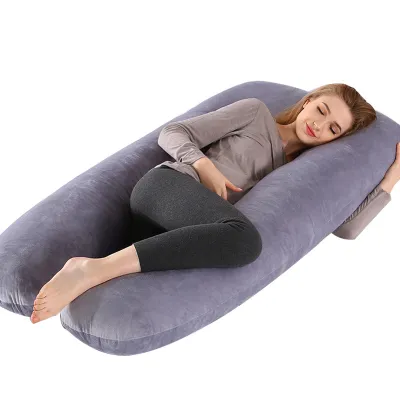
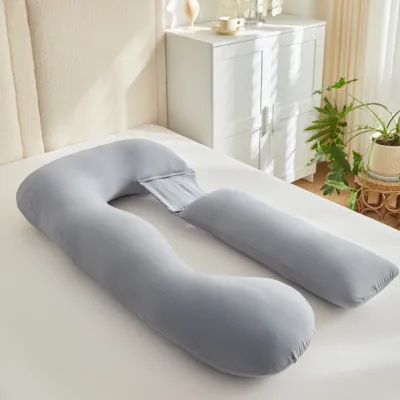
The U-shaped pregnancy pillow is designed to offer comprehensive, 360-degree support by surrounding your entire body. This design features two long, symmetrical arms connected at the top, allowing you to rest your head on the curved arch while the two parallel sides cradle your front and back simultaneously.

This shape is highly beneficial for restless sleepers who frequently switch sides throughout the night. With a U-shaped pillow, you do not need to adjust or reposition the cushion when you turn over; you simply roll from one side to the other, and the opposite arm of the pillow is already in place to support your belly or back. This seamless transition helps minimize sleep disruptions, allowing you to maintain a deeper state of rest.
However, the full-body coverage of a U-shaped pillow comes with significant spatial trade-offs. These pillows are exceptionally large and take up a substantial portion of a standard queen- or king-sized mattress. If you share a bed, your partner may find their space severely limited. Furthermore, the sheer volume of filling can make these pillows bulky to store. In warmer environments, the enclosed design can restrict airflow around your body, potentially leading to overheating unless you choose a highly breathable cover.
C-Shaped Pillows: Compact Contouring for Smaller Beds
For those working with limited mattress space or sharing a bed in a cozy room, the C-shaped pregnancy pillow offers a more compact, contoured alternative. Shaped like a large letter “C,” this design is engineered to hug the natural curves of your body, providing targeted support to your head, neck, back, and pelvic region.
When using a C-shaped pillow, you typically position the curve along your back to prevent rolling, while tucking the top end under your head and the bottom end between your thighs. Alternatively, you can reverse the pillow so that the center curve supports your growing belly. This versatility makes it an excellent option for smaller mattresses, such as double or queen beds, as it provides essential support without completely taking over the sleeping area.
Despite its space-saving advantages, the C-shaped design has notable limitations. Because it is asymmetrical in its support delivery, switching sides during the night requires you to physically turn the entire pillow with you, which can be physically demanding and wakeful. Additionally, because the bottom curve is relatively short, it may not provide sufficient alignment for your lower legs and ankles, potentially requiring you to use an extra standard pillow to keep your knees and feet properly spaced.
J-Shaped Pillows: Targeted Relief for Side Sleepers
The J-shaped pregnancy pillow, often resembling a long body pillow with a curved hook at one end, offers a streamlined and highly flexible approach to prenatal sleep support. This design is particularly suited for side sleepers who want targeted relief without the overwhelming bulk of a U-shaped or C-shaped model.
The primary advantage of the J-shaped pillow is its adaptability. You can position the curved hook at the bottom to nestle between your knees and ankles, keeping your pelvis aligned, while the straight portion runs up to support your belly. Alternatively, you can flip the pillow so that the curved hook supports your head and neck, while the long tail extends down to support your back or belly. This flexibility makes it easy to adjust and reposition throughout the night as your comfort needs shift.
While the J-shaped pillow is highly efficient and takes up far less bed space than its U-shaped counterpart, it does not offer simultaneous front and back support. If you require both belly cushioning and back bracing to prevent rolling, you will likely need to pair the J-shaped pillow with a standard bed pillow or a small wedge. Additionally, depending on how you orient the pillow, you may still need to use your regular head pillow to ensure your neck remains at a comfortable, strain-free angle.
Comparing Shapes: Which Design Matches Your Routine?
To help you determine which pregnancy pillow shape aligns best with your sleeping habits and bedroom setup, consider the following comparison of their primary characteristics:
| Pillow Shape | Primary Support Areas | Space Requirements | Best For |
|---|---|---|---|
| U-Shaped | Head, neck, back, belly, and knees simultaneously | High (requires a large mattress) | Restless sleepers who switch sides frequently |
| C-Shaped | Head, neck, and back OR belly | Medium (fits well in standard beds) | Sleepers in smaller beds wanting snug, contoured support |
| J-Shaped | Head and belly OR knees and ankles | Low (streamlined and easy to move) | Side sleepers seeking targeted joint and pelvic alignment |
When choosing between these options, you can apply a simple conditional framework to guide your decision:
- Choose a U-shaped pillow if you have a spacious mattress, tend to toss and turn frequently, and want complete, symmetrical support on both sides of your body without having to move the pillow.
- Choose a C-shaped pillow if you sleep in a smaller bed, want a cozy, nested feeling, and prefer a design that supports either your back or belly while keeping your head and pelvis cushioned.
- Choose a J-shaped pillow if you want a lightweight, versatile option that targets specific pressure points, such as your knees or belly, without crowding your partner or taking up excessive space.
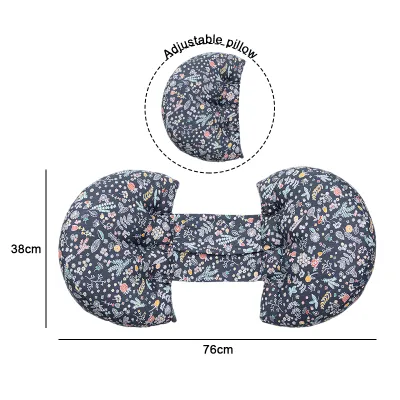
In some cases, a single standard pregnancy pillow may not meet all your needs. If you experience highly localized discomfort, such as severe pelvic girdle pain, you might find it more effective to combine a smaller wedge pillow for your belly with a standard pillow between your knees, rather than investing in a large full-body model.
Safety Checks and Care Instructions
When selecting and using a pregnancy pillow, safety and hygiene should be your top priorities. Because you will be spending hours in close contact with the pillow, it is crucial to verify the filling materials and cover fabrics. Look for hypoallergenic fillings and breathable outer covers, such as cotton or bamboo blends, which help manage moisture and prevent skin irritation, particularly in warm and humid climates.
Proper maintenance is essential to prevent the accumulation of dust mites, sweat, and allergens. Always check the manufacturer’s care label for specific washing and drying instructions. Many pregnancy pillows feature removable, machine-washable covers, which should be cleaned regularly. If the pillow itself is washable, ensure it dries completely to prevent mold growth within the inner filling.
While pregnancy pillows are designed to enhance comfort, they are not medical devices. You should monitor how your body responds to the new sleeping setup. If you experience new or worsening physical pain, numbness in your limbs, or restricted breathing while using a pillow, stop using it immediately. Always consult a qualified healthcare professional or your obstetrician to address persistent physical discomfort during pregnancy.
Frequently Asked Questions (FAQ)
When should I start using a pregnancy pillow?
There is no specific gestational week when you must begin using a pregnancy pillow, as the ideal timing depends entirely on your personal comfort. Many individuals find they need extra support around the start of the second trimester, when the physical changes of pregnancy become more noticeable. Common indicators that it is time to transition to a pregnancy pillow include waking up with a dull ache in your lower back, experiencing hip pressure, or finding it difficult to remain comfortably on your side as your belly grows. Listening to your body’s signals is the best way to determine when to introduce extra cushioning.
Can I use regular pillows instead of a dedicated pregnancy pillow?
Yes, you can use standard household pillows to create a supportive sleeping environment. By placing one pillow under your head, another between your knees to align your hips, and a third behind your back to prevent rolling, you can mimic the support of a specialized pregnancy pillow. This approach is highly customizable and works well during early pregnancy or if you have limited storage space. However, dedicated pregnancy pillows offer the advantage of a unified, single-piece design that does not shift or separate during the night, providing more consistent and stable support as you move.

Community discussion
Share your experience or ask a question. Comments are reviewed before publication.