
Quick Answer: Which Pregnancy Pillow Shape is Right for You?
Finding comfortable sleep during pregnancy is a highly personal journey that changes as your body develops. There is no single universal winner when it comes to pregnancy pillows; instead, the ideal shape depends entirely on your bed size, how much you toss and turn, and your specific physical pressure points.
To make an immediate decision, you can use this straightforward framework:
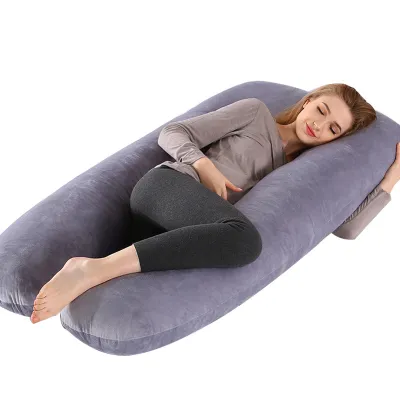
- Choose a U-shaped pillow if you are a restless sleeper who frequently switches sides during the night, require simultaneous back and belly support, and have a queen-sized or king-sized bed that can accommodate a large physical footprint.
- Choose a C-shaped pillow if you want comprehensive, head-to-toe support that curves around your body to cradle your head, belly, and knees, but you have a slightly smaller bed or want to avoid taking up the entire mattress.
- Choose a J-shaped pillow if you have limited bed space, share your mattress with a partner or other family members, travel frequently, or only require targeted, localized support for either your belly or your knees.
Ultimately, your comfort will depend on matching these physical shapes to your typical sleeping posture and the size of your sleeping area. Taking the time to assess your daily sleep habits will help you select a design that provides reliable, long-term relief.
Products mentioned in this guide




Prices are valid at publication and may change. Please refer to the product page for the latest price.
Design Breakdown: How U, C, and J Shapes Actually Support Your Body
During pregnancy, physical changes alter your body’s natural center of gravity. As the abdomen expands, the forward weight pulls on the lower spine, which can lead to pelvic tilt, muscle strain, and joint misalignment. A dedicated pregnancy pillow is designed to counteract this pull by physically supporting the weight of your bump, aligning your hips, and keeping your spine in a neutral position while you rest on your side.

U-Shaped Pillows: Full-Body Wrap
The U-shaped pregnancy pillow features a symmetrical, horseshoe-like design that completely surrounds your body. To use it, you lie directly in the center of the “U” with the curved bend serving as your headrest, while the two long parallel arms run down your front and back.
This dual-sided structure provides simultaneous support for your back and your belly. Because both sides are identical, you do not need to manually shift or flip the pillow when you turn from your left side to your right side during the night; you simply roll over and find the exact same level of support waiting for you. However, this complete wrap-around design has a massive physical footprint, making it highly bulky and heavy to move.
C-Shaped Pillows: Targeted Contour
The C-shaped pillow utilizes an asymmetrical, curved design that is shaped like a giant letter C. It is engineered to follow the natural contours of a side-sleeping posture. The top curve of the “C” cradles your head and neck, the long middle section runs along your back or hooks under your belly, and the bottom curve tucks neatly between your knees to keep your pelvis aligned.
This shape offers an excellent balance between comprehensive full-body support and a more compact footprint than a U-shaped alternative. It allows you to feel securely cradled without being completely enclosed on both sides. The primary trade-off is that if you choose to face the open side of the “C” and then decide to turn over, you will have to physically adjust the pillow to keep the support against your back or belly.
J-Shaped Pillows: Compact Versatility
The J-shaped pillow consists of a long, straight body section with a single curved hook at one end, resembling the letter J. This minimalist design is highly versatile and takes up significantly less space than both U-shaped and C-shaped models.
You can position the J-shaped pillow in several ways depending on your immediate comfort needs. The curved hook can serve as a headrest while the straight tail runs down to support your knees, or you can use your regular bed pillow for your head and tuck the curved hook of the J-pillow directly under your belly or between your thighs. Because it lacks a second side arm or a closed curve, it is incredibly easy to move, store, and position in smaller beds.
Key Comparison Dimensions: Space, Sleep Positions, and Support Zones
To choose the right pillow, you must evaluate how each shape performs across the practical realities of your daily life. Factors such as mattress size, sleep movement, and localized pain should dictate your purchase.
Bed Space and Partner Compatibility
Mattress real estate is a major consideration for many households. In the Philippines, where standard double or queen-sized beds are common and often shared with a partner, a pillow’s physical footprint can quickly become a source of discomfort.
A U-shaped pillow consumes a massive amount of space, often taking up more than half of a queen-sized bed. This can crowd your partner and make the bed feel cramped. A C-shaped pillow is slightly more compact but still requires a dedicated portion of the mattress. If you sleep on a smaller double or single bed, or if you share your sleeping space and want to maintain a comfortable distance from your partner, the J-shaped pillow is the most practical, space-saving option.
Sleep Position Adaptability
Side sleeping is the highly recommended position during the second and third trimesters because it helps optimize blood flow and reduces pressure on major blood vessels. However, maintaining a single position all night can be difficult if you are naturally restless.
If you frequently toss and turn, a U-shaped pillow is highly accommodating because it provides identical support on both sides. You do not have to wake up to rearrange your bedding. With a C-shaped pillow, turning around means you either lose back support or have to physically drag the entire curved structure over your body. A J-shaped pillow is lightweight enough to shift easily, but it still requires some manual adjustment when you switch sides.
Targeted Support Zones
Different pregnancy pillow shapes target different areas of physical strain. Relieving pressure on your joints requires understanding where each shape excels:
- Hip Alignment: Keeping your pelvis neutral requires placing a firm barrier between your knees and ankles. Both U-shaped and C-shaped pillows excel at this because their long ends naturally extend down to the lower legs.
- Lower Back Strain: To prevent your body from rolling backward and straining your lower spine, you need firm physical support behind you. The rear arm of a U-shaped pillow or the back curve of a C-shaped pillow provides a solid barrier that keeps you securely on your side.
- Belly Weight: As your baby bump grows, it can pull forward and strain your abdominal muscles. The curved hook of a J-shaped pillow or the middle section of a C-shaped pillow can be tucked tightly under the belly to lift and support the weight.
Comparison of Pregnancy Pillow Shapes
| Pillow Shape | Best For | Bed Space Needed | Primary Support Zones |
|---|---|---|---|
| U-Shaped | Restless side sleepers, full-body alignment | High (Requires Queen or King bed) | Head, neck, back, belly, hips, and knees |
| **C-Shaped** | Head-to-toe contouring, lower back support | Moderate (Fits Double or Queen bed) | Head, neck, back or belly, and knees |
| J-Shaped | Small beds, localized support, easy travel | Low (Fits Single or Double bed) | Head, knees, or belly (highly adjustable) |
Matching the Pillow to Your Sleep Style and Pregnancy Stage
Your sleeping habits and your current trimester are key indicators of which pillow shape will serve you best over time.
For Restless Sleepers
If you wake up multiple times a night to change positions, a U-shaped pillow will minimize sleep disruptions. Because the support is symmetrical, you can roll from left to right without having to lift, flip, or realign a heavy mass of fabric and stuffing. This seamless transition helps you return to deep sleep quickly, protecting your sleep quality during periods of physical fatigue.
For Hot Sleepers
In warm and humid tropical climates, such as in the Philippines, heat retention is a major comfort barrier. Wrapping your entire body in a dense, plush U-shaped pillow can trap body heat and lead to uncomfortable night sweats.
If you naturally run hot, a J-shaped pillow is highly beneficial because its open design allows air to circulate freely around your back and legs. Regardless of the shape you choose, always verify the product’s cover materials. Look for highly breathable fabrics like 100% cotton, bamboo-derived rayon, or specialized cooling weaves, and avoid synthetic polyester covers that lock in moisture and heat.
Trimester Progression
Your physical support requirements will evolve as your pregnancy progresses:
- First Trimester: Physical changes are mostly internal, though early fatigue is common. During this stage, you may not need a full-body pillow. A simple J-shaped pillow can provide early comfort for your head and knees without overwhelming your bed.
- Second Trimester: As your baby bump begins to show and side sleeping becomes necessary, a C-shaped pillow is excellent. It provides targeted cradling for your growing belly while keeping your spine aligned.
- Third Trimester: The final months bring maximum physical weight, pelvic girdle discomfort, and back strain. A highly supportive U-shaped pillow or a fully stuffed C-shaped pillow is often necessary during this stage to manage the heavy physical load and provide relief to aching joints.
Before purchasing any model, always check the manufacturer’s product documentation for specific weight limits, fill materials, and firmness ratings. Some pillows use shredded memory foam that can be adjusted for height, while others use dense polyester fiberfill or microbeans, which offer different levels of firmness and contouring.
Practical Setup and Care Tips for Maximum Comfort
Properly positioning and maintaining your pregnancy pillow will extend its lifespan and ensure you get the best possible physical support.
Positioning Tricks
To get the most out of a J-shaped pillow, tuck the curved end snugly under your lower abdomen. This slight lift cradles the weight of your belly and prevents it from pulling your spine forward. If you find that your pregnancy pillow compresses or flattens over time due to body weight, you can place a small, folded cotton towel underneath the compressed sections to restore the necessary elevation and keep your joints neutral.
Maintenance and Washing
Keeping your pillow clean is essential, especially in humid environments where sweat, skin oils, and dust can accumulate. Always read and follow the manufacturer’s care label before cleaning.
Most high-quality pregnancy pillows feature a removable, zippered outer cover that is safe for machine washing. The inner core of the pillow, however, usually requires spot cleaning or professional dry cleaning. After washing the removable cover, ensure it is completely dry before putting it back on the pillow to prevent the growth of mold or mildew in humid conditions.
Safety and Adjustment
Your body will give you clear feedback if a pillow is not adjusted correctly. If you experience new joint stiffness, numbness, restricted circulation, or an uncomfortable lateral curve in your neck or spine, stop using the pillow immediately or adjust the amount of filling inside. Always consult your healthcare provider or a physical therapist for persistent or worsening pregnancy-related pain, as they can provide personalized guidance on safe sleeping postures.
Frequently Asked Questions (FAQ)
Can I use a regular pillow instead of a pregnancy pillow?
While you can use multiple standard pillows to support your head, belly, and knees, they often slide apart as you move during the night. This requires you to wake up and constantly readjust them. A dedicated pregnancy pillow provides a single, unified, and stable structure that stays securely in place, offering continuous support without the hassle of managing multiple loose pillows.
Is it safe to sleep on my back with a U-shaped pillow?
Medical guidelines generally recommend side sleeping, particularly on your left side after the first trimester, to optimize blood flow to the placenta and your baby. While a U-shaped pillow can act as a physical barrier that helps prevent you from accidentally rolling onto your back, it does not make prolonged back sleeping medically safe if you choose to lie flat on your back. Always consult your doctor or obstetrician for personalized advice regarding your sleeping positions.

Community discussion
Share your experience or ask a question. Comments are reviewed before publication.