
Finding comfortable sleep during pregnancy often comes down to choosing the right support structure to match your changing body. As your pregnancy progresses, standard pillows rarely provide the targeted elevation needed for your belly, hips, and spine. Selecting a maternity pillow—such as a U-shaped, C-shaped, or J-shaped design—depends heavily on your primary sleeping position, your available bed space, and how much you tend to move during the night. If you are considering a Mandaue maternity pillow or a similar local option, understanding how these shapes function will help you secure restful, safe sleep throughout your trimesters.
Each pillow shape offers distinct advantages, ranging from full-body cradling to compact, targeted support. While some expectant mothers require complete front-and-back alignment to prevent rolling onto their backs, others simply need a small cushion to relieve pressure on the lower back and hips. By evaluating your sleep habits and bedroom setup, you can select a design that keeps you comfortable and properly aligned without overcrowding your bed.
Understanding the Core Differences in Maternity Pillow Shapes
To make an informed decision, you must first visualize how each maternity pillow occupies space and wraps around your body. These pillows are not merely larger versions of standard bedding; they are engineered to target specific pressure points that experience strain during pregnancy. The physical footprint of each design dictates not only how much support you receive but also how much room remains for your partner.
Products mentioned in this guide
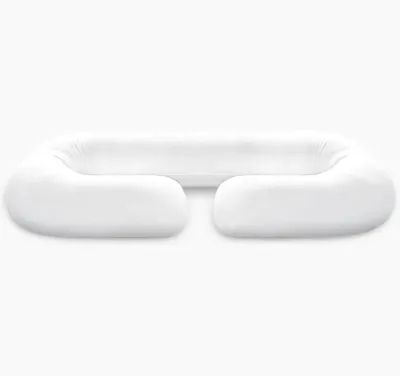
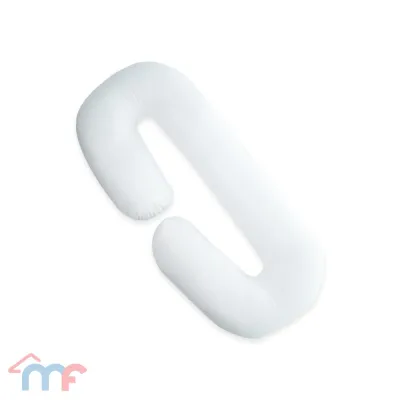
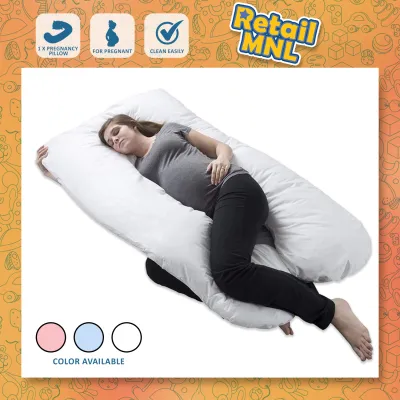
Prices are valid at publication and may change. Please refer to the product page for the latest price.
A U-shaped pillow is the largest option, featuring two long parallel arms connected at the top. This symmetrical design completely surrounds your body, offering equal support on both your front and back sides. Because of its dual-sided structure, it has a substantial physical footprint, typically requiring a queen-sized or king-sized bed to fit comfortably alongside another person.
In contrast, a C-shaped pillow utilizes a curved, semi-circular design that wraps around the front or back of your body. It features a single continuous loop that supports your head, tucks under your belly or back, and curves between your knees. This shape takes up slightly less horizontal bed space than a U-shaped model but still requires a dedicated portion of the mattress to allow the curves to align with your body.
A J-shaped pillow resembles a long, straight body pillow with a curved hook at one end. This design is highly streamlined, providing targeted support along one side of your body while leaving the other side completely open. It has the smallest footprint of the three, making it an excellent choice for smaller mattresses, such as double or semi-double beds, or for those who share a bed and want to minimize partner disruption.
Matching Pillow Designs to Your Sleeping Position and Trimester
Your ideal pillow shape is closely tied to how you naturally sleep and how your body changes as your pregnancy advances. What feels comfortable during the first trimester may feel insufficient by the third, making it essential to choose a design that adapts to your evolving needs. Additionally, bed-sharing dynamics and local climate factors play a significant role in determining which pillow will keep you cool and supported.

During the early stages of pregnancy, subtle changes in hormone levels and breast tenderness might make your usual sleeping positions uncomfortable. As you enter the second and third trimesters, healthcare professionals generally recommend side sleeping to optimize blood flow. Aligning your pillow choice with this transition ensures you can maintain a comfortable side-sleeping posture for hours without experiencing muscle strain or joint stiffness.
U-Shaped Pillows for Restless Sleepers and Back Pain
If you find yourself constantly tossing, turning, and switching sides throughout the night, a U-shaped pillow offers unmatched convenience. Because the pillow features identical supportive arms on both sides, you can turn from left to right without having to drag or reposition the pillow with you. This seamless transition is highly beneficial for maintaining deep sleep cycles, as it minimizes physical exertion during the night.
This symmetrical design is also highly effective at preventing you from rolling onto your back while asleep. The back arm of the U-shape acts as a firm barrier, keeping your spine aligned and ensuring you remain safely on your side. Meanwhile, the front arm cradles your growing belly and provides a comfortable resting place for your upper leg, which helps align your hips and pelvis.
However, the comprehensive support of a U-shaped pillow comes with a trade-off in terms of bed space. In typical Filipino households where double or queen-sized beds are common, a U-shaped pillow can take up more than half of the mattress surface. If you share a bed, this large footprint can restrict your partner’s movement and trap body heat, which is an important consideration in warm, tropical climates.
C-Shaped Pillows for Dedicated Side Sleepers
For those who are dedicated side sleepers and rarely change positions, a C-shaped pillow provides a cozy, nested sensation. The top curve of the C acts as a headrest, eliminating the need for a separate head pillow, while the middle section tucks neatly under your belly to relieve downward pulling forces. The bottom curve passes between your thighs and knees, which is crucial for reducing pressure on your lower back and pelvic girdle.
The continuous curve of this design helps distribute your body weight evenly along the pillow, reducing localized pressure points on your hips and shoulders. By keeping your knees stacked and slightly separated, the C-shape helps prevent pelvic twisting, which is a common source of pregnancy-related discomfort.
The primary limitation of a C-shaped pillow occurs when you want to face the opposite direction. Because the support is concentrated on one side, turning over requires you to physically flip the entire pillow to the other side of the bed. This adjustment can be cumbersome and disruptive to your sleep, especially during the later stages of pregnancy when physical mobility is more limited.
J-Shaped Pillows for Compact Spaces and Localized Relief
A J-shaped pillow is designed for utility and space efficiency, making it ideal for compact bedrooms or warmer sleeping environments. The straight portion of the pillow runs along your back or front, while the curved hook at the bottom supports your knees or head. This open design allows for excellent air circulation around your body, helping you stay cool during humid tropical nights.
This shape is highly versatile because it does not lock you into a single enclosed space. If you only need belly support and knee alignment, you can position the straight end between your legs and let the hook support your abdomen. Because it lacks a second side arm, you retain the freedom to move your arms and upper body without feeling restricted by bulky cushioning.
While highly portable and easy to store, a J-shaped pillow may not provide enough support if you suffer from severe, multi-zone pain. If you require simultaneous support for both your back and your belly to prevent rolling, the single-sided nature of the J-shape will fall short. It is best suited for mothers who already have a preferred head pillow and simply need targeted relief for their lower body.
Essential Features to Verify When Buying a Mandaue Maternity Pillow
When shopping for a Mandaue maternity pillow or any high-quality local alternative, looking beyond the shape to evaluate the physical construction is essential. The materials, filling, and ease of maintenance will directly impact how long the pillow retains its shape and how comfortable it remains in daily use. Taking the time to verify these specifications ensures your investment provides lasting support throughout your pregnancy and beyond.
First, examine the cover material and its removal mechanism. In the warm and humid climate of the Philippines, night sweats are common, making a breathable, hypoallergenic cover highly desirable. Look for covers made from natural fibers like cotton, which promote airflow and feel cool against the skin. Ensure the cover features a long, high-quality zipper that allows you to remove it easily for regular machine washing to maintain optimal hygiene.
Second, verify the type of filling used inside the pillow. The filling determines both the firmness and the breathability of the support zones. Polyester fiberfill is a common choice because it is lightweight and offers a plush, adjustable feel, though you should check that it is densely packed to prevent premature flattening. Some pillows utilize memory foam or microbeans; regardless of the material, verify that the filling is rated as hypoallergenic and resistant to dust mites.
Third, consider the overall size and weight of the pillow in relation to your physical strength and bed dimensions. A pillow that is too heavy or bulky can be difficult to adjust in the middle of the night, leading to sleep disruption. Check the product dimensions provided by the manufacturer to ensure the pillow will fit comfortably on your mattress without hanging over the edges or crowding your sleeping partner.
Finally, review the manufacturer’s care and safety instructions carefully before purchasing. Because large maternity pillows can trap moisture from sweat or high humidity, they require proper ventilation and drying to prevent the growth of mold or mildew. Verify whether the inner pillow itself is washable, or if you must rely solely on washing the removable cover and spot-cleaning the core.
Decision Framework: Which Shape Should You Choose?
To select the right maternity pillow, you can use a simple decision framework based on your sleep style, bed size, and specific comfort needs. Aligning these factors will help you narrow down the options to the shape that will most effectively improve your sleep quality.
You should choose a U-shaped pillow if you frequently toss and turn, require equal support for both your back and belly, and have a queen-sized or king-sized bed with ample space. This design is also ideal if you struggle to stay on your side and need a physical barrier to prevent you from rolling onto your back during the night.
You should choose a C-shaped pillow if you are a dedicated side sleeper who prefers a nested, tucked-in feeling and wants a single pillow to support your head, belly, and knees simultaneously. This shape is perfect for those who do not mind sleeping facing one direction for most of the night.
You should choose a J-shaped pillow if you have limited bed space, share your bed with a partner or children, or only require targeted support for your belly and knees. This compact design is also highly suitable if you prefer to use your own specialized head pillow and want to avoid getting too warm at night.
Before making your final purchase, remember that severe or persistent physical pain during pregnancy should always be evaluated by a professional. If you experience intense pelvic girdle pain, severe lower back spasms, or other medical discomforts, consult your obstetrician or a physical therapist. They can provide personalized guidance on positioning and recommend specific support setups tailored to your medical needs.
Frequently Asked Questions (FAQ)
Can I use a maternity pillow after pregnancy?
Yes, maternity pillows are highly versatile and can continue to serve practical purposes long after your baby is born. Many mothers find that U-shaped and C-shaped pillows can be folded or propped up to provide comfortable back and arm support during breastfeeding or bottle-feeding. The curves of the pillow can help support your baby’s weight, reducing strain on your shoulders and neck during feeding sessions. Always check the pillow’s firmness and refer to the manufacturer’s guidelines to ensure you are using the pillow safely and providing stable support for your infant.
How do I clean and maintain the pillow's shape?
Maintaining the cleanliness and shape of your maternity pillow requires strict adherence to the care label provided by the manufacturer. Most high-quality pillows feature a removable cover that can be machine-washed on a gentle cycle with mild detergent. For the inner filling, spot cleaning with a damp cloth and mild soap is generally recommended, as submerging the entire pillow can clump the filling and trap moisture. In humid climates, ensure the pillow is placed in a well-ventilated area or under indirect sunlight to dry completely before putting the cover back on, as any residual moisture can lead to mold growth.

Community discussion
Share your experience or ask a question. Comments are reviewed before publication.