
Finding a comfortable sleeping position during pregnancy can feel like an ongoing challenge as your body changes. The right maternity pillow can make a significant difference, but the best shape depends entirely on your personal sleeping habits, bed size, and specific support needs. Generally, a U-shaped pillow works best for full-body wrapping and back-and-front support, a C-shaped pillow offers versatile side support with a slightly smaller footprint, and a J-shaped pillow provides targeted belly and leg relief without taking up the entire bed. Because comfort is highly subjective, understanding how these shapes interact with your body is the first step to securing a restful night’s sleep.
When selecting a maternity pillow, it is important to recognize that no single shape is universally superior. Your choice should align with your primary discomforts—whether that is lower back pain, hip pressure, or a lack of belly support. Additionally, practical constraints like mattress size and local climate conditions play a major role in how comfortable a pillow will feel night after night. By evaluating the structural designs and matching them to your daily habits, you can find a supportive setup that helps you rest safely and comfortably throughout your pregnancy.
Understanding the Core Differences in Maternity Pillow Shapes
Maternity pillows are specifically engineered to address the unique physical changes that occur during pregnancy. Unlike standard bed pillows, these specialized cushions feature elongated, contoured designs that support multiple areas of the body simultaneously. The three primary shapes available on the market—U-shaped, C-shaped, and J-shaped—each offer a distinct physical layout designed to target different pressure points and accommodate various sleeping preferences.
Products mentioned in this guide




Prices are valid at publication and may change. Please refer to the product page for the latest price.
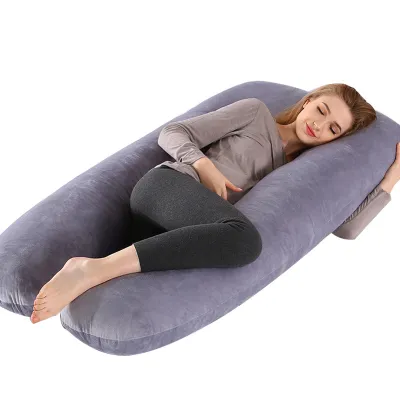
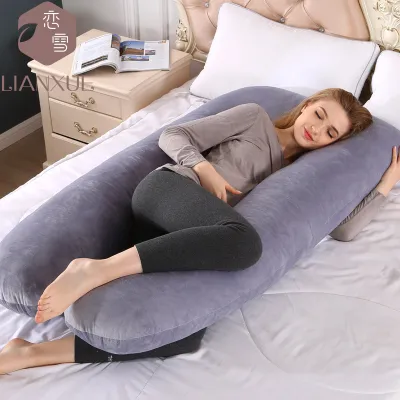
A U-shaped maternity pillow features a symmetrical, double-sided design that completely encloses your body. It consists of two long parallel arms connected by a curved top section, allowing you to nestle directly into the center. This layout is ideal for distributing weight evenly across your front and back, providing equal support to your spine and your growing belly without requiring you to reposition the pillow when you turn over.
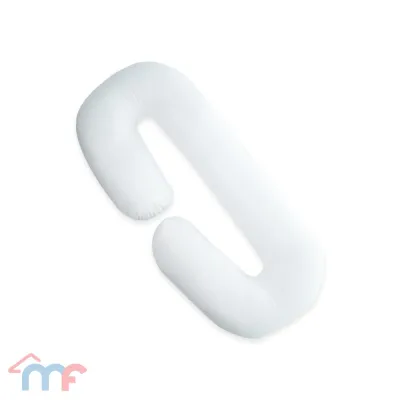
In contrast, a C-shaped pillow utilizes a single, continuous curve that wraps around the body. One end of the “C” cradles your head and neck, the middle section runs along either your back or your belly, and the lower end tucks between your thighs to align your hips. This design focuses on head-to-toe alignment along one side of your body, making it highly versatile for those who prefer a curled-up sleeping posture.
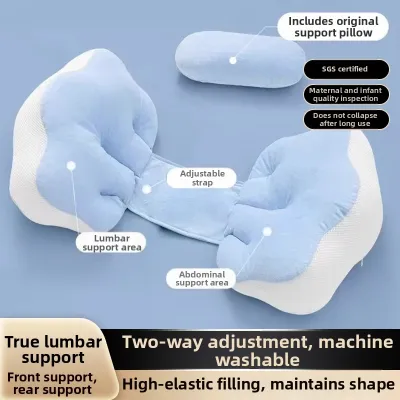
The J-shaped pillow presents a more streamlined, asymmetrical layout. It typically features a long, straight body with a curved hook at one end, resembling a candy cane. This shape provides targeted support where you need it most—such as under your head and between your knees—while leaving one side of your body completely open. Because exact dimensions, thickness, and firmness levels vary significantly by manufacturer, it is always advisable to check the specific product measurements to ensure a proper fit for your height and bed size.
Matching Pillow Shapes to Your Preferred Sleeping Position
Your dominant sleeping position is the most critical factor when choosing a maternity pillow shape. The geometry of each pillow determines which areas of your body receive cushioning and which areas remain unsupported. Aligning the pillow’s structure with your natural sleep habits ensures that your joints remain in a neutral position throughout the night.

As your pregnancy progresses, your sleeping habits will likely need to adapt to accommodate your changing body. It is highly recommended to consult your healthcare provider or OB-GYN regarding the safest and most comfortable sleeping positions for your specific trimester. They can offer personalized guidance on how to position your body to optimize circulation and comfort.
Best Options for Side Sleepers
Side sleeping is widely recommended during pregnancy because it helps maintain optimal blood flow to the uterus and kidneys. However, sleeping on your side for extended periods can place strain on your lower back and hips as your belly grows. Maternity pillows assist in maintaining this position by cradling your body and preventing you from rolling onto your stomach or flat onto your back.
For side sleepers who tend to toss and turn, a U-shaped pillow is often highly effective. Because it features supportive arms on both sides, you can turn from left to right throughout the night without having to drag a heavy pillow over with you. The back arm keeps you securely positioned on your side, while the front arm supports your belly and knees.
If you prefer a more nested, curled position on one side, a C-shaped pillow offers excellent targeted support. The curve tucks neatly under your belly to relieve downward pull, while the lower portion fits comfortably between your knees to keep your pelvis aligned. For those who want a lighter, less restrictive option, a J-shaped pillow can be tucked directly under the belly and between the knees, providing essential side-sleeping support without enclosing your entire body.
Adjustments for Back and Stomach Sleepers
Sleeping flat on your back or stomach becomes increasingly uncomfortable and is generally discouraged as pregnancy progresses. Flat back sleeping can cause the weight of the uterus to press on the vena cava, a major blood vessel, which may affect circulation. Stomach sleeping quickly becomes physically impractical as the belly expands.
If you are naturally a back or stomach sleeper, you can use maternity pillows to transition into a safe, comfortable alternative. A U-shaped or C-shaped pillow can be used to prop your upper body up into a semi-reclined position. This elevation helps relieve pressure on your lower back and can also mitigate common pregnancy symptoms like heartburn or acid reflux.
When using a pillow to create a propped-up or semi-reclined sleeping angle, it is important to check the manufacturer’s guidelines to ensure the pillow is positioned safely. Avoid propping yourself up at angles that strain your neck or cause your lower back to arch unnaturally. Experiment with the placement of the pillow arms to find a stable, upright position that keeps you comfortable without compromising your spinal alignment.
Key Factors to Evaluate Before You Choose
Beyond the basic shape of the pillow, several practical factors will influence how well a maternity pillow fits into your daily routine and sleeping environment. Evaluating these details before making a purchase will help you avoid common pitfalls, such as buying a pillow that is too large for your bed or too warm for your local climate.
- Bed Size and Space: U-shaped pillows have a very large footprint and require significant mattress width. If you sleep on a double or queen-sized bed with a partner, a U-shaped pillow may crowd the bed and leave little room for your partner. C-shaped and J-shaped pillows are much more compact, making them better suited for smaller mattresses or shared sleeping spaces.
- Material and Fill: In warm, humid tropical climates like the Philippines, heat retention is a major concern. Look for pillows with breathable outer covers made from natural fibers like 100% cotton or bamboo-derived rayon, which help wick away moisture. Check the product labels to verify the fill material; shredded memory foam or polyester fiberfill allow for better airflow than solid foam inserts.
- Care and Maintenance: Maternity pillows are subjected to daily use, sweat, and potential spills. It is essential to verify if the pillow features a removable, machine-washable cover. Check the manufacturer's care instructions to ensure the cover can be easily cleaned without shrinking or losing its shape.
- Postpartum Utility: Many parents continue to use their maternity pillows long after giving birth. C-shaped and J-shaped pillows can easily be repurposed as nursing pillows to support your baby during feeding, or as a supportive cushion to help you sit comfortably during postpartum recovery. Always follow safety guidelines and never leave an infant unattended on a maternity pillow.
Shape Comparison at a Glance
To help you weigh the pros and cons of each design, the table below summarizes the core trade-offs of U-shaped, C-shaped, and J-shaped maternity pillows. These comparisons are based on general design characteristics and may vary depending on the specific brand you choose.
| Pillow Shape | Best For | Space Required | Key Limitation |
|---|---|---|---|
| U-Shaped | Full-body wrapping, back and front support, frequent turners | Large (best for King or Queen beds) | Bulky, heavy to move, can crowd a partner |
| C-Shaped | Versatile side support, head-to-toe alignment, nested sleeping | Medium (fits most standard beds) | Must be manually flipped when you change sides |
| J-Shaped | Targeted belly and leg relief, compact support, minimal bed clutter | Small to Medium (partner-friendly) | Provides less back support compared to U-shape |
| Verify First | Check product dimensions, weight limits, and cover fabric before purchasing | Check mattress dimensions | Ensure the cover is removable and washable |
How to Decide: A Step-by-Step Selection Guide
To finalize your decision, take a systematic approach by matching your specific physical needs and sleeping environment to the strengths of each pillow shape. Use the following framework to guide your purchase:
- Choose a U-shaped pillow if: You experience significant back pain, frequently toss and turn from side to side, have a large mattress (such as a King or Queen), and want a secure, fully enclosed feeling that prevents you from rolling over.
- Choose a C-shaped pillow if: You want comprehensive head-to-toe support on a single side, prefer a curled-up sleeping position, have a standard-sized bed, and want a versatile pillow that can easily double as a nursing support later on.
- Choose a J-shaped pillow if: You only need targeted support for your belly and knees, prefer to keep one side of your body open, sleep in a smaller bed, or want to minimize bed clutter so your partner has plenty of space.
- Neither may fit if: You have a very small mattress, share a bed in a warm room without air conditioning, or strongly prefer using multiple standard bed pillows that you can adjust individually. If space or heat is a major constraint, using a combination of smaller, standard pillows under your belly and between your knees may be a more comfortable and flexible solution.
When purchasing from online marketplaces, always verify the seller’s return policies and trial periods. Because comfort is highly subjective, what works perfectly for one person may not suit another. Checking the return terms ensures you can exchange or return the pillow if the firmness, size, or material does not meet your expectations once you try it at home.
Frequently Asked Questions (FAQ)
Can I use a regular pillow instead of a maternity pillow?
Yes, you can use regular bed pillows to support your body during pregnancy. Placing a standard pillow between your knees helps align your hips, while tucking a small, firm pillow under your belly can relieve tension on your lower back. While this approach is highly customizable and takes up less space, the primary trade-off is stability. Regular pillows tend to shift and slide out of place as you move during the night, whereas a unified maternity pillow is designed to stay securely positioned around your body.
When is the best time to start using a maternity pillow?
There is no single correct time to start using a maternity pillow, as the transition depends entirely on your personal comfort. Many women begin using one during the second trimester, around week 20, when the growing belly starts to make side sleeping more challenging or when lower back discomfort begins. However, you can start using a supportive pillow as soon as you experience sleep disruptions. If you are unsure, consult your healthcare provider for personalized recommendations based on your pregnancy progression and physical comfort.

Community discussion
Share your experience or ask a question. Comments are reviewed before publication.