
Finding comfortable sleep during pregnancy can be challenging, especially when dealing with tropical humidity and a growing belly. Choosing between a U-shaped and a C-shaped pregnancy pillow comes down to your bed size, how much you move at night, and whether you need support on both sides of your body. A U-shaped pillow offers symmetrical, front-and-back support that is ideal if you toss and turn, while a C-shaped pillow provides targeted contouring that saves valuable mattress space in smaller bedrooms. By understanding how these designs interact with your sleep style, you can make an informed choice that promotes restful, safe sleep throughout your pregnancy journey.
Understanding the Core Differences in Full-Body Support
Pregnancy pillows are specifically engineered to alleviate the unique physical pressures of gestation, but their structural designs approach this goal from entirely different angles. A U-shaped pregnancy pillow is designed like a giant, symmetrical horseshoe. It features two long, parallel arms connected by a curved top section. This wrap-around configuration allows you to lie directly in the center, receiving equal support on both the left and right sides of your body simultaneously. The symmetrical design means your head, neck, back, belly, and knees are cradled in a continuous cocoon of cushioning, regardless of which way you face.
In contrast, a C-shaped pregnancy pillow utilizes a single, continuous curve that resembles a large crescent or the letter C. This design does not wrap around both sides of your body at once. Instead, it is meant to hug either your front or your back. One end of the curve serves as a headrest, the long middle section contours along your spine or supports your growing belly, and the lower end tucks comfortably between your thighs or knees. Because it only covers one side of your body, it offers a more targeted, streamlined approach to alignment.
Products mentioned in this guide

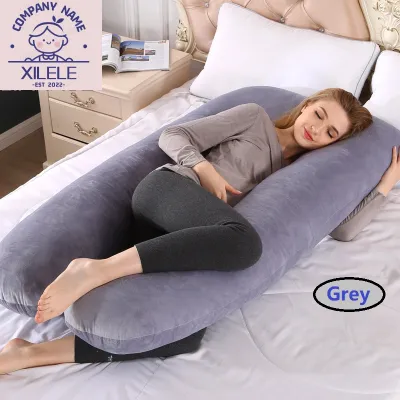
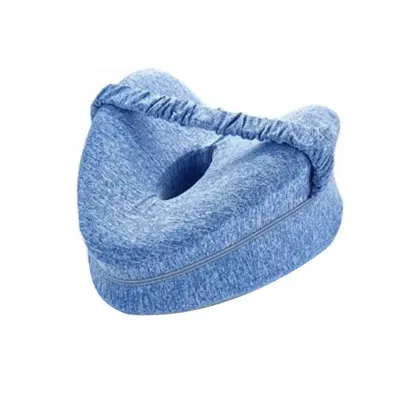
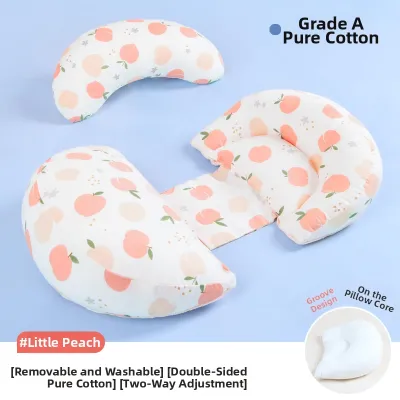
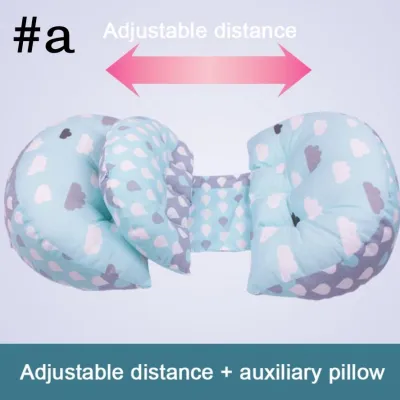
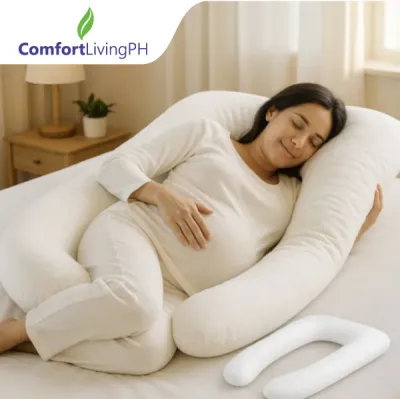
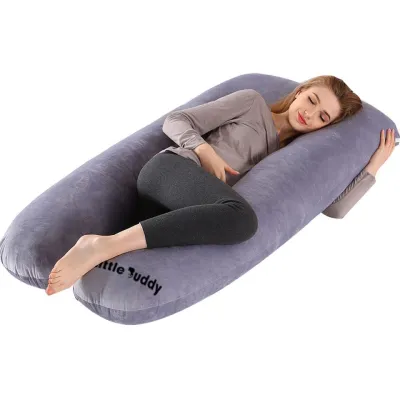

Prices are valid at publication and may change. Please refer to the product page for the latest price.
While both shapes aim to keep your spine neutral and reduce pressure on your hips, they distribute your body weight in fundamentally different ways. The U-shape distributes pressure evenly across both sides of your body, which can help minimize the strain on your pelvis. The C-shape concentrates its support along a single primary curve, which can feel more focused and less restrictive for sleepers who do not like feeling enclosed.
While these pillows are designed to support your body, they are not medical devices. If you experience persistent pelvic pain, severe backaches, or chronic sleep disruptions, consult your obstetrician or a qualified healthcare professional for personalized guidance. Additionally, because materials, firmness levels, and dimensions vary widely across brands, it is essential to check the manufacturer’s specifications and product labels before buying. Look for details regarding intended support zones and weight distribution to ensure the pillow aligns with your specific body type and comfort needs.
Space Requirements and Bed Compatibility
When selecting pillows for pregnant women, mattress size and bedroom space are critical practical considerations that directly impact your sleep quality. A U-shaped pillow has a massive physical footprint. Because of its double-sided design, it takes up a significant amount of space on a mattress, often occupying more than half of a standard Double or Queen-sized bed. In smaller bedrooms or homes where space is at a premium, this large footprint can make the entire sleeping area feel cramped and restricted.

If you share your bed with a partner, a U-shaped pillow can act as a literal physical barrier between the two of you. This separation can sometimes crowd your partner, forcing them to sleep near the edge of the mattress or leaving you with very little room to adjust your position safely. In tropical climates where airflow is crucial for staying cool at night, being crowded by a massive pillow and a partner can trap heat, leading to uncomfortable, sweaty nights.
A C-shaped pillow offers a much more compact, space-saving profile. Because it only hugs one side of your body, it leaves the other side of the bed completely open. This makes it an excellent choice for those who sleep on a Double or Queen-sized mattress with a partner, as it provides the necessary maternal support without taking over the entire bed. The smaller size also allows for better air circulation around your body, helping you stay cooler during warm, humid nights.
Before making a purchase, it is highly recommended to measure your mattress width and assess the remaining space available for your partner. If a pillow’s size compromises safe sleep space, forces you to sleep too close to the edge of the bed, or creates a rolling hazard where you might fall, it is a clear sign that the design is too large for your sleeping arrangement. Choosing a pillow that fits your bed ensures both you and your partner can sleep safely and comfortably.
Matching Pillow Shape to Your Sleeping Position
Your natural movement patterns and dominant sleeping positions during the night are the most important factors in determining which pillow shape will feel like a relief and which will feel like an obstacle. Aligning your sleep habits with the correct pillow design prevents unnecessary nighttime disruptions and helps you maintain a healthy posture.
Side Sleepers and Frequent Tossers
For side sleepers who frequently flip from left to right throughout the night, a U-shaped pillow offers unparalleled convenience. Because the pillow is completely symmetrical, you do not need to manually move, drag, or adjust the pillow when you decide to change sides. You simply roll over within the center of the “U” and find an identical, fully supportive arm waiting to cradle your back and belly on the other side. This seamless transition allows you to stay in a relaxed state without fully waking up to reposition your bedding.
Active sleepers who choose a C-shaped pillow face a distinct limitation. Because the open side of the “C” offers no physical support, flipping over to the opposite side means you will find yourself facing away from the main support curve. To maintain the same level of belly or back support, you must either manually drag the bulky pillow over your body to the other side or physically turn the pillow around in the bed. This constant readjustment can disrupt your sleep cycle, leaving you feeling tired and frustrated the next morning.
Back-to-Side Transitioners and Restless Sleepers
Medical professionals generally recommend side sleeping during the later stages of pregnancy to optimize blood flow and comfort. However, if you are naturally a back sleeper, training your body to stay on your side can be an uphill battle, as your muscles instinctively try to roll flat onto your back while you sleep.
A U-shaped pillow is exceptionally effective for back-to-side transitioners because its back panel acts as a firm, physical barrier. When your body attempts to roll onto your back during the night, the solid, cushioned arm of the pillow stops you in your tracks, keeping you safely tilted on your side. This constant, passive feedback helps you maintain the recommended sleeping position without requiring conscious effort.
A C-shaped pillow can also be used to discourage back rolling, but it requires you to tuck the main curve tightly behind your back. Because there is no secondary arm to anchor the pillow in place, it can easily slide away if you shift or move restlessly. Once the pillow shifts, the barrier is lost, and you may find yourself rolling onto your back again, requiring you to wake up and manually tuck the pillow back into position.
Side-by-Side Comparison Matrix
To help you quickly evaluate the practical differences between these two popular designs, the table below summarizes the key decision-defining dimensions of U-shaped and C-shaped pregnancy pillows.
| Feature | U-Shaped Pillow | C-Shaped Pillow |
|---|---|---|
| Support Coverage | Full-body, symmetrical front and back support simultaneously | Targeted, single-sided support for head, back/belly, and knees |
| Bed Space Required | Large footprint; takes up more than half of a Double/Queen bed | Compact footprint; space-saving and partner-friendly |
| Flipping Convenience | High; no need to move the pillow when changing sides | Low; requires manual repositioning of the pillow when flipping |
| Storage & Portability | Bulky and heavy; difficult to store or travel with | Moderately compact; easier to pack, store, or move around |
How to Make Your Final Decision
Choosing the right pillow for your pregnancy journey does not have to be overwhelming if you focus on your specific living conditions and sleep habits. By matching your daily realities with the unique strengths of each design, you can select a pillow that truly enhances your rest.
You should choose a U-shaped pillow if you find yourself changing sides frequently throughout the night and want to avoid moving your pillow each time. This design is also the ideal choice if you struggle to stay on your side and need a reliable physical barrier to prevent you from rolling onto your back. However, ensure you have a larger bed, such as a Queen or King-sized mattress, and that your partner is comfortable sharing the remaining space.
You should choose a C-shaped pillow if you have limited bed space, share a smaller mattress like a Double, or want to maintain a close sleeping arrangement with your partner. This design is also perfect if you strictly sleep on one side without tossing and turning, or if you need a lighter, more portable option that is easier to store or pack for travel.
Before making your final purchase on any online marketplace or local store, always verify a few critical product specifications. First, check that the pillow’s total length matches your height so that your head and knees can be supported simultaneously. Second, verify that the cover is fully removable and machine-washable according to the care label to ensure easy hygiene maintenance. Finally, check the manufacturer’s description of the filling density to ensure it aligns with your personal preference for either plush cushioning or firm, structured support.
Frequently Asked Questions (FAQ)
Can I use a U-shaped or C-shaped pillow after pregnancy? (FAQ)
Yes, both U-shaped and C-shaped pillows offer excellent utility long after your pregnancy journey is complete. During the postpartum recovery period, these pillows can be repurposed to provide comfortable body alignment and support as your muscles heal. Many mothers find that wrapping a C-shaped pillow around their waist provides an excellent, supportive cushion for nursing or bottle-feeding their baby. A U-shaped pillow can also be used to prop yourself up comfortably in bed while reading, resting, or feeding. Always check the manufacturer’s guidelines for weight limits, structural integrity, and washing instructions to ensure the pillow remains clean and safe for postpartum use.
Do these pillows come with removable and washable covers? (FAQ)
While many high-quality pregnancy pillows include removable covers, you should never assume that a cover is included with every product. Always check the specific product listing and packaging details on the ecommerce platform or store before purchasing. Keeping your pillow clean is essential, especially in warm, humid climates where sweat and oils can quickly accumulate on the fabric. Once you confirm a cover is included, verify the care label for specific washing instructions, such as recommended water temperatures and drying limits. Following these guidelines prevents the fabric from shrinking and protects the inner filling from clumping or losing its shape over time.

Community discussion
Share your experience or ask a question. Comments are reviewed before publication.