
Choosing the right childcare nursing pillow is not about finding a universally perfect product, but about matching a specific shape to your unique body proportions, postpartum recovery needs, and preferred feeding positions. The right pillow acts as a supportive bridge, bringing your baby up to breast height so you do not have to hunch forward, which prevents chronic neck, shoulder, and back strain. Because every parent’s body and recovery journey are different, understanding how these shapes interact with your physical frame is the key to a comfortable feeding experience.
In tropical climates where humidity and heat are daily factors, physical comfort during feeding sessions is even more critical. Holding a warm baby close for extended periods can quickly lead to overheating and discomfort for both of you. A well-chosen nursing pillow not only supports the baby’s weight but also helps maintain a slight physical boundary that allows air to circulate, keeping these intimate moments peaceful and comfortable.
Comparing the Main Childcare Nursing Pillow Shapes
To make an informed decision, you must first understand the structural differences between the three primary nursing pillow designs available on the market. Each shape offers a distinct level of coverage, stability, and physical footprint.
Products mentioned in this guide
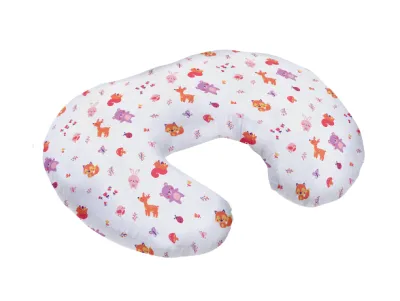
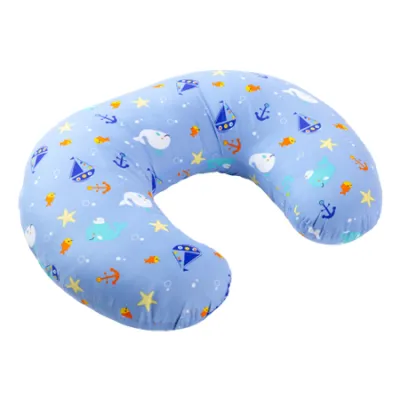
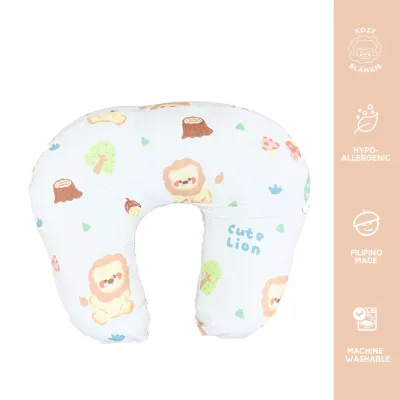
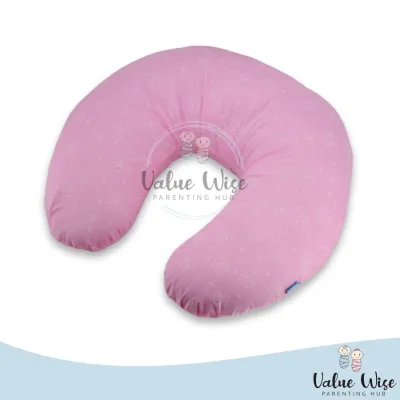
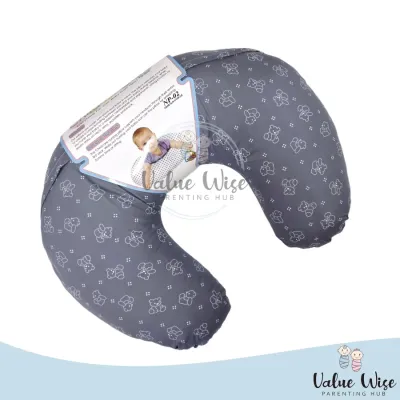
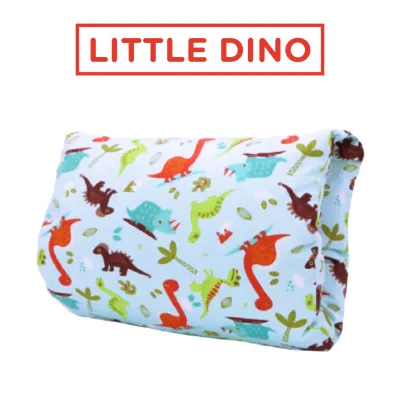
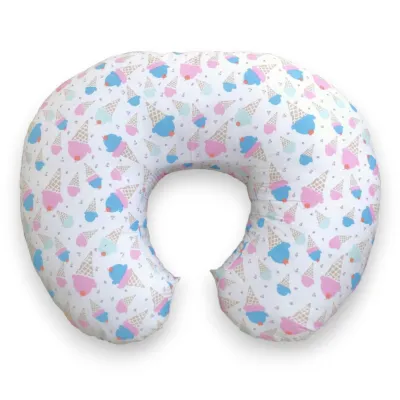
Prices are valid at publication and may change. Please refer to the product page for the latest price.
U-Shaped (Wrap-Around) Design
The U-shaped nursing pillow is designed to wrap completely around your torso, hugging your waist and resting flat on your lap. This design often features an adjustable strap, belt, or buckle system that secures the pillow tightly against your body. By locking into place, it distributes the baby’s weight evenly across your hips and lower back rather than concentrating the pressure on your thighs or abdomen. This wrap-around structure provides a highly stable, non-slip platform that stays securely in place even if you need to shift your seating position.
C-Shaped (Crescent) Design
The C-shaped or crescent nursing pillow features an open-back profile that simply slides onto your lap from the front. It does not utilize straps or buckles, making it incredibly quick to position and remove with one hand while holding a baby. Because it lacks a rear wrap-around section, it has a much smaller physical footprint, allowing it to fit comfortably within the narrow confines of standard rocking chairs, armchairs, or compact nursery gliders. The flexible ends of the crescent can gently expand to accommodate various waist sizes, resting naturally on your thighs.
Wedge (Angled) Design
The wedge nursing pillow is a minimalist, compact option featuring a sloped or angled profile. Unlike U-shaped or C-shaped designs, a wedge does not wrap around your body at all. Instead, it is designed for targeted elevation, sliding under a specific area to support your forearm, the baby’s head, or your lower back. Its small size makes it highly portable and easy to pack into a diaper bag, offering a practical solution for families who travel frequently or have limited storage space at home.
Matching the Pillow to Your Preferred Feeding Position
Your preferred feeding position directly dictates how much physical support you need from a pillow. Matching the pillow’s shape to your preferred hold prevents you from tensing your shoulders or straining your wrists to keep your baby in place.

Cradle and Cross-Cradle Holds
The cradle and cross-cradle holds are the most common breastfeeding positions, requiring the baby to lie horizontally across your lap. For these positions, U-shaped or thick C-shaped pillows are highly effective because they provide a continuous, wide, and level surface. The pillow supports the baby’s entire body while giving you a firm place to rest your elbows and forearms. This setup eliminates the need to lift or hold the baby’s weight with your arm muscles, allowing your upper body to remain completely relaxed.
Football (Clutch) Hold
In the football hold, the baby is tucked under your arm along your side, with their feet pointing toward your back. This position is highly recommended for parents with larger breasts or those recovering from abdominal surgery. A C-shaped pillow is excellent for this hold because you can easily rotate the crescent shape to the side of your body, supporting the baby’s length along your flank. Alternatively, specialized side-support wedge pillows can be tucked under your arm to elevate the baby without wrapping around your entire waist.
Side-Lying and Laid-Back Nursing
Laid-back nursing involves reclining comfortably on a bed or sofa, allowing gravity to help keep the baby in position. In this relaxed posture, a bulky U-shaped or C-shaped pillow can get in the way, pushing the baby too far from your chest. A wedge pillow is far more practical here, as it can be placed under your head and shoulders for comfortable elevation, or tucked gently under your side to support your arm without adding unnecessary bulk to your lounging space.
Factoring in Body Type and Postpartum Recovery
Your physical proportions and immediate postpartum physical condition are critical factors that determine which pillow dimensions will offer the most ergonomic support.
Torso Length and Breast Size
The primary goal of a nursing pillow is to bring the baby up to the level of your nipple so you do not have to lean forward. If you have a long torso, a standard, thin nursing pillow may still leave a significant gap, forcing you to slouch. In this case, you need a thicker, firmer U-shaped or C-shaped pillow to bridge the distance. If you have a shorter torso, a very thick pillow might elevate the baby too high, forcing you to lift your shoulders uncomfortably; a flatter wedge or an adjustable-height pillow would be a much better fit.
C-Section Recovery
Recovering from a Cesarean delivery requires keeping all pressure away from your lower abdomen and incision site. A standard, tight-fitting C-shaped pillow that rests directly on your lap can press painfully against your healing wound. To avoid this, look for a U-shaped pillow with an adjustable strap that can be buckled higher up on your ribcage, completely bypassing the incision. Alternatively, using a wedge pillow to support a football hold on your side keeps the baby’s weight entirely off your midsection, allowing your incision to heal without disturbance.
Plus-Size Considerations
Many standard C-shaped pillows have rigid, narrow openings designed for smaller waist sizes. On a plus-size frame, these rigid pillows can pinch, slide forward, or fail to wrap around the hips, creating a gap between the pillow and your abdomen where the baby can easily slip down. To prevent this, look for U-shaped pillows with long, flexible, and adjustable straps that can be customized to your waist size. Alternatively, choose an open-back design that can sit flat on your lap without needing to wrap tightly around your midsection.
Essential Specifications to Verify Before Purchase
Before purchasing any childcare nursing pillow, it is important to evaluate its physical specifications and materials to ensure they meet your daily practical needs.
Firmness and Fill Material
While a soft, plush pillow might feel comfortable to the touch, it is highly likely to sink under your baby’s weight, offering very little actual support. Look for pillows filled with dense, high-density foam or firm, tightly packed polyester fiberfill. The surface should be firm enough that your baby rests flat on top of it without rolling inward toward your body or outward away from you. Press down on the pillow with your hand; it should quickly bounce back to its original shape rather than leaving a deep, lasting indentation.
Cover Fabrics and Care Instructions
In warm, humid tropical environments, baby spit-up, sweat, and spilled milk can quickly lead to odor and bacterial growth. Prioritize breathable, natural cover fabrics like organic cotton, bamboo rayon, or lightweight linen that allow air to circulate and keep your baby cool. Always verify that the pillow cover is fully removable via a durable, recessed zipper and is completely machine-washable. Check the manufacturer’s label to see if the inner pillow core can also be washed or if it is spot-clean only.
Safety Warnings and Age Limits
Always review the manufacturer’s guidelines regarding supervised use, weight limits, and structural integrity over time. Some nursing pillows are designed strictly for feeding support, while others are rated for supervised developmental milestones like tummy time or propping once the baby reaches a specific age. Never assume a pillow is suitable for a specific developmental stage without verifying the official product documentation first.
Final Decision Framework: Which Shape is Right for You?
To finalize your decision, review this straightforward, conditional framework based on your primary daily needs:
- Choose a U-shaped pillow if you require maximum stability, need to distribute weight away from your lower back, are recovering from a C-section and need to secure the pillow high on your ribcage, or are feeding twins simultaneously.
- Choose a C-shaped pillow if you have limited seating space in your nursery, prioritize a quick and easy setup without dealing with straps, or prefer to feed your baby in the classic football hold.
- Choose a wedge pillow if you have a very small living space, travel frequently, prefer laid-back or side-lying feeding positions, or simply need a minimalist tool to support your forearm.
If you have specific medical recovery needs, experience persistent physical pain during feeding, or if your baby requires precise positioning due to reflux or other developmental factors, always consult your healthcare provider or a certified lactation consultant before making your final choice.
Frequently Asked Questions (FAQ)
Can a childcare nursing pillow be used for baby sleep?
No, a childcare nursing pillow must never be used for infant sleep. Nursing pillows are designed strictly as active, supervised feeding supports for awake babies. The soft, contoured, and inclined surfaces of these pillows present a severe risk of positional asphyxiation if the baby’s head falls forward onto their chest, or suffocation if they roll over into the fabric. To ensure your baby’s safety, always follow standard safe sleep guidelines: place your baby to sleep on their back on a flat, firm, and completely bare surface, such as a crib or bassinet mattress with a tight-fitting sheet.
How do I clean and maintain the pillow cover?
To clean and maintain your nursing pillow, always start by checking the manufacturer’s care label for specific instructions. Most high-quality pillows feature a removable cover that can be machine-washed on a gentle cycle using a mild, baby-safe detergent. Avoid using harsh chemicals, bleach, or strong fabric softeners, as these can leave residues that irritate a newborn’s sensitive skin. In humid climates, it is absolutely critical to ensure that both the cover and the inner pillow core are completely dry before reassembling them, as any trapped moisture can quickly lead to the growth of mold or mildew.

Community discussion
Share your experience or ask a question. Comments are reviewed before publication.