
Finding restful sleep during pregnancy can feel like an ongoing challenge as your body undergoes rapid changes. As your belly grows, maintaining a comfortable and safe sleeping posture becomes increasingly difficult, often leading to restless nights and morning aches. While side sleeping is widely recommended during the later stages of pregnancy, it can place unusual strain on your hips, pelvis, and lower back if your body is not properly aligned.
A specialized pregnancy pillow is designed to address these physical challenges by providing targeted cushioning and support. However, because every expectant mother has a unique body shape, sleeping style, and bedroom setup, there is no single pillow design that works perfectly for everyone. The right choice for you depends on how you naturally move during the night, where you feel the most tension, and the physical dimensions of your bed.
By comparing the three primary designs—U-shaped, C-shaped, and wedge pillows—you can identify which shape aligns with your personal comfort needs and living space. This guide breaks down the structural features, support zones, and practical considerations of each type to help you make an informed decision for a more comfortable night’s rest.
Products mentioned in this guide




Prices are valid at publication and may change. Please refer to the product page for the latest price.
Understanding the Design and Support Zones of Each Shape
To choose the right pregnancy pillow, it is essential to understand how each shape is engineered and which parts of your body it is designed to support. These pillows are structured to distribute weight evenly and relieve pressure points that are unique to pregnancy.
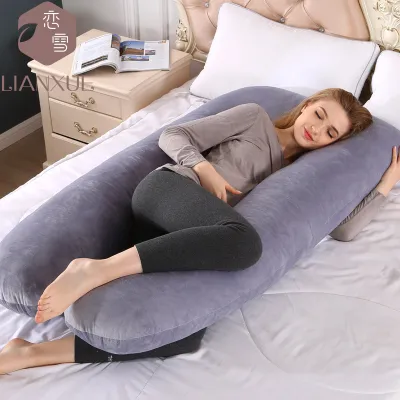
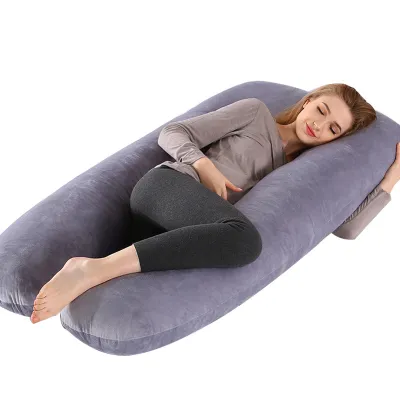
The U-shaped pregnancy pillow is a symmetrical, full-body design that completely encloses your body. It features two long parallel arms connected by a curved top section, allowing you to lie directly in the center. This dual-sided structure provides simultaneous support to your back and your belly, regardless of which side you face. The long arms can be tucked between your knees to align your hips, while the top curve supports your head and neck, eliminating the need for separate pillows.
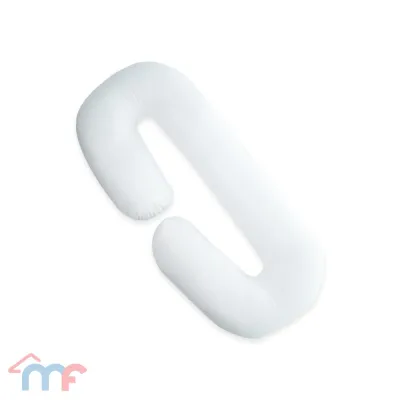
In contrast, the C-shaped pregnancy pillow offers a single-sided, asymmetrical curve that wraps around your body. It is shaped like a large letter “C,” with the top curve supporting your head, the middle section cushioning either your back or your belly, and the bottom curve tucking between your thighs. Because it only encloses one side of your body, it offers greater flexibility, allowing you to easily adjust how closely the pillow hugs your frame or to switch which side of your body receives the primary support.
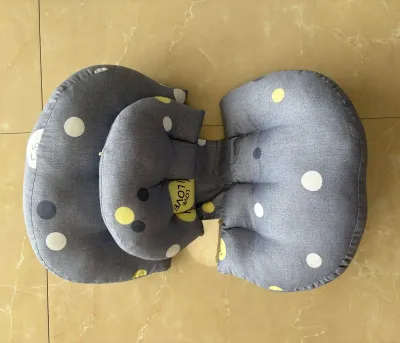
The wedge pregnancy pillow is a compact, triangular or sloped cushion designed for highly localized support. Unlike full-body options, a wedge does not attempt to cradle your entire frame. Instead, it is placed strategically under specific areas that require extra lifting, such as directly beneath your expanding belly to prevent pulling, or behind your lower back to prevent you from rolling onto your back during sleep. Its firm, angled structure provides stable elevation without taking up excess space.
Matching the Pillow Shape to Your Sleep Position
Your preferred sleeping posture is one of the most critical factors in determining which pregnancy pillow shape will provide the greatest relief. Aligning the pillow’s support zones with your natural sleep habits helps prevent waking up with stiffness or joint pain.

For dedicated side sleepers, maintaining proper spinal alignment is key to preventing hip and lower back discomfort. When you sleep on your side without support, your upper leg can slide forward, twisting your pelvis and straining your lower spine. Both U-shaped and C-shaped pillows excel here by providing a thick cushion to place between your knees and ankles. This elevates your upper leg, keeping your hips stacked and your pelvis neutral, while the middle section of the pillow gently cradles your belly to prevent it from pulling forward.
If you only require targeted support rather than full-body cushioning, a wedge pillow is often the most practical solution. Many expectant mothers find that their head and neck support needs do not change during pregnancy, but they experience a distinct downward pull on their abdomen when lying on their side. Placing a compact wedge pillow under the belly fills this gap, taking the weight off the lower back muscles. Alternatively, placing the wedge behind the lower back provides a physical barrier that gently keeps you tilted on your side.
For restless sleepers who frequently toss and turn throughout the night, the U-shaped pillow is highly beneficial. When using a C-shaped or standard pillow, turning over usually requires you to physically drag the pillow with you to the other side of the bed, which can disrupt your sleep cycle. With a U-shaped pillow, identical support arms are permanently positioned on both your left and right sides. You can roll from left to right seamlessly, finding immediate belly, back, and knee support on either side without any manual repositioning.
Factoring in Bedroom Space and Bed-Sharing Constraints
While a large, plush pregnancy pillow sounds incredibly comfortable, its physical size can present practical challenges depending on your bedroom environment. It is important to balance your personal comfort needs with the physical constraints of your mattress and your sleeping arrangements.
Bed size compatibility is a crucial consideration before purchasing a full-body pillow. U-shaped pillows have a very large footprint and can easily occupy more than half of a standard queen-sized mattress. In tropical climates where high humidity and warm temperatures are common, such as in the Philippines, a massive pillow that traps air around your body can also make you feel uncomfortably warm. If you sleep on a double or queen-sized bed, a U-shaped pillow may leave very little room for movement or airflow.
If you share your bed with a partner, their comfort and space must also be factored into the decision. A giant U-shaped pillow can create a physical barrier between you and your partner, sometimes crowding them to the edge of the mattress. A C-shaped pillow is slightly more accommodating because its open side allows for closer contact and takes up less overall width. For those sharing smaller beds, a wedge pillow is often the most considerate choice, as its minimal footprint provides the necessary support for you without encroaching on your partner’s side of the bed.
Storage, maintenance, and portability are additional practical factors to keep in mind. Full-body pillows are bulky and can be difficult to store neatly during the day, and they are highly impractical to pack for travel or overnight stays away from home. A wedge pillow, on the other hand, is small enough to fit into a standard tote bag or suitcase, making it an excellent option if you travel frequently or need a portable support cushion for your office chair or sofa.
How to Choose: A Decision Framework for Your Needs
To finalize your choice, evaluate your daily routine, sleeping habits, and bedroom setup against the specific characteristics of each pillow design. This framework is intended to help you identify the shape that best matches your current lifestyle and physical needs.
You should choose a U-shaped pillow if you experience widespread aches across your back, hips, and shoulders simultaneously. This design is ideal if you have a king-sized bed, do not mind a large physical barrier in bed, and frequently roll from side to side during the night. It offers the most comprehensive, dual-sided support without needing to adjust your bedding when you turn.
You should choose a C-shaped pillow if you want the head-to-toe support of a full-body pillow but prefer a more flexible, open design. This shape is suitable if your bed space is moderate, such as a standard queen mattress, and you want the option to tuck the pillow behind your back or curl it tightly under your belly depending on how you feel each night. It provides excellent spinal alignment while remaining slightly easier to maneuver than a U-shaped model.
You should choose a wedge pillow if your primary discomfort is localized to your belly or lower back, and you prefer to keep using your existing head pillow. This option is highly recommended if you share a smaller bed, prefer a cooler sleeping environment with maximum airflow, or need a budget-friendly and highly portable solution that can easily transition from the bed to the living room sofa.
Before making your final purchase, always verify the product specifications on the manufacturer’s label. Pay close attention to the exact dimensions to ensure the pillow will fit your mattress comfortably. Additionally, check the filling materials—breathable cotton, polyester fiberfill, or memory foam—and ensure the pillow comes with a removable, machine-washable cover. In warm and humid climates, having a cover that is easy to remove and wash regularly is essential for maintaining hygiene and keeping your sleeping environment fresh.
Frequently Asked Questions (FAQ)
When should I start using a pregnancy pillow?
Most expectant mothers begin using a pregnancy pillow around the second trimester, typically between week 13 and week 20, as the abdomen begins to expand. You may want to start using one as soon as you notice physical signs of discomfort, such as waking up with a dull ache in your lower back, feeling pressure in your hips, or finding it difficult to remain comfortably on your side. If you have specific medical concerns or pre-existing joint issues, consult your obstetrician or physical therapist for personalized guidance on the best sleep positions and support setups for your body.
Can I use a regular pillow instead of a maternity wedge?
While you can use standard household pillows to prop up your belly or place between your knees, they are generally not designed to hold their shape under consistent pressure. Standard pillows tend to flatten out, shift during the night, or slide out of place as you move. A specialized maternity wedge is constructed with a firm, high-density foam and a precise ergonomic slope. This design ensures that the pillow remains securely in place and provides consistent, stable elevation directly under your belly or behind your back without compressing completely.
How do I clean and maintain a full-body pregnancy pillow?
Proper maintenance is essential for keeping your pregnancy pillow hygienic, especially in warm climates where sweat and oils can accumulate quickly. Always read the manufacturer’s care label before cleaning, as instructions vary by material. Most high-quality pregnancy pillows feature a removable outer cover that can be machine-washed on a gentle cycle. The inner core or filling is typically not machine-washable and should only be spot-cleaned with a damp cloth and mild detergent. Ensure the entire pillow is completely dry before putting the cover back on to prevent the growth of mold or mildew.

Community discussion
Share your experience or ask a question. Comments are reviewed before publication.