
Quick Answer: Essential Safety Features for Nursery Storage
When choosing a toy storage rack for your baby’s room, structural and chemical safety must always take precedence over aesthetic appeal or maximum storage capacity. Infants and toddlers interact with furniture dynamically—often pulling themselves up, climbing shelves, or mouthing surfaces—which makes proactive hazard prevention essential. A safe nursery storage unit must feature reliable tip-over prevention, non-toxic and low-emission materials, rounded edges, and appropriate bin depths that prevent heavy items from falling.
Before making a purchase, parents should verify that the manufacturer explicitly states the age suitability, weight limits, and installation requirements of the unit. Prioritizing these non-negotiable safety criteria ensures the storage system supports your child’s developmental milestones without introducing unnecessary risks into their sleeping and playing environment.
Preventing Tip-Overs: Anchoring and Structural Stability
Furniture tip-overs pose a severe risk to infants and toddlers who are beginning to pull themselves up or explore their surroundings. As a baby pulls on an upper toy bin or attempts to climb a shelf, their body weight shifts the unit’s center of gravity forward, which can cause the entire structure to fall. Because children lack the reflex speed and strength to escape a falling piece of furniture, preventing these accidents requires a combination of secure physical anchoring and smart weight distribution.
Products mentioned in this guide
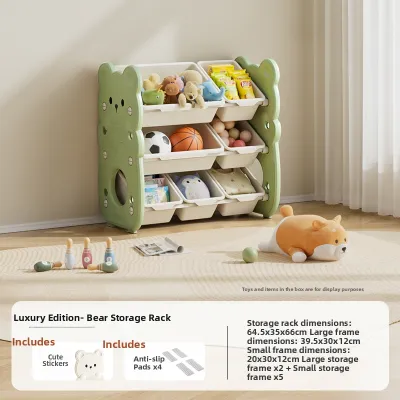
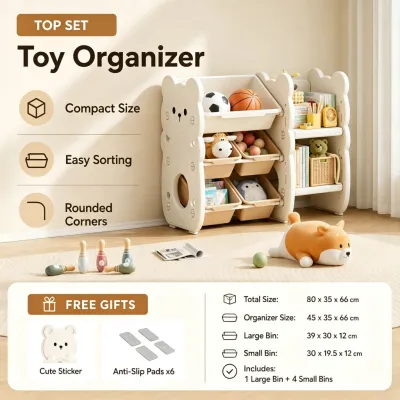
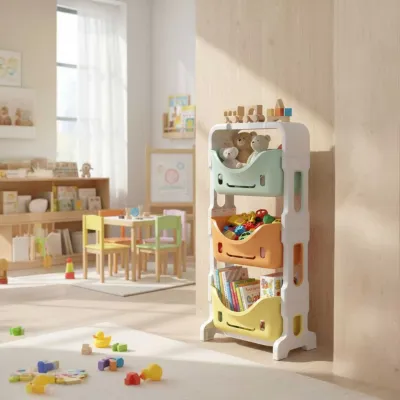
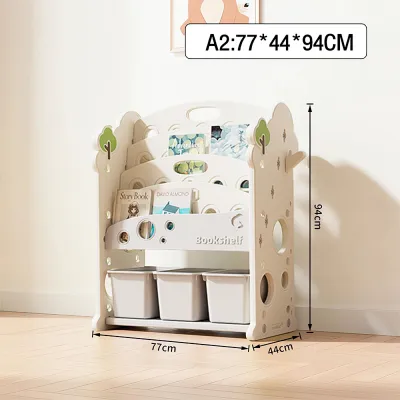
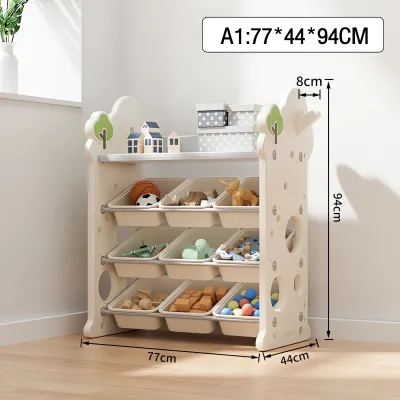
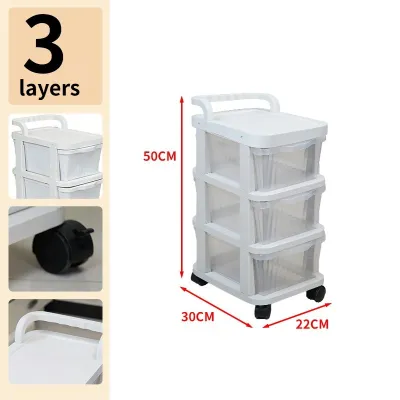
Prices are valid at publication and may change. Please refer to the product page for the latest price.

Every toy storage rack in a nursery must be secured to the wall using robust anti-tip kits or wall straps. When installing these safety devices, you must verify that the anchoring hardware is secured directly into wall studs rather than unstable drywall alone. In the Philippines, where residential walls are frequently constructed from concrete hollow blocks or solid concrete, standard drywall anchors included in imported furniture kits are often insufficient. For these concrete walls, parents should purchase heavy-duty masonry wall plugs—locally known as tox screws—and use a masonry drill bit to ensure a permanent, unyielding hold.
Beyond wall anchoring, the physical design of the rack plays a major role in its stability. Look for storage units designed with a wide base and a low profile, which naturally lowers the center of gravity and reduces the risk of tipping. When organizing the rack, establish a strict weight-distribution rule: store heavy items, such as wooden blocks, puzzles, and board books, on the lowest shelves, and reserve the upper tiers for lightweight plush toys or empty bins.
Finally, always check the manufacturer’s stated weight limits for both the overall unit and individual shelves. Overloading a shelf can cause it to sag, warp, or collapse entirely, which compromises the structural integrity of the entire rack. If the manufacturer does not specify these weight limits, look for alternative products that provide clear, verified structural specifications.
Material Safety: Identifying Non-Toxic Finishes and Plastics
Because babies frequently explore objects with their mouths, the chemical composition of nursery furniture is just as important as its physical stability. The materials used to construct a toy storage rack can release volatile organic compounds (VOCs) or contain harmful heavy metals and chemical plasticizers that compromise indoor air quality and child health.
When comparing frame materials, solid wood is generally preferred over engineered wood options like medium-density fiberboard (MDF) or particleboard. In the highly humid tropical climate of the Philippines, cheap engineered woods are prone to absorbing moisture, which can lead to swelling, structural weakening, and mold growth. Furthermore, engineered woods often utilize adhesives containing formaldehyde. If you select an engineered wood rack, verify that the product carries a certified low-VOC or formaldehyde-free rating, such as a CARB Phase 2 compliance label.
Regardless of the frame material, all paints, stains, and finishes must be non-toxic and lead-free. Carefully read product labels to verify compliance with international toy safety standards, such as the European EN71-3 standard, which limits the migration of heavy metals in consumer products. Avoid any furniture that does not explicitly state that its finishes are non-toxic and safe for children’s spaces.
For units that utilize plastic storage bins, chemical safety remains a primary concern. Parents should look for bins clearly marked as BPA-free, PVC-free, and phthalate-free. High-density polyethylene (HDPE) and food-grade polypropylene (PP) are highly recommended plastics because they are durable, impact-resistant, and do not leach harmful chemicals.
Upon unboxing any new furniture, you may notice a strong chemical odor, commonly referred to as off-gassing. High humidity and warm temperatures can accelerate this process. To protect your baby, assemble and air out the new storage rack in a well-ventilated space away from the nursery—such as a covered balcony, patio, or a room with open windows—for several days until the odor completely dissipates before bringing it into the baby’s room.
Physical Design: Avoiding Entrapment, Pinches, and Sharp Edges
A safe toy storage rack must be free of physical design flaws that could cause cuts, bruises, pinched fingers, or dangerous entrapment. Inspecting the physical construction of the frame and bins before purchase is a crucial step in childproofing your nursery.
First, evaluate the edges and corners of the storage rack. All wooden, metal, or hard plastic frames should feature rounded, chamfered, or heavily padded edges. Sharp 90-degree corners pose a significant impact hazard for a baby who is learning to walk and may lose their balance near the furniture. If you find a rack that meets all other safety standards but has sharp corners, you must apply aftermarket soft corner guards before placing it in the nursery.
Next, examine the spacing of any slats, rails, or decorative gaps in the frame. These gaps present a serious entrapment risk for small limbs and heads. As a general rule, gaps should either be smaller than 3.5 millimeters to prevent tiny fingers and toes from getting pinched, or wider than 23 centimeters to ensure a child’s head can pass through completely without becoming trapped. Avoid mid-sized gaps that could catch a child’s neck or head.
Moving parts, such as drawers or sliding bins, require extra scrutiny. Ensure that any sliding mechanisms operate smoothly and feature built-in physical stops. These stops prevent a child from pulling a heavy drawer or bin completely out of the frame, which could cause it to fall directly onto them. Soft-close hinges or drawer glides are also highly beneficial for preventing painful finger-pinch injuries.
Lastly, check the exterior of the unit for small, detachable decorative parts. Loose wooden pegs, plastic screw caps, poorly attached stickers, or exposed hardware can easily be pulled off by a curious infant and become immediate choking hazards. Ensure all assembly hardware is recessed or flush with the frame, and avoid units with unnecessary decorative elements that can be pried loose.
Safe Setup and Ongoing Maintenance Routines
Buying a safe toy storage rack is only the first step; proper assembly, strategic placement, and regular maintenance are required to ensure the unit remains safe as your baby grows and becomes more active.
During assembly, follow the manufacturer’s instructions precisely without skipping any steps or substituting hardware. Ensure every screw is tightened securely and all provided safety brackets are fully installed. If any parts are missing or damaged upon unboxing, do not attempt to assemble or use the unit; contact the manufacturer immediately for authorized replacement parts.
Where you place the toy storage rack in the nursery is critical for safety. Position the rack far away from windows, window blind cords, electrical outlets, and heaters. Blind cords pose a severe strangulation hazard, and a stable storage rack placed near a window can inadvertently act as a climbing platform, allowing a toddler to reach dangerous heights.
As your child begins to use the rack daily, establish a monthly maintenance routine to inspect the furniture for wear and tear. High humidity can cause wooden components to expand and contract, which may loosen hardware over time. Check and tighten all screws, inspect wooden frames for splintering, look for cracked plastic bins that could present sharp edges, and verify that the wall anchors remain firmly attached to the wall structure.
Finally, be prepared to stop using or replace the unit if its safety is compromised. If you observe deep structural cracks in the frame, broken drawer slides, or wall anchors that have pulled loose and damaged the wall, restrict your child’s access to the unit until it is repaired or replaced. Additionally, when your child’s height or weight exceeds the manufacturer’s recommended limits for the storage rack, it is time to transition to a storage solution designed for older children.
Frequently Asked Questions (FAQ)
Are fabric toy storage bins safer than plastic ones?
Fabric bins are significantly lighter than plastic ones, which greatly reduces the risk of impact injuries if a child pulls a bin down from an upper shelf. However, fabric bins must feature rigid internal support panels to prevent them from collapsing, which could create a minor suffocation hazard if an infant rolls onto a collapsed bin. Plastic bins offer superior durability and are much easier to wipe down and sanitize in humid climates, but they must be made of shatter-resistant, non-toxic, and BPA-free materials to remain safe for nursery use.
At what age can a child safely use a toy storage rack without supervision?
Infants and toddlers require active, direct caregiver supervision when accessing toy storage racks because they lack the motor control and safety awareness to handle bins safely. Independent, unsupervised use of a toy storage rack is generally appropriate only when a child reaches preschool age—typically around 3 to 4 years old—and can reliably follow safety instructions, such as not climbing the frame or overloading the bins. Even as children grow older and more independent, securing the storage unit to the wall with anti-tip anchors remains strictly mandatory.

Community discussion
Share your experience or ask a question. Comments are reviewed before publication.