
Selecting furniture for a nursery is more than an aesthetic choice; it is a critical safety decision. As babies transition into active toddlers, their curiosity drives them to pull, climb, and lean on everything in their path. A toy storage cabinet must be designed to withstand these dynamic interactions while keeping hazards at bay. By evaluating specific physical features, material compositions, and installation requirements, you can create a secure play environment that supports your child’s independence without compromising their well-being.
Quick Answer: Prioritizing Safety in Nursery Storage
When shopping for a toy storage cabinet, your primary focus should be on features that prevent physical injuries, chemical exposure, and tip-over accidents. The non-negotiable safety pillars include structural stability reinforced by robust anti-tip mechanisms, non-toxic and low-VOC (volatile organic compound) materials, rounded physical corners, and designs that eliminate finger-pinch or entrapment risks.
No single safety feature guarantees absolute protection on its own. A truly secure nursery requires a comprehensive approach that combines the right product design with proper home installation and active caregiver supervision. Before making a purchase, you should know exactly how to physically inspect these components, whether you are browsing options on an online marketplace or evaluating a unit in a physical showroom.
Products mentioned in this guide
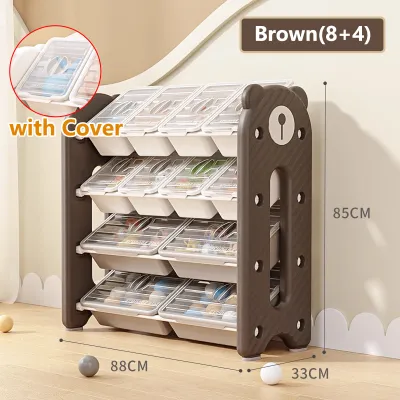
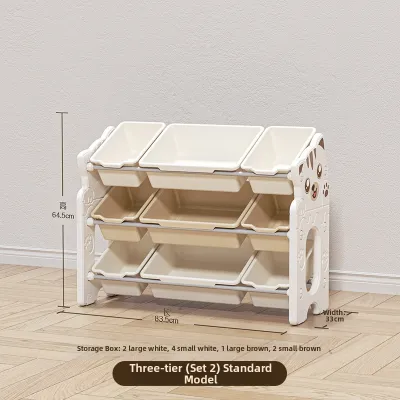
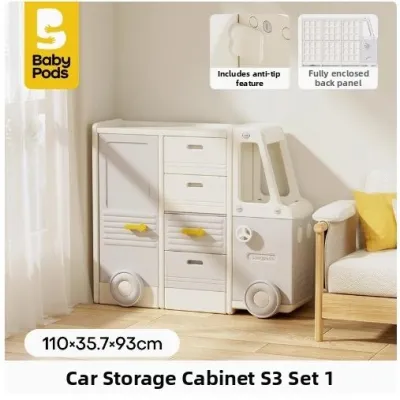
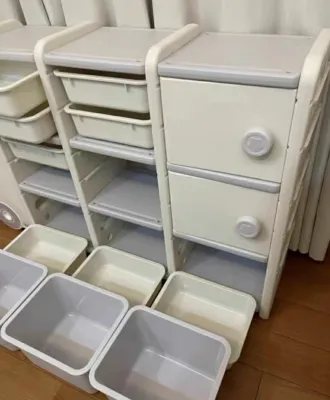
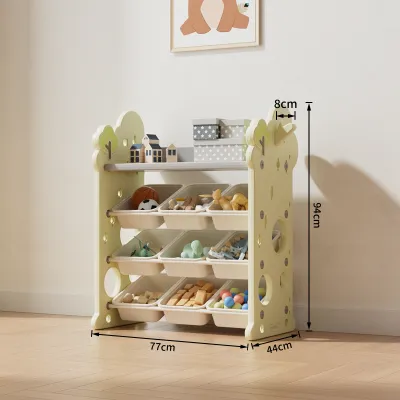
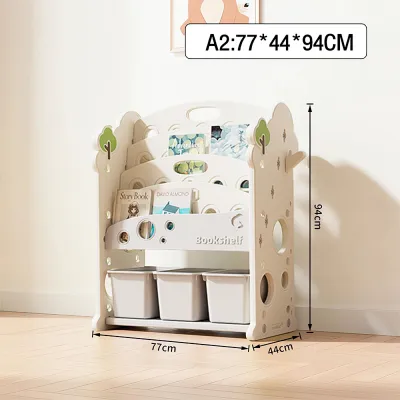
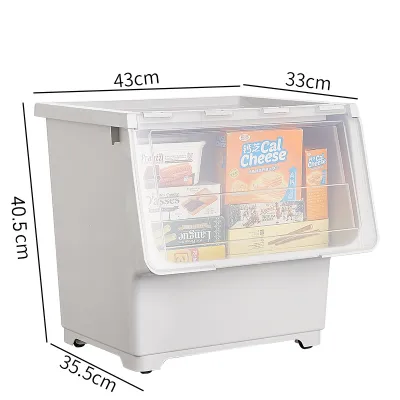
Prices are valid at publication and may change. Please refer to the product page for the latest price.
Preventing Tip-Overs: Stability and Wall Anchors
Furniture tip-overs pose a severe risk to young children who are learning to stand, walk, and climb. Toddlers often view open shelves or pulled-out drawers as a ladder, using their body weight to reach a favorite toy stored near the top. This shifting weight rapidly pulls the center of gravity forward, which can cause a heavy cabinet to topple onto a child in a matter of seconds.

To minimize this risk, look closely at the cabinet’s base footprint and physical proportions. Units with a wide, deep base and a low profile are inherently more stable than tall, narrow designs. Solid wood or heavy engineered wood bases help keep the bulk of the unit’s weight near the floor, making it much harder to tip forward during daily use.
Regardless of how stable a cabinet seems in the store, it must be anchored to the wall. Verify that the manufacturer includes a dedicated anti-tip kit, which typically consists of heavy-duty wall straps, brackets, and mounting screws. In the Philippines, where residential walls are frequently constructed from concrete, hollow blocks, or plaster, standard drywall screws will not suffice; you must ensure you use appropriate masonry plugs or heavy-duty anchors to secure the brackets directly into the structural wall.
Your storage strategy also plays a vital role in maintaining stability over time. Always plan your toy organization so that the heaviest items—such as large wooden blocks, thick books, or heavy toy trucks—are placed in the lowest compartments or bottom bins. Keeping lighter toys, stuffed animals, and soft items in the upper sections ensures the overall center of gravity remains as close to the floor as possible.
Choosing Safe Materials and Non-Toxic Finishes
The materials used to construct your baby’s toy storage cabinet can directly impact the air quality in their room. While solid wood is highly durable, many modern cabinets are made from engineered woods like medium-density fiberboard (MDF) or particleboard. If you choose engineered wood, check the product specifications to verify that the manufacturer uses low-VOC, formaldehyde-free, or CARB-compliant adhesives to prevent harmful chemical emissions.
Surface finishes require equal scrutiny because babies frequently explore their environment with their mouths, especially during teething phases. Look for cabinets finished with water-based, non-toxic, and certified lead-free paints, varnishes, or sealants. In hot, humid, tropical climates, high moisture levels can accelerate the deterioration of low-quality finishes or encourage mold growth; choosing a high-quality, moisture-resistant, non-toxic coating helps maintain the structural integrity of the wood while keeping the surface hygienic.
If the storage cabinet utilizes removable plastic bins or drawers, check the material composition of these accessories. Look for clear labels indicating that the plastic is BPA-free, phthalate-free, and rated as food-grade or toy-safe. These plastics are less likely to leach harmful chemicals when handled daily or chewed on by a curious toddler.
When unboxing a new cabinet, pay close attention to any strong chemical odor, which is a common sign of off-gassing from paints or adhesives. If you notice a distinct smell, do not place the unit in the nursery immediately. Instead, allow the cabinet to air out in a well-ventilated space, such as a covered balcony, patio, or a room with open windows and active fan circulation, for several days until the odor completely dissipates; if the strong chemical smell persists, consider returning the item.
Avoiding Cuts and Pinches: Edges, Corners, and Hardware
Unsteady toddlers frequently lose their balance, making sharp furniture edges a common source of bumps, bruises, and cuts. When evaluating a toy storage cabinet, run your hands along the frame, shelves, and corners to ensure they are rounded, beveled, or otherwise softened. Padded corner guards can be added later, but choosing a cabinet with built-in rounded edges provides a cleaner, more permanent safety solution.
Take the time to inspect all wooden components for physical defects. Run your fingers along the undersides of shelves, the backs of panels, and the inside of storage compartments to check for smooth sanding. The complete absence of splinters, rough patches, or exposed wood fibers is essential to prevent painful scratches during play.
Cabinet hardware can also present unexpected physical hazards if it is poorly designed or cheaply made. Ensure that all assembly screws, bolts, brackets, and structural hinges are recessed, capped, or smoothly integrated into the frame. Protruding metal hardware can easily snag a child’s clothing, scrape their skin, or cause impact injuries during a fall.
Moving parts like drawers and cabinet doors require specific safety mechanisms to protect small hands. Look for drawer slides equipped with sturdy built-in drawer stops, which prevent a child from pulling a heavy drawer completely out of the frame and onto themselves. For cabinets with swinging doors or pull-out compartments, prioritize soft-close hinges or hydraulic dampeners that slow down the closing action, preventing doors from slamming shut on delicate fingers.
Eliminating Entrapment and Suffocation Hazards
Enclosed storage spaces, heavy lids, and structural gaps present hidden dangers that require careful inspection. Children often enjoy climbing inside large storage spaces during creative play, which can lead to dangerous situations if they become trapped. If you are considering a traditional toy chest or a cabinet with a large hinged lid, ensure it features specialized safety lid supports or torsion hinges that hold the lid open at any angle, preventing it from slamming shut under its own weight.
Any enclosed or lidded storage unit must feature built-in ventilation holes or open slats. These openings provide a continuous supply of fresh air, mitigating the risk of suffocation if a child accidentally climbs inside and the lid or door closes behind them. Avoid completely airtight designs for any storage unit large enough to accommodate a child.
Take a close look at the physical gaps between moving parts, such as the space between a drawer front and the main cabinet frame. These gaps should either be extremely small (less than 5 millimeters) to prevent a child’s fingers from entering at all, or large enough (greater than 12 millimeters) to prevent fingers from becoming pinched or trapped if a drawer is pushed closed. Consistent spacing across all moving parts is a key indicator of quality manufacturing.
Finally, inspect the cabinet’s decorative elements and knobs. Avoid units that feature small, easily detachable decorative hardware, plastic caps, or loose wooden knobs that could be twisted off by a curious toddler. These small components can quickly become choking hazards if they find their way into a baby’s mouth.
How to Verify Safety Certifications and Product Labels
To ensure a manufacturer’s safety claims are valid, look for recognized, independent safety standard marks on the product packaging, instruction manual, or official website. Standards such as ASTM F2237 in the United States or EN 71 in Europe indicate that the furniture or toy organizer has undergone rigorous physical and chemical testing. While these marks are excellent indicators of quality, always treat them as items to verify rather than assuming compliance based on marketing text alone.
Always check and strictly adhere to the manufacturer’s specified age limits, weight capacities, and structural guidelines. A storage unit designed for light plush toys may warp or collapse if loaded with heavy books or wooden playsets. Exceeding the recommended weight limits for individual shelves or bins can compromise the overall stability of the cabinet, increasing the risk of mechanical failure.
Upon purchasing your toy storage cabinet, take a moment to register the product with the manufacturer using the registration card or online portal. This step ensures that you will receive immediate, direct notifications in the event of a safety recall or product defect. Keeping your contact details updated with the manufacturer is a simple way to stay informed about the long-term safety of the item.
Nursery furniture safety is not a one-time check; it requires ongoing attention as your child grows and interacts more vigorously with their environment. Establish a routine maintenance schedule to inspect the cabinet every few months. Check the tightness of all structural screws, confirm that the wall anchors remain firmly secured to the wall studs or masonry, and test safety hinges to ensure they still hold heavy lids open reliably.
Frequently Asked Questions (FAQ)
At what age is it safe to transition to open shelving for toy storage?
The transition to open shelving depends more on your child’s physical development and behavior than a specific age. You can consider introducing open shelving once your child has developed stable balance, no longer attempts to climb furniture, and can understand basic safety instructions. Regardless of the child’s age, any open shelving unit used in a nursery or playroom must still be securely anchored to the wall to prevent accidental tip-overs.
Can I use a regular bookshelf as a toy storage cabinet in a nursery?
You can use a standard bookshelf for toy storage only if it meets the exact same safety criteria as dedicated nursery furniture. This means the bookshelf must have a stable frame, rounded corners, non-toxic finishes, and be securely anchored to the wall. Avoid using tall, narrow, or lightweight bookshelves, as they are not designed to withstand the pulling forces and dynamic weight distribution of a toddler reaching for toys.
What should I do if my existing toy cabinet lacks an anti-tip kit?
If your current toy storage cabinet did not come with an anti-tip kit, do not leave it unanchored in your child’s room. You should purchase a high-quality, universal furniture anti-tip strap or steel bracket kit from a reputable local hardware store. Install the kit strictly according to the manufacturer’s instructions, ensuring the anchors are secured directly into a wall stud or solid masonry rather than just the drywall or plaster.

Community discussion
Share your experience or ask a question. Comments are reviewed before publication.