
Choosing the right water bottle for your baby is not about finding a single, universally perfect product, but rather matching the cup’s design to your child’s physical development. While packaging labels often suggest age ranges, your baby’s oral motor skills, hand-eye coordination, and your daily need for spill resistance should guide your decision. In a warm, tropical climate like the Philippines, keeping your little one hydrated during weaning is essential, but introducing the wrong cup design too early can lead to frustration or refusal. By observing how your baby handles milk feeds and interacts with objects, you can select a cup that supports their natural development and makes the transition to water smooth and stress-free.
Understanding the Three Main Cup Designs
Straw cups require the baby to wrap their lips tightly around a tube and draw liquid upward using active suction. This action exercises different facial muscles than breastfeeding or bottle-feeding, helping to strengthen the tongue and lips. Many modern straw cups feature internal spill-proof valves that only release liquid when compressed by the baby’s mouth, which prevents leaks but requires more physical effort to drink from.
Spout cups, traditionally known as sippy cups, feature a raised, flat spout that the baby tilts upward to drink. To use these, the baby must tilt their head back and use a sucking motion similar to a standard bottle. Spouts come in soft silicone, which feels familiar to a baby used to bottle nipples, or hard plastic, which is highly durable but offers less flexibility.
Products mentioned in this guide
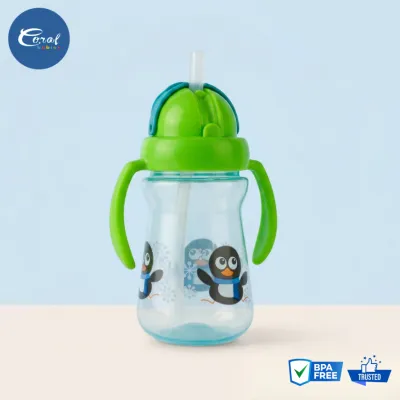
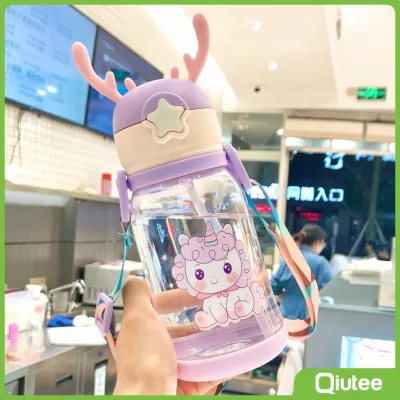
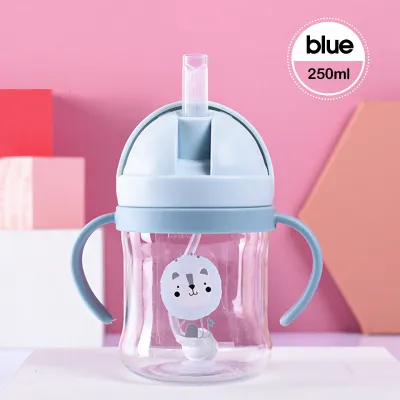
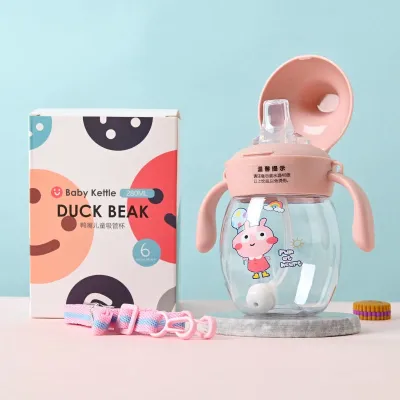
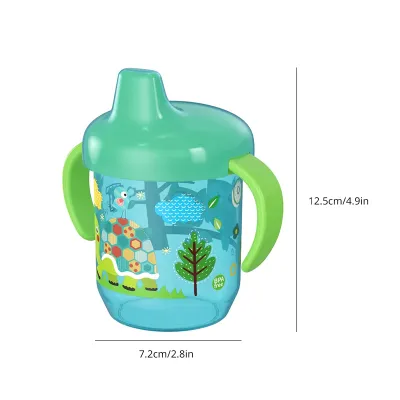
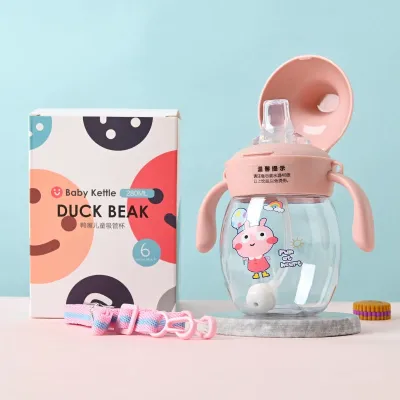
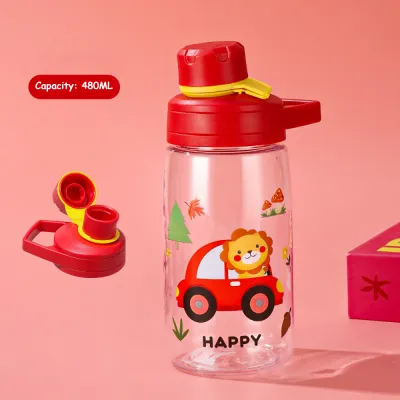
Prices are valid at publication and may change. Please refer to the product page for the latest price.
Open cups and 360-degree rim cups represent the final stage of drinking independence. Open cups are simple, rimmed vessels that require the baby to control the flow of liquid using only their upper and lower lips. A 360-degree cup mimics this action by allowing liquid to flow from any part of the rim when the baby applies lip pressure, acting as an intermediate step that prevents major spills while teaching the mechanics of rim drinking.
Matching Cup Types to Developmental Milestones
Instead of relying solely on chronological age, look for specific physical milestones to guide your choice. Every baby develops at their own pace, and their readiness to transition from a breast or bottle to a water bottle for baby depends on their muscle strength and coordination.

Evaluating Spout Cups for Early Transition
Observe if your baby can hold a standard bottle securely with both hands and guide it to their mouth. To use a spout cup successfully, they must also understand the concept of tilting the cup upward to get the liquid to flow, which requires basic hand-eye coordination.
When shopping, check manufacturer labels for recommended age ranges, material safety certifications, and flow rate limits. Soft silicone spouts are often easier for babies transitioning around six months, as they mimic the texture of familiar bottle nipples and are gentler on sensitive gums.
Keep in mind general pediatric dental guidelines, which suggest that prolonged use of hard plastic spouts may affect natural oral development if used continuously throughout the day. If you have concerns about your baby’s jaw or tooth alignment, consult a pediatric dentist or pediatrician for personalized advice.
Assessing Readiness for Straw Cups
Using a straw requires a different set of oral motor skills than a bottle or spout. Your baby must be able to form a tight, circular seal with their lips around the straw and generate enough consistent suction to pull liquid upward without simply biting down on the tip.
When evaluating straw cups, verify the straw’s position, length, and angle. A straw that is too long or positioned poorly can cause gagging or make it difficult for the baby to control the flow. Weighted straws are highly practical because they move with the liquid, allowing your baby to drink even when the cup is tilted.
Consider the trade-off of spill-proof valves. While these valves prevent messy cleanups on your floors, they require a stronger suck. If your baby gets frustrated, you may want to look for a free-flowing straw cup for supervised practice.
Transitioning to Open or 360-Degree Cups
Transitioning to an open cup requires advanced coordination. Your baby must learn to control their tongue and lips to sip liquid from an open edge without choking or letting the water pour down their chin.
Because learning this skill takes time, you must accept that minor spills are a natural and necessary part of the learning process. Using a 360-degree cup can bridge this gap by letting them practice the lip-tipping motion without the immediate mess.
To manage the learning curve, plan to use open cups primarily during supervised meal times at home, where your baby is secured in a high chair. Save the spill-proof straw or spout cups for travel, stroller rides, or active playtimes.
Key Factors to Evaluate Before Buying
In a warm and humid environment, mold can develop rapidly in damp, enclosed spaces. Inspect the cup’s design before purchasing to see how many removable parts it has. Look closely at internal valves, straw joints, and gaskets. If a cup has tiny, hard-to-reach crevices that cannot be easily scrubbed with a small brush, it may become a hygiene hazard.
Always verify BPA-free claims on the packaging. Before every single use, inspect the silicone parts—such as straws, spouts, and valves—for any visible damage, tearing, or wear. Babies who are teething may bite through soft silicone, creating small pieces that could pose a choking hazard. Replace worn parts immediately.
A water bottle for baby should be easy for tiny hands to manage. Look for cups with removable, textured handles that match your baby’s current hand size and grasping strength. As their grip improves, you can transition to contoured cups without handles. While prices can range from under ₱200 for basic models to over ₱800 for specialized trainer sets, a higher price tag does not guarantee a better fit for your baby’s unique developmental stage.
Test the flow rate yourself or read product labels carefully to ensure the liquid release speed matches your baby’s swallowing pace. A flow that is too fast can cause coughing or sputtering, while a flow that is too slow will tire your baby out and discourage them from drinking.
Comparison Matrix: Straw vs. Spout vs. Open Cup
| Design | Primary Skill Required | Spill Risk | Cleaning Complexity | Ideal Usage Scenario |
|---|---|---|---|---|
| Spout Cup | Tilting and basic sucking | Low to Medium | Low to Medium | Early weaning transition and on-the-go hydration |
| Straw Cup | Lip seal and active suction | Low | High (requires straw brushes) | Active play, travel, and upright drinking |
| Open / 360 Cup | Lip control and flow regulation | High (Open) / Low (360) | Low | Supervised meals at home and oral motor practice |
Frequently Asked Questions (FAQ)
Can I skip the spout cup and go straight to a straw or open cup?
Yes, you do not have to follow a rigid, step-by-step progression from bottle to spout to straw to open cup. Many pediatric feeding specialists actually recommend skipping the spout cup entirely to encourage better oral motor habits. Your baby’s developmental readiness and observable skills are far more important than a traditional sequence. If your baby shows strong lip control and can manage suction, starting directly with a weighted straw cup or a small open cup during meals is a perfectly safe and effective path.
How do I properly clean cup valves to prevent mold?
To prevent mold buildup, especially in warm and humid climates, you must fully disassemble all silicone valves, straws, and lids after every single use. Do not simply rinse the cup intact. Use specialized straw brushes to clean the inside of tubes and small crevices. Always check the manufacturer’s specific care instructions to verify if the parts are dishwasher safe, can withstand boiling water for sterilization, or require air-drying in a well-ventilated space before reassembly.

Community discussion
Share your experience or ask a question. Comments are reviewed before publication.