
Deciding how to arrange a nursery in a limited space is one of the first major challenges of preparing for a new baby. When floor space is tight, every piece of furniture must justify its presence. The choice between a standalone bassinet and an integrated bassinet-changing table combo often comes down to how you balance physical floor space against daily operational convenience.
A standalone bassinet is highly compact and designed primarily to provide a safe, dedicated sleep environment right next to your bed. An integrated combo unit, on the other hand, merges the sleeping area with a changing station and built-in storage shelves or drawers. While the combo unit occupies a larger single footprint, it can actually save space overall by consolidating multiple essential functions into one zone.
To make the right choice for your home, you must evaluate your room’s physical layout, your storage capacity, and how you want your nighttime caregiving routine to flow. Both options have distinct advantages, but their suitability depends entirely on your specific spatial constraints and daily habits.
Products mentioned in this guide

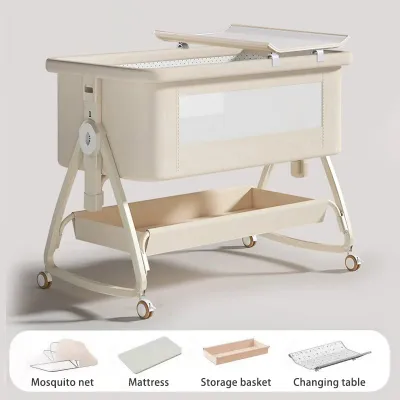
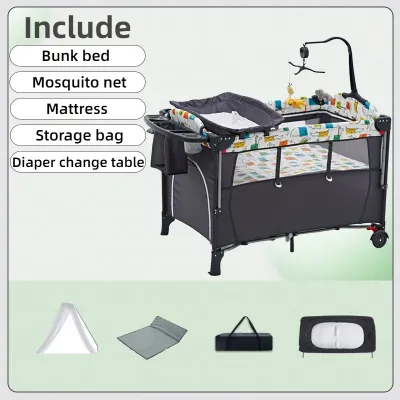
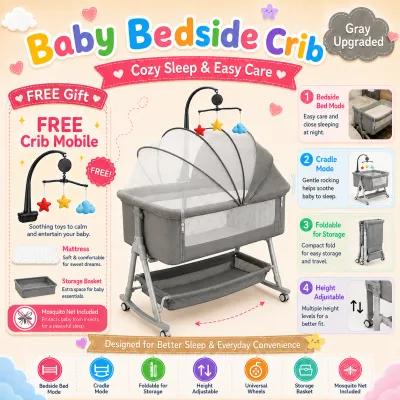
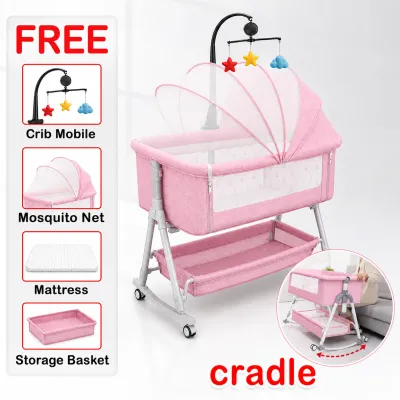

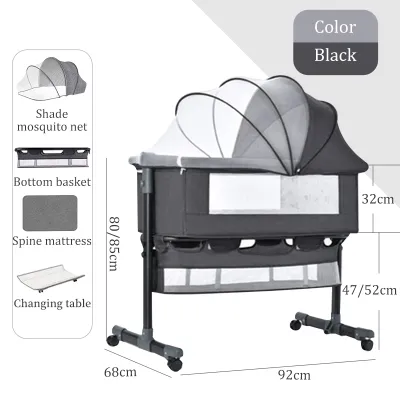
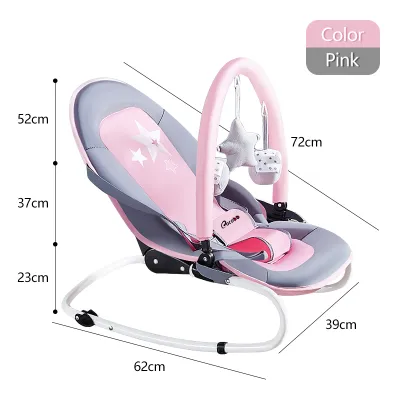
Prices are valid at publication and may change. Please refer to the product page for the latest price.
Space Footprint and Room Layout
Before purchasing any baby furniture, it is essential to measure the exact dimensions of your bedroom and map out the traffic flow. A standalone bassinet typically features a minimalist frame with a footprint of roughly 80 to 90 centimeters in length and 50 to 60 centimeters in width. This compact size allows it to fit easily into narrow spaces, such as the gap between your bed and the wall, without blocking walkways.
In contrast, an integrated bassinet and changing table combo requires a significantly larger continuous footprint. These units often extend over a meter in length and are wider to accommodate a secure changing pad and storage compartments. While this consolidated design saves you from buying separate pieces of furniture, it requires a dedicated, permanent spot in the room where it will not obstruct doors, built-in wardrobes, or pathways.
When planning your layout, you must also account for operational clearance. This means measuring not just the static size of the furniture, but also the space needed to open drawers fully, lower a folding changing pad, or stand comfortably while changing your baby. In tropical climates like the Philippines, where rooms often rely on standing fans, air conditioning units, or open windows for ventilation, you must also ensure the furniture is positioned away from direct drafts and humid walls to prevent mold growth on fabric components.
If your bedside clearance is exceptionally narrow—such as a tight space of less than 70 centimeters between your mattress and the wall—a standalone bassinet is usually the only viable option. Attempting to squeeze a bulky combo unit into a tight corner can make it difficult to get out of bed safely, especially during recovery from childbirth. Always use a physical measuring tape to mark out the proposed footprint on your floor before making a final decision.
Nighttime Workflow and Convenience
The first few months with a newborn involve frequent nighttime feedings and diaper changes, making convenience a top priority for tired parents. An integrated combo unit excels in streamlining this workflow by keeping all your essential supplies within arm’s reach of the sleeping baby. When your baby wakes up wet in the middle of the night, you can transition them from the bassinet to the changing surface in a single, smooth movement without walking across the room.

This close proximity minimizes sleep disruption for both you and your baby. You do not have to navigate a dark room while carrying a crying infant, which reduces the risk of tripping over stray items on the floor. Having diapers, wipes, swaddles, and change of clothes organized in the attached shelves means you can complete the change quickly and return to sleep.
A standalone bassinet, while highly convenient for sleeping, requires a bit more planning to achieve the same level of nighttime efficiency. Because most standalone models do not have built-in changing surfaces or storage, you will need to decide where diaper changes will take place. If you choose to walk to a separate changing table in another room, the increased physical movement and exposure to different light levels can wake your baby up more fully, making it harder for them to settle back down.
To bridge this gap, many parents using a standalone bassinet set up an auxiliary bedside caddy or a rolling utility cart. This allows you to keep a small stash of diapers, wipes, and a portable changing mat right next to the bassinet. While this setup mimics the convenience of a combo unit, it does introduce another small piece of furniture into your room, which you must factor into your overall space calculations.
Storage Capacity for Small Rooms
Storage is often the biggest hurdle when setting up a nursery in a small bedroom. Newborns require an surprisingly large volume of supplies, including diapers, wipes, blankets, burp cloths, and multiple changes of clothes. An integrated changing station combo addresses this need directly by utilizing the vertical space beneath and beside the bassinet for built-in storage.
These combo units typically feature open shelves, fabric bins, or wooden drawers integrated into the frame. This design allows you to store several weeks’ worth of supplies in the exact location where they will be used, eliminating the need for an additional chest of drawers or wardrobe in the room. For small bedrooms that lack closet space, this all-in-one approach is an incredibly efficient use of floor space.
Standalone bassinets, by design, offer very little in the way of storage. Some models include a small mesh basket suspended beneath the sleeping area, but this is usually only large enough to hold a few spare swaddles or a pack of wipes. If you choose a standalone model, you will almost certainly need to rely on existing closet space, wall-mounted shelves, or separate storage furniture to house your baby’s daily essentials.
This creates a spatial trade-off that you must carefully calculate. While a standalone bassinet has a smaller individual footprint, the cumulative footprint of the bassinet plus a separate storage cabinet or plastic drawer set may actually exceed the footprint of a single combo unit. If your room is already at maximum capacity and cannot accommodate any extra storage furniture, an integrated combo unit is often the more space-efficient choice.
Decision Framework: Choose Based on Your Constraints
To determine which option is best for your specific living situation, evaluate your home against the following practical scenarios and constraints.
Choose a standalone bassinet if:
- Your bedside clearance is extremely narrow, leaving only enough room for a compact sleeping surface.
- You already have a dedicated, fully stocked changing station in an adjacent room or a sturdy dresser that can accommodate a changing pad.
- You prioritize portability and want a lightweight unit that you can easily move from your bedroom to the living room or kitchen during daytime hours.
- You prefer a minimalist aesthetic and plan to transition your baby to a full-sized crib in a separate nursery relatively early.
Choose a bassinet with a changing table if:
- Your bedroom lacks built-in closets or extra floor space for separate storage furniture like dressers or shelving units.
- You want to minimize nighttime walking and physical strain by keeping sleep, changing, and storage functions consolidated in one spot.
- Your room layout has a wider, unused wall or corner that can comfortably accommodate a stationary, multi-functional piece of furniture.
- You want a single purchase that serves multiple purposes, reducing the need to buy and coordinate separate nursery items.
Verify first if:
- The changing table component of the combo unit is at an ergonomic height for the primary caregivers to prevent back strain during frequent changes.
- The overall dimensions of the unit allow for complete clearance of bedroom doors, closet doors, and walkways when all drawers or folding parts are fully extended.
- The materials and construction are suitable for your local climate, ensuring adequate airflow around the sleeping area to keep your baby comfortable.
Essential Safety and Specification Checks
Regardless of which style you choose, safety must be your primary consideration when selecting nursery furniture. Before finalizing your purchase, always verify the manufacturer’s maximum weight and developmental limits for both the bassinet and the changing table components. Bassinets are temporary sleep spaces, and babies typically outgrow them once they reach a certain weight or begin to roll over, push up on their hands and knees, or sit up unassisted.
For integrated combo units, it is critical to assess the structural stability and tip-over risk. Check that the unit has a wide, sturdy base and does not wobble when weight is applied to the changing surface. If the unit features drawers, verify that it remains stable when the drawers are fully extended, and look for models that include wall-anchoring hardware to secure the furniture firmly in place.
When using the changing station component, always use the provided safety straps to secure your baby, even if you plan to stand right next to them. Never leave your baby unattended on a changing table for any reason, even for a split second; if you must step away to grab an item, always take your baby with you or place them safely in their bassinet. Finally, ensure that the bassinet portion features a firm, flat mattress that fits snugly against the frame with no gaps, and keep the sleeping area completely free of loose blankets, pillows, or plush toys to maintain a safe sleep environment.
Frequently Asked Questions (FAQ)
Can I use a regular dresser as a changing table next to a standalone bassinet?
Yes, a sturdy, appropriately heighted dresser can serve as an excellent changing surface if you securely attach a contoured changing pad to the top. This is a highly popular space-saving strategy for small bedrooms, as it allows you to utilize existing furniture for dual purposes. However, you must ensure the dresser is completely stable and properly anchored to the wall to prevent any risk of tipping over, especially in earthquake-prone regions. Always check the manufacturer’s weight capacity for the dresser top and ensure the changing pad is fastened using safety screws or non-slip straps to prevent it from sliding during use.
How long can my baby use the bassinet portion of a combo unit?
The usable lifespan of the bassinet portion depends strictly on the manufacturer’s specified weight limits and your baby’s physical development. Most bassinets are designed for use from birth until the baby reaches a weight limit of approximately 6.8 to 9 kilograms, or until they hit key developmental milestones. You must transition your baby to a crib as soon as they show signs of rolling over, pushing up on their hands and knees, or sitting up unassisted, as they can easily fall out of a shallow bassinet once they gain this mobility. Always read your specific product manual for the exact transition triggers, though keep in mind that the changing table and storage portions of a combo unit often remain highly useful long after the bassinet itself has been outgrown.

Community discussion
Share your experience or ask a question. Comments are reviewed before publication.