
Finding a discounted wooden crib requires balancing upfront savings with long-term safety and durability. While promotions on major e-commerce platforms are highly appealing, a crib is the only nursery item where a baby is left unsupervised for long periods. Therefore, parents must look beyond the discount tag to evaluate structural integrity, material safety, and long-term usability.
This guide provides a reliable framework to evaluate discounted items, prioritize your budget allocations, and verify critical safety specifications before you commit to a purchase. By understanding what to look for, you can secure a safe, high-quality sleeping environment for your baby without overspending.
Setting Your Budget Priorities for a Wooden Crib
When shopping for a discounted wooden crib, it is essential to establish what is non-negotiable and what can be compromised to lower the price. Your primary budget allocation must always prioritize structural safety, robust joinery, and non-toxic finishes. A cheap crib that wobbles or uses finishes containing harmful chemicals is never a bargain.
Products mentioned in this guide


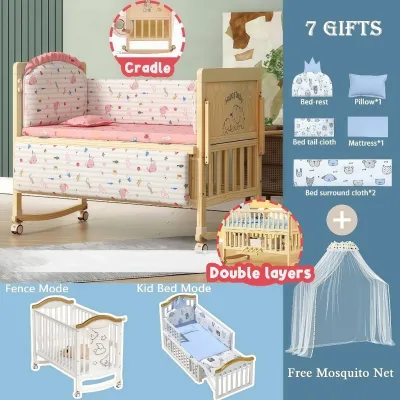


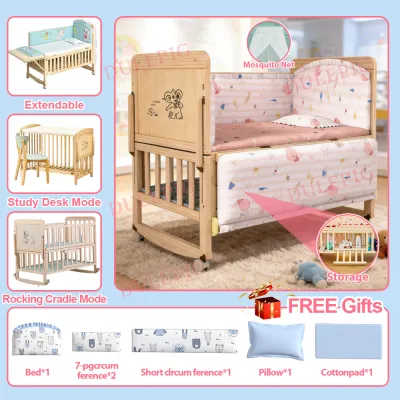

Prices are valid at publication and may change. Please refer to the product page for the latest price.
To keep costs down, you can easily sacrifice aesthetic or convenience features that do not impact safety. For example, intricate decorative carvings, built-in storage drawers, and included convertible toddler bed rails often drive up the price. Opting for a minimalist, classic design with clean lines is usually much more affordable and easier to clean.
Another critical budget consideration is the mattress. Many discounted wooden cribs are sold as frame-only bundles. If the sale price does not include a mattress, you must factor in the cost of purchasing a separate, high-quality, firm mattress that fits the crib frame perfectly. Never compromise on mattress firmness or fit to save money, as a soft or ill-fitting mattress poses significant safety risks for infants.
Key Specifications to Verify Before Buying on Sale
Before adding a discounted crib to your online cart, you must carefully scrutinize the product specifications listed by the seller. Do not rely solely on promotional images or vague descriptions.

Verify the exact dimensions of the crib, paying close attention to the slat spacing. Standard safety guidelines dictate that the distance between crib slats should be no more than 6 centimeters (about 2.38 inches) to prevent a baby’s head or limbs from getting trapped. Additionally, you must verify the manufacturer’s stated weight limits, age recommendations, and intended use conditions to ensure the crib remains safe as your baby grows.
Wood Type and Finish Safety
Check the product description for the specific type of wood used in the crib’s construction. Solid hardwoods, such as beech, birch, or sustainably sourced local hardwoods, offer superior durability and resistance to the tropical climate of the Philippines.
In contrast, engineered wood, fiberboard, or medium-density fiberboard (MDF) can be highly sensitive to moisture and humidity. These materials may warp, sag, or degrade over time when exposed to humid conditions, potentially compromising the crib’s structural integrity.
Equally important is the chemical safety of the paint, stain, or sealant. Babies frequently chew on crib rails when teething, making non-toxic finishes an absolute necessity. Look for listings where the manufacturer explicitly certifies that the finishes are lead-free, phthalate-free, and non-toxic, rather than relying on generic marketing terms like “eco-friendly.”
Structural Integrity and Adjustability
A durable wooden crib must feature robust construction that remains stable even as your baby becomes more active. Look for indicators of sturdy joinery in the product specifications or user manuals, such as mortise-and-tenon joints or reinforced metal-to-metal hardware.
Avoid cribs that rely primarily on wood screws driven directly into the wood grain. These can easily strip, loosen, or split the wood over time, especially when subjected to repeated assembly or high humidity.
Adjustability is another key feature that enhances both safety and value. A safe crib should offer at least two or three adjustable mattress height positions. This allows you to lower the mattress as your baby learns to sit, crawl, and eventually stand, preventing them from climbing or falling out. Verify the stability of the adjustment mechanism through product diagrams or customer images to ensure the support brackets lock securely into place.
Navigating E-Commerce Promotions and Hidden Costs
Shopping during major online sales campaigns can yield significant discounts, but the initial price tag rarely represents the final cost. When buying heavy wooden furniture online in the Philippines, shipping fees can be substantial due to the weight and bulk of the package.
Always calculate the total price in ₱ at checkout, including shipping, before making your final decision. Sometimes, a slightly more expensive crib with free shipping is more economical than a heavily discounted crib with exorbitant delivery fees.
Assembly is another potential hidden cost. Most discounted wooden cribs are shipped flat-packed and require self-assembly. Check if the package includes all necessary tools, or if you will need to purchase specific screwdrivers, hex keys, or rubber mallets. If you are not confident in your assembly skills, you may need to hire a local professional assembly service, which adds to the overall expense.
Finally, pay close attention to the seller’s return policy and warranty terms. Heavily discounted, clearance, or “flash sale” items often come with strict “final sale” conditions, meaning they cannot be returned or exchanged unless they arrive damaged. Ensure you understand the process for claiming a refund or replacement if the crib arrives with manufacturing defects, as returning a heavy wooden item can be logistically challenging and costly if the seller does not cover return shipping.
Red Flags to Avoid When Buying Discounted Nursery Furniture
While searching for a bargain, you must remain vigilant against deceptive listings and low-quality products. A major red flag is a listing that lacks clear manufacturer details, brand names, or verifiable safety certifications. If a seller cannot provide the name of the manufacturer or refuses to share safety compliance details, it is best to avoid the product entirely, regardless of how attractive the discount is.
Be cautious of listings that rely exclusively on generic stock photos or highly edited 3D renders. Safe, reputable sellers typically provide detailed photos of the actual product, including close-ups of the joints, hardware, and wood grain. If you cannot see how the crib is put together, you cannot verify its structural integrity.
Similarly, avoid “open box,” refurbished, or secondhand cribs from unknown sources. These items may have hidden structural damage, missing hardware, or hairline cracks in the wood that compromise safety.
Most importantly, strictly avoid any crib that features a drop-side mechanism. Drop-side cribs, where one side slides down to make it easier to reach the baby, have been widely banned internationally due to severe safety hazards, including risk of entrapment and suffocation. Even if you find a vintage or discounted drop-side crib on a local marketplace, prioritize your baby’s safety and choose a modern, fixed-side wooden crib instead.
Step-by-Step Checklist for Checkout and Delivery
To ensure a safe purchasing experience, follow this step-by-step checklist from checkout to final assembly:
First, measure the exact area in your nursery where the crib will stand. Ensure there is adequate clearance from windows, curtains, cords, and other furniture to prevent safety hazards.
Second, check the estimated delivery window to ensure you or a designated caregiver will be home to receive the heavy package and inspect it immediately.
Third, before signing the delivery receipt, inspect the outer box for significant damage, punctures, or water exposure, which could indicate damage to the wood inside.
Fourth, lay out all the wooden parts and hardware in a clean, well-lit space. Check each wooden piece for splinters, rough edges, cracks, or warping. In the humid Philippine climate, wood can sometimes warp during transit or storage, so ensure all slats and rails are perfectly straight.
Fifth, cross-reference the included screws, bolts, and brackets with the assembly manual’s parts list. Never attempt to assemble the crib if any hardware is missing.
Finally, if you discover any cracked wood, stripped threads, missing safety warnings, or incorrect parts, stop assembly immediately. Do not attempt to fix structural defects yourself. Contact the seller or manufacturer right away to arrange for replacement parts or a return.
Frequently Asked Questions (FAQ)
Is it safe to buy a wooden crib from an online marketplace?
Yes, it can be safe, provided you do your due diligence. Safety depends on verifying the seller’s credibility and the manufacturer’s specifications, rather than relying solely on the platform’s reputation. Look for official brand stores or authorized distributors on the e-commerce platform. Cross-reference the product model and specifications with the manufacturer’s official website to confirm authenticity, safety standards, and to ensure the model has not been subject to any safety recalls.
What should I do if the discounted crib arrives with missing parts?
If your crib arrives with missing hardware or structural components, halt the assembly process immediately. Do not attempt to use makeshift substitutes, such as random screws from a local hardware store, as these may not have the correct thread, length, or load-bearing capacity required for nursery furniture. Contact the seller or manufacturer directly to request official replacement parts. If they cannot provide the exact specified hardware promptly, initiate a return or refund through the e-commerce platform’s customer protection program.

Community discussion
Share your experience or ask a question. Comments are reviewed before publication.