
For a three-month-old baby, choosing between silicone and latex nipples involves balancing material safety, durability, and your infant’s developing feeding preferences. Neither material is universally safer than the other, as both must meet strict food-grade standards before hitting the shelves. However, silicone is generally considered the more practical and hypoallergenic choice for most families, while latex offers a softer, more flexible feel that some infants prefer. At three months of age, your baby’s sucking reflex is transitioning, and their sensitivity to textures, flow rates, and hygiene practices becomes more pronounced. Deciding which material is best for your little one requires looking closely at their physical reactions, your household sterilization setup, and how well each option holds up under daily use.
Silicone vs. Latex: Core Material Differences
Understanding the physical properties of silicone and latex helps you make an informed choice when browsing baby care aisles or online marketplaces. Silicone is a synthetic, clear, and highly durable polymer. It is completely transparent, firm to the touch, and holds its shape exceptionally well even after weeks of repeated use. Because it is non-porous, silicone does not easily absorb odors, colors, or flavors from breast milk or infant formula. When inspecting Pigeon packaging, you can easily identify silicone nipples by their crystal-clear appearance and the explicit silicone or silicone rubber label printed on the box.
Latex, on the other hand, is a natural rubber product harvested from sap. It is easily recognizable by its distinct yellow, amber, or light brown hue and its matte finish. Tactilely, latex is significantly softer, more elastic, and more pliable than silicone, closely mimicking the natural flexibility of a mother’s breast. However, because it is a natural organic material, latex has a slight, inherent rubbery scent and taste that some sensitive infants might notice during their first few feeds. It is also more porous, meaning it can absorb odors and oils over time, causing the material to gradually darken or change texture.
Products mentioned in this guide
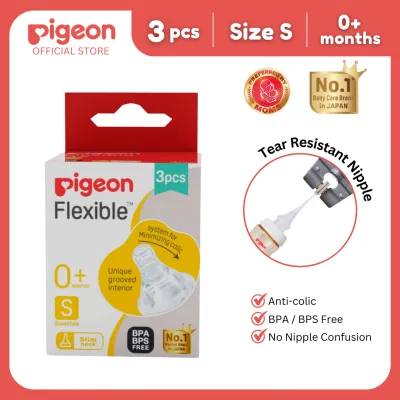
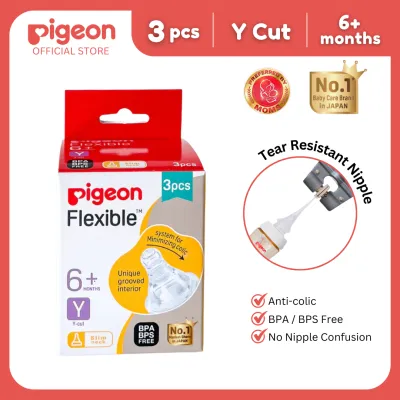
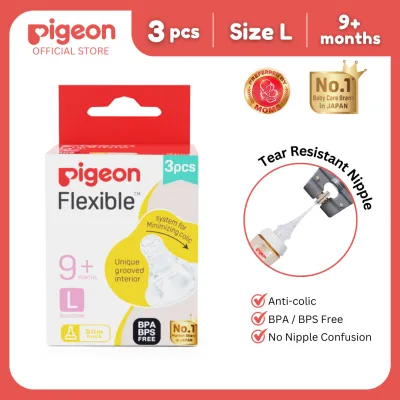
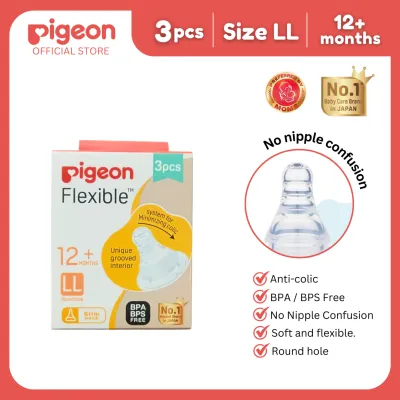
Prices are valid at publication and may change. Please refer to the product page for the latest price.
To help you compare these two materials at a glance, the table below outlines their physical traits, general heat tolerance considerations, and typical wear indicators that you should verify in your product’s instruction manual.
| Feature | Silicone Nipples | Latex Nipples |
|---|---|---|
| Appearance | Crystal clear, transparent | Yellow, amber, translucent to opaque |
| Texture & Flexibility | Firm, retains shape under pressure | Very soft, highly elastic and pliable |
| Odor & Taste | Neutral, highly resistant to absorption | Mild rubber scent, may absorb milk oils |
| Heat Tolerance | High (verify exact limits in manual) | Moderate to low (highly sensitive to heat) |
| UV Sterilizer Safe | Generally yes (check manufacturer guide) | No (rapidly degrades under UV light) |
| Primary Wear Signs | Tears, punctures, cloudy appearance | Stickiness, swelling, stretching, cracking |
Safety and Allergy Monitoring for Young Infants
While both materials are manufactured to meet stringent safety standards, latex carries a natural risk of allergic reactions that silicone does not. Because latex is derived from natural rubber plants, it contains plant proteins that can trigger sensitivities or allergic contact dermatitis in susceptible infants. When introducing a latex nipple to your three-month-old, it is crucial to monitor their physical response closely during and immediately after feeding. Look for localized signs of irritation, such as redness around the mouth, swelling of the lips or tongue, hives, or a sudden rash on the cheeks where the nipple collar rests.

If you observe any of these symptoms, or if your baby displays unusual fussiness, coughing, or breathing difficulties during a feed, you must stop using the latex nipple immediately. Switch to a clean silicone alternative and consult your pediatrician or a qualified healthcare professional to assess for a potential latex allergy. It is also wise to check your family history; if parents or siblings have known sensitivities to natural rubber, elastic bands, or certain fruits associated with latex-fruit syndrome, starting with silicone is generally the safer, precautionary path.
Regardless of the material you choose, always verify the safety credentials printed on the packaging. Look for clear labels indicating that the product is BPA-free, BPS-free, and made from food-grade materials. In the tropical climate of the Philippines, where high humidity and heat can accelerate chemical leaching in substandard plastics, ensuring that your baby’s feeding gear is certified by recognized international or local regulatory bodies provides an essential layer of protection. Never use a nipple that shows signs of peeling, chemical odors, or lacks clear manufacturing details on its original box.
Sterilization Limits and Everyday Durability
The way you clean and sanitize your baby’s bottles plays a massive role in how long each nipple material lasts. In Philippine households, where steam sterilizers, boiling water, and UV sterilizing cabinets are common, understanding the heat limits of your chosen material is vital. Silicone is highly resilient and can withstand high temperatures repeatedly without losing its structural integrity. It is compatible with almost all standard sterilization methods, including boiling, electric steam sterilizers, microwave sterilizing bags, and UV light sanitizers. However, you must always check the specific Pigeon manual to verify the maximum temperature limit and recommended sterilization cycle times.
Latex is far more delicate and degrades rapidly when exposed to high heat, moisture, and light. Boiling latex nipples too frequently or leaving them in a steam sterilizer for extended periods can cause the natural rubber to soften, swell, and become sticky. Furthermore, UV sterilizers are highly discouraged for latex products, as the ultraviolet rays break down the organic bonds of natural rubber, leading to premature cracking and structural failure. If you choose latex, you will need to adjust your sterilization routine, often relying on cold-water chemical sterilizing tablets or very brief boiling cycles as specified by the manufacturer.
The tropical humidity in the Philippines also means that damp latex nipples can become a breeding ground for mold if not dried thoroughly in a well-ventilated, shaded area. Direct sunlight must be avoided, as solar heat and UV rays will melt or warp latex quickly. Regularly inspect both types of nipples under a bright light. If a silicone nipple becomes cloudy or develops a tear, it must be discarded. If a latex nipple feels sticky to the touch, looks swollen, or shows micro-tears near the feeding hole, replace it immediately to prevent the risk of the tip tearing off during a feed, which poses a severe choking hazard.
Matching Flow Rate and Feeding Mechanics
At three months old, your baby’s feeding volume and swallowing coordination are changing rapidly. They are growing stronger, sucking more efficiently, and may become frustrated if the milk flow is too slow, or choke if it is too fast. When shopping for Pigeon nipples, you must separate the material choice from the flow rate size. Pigeon typically categorizes their nipples by age indicators, such as Size S for newborns, and Size M or 3M+ (three months and older) for developing infants. Always verify the flow rate indicator embossed on the base of the nipple or printed on the packaging to ensure it matches your baby’s current developmental stage.
The firmness of the material can directly influence how hard your baby has to work to get milk. Because silicone is firmer, it requires a more active, coordinated suck-and-swallow motion. This can be beneficial for babies who tend to guzzle milk too quickly, as the resistance helps pace their feeding. However, if your three-month-old has a weaker latch or gets tired quickly during feeds, they might find the firm silicone nipple frustrating. In contrast, the soft, highly pliable nature of latex requires less suction effort, allowing the milk to flow more easily with gentle compression.
As you feed your baby, watch their behavior closely. Signs that the flow rate or material firmness is not a good fit include milk leaking from the corners of the mouth, frequent coughing or sputtering, swallowing excessive air, or collapsing the nipple flat during suction. If the nipple collapses repeatedly, it may indicate that the air ventilation valve (such as Pigeon’s Anti-Colic System valve) is blocked, or that your baby’s suction is too strong for the soft latex material, suggesting a transition to a firmer silicone nipple or a faster flow rate is needed.
How to Decide: A Condition-Based Checklist
To help you make the final decision for your three-month-old, use this practical, condition-based checklist to match your family’s lifestyle and your baby’s specific feeding profile:
- Choose silicone if:
- You prioritize long-lasting durability and want a material that can withstand daily steam or UV sterilization without degrading.
- You want to minimize replacement costs, as silicone nipples generally last longer than latex before showing signs of wear.
- Your baby has no issues with a firmer texture and maintains a steady, comfortable latch.
- You want an odorless, taste-free feeding experience that does not alter the flavor of expressed breast milk or formula.
- There is a family history of skin sensitivities or latex allergies.
- Choose latex if:
- Your baby consistently rejects firmer silicone nipples and prefers an ultra-soft, highly flexible texture that closely mimics the breast.
- You are willing to sterilize nipples using gentler, low-heat methods and dry them carefully away from direct sunlight.
- You do not mind replacing the nipples more frequently and budgeting for regular replacements, which can add up to several hundred pesos (₱) over a few months.
- Your baby shows absolutely no signs of skin redness, oral irritation, or discomfort after feeding.
- Reassess both options if:
- Your baby consistently rejects the bottle, cries during feeds, or shows signs of oral discomfort regardless of whether you use silicone or latex.
- You notice persistent feeding issues like choking, excessive gas, or prolonged feeding times, which may require consulting a pediatrician or a lactation consultant to check for tongue-ties or developmental feeding challenges.
Frequently Asked Questions (FAQ)
Can I alternate between silicone and latex nipples on the same Pigeon bottle?
Yes, you can generally alternate between silicone and latex nipples on the same Pigeon bottle, provided both nipples are designed for the exact same bottle line (such as the Wide-Neck or Slim-Neck series) to ensure a secure, leak-proof seal with the collar ring. However, you should observe your baby’s reaction closely when switching. Some infants are highly sensitive to changes in texture, flexibility, and scent, and alternating materials may cause temporary confusion or bottle refusal. If your baby happily accepts both, alternating can be a practical way to extend the lifespan of your latex nipples by using them less frequently.
What are the immediate signs that a nipple needs replacing?
You must replace a nipple immediately if you observe any physical changes, such as the material becoming sticky, swollen, discolored, or cloudy. For latex, stickiness and swelling are clear indicators that the natural rubber is breaking down and could tear apart during suction. For both materials, look for micro-tears around the feeding hole or the ventilation valve, stretching of the tip, or a flow rate that has become noticeably faster than normal. In the warm, humid climate of the Philippines, check your baby’s nipples daily before sterilization to ensure they remain structurally sound and safe for use.

Community discussion
Share your experience or ask a question. Comments are reviewed before publication.