
Selecting the right tool to clean your baby’s feeding equipment is a daily decision that directly impacts their health and your peace of mind. With various options available, choosing between silicone, nylon, and sponge can feel overwhelming. There is no single “best” material for every household; the ideal choice depends on your bottle material, your hygiene priorities, and your typical cleaning routine.
A high-quality silicone bottle brush offers rapid drying and scratch-free hygiene, making it excellent for modern plastic, silicone, and PPSU (polyphenylsulfone) bottles. Nylon brushes provide heavy-duty scrubbing power to tackle dried milk or formula residue, particularly in glass bottles. Sponge brushes excel at producing a rich lather for gentle, light washing of fresh residues. Before selecting a brush, always check your specific baby bottle manufacturer’s care instructions, as some brands explicitly prohibit abrasive bristles to protect their surfaces.
How Silicone, Nylon, and Sponge Brushes Clean Differently
To choose the right cleaning tool, it helps to understand how these materials interact physically with milk residues. Breast milk and infant formula contain complex fats and proteins that adhere to bottle walls. Removing these residues requires a combination of chemical action from dishwashing liquid and mechanical action from the brush.
Products mentioned in this guide
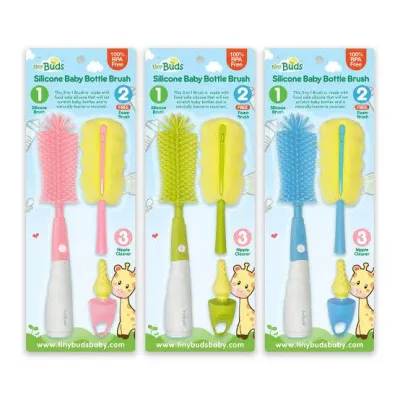

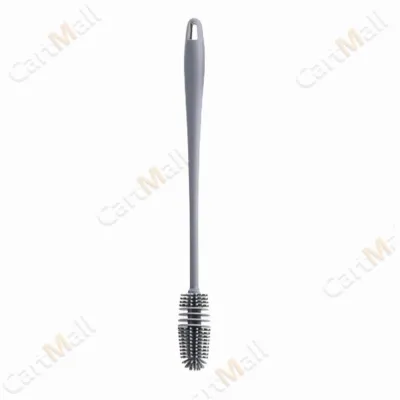
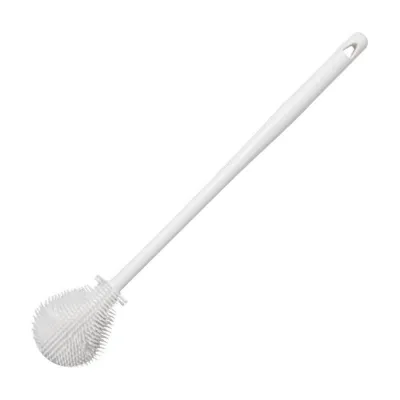
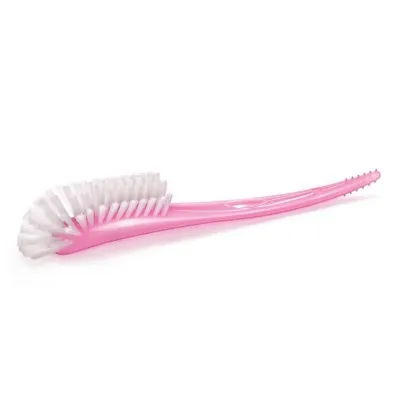
Prices are valid at publication and may change. Please refer to the product page for the latest price.
Silicone brushes rely on flexible, thick bristles or molded fins to squeegee and wipe surfaces rather than aggressively scrubbing them. Because silicone is non-porous, it does not absorb milk fats or water. Instead, the flexible fins slide over the bottle’s inner surface, displacing the liquid milk film so that soapy water can wash it away. This wiping action is highly effective for fresh milk but requires consistent contact and coverage.
Nylon brushes use dense, stiff bristles to create high-friction scrubbing. When you insert a nylon brush into a bottle, the individual bristles bend and spring back, scraping off dried formula or breast milk proteins that have adhered to the bottle walls. This mechanical scraping is highly effective for stubborn, dried-on spots, but it exerts significant localized pressure on the bottle material.
Sponge brushes utilize a porous, absorbent head to create a high volume of foam. The soft, compressible foam conforms completely to the contours of the bottle, maximizing surface contact with very low friction. However, because the sponge itself is extremely soft, it relies heavily on the chemical action of the dishwashing liquid and the volume of lather to lift residues, rather than aggressive mechanical scrubbing.
Comparing the Performance of a Silicone Bottle Brush, Nylon, and Sponge
Evaluating how each material performs across key dimensions—scrubbing power, hygiene, and safety—helps narrow down the best option for your daily routine.

Scrubbing Power and Stain Removal
Nylon brushes offer the highest mechanical scrubbing power among the three materials. The stiff bristles easily break down dried-on milk rings and stubborn formula deposits that have settled at the bottom of the bottle. If you occasionally leave bottles unrinsed for a few hours, a nylon brush requires the least physical effort to clear away hardened residue.
In contrast, a silicone bottle brush provides moderate scrubbing power. Because the silicone fins are smooth and flexible, they wipe away liquid milk film easily but can struggle with dried, crusty formula unless you apply extra pressure or soak the bottles beforehand. To get the best results with silicone, you must establish a routine of rinsing bottles immediately after feeding.
Sponge brushes offer the lowest mechanical scrubbing power. While they excel at wiping away fresh, loose milk residue, they cannot easily scrape off dried-on proteins. If formula has dried inside the bottle, a sponge brush will require significant soaking time and manual effort to clean the surface thoroughly.
Additionally, the shape of the brush head and the density of the bristles affect how well you can reach the corners and shoulders of different bottle designs. Nylon brushes with radial bristles at the tip can bend into tight corners, though they require some manual effort to rotate. Silicone brushes often feature multi-directional fins that adapt well to wide-neck bottles but may require a firmer push to reach into the tight corners of narrow-neck models. Sponge heads compress easily to fit almost any bottle shape, but they may not apply enough pressure to clean the bottom edges effectively if milk residue has hardened.
Drying Speed and Bacterial Resistance
In tropical, high-humidity climates like the Philippines, drying speed is a critical factor in preventing microbial growth. High humidity levels mean that damp kitchen tools can remain wet for hours, creating an ideal environment for bacteria and mold to multiply.
Silicone’s non-porous nature is its greatest hygienic advantage. Water does not penetrate the material, allowing a silicone bottle brush to drip dry completely in a fraction of the time required by other materials. This rapid drying prevents the colonization of mold and bacteria, making it an exceptionally hygienic choice for humid households.
Sponge brushes present the highest hygiene risk in humid environments. The porous foam retains water and microscopic milk particles deep within its core. Even after thorough squeezing, a sponge can remain damp for a long time, leading to a sour odor and rapid bacterial multiplication. Caregivers using sponges must be prepared to dry them in well-ventilated areas and replace them frequently.
Nylon brushes serve as a middle ground. While the individual nylon bristles do not absorb water, the dense cluster at the base where the bristles are anchored can trap moisture and fine milk residue. If not hung to dry in a well-ventilated space, this anchor point can develop black mold spots over time. Caregivers must rinse nylon brushes thoroughly and shake off excess water after each use.
Scratch Risk and Long-Term Durability
Protecting the interior of baby bottles is essential for long-term safety. Stiff nylon bristles carry a high risk of creating micro-scratches on the soft plastic (polypropylene), PPSU, and silicone surfaces of modern baby bottles. While these scratches may be barely visible to the naked eye, they create microscopic crevices where milk fats, proteins, and bacteria can hide, making subsequent cleanings less effective. Glass bottles are highly resistant to scratching, making nylon a safe match for glass.
Silicone and sponge brushes are exceptionally gentle, posing virtually zero risk of scratching plastic, PPSU, or silicone bottles. They preserve the smooth, glossy interior of the bottle, ensuring that milk residues have no rough surfaces to cling to.
Physical degradation patterns differ significantly among the three. Nylon bristles tend to splay outward, lose their stiffness, or shed over time, reducing their cleaning efficiency. Sponge heads degrade the fastest; under daily use, the foam can tear, crumble, or detach from the handle, often requiring replacement every few weeks. A quality silicone bottle brush is highly durable, with flexible fins that resist tearing, splaying, or losing their shape, often lasting for several months of daily use.
Caregivers should regularly inspect bottle interiors. If a plastic bottle appears cloudy, dull, or shows visible fine scratches when held to the light, it is time to evaluate whether your current brush is too abrasive and replace the damaged bottle to maintain hygiene.
Decision Framework: Match the Brush to Your Bottles and Routine
To finalize your choice, match the characteristics of each material to your specific bottle types and daily cleaning habits.
Choose Silicone if:
- You primarily use plastic, PPSU, or silicone baby bottles and want to prevent micro-scratches.
- You live in a high-humidity environment where quick drying is essential to prevent mold and bacterial growth.
- You prefer a highly durable cleaning tool that does not need to be replaced every few weeks.
- You establish a routine of rinsing bottles immediately after feeding, preventing milk from drying and hardening.
Choose Nylon if:
- You use glass baby bottles, which are highly scratch-resistant and benefit from aggressive scrubbing.
- You frequently deal with dried-on formula or breast milk residue that requires heavy-duty mechanical agitation to remove.
- You want a budget-friendly option with high scrubbing power, and you have a well-ventilated space to dry the brush thoroughly.
Choose Sponge if:
- You prefer a rich, soapy lather that lifts light, fresh milk residues with minimal effort.
- You want a soft, non-abrasive cleaning action for delicate plastic bottles and do not mind the upkeep.
- You are committed to a strict maintenance routine, including thorough squeezing, air-drying, and frequent replacements.
Verify first if: Before purchasing any brush, always verify the specific cleaning guidelines provided by your baby bottle manufacturer. Some specialized bottles, particularly those with complex anti-colic vent systems, internal valves, or delicate silicone membranes, explicitly prohibit the use of stiff bristles or sponges. Using the wrong brush type on these components can tear the silicone or compromise the venting mechanism, leading to leaks or feeding issues.
Many caregivers find that keeping a hybrid setup works best. For example, using a silicone bottle brush for the main daily bottle washes protects the bottle walls, while keeping a small nylon detail brush on hand allows you to clean the hard-to-reach screw threads and bottle caps where milk residue often accumulates.
Daily Care, Sanitizing, and When to Replace Your Brush
Proper maintenance extends the life of your bottle brush and ensures it remains safe for cleaning baby feeding gear.
After every cleaning session, rinse the brush thoroughly under warm running water to remove all traces of soap and milk residue. Shake off excess water vigorously. Store the brush upright in a clean holder or hang it by its handle in a well-ventilated area. Avoid storing damp brushes in enclosed cupboards or crowded drying racks where air circulation is limited, as this encourages mold growth.
Before attempting to sanitize your bottle brush, check the manufacturer’s label for the maximum heat tolerance of all its components. While silicone bristles can often withstand high temperatures, the plastic handles, adhesives, or sponge attachments may melt, warp, or degrade in boiling water, steam sterilizers, or dishwashers. Never assume a brush is fully sterilizer-safe unless the product documentation explicitly states it.
List of clear, observable signs that a brush must be replaced:
- Splayed or shedding bristles: For nylon brushes, replace immediately if bristles bend outward permanently or begin to fall out, as loose bristles can pose a physical hazard if they remain inside feeding equipment.
- Torn or crumbling material: For sponge brushes, replace the moment the foam begins to tear, crumble, discolor, or develop a persistent sour odor that survives washing.
- Damaged fins: For silicone brushes, replace if the fins or bristles tear, crack, or if the handle shows signs of structural wear.
As a general rule, even with proper care, sponge brushes should be replaced every 4 to 6 weeks (costing around ₱30 to ₱80 per replacement on local e-commerce platforms), while high-quality nylon and silicone brushes can last 3 to 6 months (with premium silicone options ranging from ₱200 to ₱500), provided they show no signs of damage or wear.
Frequently Asked Questions (FAQ)
Can I sanitize my bottle brush in boiling water or a sterilizer?
Heat tolerance depends entirely on the specific product’s manufacturing specifications, not just the primary material. Always read the product packaging or manufacturer’s label for maximum temperature limits before boiling or using an electric sterilizer. Some plastic handles or sponge adhesives can melt or warp at high temperatures, even if the silicone or nylon bristles themselves are heat-safe. If you cannot verify the heat limits, stick to thorough washing with warm, soapy water.
Do I need a separate brush for the bottle nipple and ring?
Yes, standard bottle brushes are typically too large and stiff to clean the delicate contours of silicone nipples and small anti-colic vent tubes safely. Attempting to force a large brush into a nipple can stretch, tear, or damage the feeding hole, which affects milk flow and can pose a safety hazard. Use a dedicated, smaller detail brush—often included in bottle brush sets or sold separately—to gently clean the threads, rings, and nipples without compromising their structural integrity. If your baby experiences sudden changes in feeding behavior, excessive gas, or latching difficulties, consult a pediatrician or a lactation consultant to evaluate feeding safety and nipple flow rates.

Community discussion
Share your experience or ask a question. Comments are reviewed before publication.