
Deciding between a rocking crib for baby and a regular stationary crib comes down to your infant’s sleep cues, your physical comfort, and your nursery’s spatial limits. While a rocking crib offers a built-in soothing motion that can ease a fussy newborn to sleep, a standard stationary crib provides long-term stability, easier conversion options, and a simpler path to independent self-soothing. There is no single correct choice; instead, the right decision depends on matching the crib’s specific features with your family’s daily caregiving routine and your baby’s developmental stage.
Signs Your Baby Might Benefit from a Rocking Crib
Observe how your baby responds to movement during their first few weeks. Some infants consistently require being rocked in your arms, swayed in a carrier, or walked around the room before they can successfully transition into sleep. If your baby startles awake the moment you lay them down on a stationary surface, a gentle, rhythmic rocking motion can help bridge that transition. This is particularly common during the fourth trimester, when newborns are adjusting to life outside the womb and still crave the constant motion they experienced before birth.
Pay close attention to the frequency of night wakings and how your baby resettles. If they tend to stir between sleep cycles but do not necessarily need a feeding, a light sway can soothe them back to sleep. This gentle motion can mimic the natural environment of the womb, helping to calm a restless infant without requiring you to pick them up every time they fuss.
Products mentioned in this guide
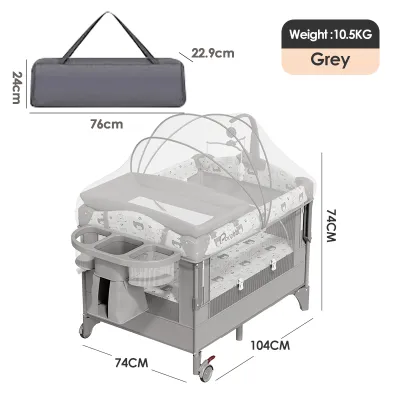
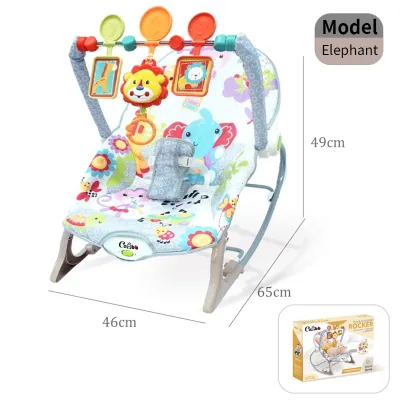
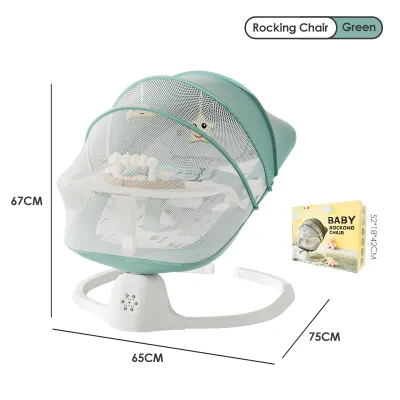
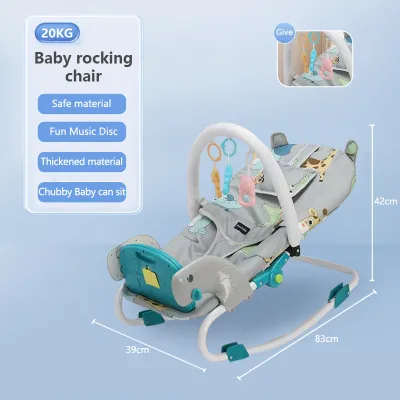
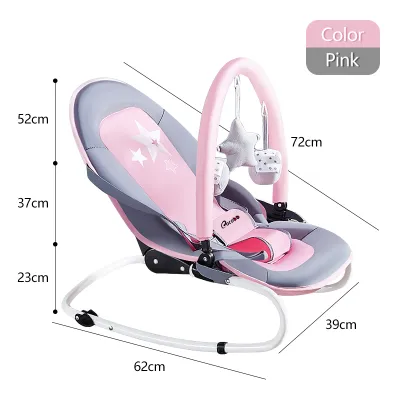
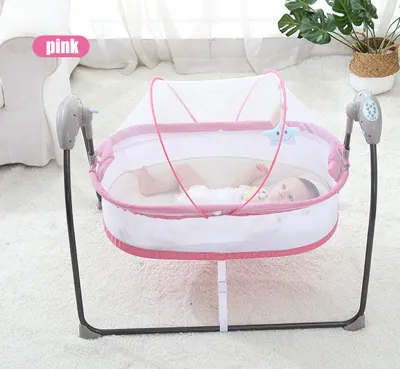
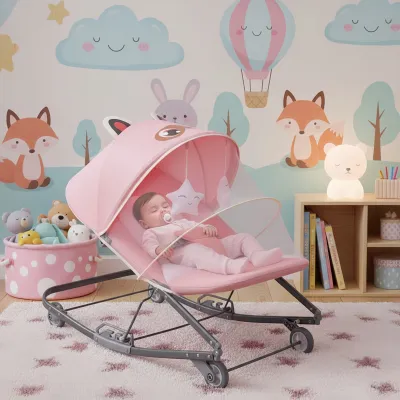
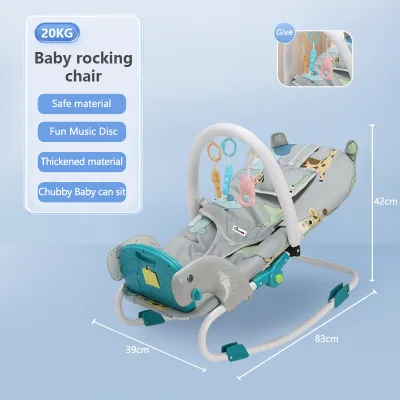
Prices are valid at publication and may change. Please refer to the product page for the latest price.
Consider the physical toll of constant manual soothing on caregivers. Recovering from childbirth, managing postpartum back pain, or dealing with sleep deprivation can make hours of standing and swaying physically exhausting. A rocking crib allows you to sit comfortably nearby while gently guiding the crib’s motion, reducing strain on your back, shoulders, and arms during long nights.
When a Standard Stationary Crib Is the Better Choice
Some babies are easily overstimulated by continuous movement. If your infant becomes more alert or agitated when rocked, a stationary sleeping environment is often the better choice. A stable, non-moving mattress allows them to focus on winding down and helps them learn to self-soothe and sleep independently without relying on motion as a sleep crutch. This stability is highly beneficial if you plan to implement a structured sleep training routine, as it teaches the baby to associate a still, quiet environment with bedtime.

Evaluate the long-term utility of the furniture piece. Standard stationary cribs are frequently designed to grow with your child, offering conversion options that transform the crib into a toddler bed, daybed, or even a full-sized headboard. If you want a single investment that lasts through the toddler years and beyond, a traditional stationary model is highly practical.
Factor in your budget and style preferences. Standard cribs are available in a vast range of sizes, materials, and designs, often making it easier to find a high-quality option at a comfortable price point in ₱. Because they do not require specialized rocking hardware or curved base runners, you can often find highly durable stationary models that fit your nursery aesthetic without a premium price tag.
Safety and Feature Checklist Before You Buy
Before purchasing any crib, you must verify the manufacturer’s specified weight, height, and developmental limits. Rocking cribs often have lower weight limits or specific developmental milestones—such as when a baby begins to roll over, push up on hands and knees, or sit up—at which point the rocking function must be permanently disabled or the crib replaced. Always consult the product manual to confirm these limits.
Check for secure, heavy-duty locking pins or stabilization mechanisms. A high-quality rocking crib must have a reliable way to completely immobilize the rocking motion when it is not actively supervised or when the baby is sleeping overnight. Ensure these locks are easy for you to engage but completely inaccessible to curious siblings or the baby inside.
Inspect the mattress fit and overall frame construction. There should be no dangerous gaps between the edges of the mattress and the crib sides; a standard rule of thumb is that you should not be able to fit more than two fingers between them. Additionally, verify that the slat spacing complies with current safety guidelines outlined in the product manual to prevent any risk of entrapment. Regularly inspect the hardware to ensure no screws or joints have loosened from the repetitive rocking motion.
Look for recognized safety certification labels on the product packaging or the manufacturer’s official website. Because safety standards and recalls are dynamic, do not rely solely on product names or retail descriptions. Take the time to verify that the specific model has undergone rigorous testing for structural integrity, non-toxic finishes, and stability before finalizing your purchase.
Evaluating Your Nursery Space and Daily Routine
Measure your nursery or bedroom footprint carefully before making a decision. A rocking crib requires extra clearance on either side to accommodate the rocking arc without hitting walls, dressers, or other furniture. Ensure there is still a safe, unobstructed walking path for caregivers navigating the room in the dark.
Determine how often you plan to move the crib between rooms. If you want to keep your baby close during daytime naps in the living room and overnight in your bedroom, compare the overall weight and wheel availability of both styles. Some stationary cribs come with locking casters, whereas rocking cribs can be heavier and more cumbersome to transport through standard doorways.
Consider your flooring type and the local climate. In tropical environments where tile or hardwood floors are common to manage humidity, a rocking crib can slide, squeak, or cause indentations on the floor surface. Placing a thin, non-slip protective mat under the crib can prevent unwanted noise during the night and keep the unit securely in place while rocking. Additionally, ensure the crib’s placement allows for optimal airflow from fans or air conditioning units, keeping the sleeping area cool and comfortable.
Frequently Asked Questions (FAQ)
Can I convert a rocking crib into a stationary one later?
Whether you can convert a rocking crib into a stationary one depends entirely on the specific model’s design. Many modern rocking cribs feature removable bottom rockers or built-in locking pins that allow you to transition the unit into a stable, stationary crib as your baby grows. Always check the manufacturer’s manual and product specifications before purchasing to ensure the model supports this conversion safely.
Are rocking cribs safe for newborns to sleep in overnight?
Any crib used for unsupervised overnight sleep must meet standard flat-sleep safety guidelines to ensure your baby remains in a safe position. If you plan to use a rocking crib for overnight sleep, verify the manufacturer’s instructions regarding locking the crib into a completely stationary position. Many manufacturers recommend disabling the rocking motion entirely during unsupervised sleep to prevent the baby from rolling or shifting against the sides of the crib.

Community discussion
Share your experience or ask a question. Comments are reviewed before publication.