
Quick Answer: Which Diaper Brand is Right for Your Toddler?
Finding the ideal diaper for a growing toddler is rarely a one-size-fits-all decision. As children transition into extra-large (XL) sizes, their unique body shapes, activity levels, and skin sensitivities dictate which brand will perform best. There is no single “best” diaper on the market; instead, the right choice depends on whether you prioritize maximum overnight absorption, a flexible daytime fit, chemical-free materials for sensitive skin, or strict budget management.
To help you navigate the options, we look at four prominent brands available in the Philippines: Rascal and Friends, Pampers, Huggies, and Equator. Rascal and Friends is widely recognized for its material transparency and skin-friendly design, making it a favorite for sensitive skin. Pampers focuses on rapid dryness technology and a slim profile that resists sagging. Huggies offers robust leak guards and highly secure waistbands for heavy wetters. Equator serves as a highly practical, value-driven alternative designed for frequent daytime changes.
Because every toddler’s physical build and urine output differ, we advise using this comparison as a guide to run a short, practical trial at home. Observing how a specific brand performs on your child during active play and long sleep cycles is the most reliable way to find your perfect match.
Products mentioned in this guide
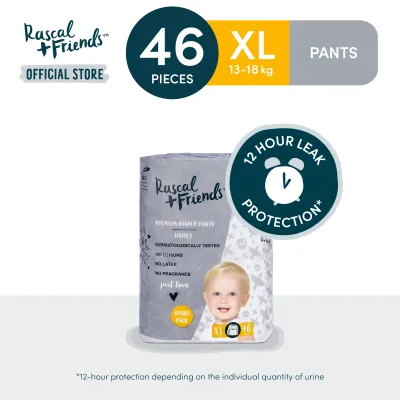
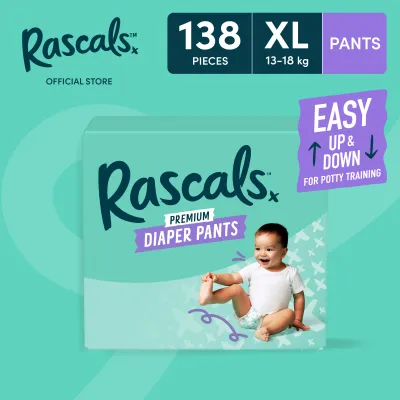
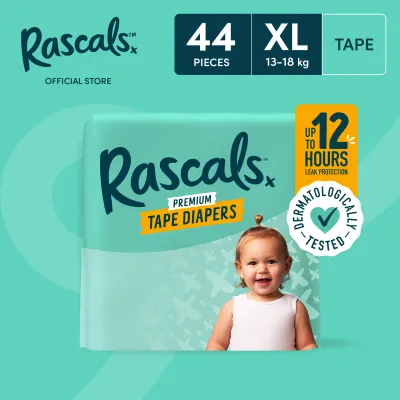
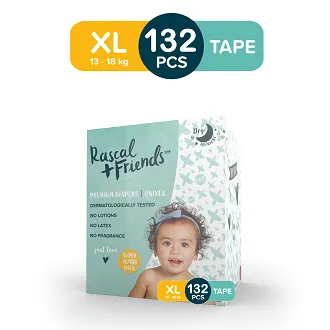
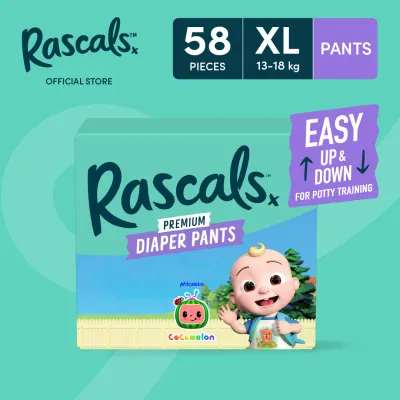
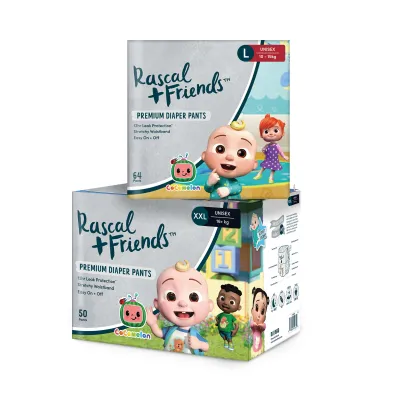
Prices are valid at publication and may change. Please refer to the product page for the latest price.
Why XL Sizing Changes the Diaper Game for Active Toddlers
When a child reaches the development stage requiring extra-large (XL) diapers—typically corresponding to a weight range of 12 to 17 kilograms, though you must always verify the specific manufacturer’s packaging—their physical needs shift dramatically. Toddlers at this stage are no longer sedentary infants. They are constantly in motion: running, climbing, squatting, and exploring their environments. This high level of physical activity puts immense mechanical stress on a diaper’s waistband, side panels, and leg cuffs, requiring elastics that stretch dynamically without slipping or tearing.

Furthermore, a toddler’s bladder capacity increases significantly compared to earlier infancy. Instead of releasing small amounts of urine frequently, older toddlers hold their urine longer and release much larger volumes at once. This sudden rush of liquid demands an absorbent core that can draw moisture away from the surface almost instantly and distribute it evenly across the diaper to prevent heavy sagging or localized leaks.
In the tropical climate of the Philippines, high temperatures and humidity introduce another critical variable. When active toddlers sweat, trapped moisture inside a non-breathable diaper can quickly lead to friction, heat rash, and diaper dermatitis. Ensuring the diaper materials allow adequate airflow while maintaining a secure seal around the legs is vital for keeping skin dry and healthy under these challenging environmental conditions.
It is also common for parents to notice that a brand that performed flawlessly in size M or L suddenly fails in size XL. This often happens because some manufacturers do not scale their elastic tension, core distribution layers, or overall proportions correctly when upsizing. A high-quality XL diaper must be engineered specifically for the proportions of an active, upright toddler rather than simply being an enlarged version of an infant diaper.
Brand-by-Brand Breakdown: Design and Feature Focus
Rascal and Friends XL
Rascal and Friends XL diapers are engineered with a strong emphasis on skin health and material safety. The brand positions itself as a premium choice for parents who want to minimize their child’s exposure to potential irritants. Their diapers are formulated without harsh chemicals, latex, lotions, or artificial fragrances, making them highly suitable for toddlers who suffer from eczema or sensitive skin.
When purchasing, caregivers should carefully inspect the packaging to verify specific material certifications, such as dermatological testing or eco-friendly manufacturing standards, as these can vary by batch and region. The physical design features a notably high waistband and a deep pocket, which provides excellent coverage for active toddlers who climb and twist.
In terms of fit, Rascal and Friends XL tends to have a slightly bulkier, wider profile compared to some ultra-slim alternatives. While this generous cut offers superb containment and helps prevent blowouts, parents should observe whether the extra bulk affects their child’s mobility or requires sizing up in toddler clothing.
Pampers
Pampers is a well-established brand known globally and locally in the Philippines for its focus on advanced dryness technology and slim-core designs. The primary design philosophy centers on keeping the diaper lightweight and thin, even when fully saturated, to allow maximum freedom of movement during active daytime play.
The brand utilizes specialized absorbent channels designed to distribute liquid quickly and evenly throughout the core, reducing the risk of the diaper sagging between the toddler’s legs. When evaluating Pampers XL options, parents should check the wetness indicator lines and test the elasticity of the side panels, which are designed to stretch comfortably as the toddler’s belly expands and contracts throughout the day.
It is important to note that Pampers offers several product lines, such as premium care variants and standard baby-dry options. Caregivers must verify the specific features, material softness, and breathability claims on the packaging of the exact line they choose, as performance and price points can vary significantly within the brand’s XL offerings.
Huggies
Huggies has built a strong reputation around robust leak protection and secure, structured fits. The brand’s XL diapers are highly favored for overnight use and heavy wetters due to their structural integrity and heavy-duty absorbent cores.
Key design features include double-layered leg cuffs and a highly elastic, pocketed waistband designed to trap liquid and prevent leaks from escaping the back of the diaper. Parents should physically inspect the thickness of the diaper core and the snugness of the waistband elastics. While a secure fit is excellent for preventing leaks during sleep, caregivers must monitor their child’s skin to ensure the elastics do not leave deep red marks on chubbier thighs or around the waist.
Because Huggies diapers often feature a denser absorbent core, parents should also verify the breathability specifications on the packaging. In hot, humid climates, a thicker core requires high-quality outer materials to ensure heat and moisture can escape, preventing sweat rash during extended wear.
Equator
Equator is a budget-conscious brand frequently selected by parents in the Philippines looking for an economical diapering solution. It focuses on core functionality, offering basic absorbency and standard fit features at a lower price point per piece, making it highly accessible in local supermarkets and online marketplaces.
Because Equator is positioned as a value brand, its design is typically simpler, with fewer proprietary technologies than premium competitors. Caregivers should read the packaging closely to verify the number of absorbent layers, core materials, and recommended weight limits, as value diapers may saturate more quickly and require more frequent changes to maintain skin dryness.
When considering Equator XL diapers, check the available pack sizes and calculate the exact cost-per-diaper for your household. This brand is often most effective when integrated into a hybrid diapering routine, serving as a reliable option for frequent daytime changes when parents can monitor and replace the diaper every few hours.
How to Evaluate Absorption, Fit, and Value at Home
Relying solely on manufacturer marketing or laboratory tests may not reflect how a diaper performs on your specific toddler. Conducting simple, structured evaluations at home allows you to make an informed decision based on real-world conditions.
Testing Absorption To assess a diaper’s absorption capacity and speed, monitor its performance during a typical three-to-four-hour wear cycle. After removing a wet diaper, gently press a dry, clean paper towel against the inner lining; if the towel remains dry, the diaper’s core is successfully locking moisture away from your child’s skin. Additionally, check the diaper for structural failure, such as the leakage of superabsorbent polymer (SAP) gel beads onto your toddler’s skin, or heavy clumping where the absorbent material bunches up, leaving empty, unprotected zones.
Evaluating Fit A proper fit is crucial for preventing leaks and ensuring comfort. After removing your toddler’s diaper, perform a quick physical inspection of their skin. Look for deep red marks or indentations around the waist and thighs, which indicate that the elastics are too tight or the diaper is too small. Check for gaps around the leg cuffs by sliding your finger along the elastic; if there is a visible gap, liquid is highly likely to escape. Finally, observe your toddler while they walk and play to see if the diaper shifts, twists, or bunches uncomfortably between their legs.
Calculating True Value Determining the true economic value of a diaper requires looking beyond the initial purchase price of the pack. Calculate the cost-per-diaper by dividing the total price of the package by the exact number of diapers inside (e.g., ₱500 divided by 40 diapers equals ₱12.50 per piece). However, you must also factor in consumption rates: if a cheaper diaper costs ₱8 per piece but leaks frequently, requiring eight changes a day plus extra laundry and diaper rash creams, it may ultimately cost more than a premium diaper that costs ₱14 per piece but only requires four changes a day.
Skin Reaction Monitoring When testing a new diaper brand, introduce only one product at a time to isolate any potential skin reactions. Monitor your toddler’s diaper area over a 48-hour period for signs of contact dermatitis, chafing, or heat rash, which can develop rapidly in the humid Philippine climate. If you observe persistent redness, bumps, or signs of discomfort, stop using the brand immediately, clean the area gently with water, and consult a qualified pediatrician or medical professional for appropriate care instructions.
Decision Framework: Choosing the Best Diaper for Your Child
To help you finalize your selection, we have structured a conditional decision matrix based on your primary parenting priorities, budget, and your toddler’s unique physical needs.
Choose Rascal and Friends XL if:
- Your toddler has highly sensitive skin, eczema, or allergies that are easily triggered by fragrances and lotions.
- You prioritize material transparency, chemical-free certifications, and a high-waisted fit that provides full coverage.
- You have a flexible budget that accommodates a premium cost-per-piece.
Choose Pampers if:
- Your main priority is a slim, lightweight diaper that does not sag or restrict your highly active toddler's movement during daytime play.
- You want rapid surface dryness and a reliable wetness indicator to make quick check-ups easy.
- Your child has a standard or slender build where a streamlined fit works best.
Choose Huggies if:
- Your toddler is a heavy wetter, and you require maximum absorption and leak containment for long overnight sleep cycles.
- You prefer a highly structured diaper with deep waist pockets and robust double leg guards to prevent blowouts.
- Your child's body shape benefits from a snug, highly elastic waistband.
Choose Equator if:
- You are managing a strict household budget and want to minimize your overall diapering expenses.
- You practice frequent daytime diaper changes (every 2 to 3 hours) and do not require a diaper to last through extended overnight cycles.
- Your toddler has resilient skin that does not react easily to standard diaper materials.
Verify first if… Before committing to a large bulk purchase of any brand, always verify the exact weight limits printed on the packaging. Sizing is not standardized across manufacturers, meaning an XL in one brand may have a weight range of 12 to 17 kilograms, while another brand’s XL might cover 13 to 18 kilograms. If your toddler is approaching the upper limit of a brand’s XL range, or if they have exceptionally thick thighs, they may experience premature leaks and should transition to XXL or pull-up pants.
Neither may fit if… If your toddler has a highly unique body shape—such as an extremely narrow waist combined with very thick, chunky thighs—standard tape diapers from any of these brands may fail to provide an adequate seal. In such scenarios, tape adjustments can become either too tight on the legs or too loose on the waist. If you experience persistent leaks despite trying multiple brands, consider transitioning to pants-style diapers, which feature 360-degree stretchy waistbands that conform more naturally to irregular body shapes.
Frequently Asked Questions (FAQ)
How do I know if my toddler needs to size up to XL diapers?
Several physical indicators suggest it is time to transition your toddler to XL diapers, even if their weight still falls within the guidelines of their current size. Look for frequent leaks or blowouts occurring despite the diaper not being fully saturated, which indicates the physical cup capacity is too small. Other clear signs include deep red marks or chafing on your child’s waist or inner thighs, fastening tabs that struggle to reach the designated landing zone on the front panel, or the waistband sitting too low below the hips. Always prioritize your toddler’s physical build and comfort over the weight range listed on the box.
Can I mix different diaper brands for daytime and nighttime use?
Mixing different diaper brands is an exceptionally practical and cost-effective strategy used by many parents. You can optimize your budget by using an affordable, basic-absorbency brand like Equator for frequent daytime changes when your toddler is active and easily monitored. Then, reserve a premium, high-capacity brand like Huggies or Rascal and Friends for overnight use or long outings. This hybrid approach ensures your toddler stays dry and comfortable during sleep to prevent diaper rash, while significantly lowering your overall monthly diaper expenses.

Community discussion
Share your experience or ask a question. Comments are reviewed before publication.