
Quick Answer: Which Diaper Brand Best Fits Your Baby's Needs?
Finding the perfect diaper is rarely a matter of choosing a single, universally superior brand. The ideal option depends heavily on your baby’s unique body shape, skin sensitivity, and urination patterns. A diaper that keeps one infant dry through a twelve-hour stretch might cause leaks or chafing on another baby with different proportions or a more active movement style.
To simplify your decision, consider these general brand alignments. Rascals is highly regarded for babies with rounder bellies or chunkier thighs due to its generous sizing and high waistband design. Pampers often excels for active daytime wear where a thin, flexible profile is preferred to support free movement. Huggies remains a reliable choice for parents seeking a snug, secure fit with specialized features to prevent back blowouts. Equator serves as an exceptionally practical, budget-conscious option for families prioritizing frequent daytime changes without high costs.
Because baby shapes and skin reactions change as they grow, committing immediately to bulk packages can lead to wasted money and unused supplies. Parents should purchase small trial packs first to evaluate real-world performance under local conditions. Testing a small quantity allows you to observe how the materials interact with your baby’s skin and movement patterns before making a larger financial commitment.
Products mentioned in this guide
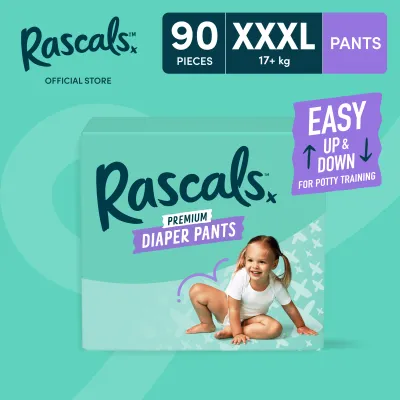
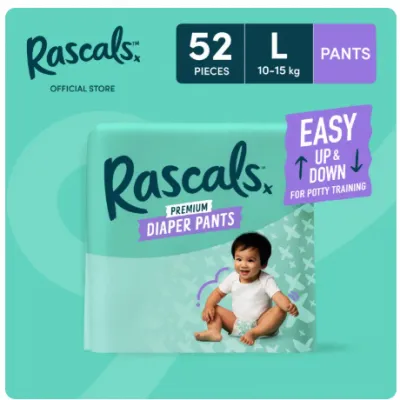
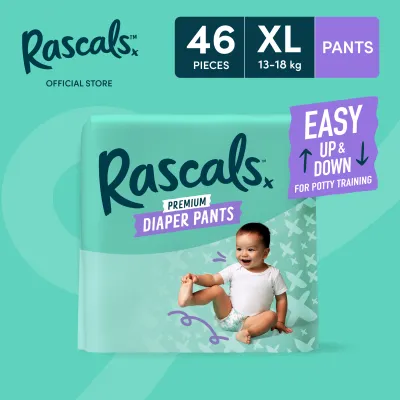
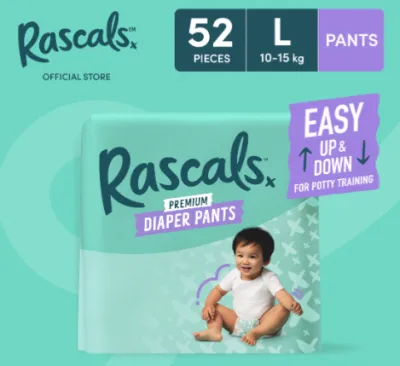
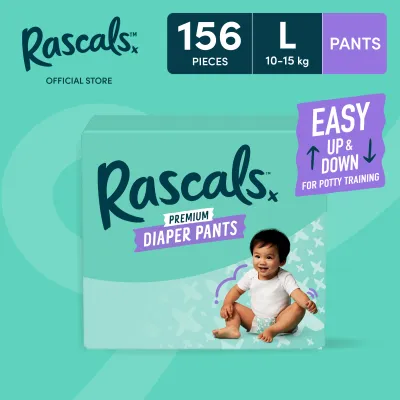
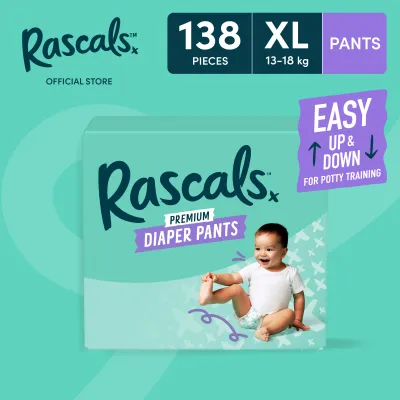
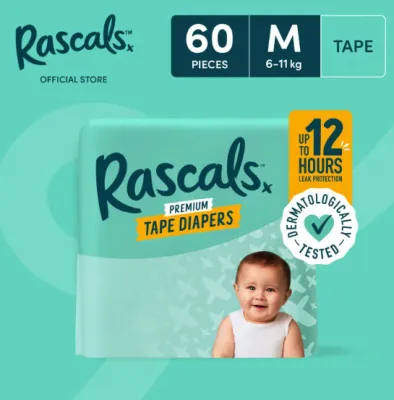
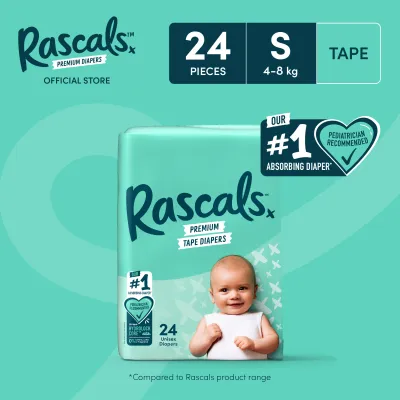
Prices are valid at publication and may change. Please refer to the product page for the latest price.
Brand Positioning: What to Expect from Rascals, Pampers, Huggies, and Equator
Navigating the diaper market in the Philippines requires an understanding of how different brands position their product lines. Most manufacturers offer distinct tiers, typically divided into tape diapers for newborns and younger infants, and pants-style diapers for older, more active babies. Within these formats, brands also differentiate between premium lines, which feature advanced absorbent cores and softer materials, and standard or economy lines designed for basic utility.

When comparing these four brands, it is essential to evaluate equivalent product tiers rather than making broad generalizations. For instance, comparing a premium pants diaper from Rascals to an economy-tier tape diaper from another brand will not yield a fair assessment of performance. Each brand tailors its engineering to specific price points and consumer expectations, meaning that absorbency, softness, and elastic strength will vary significantly across a single manufacturer’s portfolio.
Furthermore, diaper designs, materials, and manufacturing locations are subject to periodic updates. Parents should always check the specific series name and the manufacturing or packaging date printed on the exterior wrap. Keeping track of these details ensures that you are aware of any recent design modifications, such as changes to the waistband structure or core composition, which might affect how the diaper performs on your child.
Absorbency Comparison: Daytime Dryness and Overnight Leak Protection
Daytime vs. Overnight Performance
Daytime and overnight diapering present entirely different functional challenges. During the day, babies are active, crawling, and constantly changing positions, which requires a thinner, more flexible diaper that does not bunch up or restrict mobility. These daytime options are engineered for frequent changes, meaning they do not always require the massive fluid capacity of specialized overnight varieties. In contrast, overnight diapers must endure long hours of continuous use while the baby sleeps, requiring a thicker, high-capacity absorbent core designed to lock away multiple wettings without leaking.
To evaluate how well a diaper keeps moisture away from your baby’s skin, you can perform a simple home test. After your baby has urinated in the diaper, wait a few minutes for the core to absorb the liquid, then firmly press a dry, clean paper tissue against the inner lining. If the tissue remains dry, the diaper’s top sheet is successfully drawing moisture downward and preventing wetness from clinging to the skin. If the tissue dampens, it indicates that moisture is pooling near the surface, which can lead to skin irritation over extended wear times.
Always verify the manufacturer’s claimed maximum wear time, which is often printed on the packaging as a guide rather than a guarantee. Real-world performance depends heavily on your baby’s age, liquid intake, and individual urination volume. Parents should adjust their changing schedules based on these observable habits rather than relying solely on packaging claims, particularly during hot afternoons when fluid intake might increase.
Leak Protection and Core Technology
Preventing leaks requires a combination of advanced chemical absorption and physical barriers. Most modern diapers utilize Super Absorbent Polymer (SAP) technology, which consists of tiny spheres that turn liquid into a secure gel. Alongside this chemical core, physical barriers like standing leg cuffs and double elastic guards run along the leg openings to catch liquid before it escapes. The height, elasticity, and material quality of these cuffs determine how effectively they contain sudden, high-volume flows.
When a leak does occur, inspecting the diaper immediately helps identify the specific failure point. A leak near the legs often indicates that the leg cuffs were folded inward, the elastic has worn out, or the sizing is too large for the baby’s thighs. A blowout or leak at the back waistband typically suggests that the diaper lacks a pocketed barrier or that the overall rise of the diaper is too low for the baby’s torso. Leaks occurring through the outer cover usually mean the absorbent core has reached its absolute saturation threshold.
Another factor to monitor is the stability of the absorbent core during use. In some lower-tier or poorly constructed diapers, the SAP can clump, break apart, or shift to one side when wet, leaving dry areas of the diaper unusable while other parts leak. Gently feeling the wet diaper through the outer cover allows you to check for shifting or clumping, helping you assess whether the core maintains its structural integrity under pressure.
Fit and Sizing: Waistbands, Leg Cuffs, and Sizing Consistency
Waistband Elasticity and Leg Cuffs
An effective waistband must balance secure retention with physical comfort, keeping the diaper in place without constricting the baby’s abdomen. Some brands utilize a 360-degree elastic waistband that wraps completely around the torso, which is highly effective for active toddlers wearing pants-style diapers. Other designs rely on stretchable side panels or elastic back tabs, which offer a more customizable fit for younger babies who spend most of their time lying down or sitting.
To confirm that a diaper is fitted correctly, parents can perform the standard two-finger test. Once the diaper is fastened, slide two fingers easily between the waistband and your baby’s tummy, and do the same around the leg openings. If your fingers fit comfortably without forcing them, the tension is correct. If the fit is too tight to insert your fingers, or if there is visible gaping, the diaper needs to be adjusted or resized.
Caregivers must also regularly inspect the baby’s skin for red marks around the thighs and waistline. Temporary, light indentations that disappear within a few minutes of removing the diaper are generally harmless, similar to the marks left by socks on adults. However, deep, persistent red marks that remain visible for hours indicate that the elastic is too harsh, the diaper is fastened too tightly, or the baby has outgrown the current size.
Sizing Consistency Across Brands
One of the most common challenges parents face is the lack of standardized sizing across diaper manufacturers. A “Medium” diaper from Rascals is physically patterned differently than a “Medium” from Pampers, Huggies, or Equator. Rascals is widely noted for running larger and wider than traditional brands, meaning a baby might transition into a larger size of Pampers or Huggies while still fitting comfortably in a smaller size of Rascals.
Rather than relying on the letter size (such as S, M, or L) or the baby’s age, parents should guide their purchases using the weight ranges printed on the packaging. These weight guidelines are calculated based on average body dimensions and core capacities. However, because two babies of the exact same weight can have entirely different body shapes, these ranges should be treated as overlapping suggestions rather than strict limits.
Several clear physical indicators signal that it is time to transition to the next size up, even if your baby’s weight remains within the printed range on the package. If you experience frequent, unexplained leaks, find it difficult to fasten tape tabs securely near the center, or notice the diaper sits too low below the belly button, sizing up is usually the most effective solution. A larger size provides both a higher absorbent capacity and better physical coverage.
Comfort and Skin Health: Softness, Breathability, and Rash Prevention
Material Softness and Inner Lining
The texture of the diaper’s inner lining is the primary point of contact with your baby’s delicate skin, making material quality a key factor in overall comfort. Manufacturers design these top sheets with various textures, ranging from perfectly flat, smooth surfaces to complex quilted, embossed, or 3D-patterned weaves. These textured linings are designed to minimize the total surface area touching the skin, creating tiny channels that help liquid flow away quickly.
Because softness is a highly subjective quality, parents should physically feel the inner lining of a diaper themselves before committing to large quantities. Run your fingers over the interior sheet to assess whether it feels smooth, fibrous, or slightly plastic-like. A softer, fabric-like texture reduces the risk of mechanical friction against the skin, which is especially important for babies who are constantly moving, crawling, or rolling.
It is important to remember that physical softness does not automatically guarantee that a diaper is hypoallergenic or free from potential irritants. Parents of babies with highly sensitive skin should carefully read the ingredient and material specifications on the packaging. Look for clear indications regarding the absence of added fragrances, elemental chlorine, or natural rubber latex, as these substances can sometimes trigger allergic reactions regardless of how soft the material feels.
Breathability and Diaper Rash Prevention
In the tropical climate of the Philippines, high temperatures and intense humidity accelerate the buildup of heat and moisture inside a diaper. This warm, damp environment can weaken the skin’s natural barrier, making it highly susceptible to diaper dermatitis, commonly known as diaper rash. Highly breathable outer covers featuring microscopic pores are essential, as they allow hot air and water vapor to escape while keeping liquid water safely contained inside.
Despite advanced materials and breathability features, no diaper is completely immune to causing diaper rash if left on too long. The primary and most effective method of preventing skin irritation remains frequent changing. Caregivers should inspect the diaper regularly and change it immediately after every bowel movement or when the wetness indicator shows significant saturation, ensuring the skin remains clean and dry.
Parents must also recognize when to seek professional medical advice for skin issues. If your baby develops persistent redness, swelling, raised bumps, blistering, or signs of infection that do not improve after a few days of frequent changes and the application of barrier creams, stop using the current diaper brand immediately. Consult a qualified pediatrician to receive an accurate diagnosis and appropriate treatment plan rather than continuing to experiment with different diaper brands.
At-a-Glance Comparison Matrix
| Brand | Absorbency Focus | Fit Characteristics | Comfort Features | Best Suited For |
|---|---|---|---|---|
| Rascals | High-capacity core with deep pocket design | Generous sizing, high waistband, wide leg cuffs | Soft 3D top sheet, fragrance-free materials | Babies with rounder bellies, chunky thighs, or heavy wetters |
| Pampers | Thin absorbent channels for quick distribution | Slim, flexible profile with stretchy side panels | Soft outer cover, lightweight design | Active daytime wear and babies who prefer minimal bulk |
| Huggies | Secure core with wetness lock technology | Snug fit with pocketed elastic waistband | Textured inner liner, secure elastics | Prevention of back blowouts and highly active babies |
| Equator | Straightforward absorption for daily use | Standard utility fit with basic elastication | Plain top sheet, lightweight construction | Budget-conscious daytime changes where frequency is high |
Disclaimer: Diaper performance, fit, and material feel can vary significantly depending on the specific product series (such as premium versus economy lines, or tape versus pants formats) and your baby’s individual physical anatomy. Always refer to the specific packaging details of the product batch you purchase.
Decision Framework: How to Choose the Right Diaper for Your Baby
Choose Your Brand Based on Specific Needs
To make an efficient and practical choice, align your purchase with your baby’s current developmental stage, body shape, and your family’s daily routine.
- Choose Rascals if your baby has a rounder torso or thick thighs, experiences frequent leaks through the back waistband, or requires a very high-capacity core for long stretches of sleep.
- Choose Pampers if your baby is highly active during the day, prefers a thin and flexible diaper that fits easily under clothing, or if you prefer a slim profile that distributes liquid evenly without sagging.
- Choose Huggies if you are dealing with frequent liquid stool blowouts up the back, require a secure and snug waistband that hugs the torso closely, or prefer a classic, trusted fit.
- Choose Equator if you follow a strict daytime changing schedule every two hours, want to minimize diapering costs, or need a straightforward diaper for standard daily use.
Verify First Before Buying
Before purchasing any diaper brand in bulk, check for specific indicators if your baby has unique physical or medical needs. If your baby has diagnosed skin conditions like eczema or extreme chemical sensitivities, verify the full material list on the packaging for any potential irritants. Additionally, if your baby has unusual body proportions, such as an exceptionally long torso or very slim legs, start with a single small pack to ensure the physical pattern of the brand matches their shape without gaping.
Calculate Cost-Effectiveness
To manage your household budget effectively, do not compare diaper prices by the pack. Instead, calculate the price per single piece by dividing the total cost of the pack (in Philippine Pesos, ₱) by the number of diapers inside. Compare these unit prices across official brand stores and reputable online marketplaces to find the best deals. Weigh this unit cost against your baby’s actual daily consumption rate and skin tolerance; sometimes, a slightly more expensive diaper that prevents leaks and rash actually saves money by reducing changing frequency and eliminating the need for expensive skin treatments.
Frequently Asked Questions (FAQ)
Can I mix different diaper brands for day and night use?
Yes, mixing diaper brands is a highly practical and cost-effective strategy used by many parents. You can use a more affordable, thinner diaper like Equator or a standard-tier Pampers for frequent daytime changes, where the diaper is replaced every few hours anyway. For overnight sleep, you can switch to a premium, high-capacity option like Rascals or Huggies to ensure your baby remains dry and comfortable for up to twelve hours without requiring a disruptive middle-of-the-night change. If you adopt this strategy, ensure that both brands fit your baby correctly in their respective sizes to prevent confusion.
How do I know if a diaper is too small or too big for my baby?
Signs that a diaper is too small include deep, persistent red marks left on your baby’s thighs or waist, difficulty pulling the waistband up over the hips, tape tabs that do not reach the designated fastening zones, or the diaper sitting well below the belly button. Signs that a diaper is too big include visible gaps between the leg cuffs and your baby’s skin, a loose waistband that sags even when dry, or frequent leaks occurring when the absorbent core is barely wet. In either case, adjusting the size or switching to a brand with a different physical cut will help restore proper containment.
Community discussion
Share your experience or ask a question. Comments are reviewed before publication.