
Selecting the right material for your baby’s feeding bottle is a decision that directly impacts your daily routine, budget, and peace of mind. For parents considering a PUR feeding bottle, the choice between glass, silicone, and plastic depends on your baby’s age, how you plan to sterilize the gear, and where the feeding takes place. While glass offers excellent hygiene and longevity, silicone provides a soft, drop-resistant alternative, and plastic remains the lightweight standard for families on the move.
To make the best choice, you must evaluate how each material fits into your lifestyle and matches your baby’s physical development. It is also essential to understand how to properly clean and inspect these materials to ensure they remain in safe, usable condition. If your baby experiences persistent feeding difficulties, colic, or discomfort, stop use and consult a pediatrician or lactation consultant to rule out underlying issues.
Understanding PUR Feeding Bottle Materials: Glass, Silicone, and Plastic
Glass feeding bottles are traditionally favored for their exceptional clarity and scratch-resistant surfaces. Because glass is non-porous, it does not absorb odors, colors, or flavors from breast milk or formula, making it highly hygienic and easy to clean. However, glass is inherently heavy and fragile, meaning it requires careful handling and is prone to breaking if dropped on hard surfaces.
Products mentioned in this guide
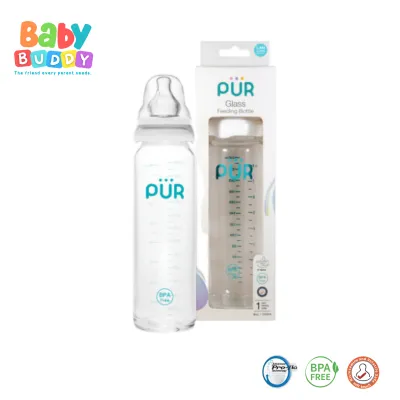
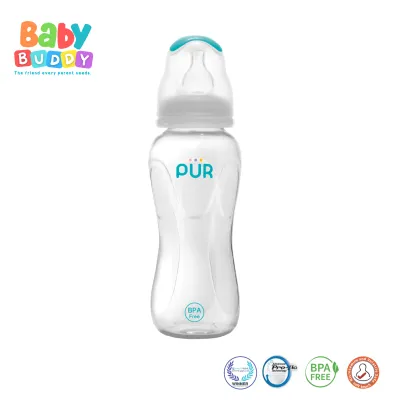
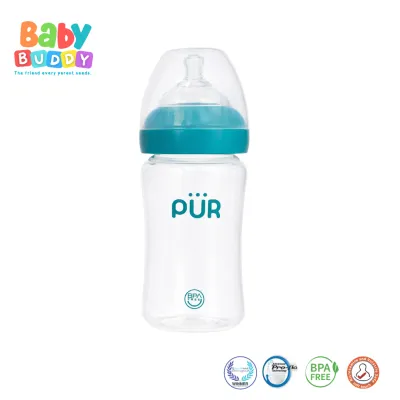
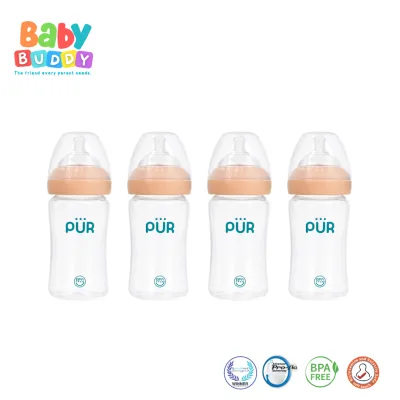
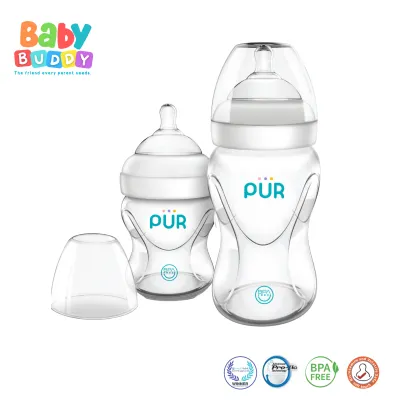
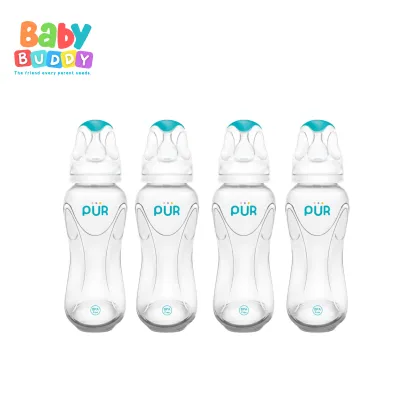
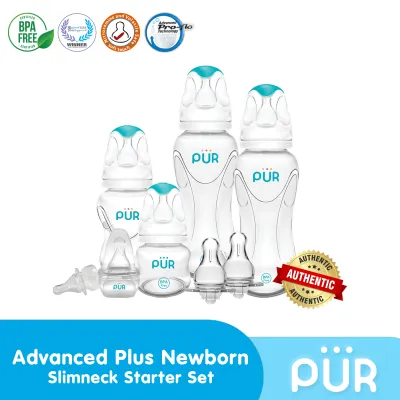
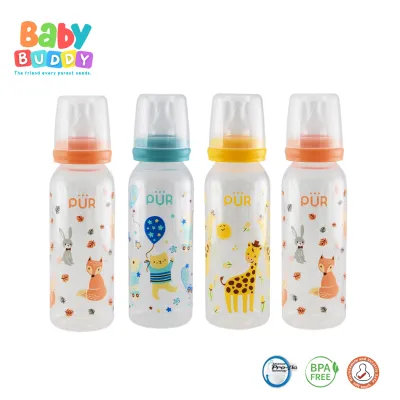
Prices are valid at publication and may change. Please refer to the product page for the latest price.
Silicone feeding bottles are made from a flexible, food-grade material that feels soft and squeezable to the touch. This pliable texture can mimic the natural feel of breastfeeding, which some babies find comforting during transitions. While silicone is highly resistant to drops and impacts, its semi-porous nature means it can gradually absorb odors from dish soaps or milk fats, and it may discolor over time.
Plastic feeding bottles are typically manufactured from lightweight materials such as polypropylene (PP) or polyphenylsulfone (PPSU). These bottles are highly shatterproof and easy for both parents and babies to hold, making them a practical choice for active families. Despite these benefits, plastic is more susceptible to micro-scratches from cleaning brushes, which can create tiny crevices where milk residue and bacteria can accumulate.
Keep in mind that specific material availability, bottle shapes, and exact plastic formulations depend on the specific PUR bottle model and current product lines. Always verify current safety certifications, BPA-free claims, and potential product recalls on the official manufacturer or regulatory websites before purchase.
Comparing Safety, Durability, and Cleaning Requirements
In warm, humid climates like the Philippines, preventing mold and bacterial growth on baby gear is a constant priority. High humidity can prolong drying times, making proper sterilization and thorough drying essential. Glass and high-grade plastics like PPSU can withstand high sterilization temperatures, whether you use boiling water, steam sterilizers, or UV cabinets. Standard PP plastic, however, may have lower heat thresholds, meaning prolonged exposure to extreme heat can cause it to warp or degrade faster.

Durability and lifespan vary significantly across these three materials. Glass bottles can theoretically last through multiple children, provided they do not chip, crack, or suffer thermal shock from sudden temperature changes. In contrast, plastic and silicone bottles have a finite lifespan and will eventually show signs of wear. Repeated exposure to heat, UV light, and cleaning agents causes plastic to become cloudy or brittle, while silicone may develop a sticky texture or retain a stubborn milk odor.
Proper cleaning requires different techniques for each material to prevent premature degradation. For plastic bottles, use a soft sponge or a silicone bottle brush rather than a stiff nylon bristle brush to avoid creating micro-scratches. For silicone bottles, ensure you thoroughly wash away any oily milk residue, which tends to cling to the flexible walls. For glass bottles, always inspect the rim and threads for tiny chips that could occur during washing or assembly, and discard the bottle immediately if any damage is found.
Matching the Material to Your Baby's Age and Feeding Routine
During the first few months of life, parents handle all the feedings, making the heavier weight of glass bottles highly manageable. Glass is excellent for this newborn stage because young infants require frequent, rigorous sterilization, and glass handles repeated high-heat cycles without degrading. Premium plastics like PPSU are also suitable for newborns, offering high heat resistance without the risk of breakage.
As your baby transitions to holding their own bottle, safety priorities naturally shift. A heavy glass bottle poses a hazard if dropped on a baby’s face or a hard floor. At this stage, lightweight, shatterproof plastic or squeezable silicone bottles are much more practical. They allow your little one to practice self-feeding and grip coordination without the risk of dangerous breaks.
Your daily routine and lifestyle should also dictate your material mix. If your baby attends daycare or you frequently travel, lightweight plastic or silicone bottles are highly convenient to pack in a diaper bag. They won’t add unnecessary weight and won’t break during transit. On the other hand, keeping a set of glass bottles at home for nighttime feedings ensures maximum hygiene and easy temperature monitoring when you are preparing milk in the kitchen.
While premium materials like PPSU may require a higher initial investment in ₱, their durability often makes them more cost-effective over time. Balancing your budget with your baby’s developmental stage will help you determine the right mix of bottles for your household.
How to Verify Material Specifications on PUR Packaging
Before purchasing or using a PUR feeding bottle, turn the bottle over or examine the outer box to locate the exact material codes. Manufacturers typically mold material identification codes, such as “PP” for polypropylene or “PPSU” for polyphenylsulfone, directly into the plastic base. If the packaging does not clearly state the material type, consult the manufacturer’s official documentation or customer service before use.
Check the back or side panels of the packaging for the manufacturer’s stated maximum heat resistance thresholds. This section outlines the maximum temperature the bottle, collar, and nipple can safely tolerate during sterilization. Ensure these limits align with your home sterilization setup, especially if you use a high-temperature steam sterilizer or a UV cabinet, as some materials can degrade under specific wavelengths or heat levels.
Finally, verify the age recommendations, volume measurement accuracy, and compatible nipple or collar types specific to the chosen bottle material. Ensure the bottle collar matches the nipple type you plan to use, as mixing mismatched lines can lead to leaks or improper venting. Always verify that the volume measurements printed on the side are clear and easy to read, allowing for precise formula preparation.
Frequently Asked Questions (FAQ)
Can I mix and match different PUR bottle materials?
Yes, you can use different materials for different scenarios, such as glass bottles at home and plastic or silicone bottles when traveling. However, you must ensure that the interchangeable parts, such as the collars, nipples, and caps, are fully compatible. Not all product lines share the same neck width or thread design. Always check the manufacturer’s instructions to verify cross-compatibility between their glass, silicone, and plastic lines to prevent leaks and ensure proper venting.
How often should I replace plastic or silicone PUR bottles?
Unlike glass, which can last until it chips or breaks, plastic and silicone bottles require regular replacement based on their physical condition. You should inspect them daily for visual and tactile signs of wear. Replace plastic bottles immediately if they become permanently cloudy, deeply scratched, or show hairline cracks. Silicone bottles should be retired if they feel sticky, show persistent discoloration, or retain a strong odor even after thorough cleaning. Always follow the specific replacement intervals and condition-based guidelines printed on your PUR product packaging.

Community discussion
Share your experience or ask a question. Comments are reviewed before publication.