
Choosing the right toddler formula in the Philippines can feel like an overwhelming task. With shelves lined with various brands, parents often find themselves comparing Promil Gold 3 Plus, Nido, and Enfagrow. There is no single “best” formula for every child; the ideal choice depends on your toddler’s specific nutritional gaps, taste preferences, digestive tolerance, and your family’s budget.
Promil Gold 3 Plus is widely recognized for its focus on nutrient absorption and comprehensive growth, often appealing to parents looking for advanced developmental support. Nido (such as Nido 3+) is a household favorite in the Philippines, highly regarded for its taste acceptance, general immunity support, and budget-friendly value. Enfagrow (such as Enfagrow A+ Four) is frequently highlighted for its focus on brain development, featuring prominent levels of DHA and other cognitive-supporting nutrients.
When comparing these options, it is essential to verify the exact stage on the packaging. Stage 3 formulations are generally designed for toddlers aged 1 to 3 years, while Stage 4 formulations target children aged 3 years and older. Because formulations and age recommendations can vary across brands and change over time, always inspect the label of the specific tin you purchase to ensure it matches your child’s developmental stage.
Products mentioned in this guide

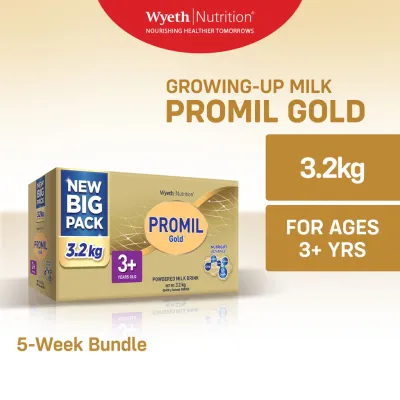
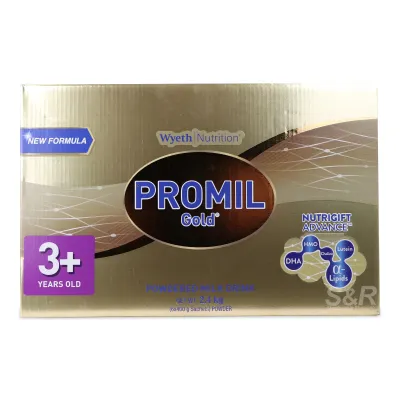
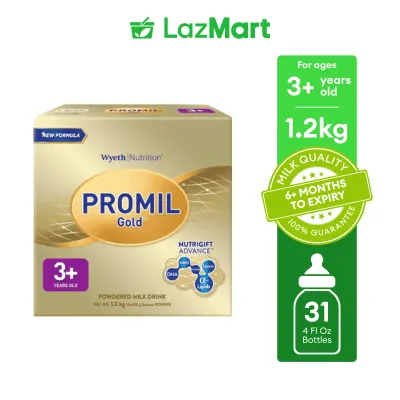
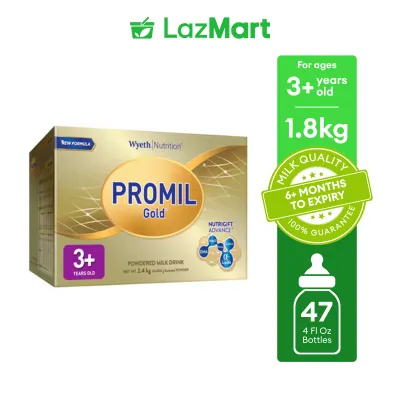
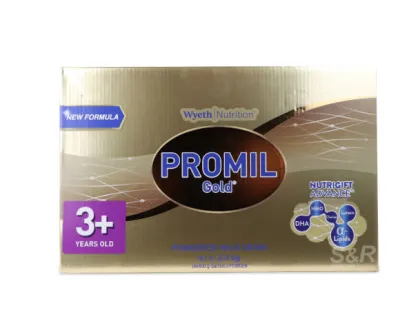

Prices are valid at publication and may change. Please refer to the product page for the latest price.
Meet the Contenders: Brand Positioning and Target Age
To make an informed decision, it helps to understand the philosophy and target audience behind each brand. These manufacturers design their products to meet different developmental milestones, and their positioning in the Philippine market reflects these distinct goals.
Promil Gold 3 Plus is a premium toddler milk under Wyeth Nutrition. It is specifically formulated for children aged 1 to 3 years, positioning itself as a premium option that supports both cognitive development and physical growth. The brand emphasizes “alpha-lipids” and other nutrient-absorption enhancers, aiming to maximize the benefit of every scoop. It is tailored for parents who prioritize scientific innovation and structured developmental milestones.
Nido (specifically Nido 3+ or Nido Kinder) is produced by Nestlé and remains one of the most popular milk brands in Filipino households. Positioned as an accessible, high-quality daily milk supplement, Nido focuses heavily on immunity (often marketed as “Lacto-Protect” or immune-support nutrients) and physical vitality. It is designed to be highly palatable, making it an excellent choice for active toddlers who might be transitioning from breast milk or infant formula to a broader family diet.
Enfagrow (such as Enfagrow A+ 3 or Enfagrow A+ Four) is manufactured by Mead Johnson. This brand is strongly associated with brain development and cognitive milestones. Its marketing and formulation heavily feature DHA, choline, and other brain-essential nutrients. Enfagrow is positioned as a premium, scientifically backed choice for parents who want to focus on their child’s cognitive, motor, and social development during these crucial early years.
Because manufacturers regularly update their ingredients, ratios, and target age brackets to align with the latest pediatric research, parents should treat these descriptions as general guides. Always check the physical label of the container in the store to ensure the product matches your child’s current age and developmental stage.
Comparing Nutritional Profiles and Key Benefits
When evaluating toddler formulas, looking past the front-of-pack marketing claims and studying the nutrition information panel on the back is crucial. This panel details the exact vitamins, minerals, and macronutrients your child will receive per serving.

To help you compare, the table below outlines the general nutritional components you should look for on the labels of Promil Gold 3 Plus, Nido, and Enfagrow. Because exact values can vary based on regional manufacturing updates and packaging sizes, use this as a framework to compare the physical tins available in your local supermarket.
| Nutritional Component | Promil Gold 3 Plus (Typical Focus) | Nido 3+ (Typical Focus) | Enfagrow A+ (Typical Focus) | What to Look For on the Label |
|---|---|---|---|---|
| Primary Focus | Nutrient absorption, cognitive growth, and physical development | Digestive health, immunity support, and overall physical growth | Brain development, cognitive milestones, and immune health | Check the brand's primary developmental claims on the front panel. |
| DHA & ARA | Moderate to high levels, often paired with Phospholipids / Sphingomyelin | Present in moderate amounts for general development | High levels of DHA, often highlighted as a key selling point | Compare the exact milligrams (mg) of DHA per 100g or per serving. |
| Prebiotics / Probiotics | Often includes Oligofructose (FOS) to support digestion | Features specific probiotic strains (e.g., L. rhamnosus) and prebiotics | Includes prebiotic blends (e.g., GOS, PDX) for gut health | Look for terms like FOS, GOS, Inulin, or specific live bacteria cultures. |
| Key Minerals (Calcium, Iron, Zinc) | Balanced ratios optimized for absorption and bone strength | High calcium and iron levels tailored for active toddlers | Fortified with iron and zinc to support cognitive and immune function | Verify the % RENI (Recommended Energy and Nutrient Intakes) on the label. |
| Vitamins (A, C, D, E) | Comprehensive vitamin profile supporting overall growth | Strong focus on Vitamins A, C, and D for immune defense | Balanced vitamin blend supporting brain and body development | Check the daily value percentages to ensure adequate coverage. |
Brain and Cognitive Support
During the toddler years, the brain undergoes rapid development, forming millions of neural connections every second. To support this growth, look for cognitive nutrients such as Docosahexaenoic Acid (DHA), Arachidonic Acid (ARA), Choline, Iron, and Iodine. DHA is an omega-3 fatty acid that serves as a primary structural component of the brain and retina.
When comparing Promil Gold 3 Plus, Nido, and Enfagrow, examine the source and concentration of DHA on the ingredient list. Some formulas derive their DHA from fish oil, while others use algal oil, which can subtly affect the milk’s taste and smell. Enfagrow historically emphasizes high DHA levels as a cornerstone of its formulation, whereas Promil Gold 3 Plus often pairs DHA with phospholipids or sphingomyelin to support myelination (the insulation of brain fibers). Nido offers a balanced amount of DHA integrated into a broader nutritional profile. Rather than relying on general brand reputation, locate the nutrition facts table on each tin and compare the exact milligrams of DHA per serving to see which aligns with your pediatrician’s recommendations.
Immunity and Gut Health
A significant portion of a toddler’s immune system resides in the gut. As toddlers in the Philippines explore their environment, play outdoors, and transition to solid foods, they are exposed to various pathogens. This makes digestive health and immune support critical. Look for prebiotics—such as Fructooligosaccharides (FOS), Galactooligosaccharides (GOS), and Polydextrose (PDX)—which feed beneficial gut bacteria, and probiotics, which are live beneficial microorganisms.
Nido 3+ is well-known for incorporating active probiotic cultures, such as Lactobacillus rhamnosus, alongside prebiotics to support a healthy gut barrier and assist in comfortable digestion. Promil Gold 3 Plus typically utilizes oligofructose (FOS) to promote a healthy digestive environment and enhance nutrient absorption. Enfagrow often features a dual-prebiotic blend designed to support soft stools and a healthy microbiome. When reviewing these options, check the ingredient list for these specific fibers and cultures, as they play a direct role in your child’s stool consistency and overall digestive comfort.
Bone and Physical Growth
Toddlers require a steady supply of macronutrients and minerals to support rapid skeletal growth and muscle development. Protein, Calcium, Phosphorus, and Vitamin D are the primary building blocks for strong bones and teeth. Vitamin D is especially crucial because it facilitates the absorption of calcium in the gut.
When evaluating these formulas, check the Calcium-to-Phosphorus ratio on the label. A balanced ratio is essential for optimal bone mineralization. Nido is highly favored by many Filipino parents for its robust calcium levels, which support the high energy demands of active, running toddlers. Promil Gold 3 Plus and Enfagrow also provide carefully calibrated levels of calcium and vitamin D to meet the Recommended Energy and Nutrient Intakes (RENI) for Filipino children. Compare the protein sources and totals per serving on the labels, keeping in mind that your toddler should also be receiving high-quality protein from solid foods like eggs, fish, and meats.
Pricing, Availability, and Value in the Philippines
While nutrition is the top priority, practical factors like cost, package size, and availability are crucial for long-term sustainability. Toddler formula is a recurring expense, and prices can vary significantly between premium and standard tiers in the Philippine market.
Generally, Enfagrow and Promil Gold 3 Plus sit in the premium price tier, reflecting their specialized, research-heavy formulations. A standard 900g tin of these premium brands typically ranges from ₱900 to ₱1,400, depending on the specific sub-variant and retailer. Nido 3+ is positioned as a highly accessible, value-friendly option, with standard 900g packs or tins generally retailing between ₱400 and ₱700.
To find the true value of each option, do not rely solely on the price of the box or tin. Instead, calculate the cost per serving or cost per 100 grams. To do this, look at the suggested serving size on the packaging (usually measured in grams or scoops) and divide the total weight of the package by the serving size to find the total number of servings. Then, divide the retail price by the number of servings.
For example, if a 1.2kg box of Nido costs ₱750 and has a suggested serving size of 36g, it contains approximately 33 servings. This brings the cost per serving to roughly ₱22.70. Conversely, if a 900g tin of a premium formula costs ₱1,200 with a serving size of 40g, it provides 22.5 servings, resulting in a cost per serving of approximately ₱53.30. By mapping these costs against your child’s daily consumption (e.g., 2 servings per day), you can accurately forecast your monthly milk budget.
These brands are widely available throughout the Philippines. You can find them on the shelves of major supermarkets, local grocery chains, and leading pharmacies. They are also sold through official brand stores on major online marketplaces.
When shopping online, exercise extreme caution. High humidity and tropical temperatures in the Philippines mean that milk powder must be stored in cool, dry conditions to prevent spoilage, clumping, and nutrient degradation. Only purchase formula from authorized distributor stores or official brand flagships. Avoid buying from unauthorized third-party sellers offering unusually low prices, as these products may be counterfeit, expired, or stored in sub-optimal conditions that compromise their safety and quality.
The Decision Framework: Which One Should You Buy?
To help you finalize your choice, use this conditional framework to match a formula to your toddler’s specific needs, lifestyle, and dietary habits.
Choose Promil Gold 3 Plus if:
- Your pediatrician has recommended a formula with a strong focus on nutrient absorption and cognitive development.
- Your child tolerates the formula well without digestive discomfort, and you prefer a premium product backed by Wyeth's scientific research.
- Your budget comfortably accommodates a premium-tier formula for your child's daily milk intake.
Choose Nido if:
- You are looking for a highly cost-effective, widely available daily milk supplement that fits a standard household budget.
- Your child is a picky eater, and you need a formula with high taste acceptance that easily transitions them from previous milks.
- Your primary focus is on general immune support, digestive health, and active physical growth.
Choose Enfagrow if:
- Your pediatrician has recommended a formula with high, clinically guided levels of DHA to support specific cognitive milestones.
- Your child has a history of accepting Mead Johnson formulations or has transitioned smoothly from their Stage 2 products.
- You prefer a premium formula that emphasizes brain development and cognitive support as its primary benefit.
Verify first if:
- Your child has a history of cow's milk protein allergy (CMPA), lactose intolerance, or other chronic digestive sensitivities. Standard versions of Promil Gold, Nido, and Enfagrow are based on cow's milk and are not suitable for children with diagnosed milk allergies. If your child exhibits signs of sensitivity, consult your pediatrician immediately to discuss specialized, hypoallergenic, or lactose-free alternatives before making any purchase.
Beyond the Label: Safe Feeding and Transition Tips
No matter which brand you select, it is vital to remember that toddler formula is designed to supplement a balanced solid food diet, not replace it. For children aged 1 to 3 years, diverse solid foods—including fruits, vegetables, grains, and proteins—should be the primary source of nutrition. Milk should be offered as a supportive addition to fill potential nutritional gaps, rather than the main meal.
Proper preparation is essential to protect your child’s health. Always wash your hands thoroughly and sterilize all feeding utensils before preparation. Use clean, safe drinking water that has been boiled and cooled to the manufacturer’s recommended temperature. Strictly follow the scooping ratios indicated on the tin; adding too much powder can strain your toddler’s kidneys and cause constipation, while adding too little can lead to undernutrition. Once prepared, feed the milk immediately, and discard any unfinished portions within the timeframe specified on the packaging (usually one hour) to prevent bacterial growth.
In the humid Philippine climate, keeping the formula powder dry is of utmost importance. Once a tin or foil pack is opened, store it in a cool, dry pantry—never in the refrigerator, as the temperature difference can cause condensation inside the container, leading to mold and bacterial growth. Ensure the lid is pressed down firmly after every use.
If you decide to switch your toddler from one brand to another, do so gradually to minimize the risk of digestive upset. You can follow a simple transition schedule over a week:
- Days 1 to 2: Serve 75% of the old formula mixed with 25% of the new formula.
- Days 3 to 4: Serve a 50/50 blend of both formulas.
- Days 5 to 6: Serve 25% of the old formula mixed with 75% of the new formula.
- Day 7 onwards: Transition completely to 100% of the new formula.
Keep a close eye on your child during and after a transition. Stop using the formula and consult your pediatrician immediately if you observe any red flags. These include signs of an allergic reaction (such as hives, swelling, or difficulty breathing), persistent diarrhea, vomiting, excessive gassiness, or a sudden drop in weight gain. Your doctor can provide tailored advice to ensure your child’s nutritional needs are met safely and effectively.

Community discussion
Share your experience or ask a question. Comments are reviewed before publication.