
Quick Answer: Which Pigeon Bottle Material Fits Your Needs?
Choosing the right baby bottle is one of the most frequent decisions parents face. When looking at the popular Pigeon lineup in the Philippines, you will find three primary materials: Polyphenylsulfone (PPSU), Borosilicate Glass, and Polypropylene (PP). Each material serves a distinct purpose depending on your daily routine, budget, and baby’s developmental stage.
If you need a highly durable, lightweight bottle that can withstand frequent travel and is safe for older babies to hold, PPSU is the premium choice. For parents who prioritize maximum hygiene, scratch resistance, and easy cleaning at home, Glass is highly suitable. If you are looking for an ultra-lightweight, budget-friendly option for short-term use or as a backup, PP bottles offer excellent practicality.
Pigeon PPSU Bottles: Durability for Active and Older Babies
PPSU, or Polyphenylsulfone, is a medical-grade plastic known for its exceptional durability and high heat resistance. This material is naturally shatterproof, making it an excellent option for active babies who are beginning to transition to self-feeding. If your baby drops the bottle from a high chair or stroller, a PPSU bottle will not break, offering peace of mind during busy daily routines.
Products mentioned in this guide
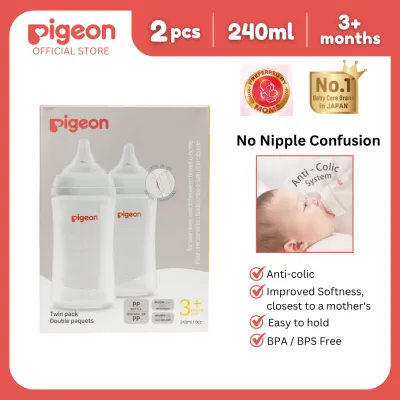
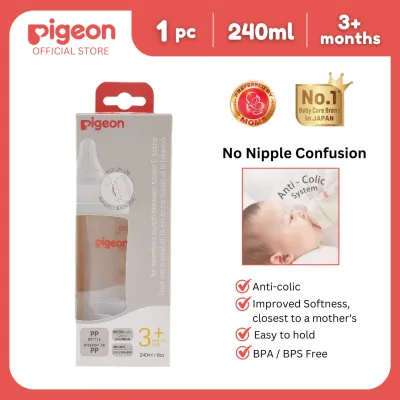
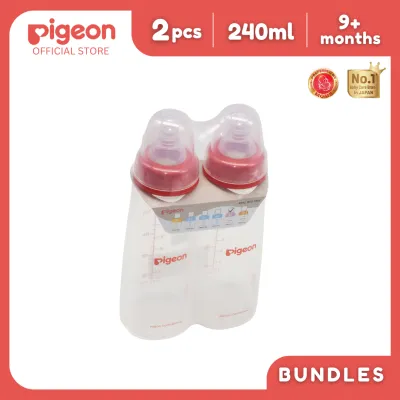
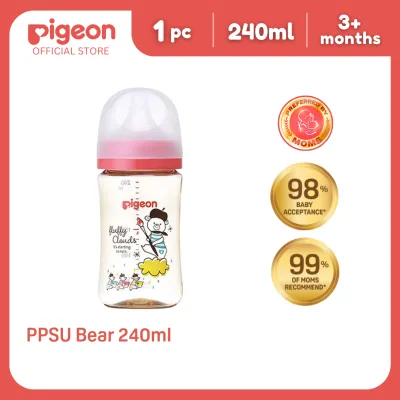
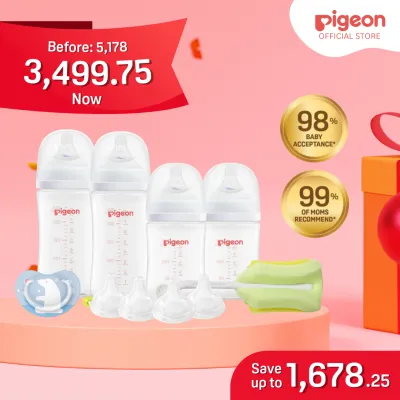
Prices are valid at publication and may change. Please refer to the product page for the latest price.

Because PPSU is highly resilient, it can withstand rigorous cleaning and sterilization cycles. However, parents must always verify the specific heat resistance limits and compatible sterilization methods directly on the manufacturer’s label. While many PPSU bottles are compatible with boiling, steam, and UV sterilizers, checking the packaging ensures you do not inadvertently damage the bottle or its components.
Visually, PPSU bottles are easily recognizable by their distinct natural amber or honey-colored tint. Over months of continuous use, it is important to regularly inspect the bottle for signs of wear. Look closely for deep scratches, persistent cloudiness, or structural changes, and replace the bottle immediately if you notice any degradation to maintain optimal feeding hygiene.
Pigeon Glass Bottles: Hygiene and Easy Cleaning for Home Use
Pigeon glass bottles are typically made from high-quality borosilicate glass, which offers a smooth, non-porous surface. This material is highly resistant to absorbing odors, organic stains, or milk fat residues. For parents, this means the bottle remains crystal clear and easy to clean, even after hundreds of uses, without the greasy film that can sometimes cling to plastic alternatives.
Despite these hygienic benefits, glass bottles are significantly heavier than plastic options and carry an inherent risk of breakage. Because of this, glass bottles require strict adult supervision during every feed. They are best reserved for home use where a caregiver can safely hold the bottle, rather than letting an infant handle it independently.
When preparing or cleaning glass bottles, temperature management is crucial. Always check the product packaging for specific temperature shock precautions to prevent cracking when transitioning from cold storage to warm water. Additionally, verify the standard sterilization compatibility on the label to ensure safe handling during boiling or steam sterilization.
Pigeon PP Bottles: Lightweight and Budget-Friendly Practicality
PP, or Polypropylene, is a widely used, lightweight plastic that serves as a highly accessible and budget-friendly option for parents. These bottles are exceptionally light, making them very easy for tiny hands to grip during early attempts at holding a bottle. For families looking to manage expenses or build a secondary set of bottles for travel, PP provides a practical solution.
However, PP has a softer surface compared to PPSU and glass, which generally results in a shorter overall lifespan. Over time, frequent scrubbing can create micro-scratches on the inner walls where milk residue and bacteria can accumulate. Parents should regularly inspect PP bottles for visual signs of degradation, such as a cloudy appearance, a sticky texture, or visible scratches, which indicate the bottle needs to be replaced.
To prolong the usability of PP bottles and prevent warping, always consult the product label for safe sterilization practices. PP has a lower heat tolerance than PPSU, so verifying the exact temperature limits on the packaging is essential before exposing the bottles to high-heat steam or boiling water.
Side-by-Side Comparison: PPSU vs Glass vs PP
To help you decide which material fits your household best, comparing their physical properties and care requirements side-by-side is highly effective. Each material presents distinct trade-offs in terms of weight, durability, and long-term value.
| Feature | PPSU Bottles | Glass Bottles | PP Bottles |
|---|---|---|---|
| Weight | Very lightweight | Heavy | Ultra-lightweight |
| Shatter Resistance | High (shatterproof) | Low (fragile) | High (shatterproof) |
| Scratch Resistance | Moderate to High | Very High | Low |
| Typical Color | Amber/Honey tint | Clear | Semi-clear/Milky |
| Primary Use Case | Travel, self-feeding, long-term | Home feeding, newborns | Budget-friendly, backup |
When shopping for Pigeon bottles in the Philippines, you will find that price-to-value considerations play a major role in your selection. PPSU bottles represent a premium upfront investment, but their long lifespan and durability often make them more cost-effective over several months of continuous use. Glass bottles sit in a moderate price range and can last indefinitely if handled carefully, while PP bottles offer the lowest initial cost, making them ideal for short-term phases.
Before purchasing, always review the specific product label on the packaging. Specifications, heat limits, and accessory compatibility can vary depending on the bottle generation, size, or specific product line. A quick check of the manufacturer’s instructions ensures you select the correct accessories and sterilization methods for your chosen bottle.
How to Choose the Right Pigeon Bottle for Your Baby's Stage
Selecting the right bottle material depends heavily on your baby’s current developmental stage and your family’s lifestyle. Many households find that a single material does not fit every scenario, leading them to adopt a flexible approach.
Choose PPSU if:
- Your baby is transitioning to holding their own bottle.
- You travel frequently, attend daycare, or need a reliable bottle for outdoor trips.
- You want a durable plastic bottle that lasts through multiple daily sterilization cycles.
Choose Glass if:
- You are feeding a newborn who relies entirely on a caregiver to hold the bottle.
- You prioritize a material that is highly resistant to scratches, stains, and odors.
- Most feedings take place at home where the risk of dropping the bottle on hard outdoor surfaces is low.
Choose PP if:
- You need an affordable, lightweight option for occasional or short-term feeding.
- You want to keep extra backup bottles at a relative's house or in a secondary diaper bag.
- You prefer an ultra-lightweight bottle for early developmental gripping practice.
Many parents in the Philippines successfully mix materials within the same household. For instance, you might use glass bottles for late-night feeds at home to ensure easy cleaning, while keeping a few PPSU bottles packed in your diaper bag for trips to the mall or family gatherings.
Regardless of the bottle material you choose, always verify nipple compatibility and flow rates. The nipple is a separate but equally critical component of the feeding system. Ensure the nipple size matches your baby’s age and feeding pace, and check the packaging to confirm that the nipples you purchase are fully compatible with your specific bottle line.
Frequently Asked Questions (FAQ)
Can I mix Pigeon PPSU, Glass, and PP bottles for the same baby?
Yes, you can mix different bottle materials for the same baby, provided you maintain consistency in the nipple system. Standard Pigeon nipples are generally designed to be interchangeable within their respective wide-neck or standard-neck product lines. However, always verify specific compatibility on the product packaging before mixing components.
Maintaining a consistent nipple shape and flow rate is crucial for your baby’s comfort. While the bottle material changes the weight and feel for the caregiver, the baby interacts primarily with the nipple. Keeping the nipple style consistent helps prevent nipple confusion and ensures a smooth feeding transition between different bottles.
How often should I replace Pigeon plastic (PPSU and PP) bottles?
The replacement frequency for plastic bottles depends heavily on usage, cleaning habits, and the specific material. Generally, PP bottles have a shorter lifespan and may need replacement more frequently than PPSU bottles due to their susceptibility to micro-scratches. Always consult the manufacturer’s guidelines printed on the packaging for recommended replacement timelines.
Regardless of the timeline, perform regular visual and tactile inspections. If you notice deep scratches, persistent cloudiness that does not wash away, a sticky texture, or any warping from heat, replace the bottle immediately. These signs of degradation can compromise hygiene and make the bottle difficult to clean thoroughly.
Are Pigeon glass bottles safe for newborns?
Pigeon glass bottles are highly safe for newborns, provided they are handled correctly. Because newborns cannot hold bottles themselves, an adult caregiver must always hold and support the glass bottle during feeding. This eliminates the risk of the bottle being dropped and breaking near the infant.
As your baby grows and begins to show signs of wanting to hold the bottle independently, it is advisable to transition to lightweight, shatterproof materials like PPSU or PP. This transition supports their motor skill development while preventing accidental injuries or messes from broken glass.

Community discussion
Share your experience or ask a question. Comments are reviewed before publication.