
Finding the best value on diaper pants during major online sales requires more than just looking at the initial price tag displayed on your screen. With various pack sizes, shipping fees, and promotional mechanics, calculating the actual cost per piece is the only reliable way to ensure your budget goes as far as possible. To find the true cost, use a simple formula: divide the final checkout price (including shipping fees and after applying all vouchers) by the total number of diaper pants in the order. This final checkout price is crucial because a low sticker price can easily be offset by high shipping costs or the requirement to purchase unnecessary add-on items to qualify for a discount.
Many parents make the mistake of comparing diaper packs based solely on the upfront price shown on the product listing. However, online marketplaces often use tiered pricing, where larger boxes or multi-pack bundles offer a lower unit price but require a higher initial outlay. To make an accurate comparison, always look at the total quantity of diapers you are receiving. For example, if a single pack of XL pants costs ₱450 and contains 30 pieces, the cost per piece is ₱15.00. If a mega-bundle costs ₱1,200 and contains 90 pieces, the cost per piece drops to ₱13.33.
Hidden costs can quickly disrupt your budget calculations if you do not pay close attention during checkout. Shipping fees are a primary culprit, especially when ordering heavy bulk boxes of diapers that incur higher delivery rates based on weight and volume. Some promotions require a minimum spend threshold to unlock free shipping or store coupons, which might force you to add items you do not actually need. Always calculate the cost per piece using the final amount you will pay at the very last step of the checkout process, rather than the individual item price.
Products mentioned in this guide
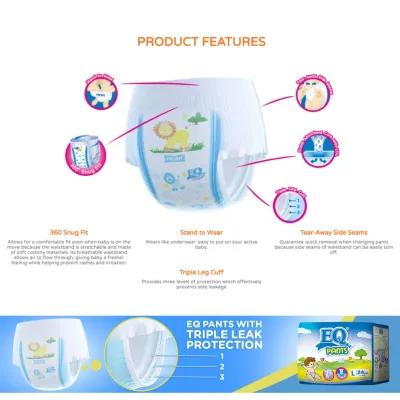
![EQ Pants XL (12-16 kg) - 46 pcs x 6 packs (276 pcs) - Diaper Pants [Case]](https://img.lazcdn.com/g/p/2e4386fa65613bf9a223ff8e8d594811.png_400x400q80.png_.webp)
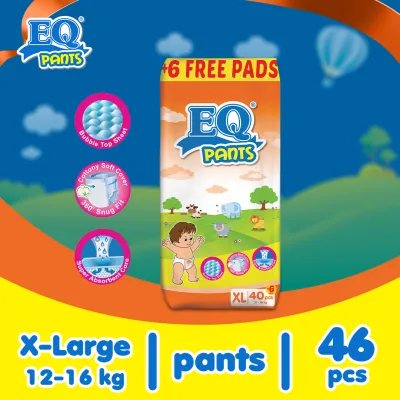
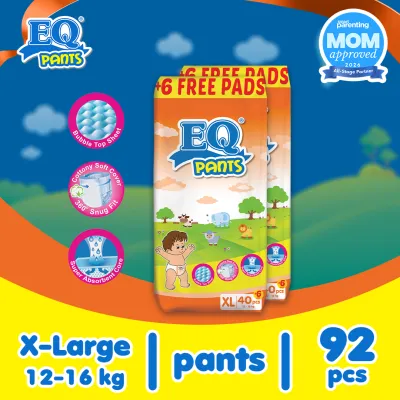
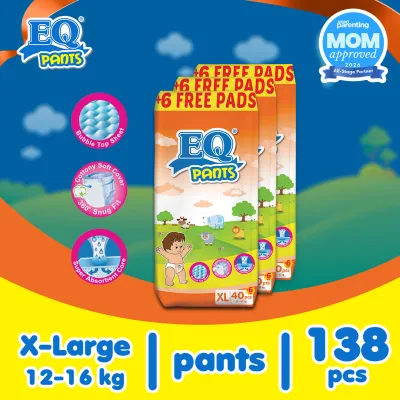
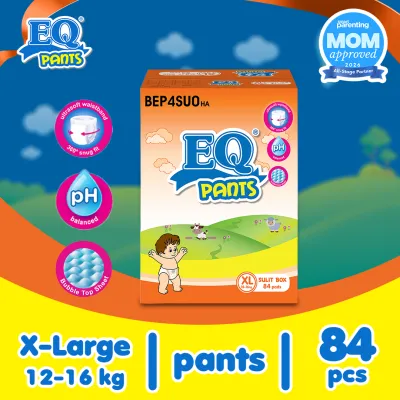
Prices are valid at publication and may change. Please refer to the product page for the latest price.
During major promotional events, the lowest sticker price on a product page does not always translate to the best actual value. Flash sales might offer a steep discount on a single pack, but limit the purchase to one unit per customer, meaning you cannot stock up at that price. Conversely, a slightly higher-priced listing might allow you to stack multiple high-value vouchers, ultimately resulting in a much lower cost per piece when buying in bulk. Taking a few moments to run these quick calculations on your phone’s calculator before finalizing your purchase can lead to significant savings over time.
Comparing Pampers, Equator, and Huggies XL Pants
When evaluating Pampers, Equator (commonly known as EQ), and Huggies XL pants, it is essential to look beyond the price tag and assess the physical features of each brand. XL diaper pants are generally designed for toddlers who are actively moving, walking, or potty training, typically falling within a weight range of 12 to 17 kilograms. However, because sizing standards and fit can vary significantly between manufacturers, caregivers must always verify the specific weight and size guidelines printed on each brand’s packaging before purchasing.
Typical pack sizes and piece counts for XL pants vary across these three brands, which directly impacts how you calculate your bulk savings. Some brands package their XL pants in standard bags of 24 to 32 pieces, while others offer mega-packs or box deals containing 60 or more diapers. Understanding these baseline packaging differences helps you compare apples to apples when browsing different online storefronts. A larger box might seem more expensive upfront, but it often yields a lower cost per piece compared to buying multiple small packs.
Key design differences are critical to check on product labels, as they directly affect your baby’s comfort and the diaper’s performance. Look closely at the waistband elasticity, as active toddlers require a secure yet gentle fit that moves with them without leaving harsh red marks. Additionally, check for the presence of wetness indicators, which change color to signal when a change is needed, and research the specific absorbent core technology advertised on the packaging. In the hot and humid climate of the Philippines, a highly breathable outer cover is also essential to help keep your baby’s skin dry and comfortable.
Matching specific brand features with your baby’s unique daily routine is the key to determining true value. For instance, if your toddler is a heavy wetter, especially overnight, a diaper with a highly advanced absorbent core that prevents backflow might be worth a slightly higher cost per piece. On the other hand, for active daytime wear when changes are more frequent, a lighter, more flexible diaper pant might be the more practical and economical choice. If a cheaper diaper leaks frequently, requiring extra clothing washes and double the diaper changes, it ultimately costs you more in time, effort, and money than a slightly more expensive, high-performing option.
Decoding Sale Mechanics on Online Stores
Navigating the complex promotional structures of online marketplaces is essential for securing the lowest possible price on diaper pants. Major shopping events, such as monthly double-day sales, payday promotions, and midnight flash sales, offer a variety of discount formats. To maximize your savings, you must understand how to evaluate bundle deals, buy-one-get-one (BOGO) offers, and tiered multi-piece discounts, as some of these deals are far more lucrative than others.

Voucher stacking is one of the most effective strategies for reducing the cost per piece of bulk diaper purchases. Most major e-commerce platforms allow you to combine different types of discounts on a single order. For example, you can often stack a store-specific coupon (provided by the diaper brand) with a platform-wide discount voucher, a free shipping voucher, and a cashback reward. To do this successfully, collect all available vouchers in your digital wallet before the sale begins, and test different combinations in your shopping cart to see which yields the lowest final checkout price.
While searching for the lowest price, safety and product authenticity must remain your top priorities. Always verify that you are purchasing from authorized online sellers or official brand stores, which are typically marked with official mall or preferred badges on the platform. Buying from unverified third-party sellers carries the risk of receiving counterfeit products, older stock with degraded elastics, or diapers that have been stored in damp, unhygienic conditions. Additionally, check the product description or message the seller to confirm the manufacturing or expiration dates, ensuring the diapers will remain in optimal condition throughout your planned storage period.
Smart Stockpiling Rules for XL Diapers
Stockpiling diapers during a major sale is an excellent way to save money, but overbuying can lead to wasted budget if your baby outgrows the size before you can use them all. To plan your purchases wisely, start by estimating your baby’s daily diaper usage. Toddlers wearing XL pants typically go through fewer diaper changes than infants, averaging about 4 to 6 diapers per day. Based on this average, a one-month supply consists of approximately 120 to 180 diapers, which can help you calculate exactly how many packs to buy without cluttering your home.
Caregivers must remain highly observant of physical signs that indicate a baby is ready to transition out of XL pants. If you notice persistent red marks around your toddler’s thighs or waist, experience frequent leaks despite proper fitting, or find it difficult to pull the waistband up comfortably, it is time to stop buying XL pants and prepare to transition to XXL. If your baby is already near the upper weight limit of the XL range, avoid buying massive bulk bundles that will take several months to consume, as they may quickly become too tight.
Proper storage is vital for maintaining the quality and safety of your stockpiled diapers. Because the tropical climate in the Philippines is highly humid, diapers must be stored in a cool, dry place away from direct sunlight, moisture, and pests. Keep the diapers in their original, sealed packaging until you are ready to use them, as exposure to open air can cause the absorbent gels to absorb ambient moisture, reducing their effectiveness. If your baby develops any sudden skin irritation or persistent diaper rash, stop using the current batch immediately and consult a qualified pediatrician to rule out sensitivity issues.
Frequently Asked Questions (FAQ)
When should I switch my baby from XL to XXL pants?
You should consider upgrading to XXL pants when you observe clear physical signs of discomfort or poor fit. These signs include deep red marks left by the elastic on your baby’s thighs or waist, frequent leaks during normal use, and a waistband that sits too low or is difficult to pull up over the hips. If your baby’s weight is approaching the maximum limit specified on the XL packaging, transitioning to the next size up will help ensure proper absorption and prevent skin chafing.
Is it safe to buy diapers from unauthorized online sellers to get a lower price?
Purchasing diapers from unauthorized online sellers carries significant risks, including counterfeit products, expired stock, or items damaged by poor storage conditions. To protect your baby’s skin health, always verify the seller’s authenticity by looking for official brand store badges and reading recent customer reviews that include photos of the packaging. Upon delivery, inspect the diaper packaging carefully to ensure the factory seals are intact, the print quality is clear, and there are no unusual chemical odors.

Community discussion
Share your experience or ask a question. Comments are reviewed before publication.