
Choosing the right baby gear is one of the most significant decisions you will make during your child’s first few months. Among the options available, the Nuna LEAF grow and traditional baby bouncers stand out as popular choices for soothing restless infants. The primary difference lies in how they move and how long they can remain a functional part of your home.
While traditional bouncers rely on the baby’s own movements or a manual tap to create an active, up-and-down spring, the Nuna LEAF grow utilizes a gentle, unassisted side-to-side swaying motion. This motor-free design is engineered to mimic the natural drift of a leaf in the breeze, offering a distinct sensory experience.
To make the best choice for your family, you must weigh several factors, including your baby’s unique soothing preferences, your home’s layout, and your long-term budget. By examining the mechanics, safety features, and physical footprints of these products, you can select a seat that keeps your little one comfortable and secure.
Products mentioned in this guide
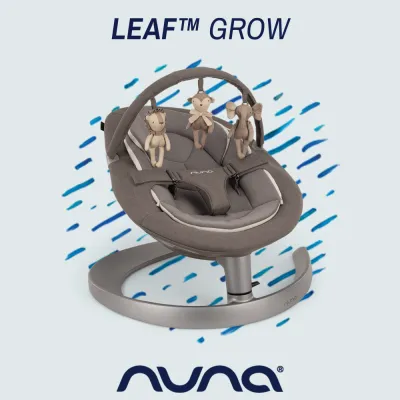
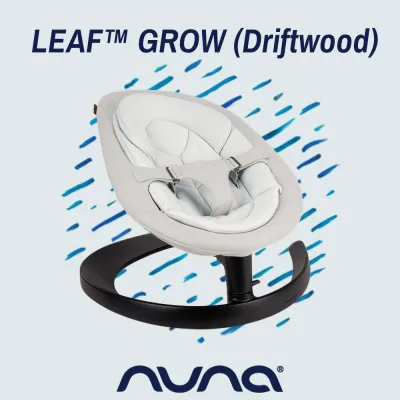
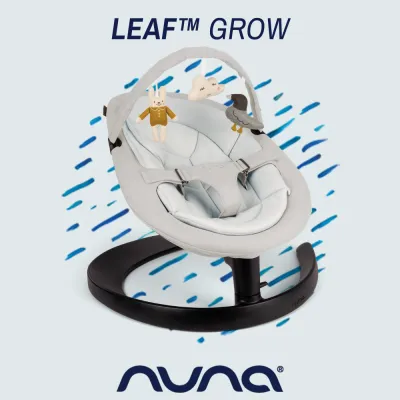
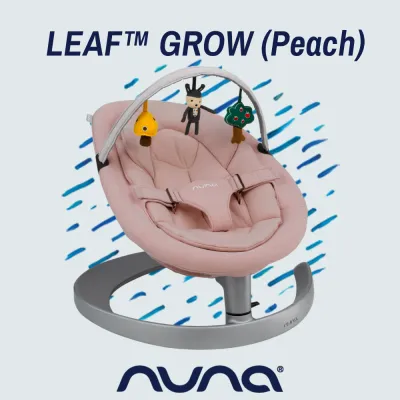

Prices are valid at publication and may change. Please refer to the product page for the latest price.
Understanding the Core Differences in Design and Motion
The fundamental distinction between these two categories of baby gear is the motion they use to soothe your child. Traditional baby bouncers typically feature a flexible wire or plastic frame that responds directly to your baby’s kicks and shifts in weight. This design produces a vertical, up-and-down bounce that many infants find stimulating and comforting, especially during active alert periods.
In contrast, the Nuna LEAF grow operates on a completely different mechanical principle. It features a solid, heavy base with a single pivot point that allows the seat to glide smoothly from side to side. Once given a gentle push, the seat continues to sway naturally without the aid of batteries, cords, or motors, providing a continuous, horizontal motion that resembles being rocked in a caregiver’s arms.
Because every infant is unique, babies respond differently to these distinct motion profiles. Some newborns are instantly calmed by the rhythmic, horizontal sway of a glider, while others prefer the immediate feedback of a vertical bounce. Observing how your baby reacts to being held and rocked can give you valuable clues about which motion style they will prefer.
The physical bases of these seats also influence how they sit in your living space. Traditional bouncers often have a lightweight, springy wire frame that rests directly on the floor, making them highly responsive but sometimes prone to sliding if placed on slick tiles. The LEAF grow utilizes a broad, heavy, and completely stationary metal base that anchors the unit firmly to the ground, preventing any shifting during use.
Additionally, the lack of electronic components in both the LEAF grow and basic traditional bouncers means they operate silently. However, some traditional bouncers do include optional battery-powered vibration units built into the seat. If your baby is comforted by continuous, gentle vibrations, you may want to check if the models you are comparing offer this feature, keeping in mind that it will require periodic battery replacements.
Comparing Weight Capacity and Convertibility
When investing in baby gear, understanding how long a product can be safely used is essential for evaluating its overall value. Traditional baby bouncers are generally designed strictly for the infancy stage. Most of these models have a relatively low maximum weight limit, often requiring you to retire the gear once your baby reaches a certain weight or begins to sit up independently.

The Nuna LEAF grow is designed with a convertible structure intended to extend its usability far beyond infancy. It features a multi-stage design that transitions from a harnessed infant seat to a casual toddler chair. To understand the exact longevity of each option, you must locate and compare the minimum and maximum weight limits printed on the product labels, user manuals, and official manufacturer specifications.
Verifying the specific developmental milestones required for each stage of use is critical for your child’s safety. For example, the infant stage of the LEAF grow requires the use of a secure harness to keep newborns safely positioned. As your child grows into a toddler and achieves stable, unassisted mobility, the harness and infant insert can be removed, transforming the unit into a comfortable lounge seat that supports a much higher weight threshold.
Regardless of which style you choose, you must strictly adhere to the manufacturer’s guidelines regarding transitions. Never assume a seat is safe for a toddler simply because they fit within the physical dimensions of the fabric. Always stop using the infant configuration immediately when your baby reaches the specified weight, height, or mobility limits, such as rolling over or pushing up on their hands and knees.
It is also wise to check how easy it is to adjust the seat’s recline angles. Some convertible seats offer multiple recline positions to accommodate different stages of alertness and growth, while basic bouncers often remain at a single, fixed angle. Reviewing the product manual will help you understand how to safely adjust these positions without compromising the seat’s structural integrity.
Evaluating Safety Standards and Harness Features
Safety must always be the primary consideration when selecting any product for your baby. Before purchasing any bouncer or glider, take the time to inspect the packaging and the product frame for recognized safety standard labels and compliance marks. These certifications indicate that the product has undergone rigorous testing to meet established safety protocols.
The restraint system is your primary defense against accidental falls. Compare the harness designs of the models you are considering, looking closely at whether they feature a 3-point or a 5-point harness. The harness should be constructed from durable, high-quality webbing and feature secure, adjustable buckles that can be customized to fit your baby’s current size snugly.
When setting up your chosen seat, always follow universal safety rules to protect your child from common household hazards. Never place a baby bouncer or glider on an elevated surface, such as a table, countertop, or sofa, as the natural vibrations or the baby’s movements can cause the seat to slide off the edge. Always keep the unit on a flat, level floor.
Additionally, ensure the seat is positioned far away from potential dangers, including stairs, open windows, electrical cords, and heating appliances. In tropical environments, it is also important to keep the seat clear of direct sunlight coming through windows and away from open patio doors where insects might enter. Most importantly, never leave your baby unattended in any bouncer or glider, even for a brief moment.
Regularly inspect the harness straps and buckles for signs of wear and tear, such as fraying or cracking. If you notice any damage to the restraint system or the frame, discontinue use immediately and contact the manufacturer for replacement parts. Keeping a close eye on these components ensures the seat remains a safe environment for your little one.
Assessing Portability, Storage, and Daily Convenience
A baby seat needs to fit seamlessly into your daily routine and your physical living space. Traditional baby bouncers are highly regarded for their lightweight construction and portability. Many models feature a simple folding mechanism that allows the frame to collapse nearly flat, making them incredibly easy to slide under a bed, pack into a car trunk, or carry from room to room as you complete household chores.
The Nuna LEAF grow, with its robust construction and heavy stationary base, is significantly heavier and less portable. While the seat can be detached from the base for transport or storage, it does not fold flat in the way a traditional wire-frame bouncer does. This makes it more suited as a semi-permanent fixture in a living room or nursery rather than a travel-friendly companion.
Before making a decision, measure your available floor space and compare it against the product’s base dimensions. It is vital to maintain a safe clearance zone around the seat, ensuring there are no walls, furniture, or sharp corners within reach of the seat’s maximum range of motion. This is especially important for the swaying motion of the LEAF grow, which requires clear space on both sides.
Daily maintenance is another practical factor to consider, particularly in warm and humid tropical climates where babies are prone to sweating. Check the care labels on the fabric seat covers to verify if they are machine washable or if they require meticulous spot cleaning. Removable, machine-washable covers are highly advantageous for managing spit-up, diaper leaks, and sweat, helping you keep the baby’s environment clean and hygienic.
Furthermore, consider the breathability of the fabrics used in the seat construction. Some premium models incorporate mesh backing or organic cotton liners that promote better airflow, keeping your baby cool during warm afternoons. Reviewing these material specifications beforehand can make a significant difference in your baby’s daily comfort.
Decision Framework: Which Bouncer Fits Your Baby and Home?
To choose the right seat, you must align the features of each product with your family’s specific lifestyle, space, and budget. The Nuna LEAF grow is often the preferred choice for caregivers who prioritize a smooth, natural swaying motion that does not require electricity or batteries. Its elegant, modern aesthetic blends well with contemporary home decor, and its high weight capacity makes it an attractive option if you want a piece of furniture that your child can continue to use as a cozy reading chair throughout their toddler years.
On the other hand, a traditional baby bouncer is highly suitable if you are working with a stricter budget or have limited floor space. If you need a seat that you can easily fold up and take with you to a relative’s house, or if your baby is highly active and thrives on the self-soothing feedback of an energetic, vertical bounce, a classic lightweight bouncer is often the more practical and satisfying choice.
Before finalizing your purchase, verify the current local retail availability and exact pricing in ₱ at authorized local baby boutiques or reputable online marketplaces. Be sure to check the specific warranty terms offered by the retailer or manufacturer to ensure your investment is fully protected against any manufacturing defects.
Frequently Asked Questions (FAQ)
Can a baby sleep in the Nuna LEAF grow or other bouncers?
No, baby bouncers, gliders, and loungers are not approved for safe, unsupervised sleep. Because these products hold the baby at an incline, there is a risk of the baby’s head chin-tucking toward their chest, which can restrict their airway. If your baby falls asleep while in the bouncer, you should immediately transfer them to a firm, flat crib, cot, or bassinet designed specifically for safe sleep.
How do I know when my baby has outgrown the bouncer?
You must always consult your specific product manual to find the exact maximum weight and height limits for the infant stage. Beyond these numbers, your baby’s physical development is the most critical indicator. If your baby begins attempting to sit up unassisted, rolls over, or tries to climb out of the seat, you must discontinue using the infant bouncer mode immediately, as these milestones increase the risk of the seat tipping over.

Community discussion
Share your experience or ask a question. Comments are reviewed before publication.