
Choosing a practical spot to safely set your baby down during the day is an important decision you will make as a parent. When comparing a baby bouncer and a baby swing, the choice comes down to your living space, your daily routine, and how your baby prefers to be comforted. Baby bouncers are lightweight, compact, and powered by your baby’s own natural movements or a gentle manual tap, making them highly suitable for smaller homes and easy portability. Baby swings, on the other hand, are larger, motorized devices that offer consistent, hands-free rhythmic motion to soothe a restless infant.
A baby bouncer features a flexible frame with an angled fabric seat. When your baby kicks their legs or wiggles their body, the frame responds with a gentle up-and-down bouncing motion. This design is highly responsive to the baby’s own activity, allowing them to self-soothe while developing basic motor awareness. Because they do not require heavy motors or bulky frames, bouncers are exceptionally easy to lift, fold, and carry from room to room.
In contrast, a baby swing is a more substantial piece of baby gear designed to mimic the swaying motion of a parent’s arms. Powered by batteries or an electrical wall outlet, these devices swing the seat back and forth or side to side at various pre-programmed speeds. They often include extra features like built-in lullabies, white noise, and overhead toy bars to keep your little one engaged or relaxed.
Products mentioned in this guide
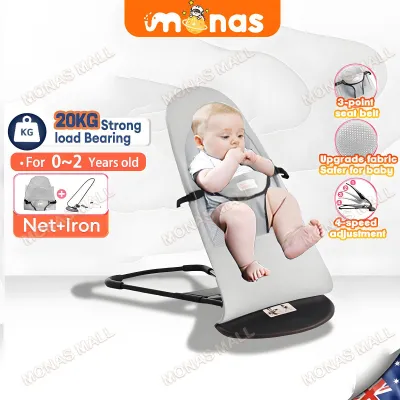
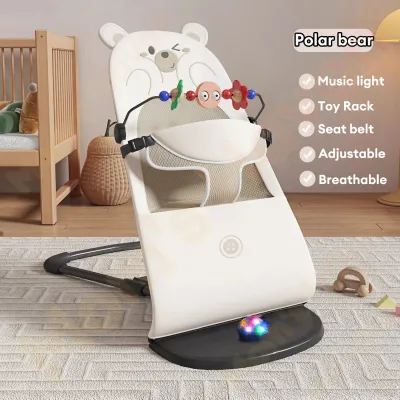
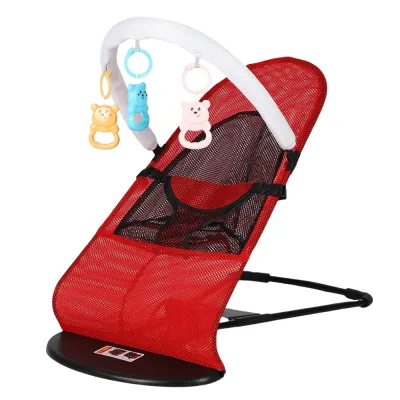
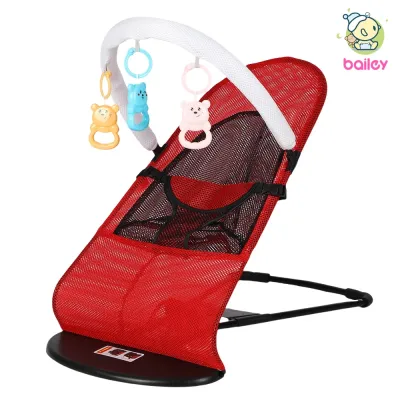
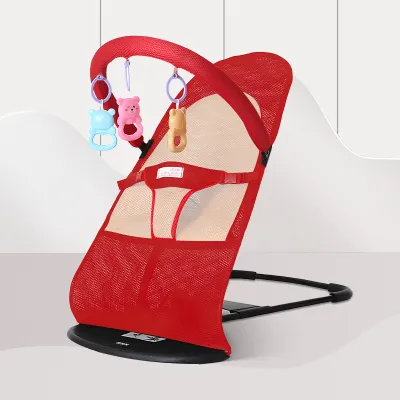
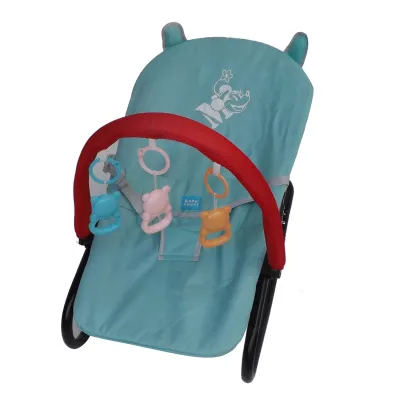
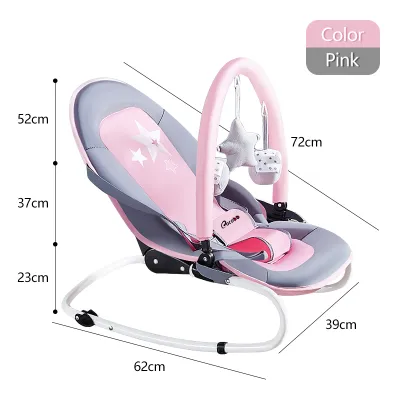
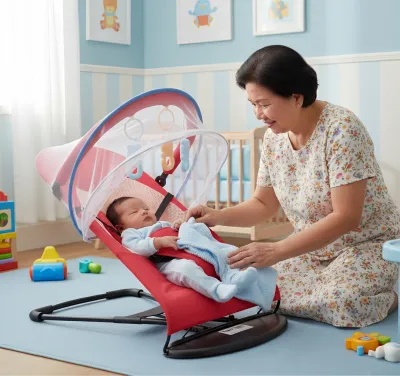
Prices are valid at publication and may change. Please refer to the product page for the latest price.
These modern activity seats differ significantly from traditional manual rocking chairs for babies. While a traditional infant rocker or manual rocking chair relies entirely on a parent sitting nearby to physically rock the frame back and forth, bouncers and swings are designed to sit securely on the floor, allowing your baby to enjoy motion independently while you supervise them from a short distance.
In a tropical climate like the Philippines, where warm afternoons and high humidity are common, choosing the right seat also involves keeping your baby cool and comfortable. A lightweight bouncer with breathable mesh fabric can be easily moved to the coolest, most well-ventilated part of the house, such as near a window or within the path of a stand fan. Meanwhile, a motorized swing might find a permanent home in an air-conditioned living room where its steady rhythm can help soothe a baby during humid midday fussiness.
Key Dimensions to Compare for Your Household
When deciding between these two popular options, evaluating your home’s layout and your daily lifestyle is just as important as considering your baby’s temperament.
Space and portability are often the deciding factors for many families. In typical Filipino households, where living spaces may be compact or shared with extended family members, floor real estate is highly valuable. A baby bouncer has a very small footprint, typically taking up no more space than a standard floor cushion. Many bouncer models fold completely flat, allowing you to slide them under a bed, tuck them behind a sofa, or pack them into the trunk of a car for trips to visit grandparents. A baby swing, however, requires a dedicated area. The wide base needed to keep a motorized swing stable while in motion means it cannot easily be tucked away when not in use, and moving it between rooms can be a heavy, awkward chore.
Power and operation requirements also present a clear contrast. Baby bouncers operate silently and require no external power source, relying solely on gravity and your baby’s physical movement. This makes them incredibly reliable, especially in areas prone to occasional power interruptions or brownouts, as the seat remains fully functional at all times. Baby swings require a continuous power supply, either through a wall adapter or multiple batteries. While motorized swings offer the convenience of continuous, hands-free motion, some motors can produce a noticeable humming sound that might bother light sleepers, and relying solely on batteries can lead to ongoing replacement costs.
Soothing effectiveness varies widely depending on what your baby finds comforting. Some infants are instantly calmed by the predictable, continuous sway of a motorized swing, which can closely replicate the sensation of being rocked to sleep in your arms. Other babies prefer the immediate feedback of a bouncer, where their own kicks translate into instant movement. If your baby is easily overstimulated, the simple, quiet bounce of a manual seat may be far more relaxing than a swing equipped with flashing lights, moving mobiles, and electronic music. Observing how your baby reacts to different types of motion—such as being rocked in your arms versus being gently bounced on your lap—can give you a helpful clue before you make a purchase.
Age, Weight, and Developmental Considerations
Every piece of baby gear comes with strict developmental boundaries that ensure your child remains safe during use.

Before placing your baby in any bouncer or swing, it is essential to check the manufacturer’s labels for specific minimum and maximum weight and height limits. Some heavy-duty swings are approved for use from birth up to around 9 to 11 kilograms, while lightweight bouncers may have different weight thresholds depending on their frame design. Never assume a seat is suitable for your baby based on their age alone; physical size and weight are the primary metrics used by manufacturers to certify safety.
The transition out of these activity seats is dictated by your baby’s physical milestones rather than a calendar date. You must stop using both bouncers and swings as soon as your baby shows signs of sitting up unassisted, rolling over, or attempting to climb out of the seat. Once a baby gains the core strength to sit up or shift their weight significantly, the risk of the seat tipping over increases dramatically, making these devices unsafe for older, more active infants.
Newborns require extra attention when using angled seats due to their limited physical development. Because young infants lack head and neck control, their heads can easily flop forward, potentially compromising their airway. When selecting a bouncer or swing for a newborn, look for models that offer a deep, supportive recline and adequate head support. Always monitor your baby’s posture to ensure their chin remains lifted off their chest, and adjust the seat’s recline angle according to the manufacturer’s instructions for the newborn stage.
Safety Rules and Supervision Boundaries
While bouncers and swings are excellent tools for keeping your baby entertained while you fold laundry or prepare a meal nearby, they must always be used with strict safety protocols in mind.
The most critical safety rule for both bouncers and swings is that they are designed for awake, supervised use only. They are not safe environments for infant sleep. If your baby falls asleep while bouncing or swinging, you should gently transfer them to a firm, flat sleep surface, such as a crib or playpen, as soon as possible. The angled position of these seats increases the risk of positional asphyxiation, a dangerous condition where a baby’s head drops forward and blocks their airway while they are asleep.
Placement safety is another non-negotiable factor. Both bouncers and swings must always be placed directly on the floor. Never place an activity seat on an elevated surface such as a table, kitchen counter, bed, or sofa. The vibrations from a swing’s motor or the vigorous kicking of a baby in a bouncer can cause the seat to slide or tip off the edge, leading to severe fall injuries. Additionally, keep the seat well away from hazards like electrical cords, window blind strings, and hot appliances.
Proper harness usage is vital every single time you place your baby in the seat, even if you only plan to leave them there for a few minutes. Always secure the integrated three-point or five-point harness snugly around your baby’s hips and shoulders to prevent them from sliding down or slipping out. Regularly inspect the fabric, buckles, and frame for any signs of wear, tear, or loose joints, and check the manufacturer’s website periodically to ensure your specific model has not been subject to any safety recalls.
Decision Framework: Which Seat Should You Choose?
To make the right choice for your family, weigh your daily household needs against the unique features of each seat.
You should choose a baby bouncer if you have limited floor space, value portability, and want a budget-friendly option that is easy to store. A bouncer is ideal for parents who want to move the seat effortlessly from the living room to the bathroom while they shower, or for families who travel frequently to visit relatives. It is also an excellent choice if your baby is highly active and enjoys initiating their own movement through kicking and wiggling.
You should choose a baby swing if you have ample floor space and require a reliable, hands-free tool to soothe a fussy baby who craves constant, rhythmic motion. A swing is particularly helpful for parents of infants who find it difficult to settle down without continuous rocking, allowing you to rest your arms while keeping your baby calm and content nearby.
Before making your final decision, verify if your baby has any specific physical needs that might affect how they sit. If your baby experiences frequent infant reflux or has unique neck-support requirements, consult your pediatrician for personalized guidance on the most appropriate seating angles and duration of use.
Frequently Asked Questions (FAQ)
Can my baby sleep in a bouncer or swing?
No, babies should not be allowed to sleep in a bouncer or swing. These devices are designed exclusively for awake, supervised activity and relaxation. Sleeping in an angled seat poses a serious risk of positional asphyxiation, where the baby’s heavy head falls forward, compressing their windpipe and restricting their breathing. If your baby dozes off while in a bouncer or swing, always transfer them to a firm, flat mattress in a crib or bassinet to ensure they can breathe safely and sleep comfortably.
How do I clean and maintain the fabric and frame?
To clean your baby’s activity seat, always start by checking the manufacturer’s care label attached to the fabric cover. Most bouncers and swings feature removable fabric seats that can be machine-washed on a gentle cycle with a mild, baby-safe detergent, which is especially helpful for managing diaper blowouts or spit-up. For the frame, wipe down the plastic and metal parts with a damp cloth and mild soap. Never submerge motorized components, battery compartments, or electronic control panels in water, as this will permanently damage the electrical systems.
Is a manual rocking chair a better alternative?
A manual rocking chair serves a different purpose than an independent baby bouncer or swing. A traditional rocking chair requires you to sit in the chair and hold your baby, which is wonderful for close bonding, feeding, and soothing during the night. However, it does not provide a safe, hands-free spot to place your baby when you need to attend to other household tasks. While a manual rocking chair is a beautiful addition to a nursery, a bouncer or swing is often more practical for daytime multitasking when you need a secure, floor-level space for your supervised baby to rest.
Community discussion
Share your experience or ask a question. Comments are reviewed before publication.