
When choosing a newborn baby carrier, safety is the absolute priority. A newborn’s physical structure is incredibly delicate, requiring specialized support that standard carriers designed for older infants might not provide. The ideal carrier must feature a design that actively protects the baby’s fragile airway, supports their developing spine, and keeps their hips in a healthy position.
To ensure your baby remains safe and comfortable, you must look for specific structural elements. These include a supportive back panel that preserves the natural curvature of the spine, a seat that facilitates a wide leg position, and a dedicated headrest. Additionally, the carrier must be constructed from breathable materials to prevent overheating, especially in warm and humid tropical climates.
Understanding these essential safety features allows you to make an informed decision. By focusing on ergonomic design, secure fastenings, and proper airflow, you can confidently select a carrier that keeps your newborn secure while keeping your hands free for daily tasks.
Products mentioned in this guide
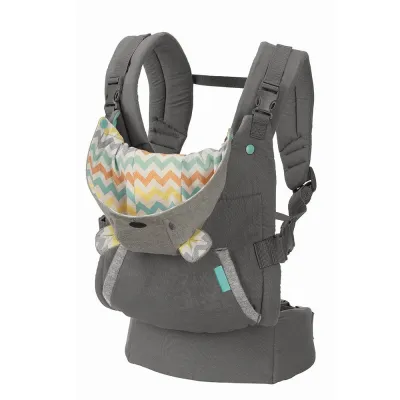
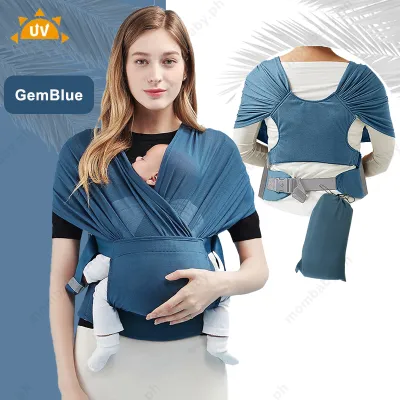


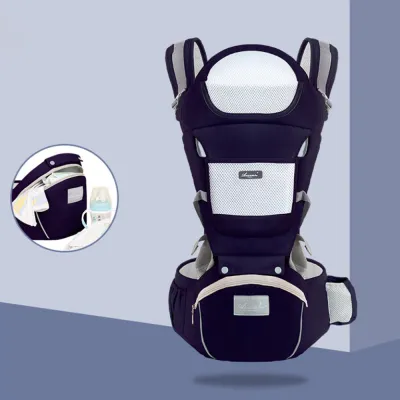
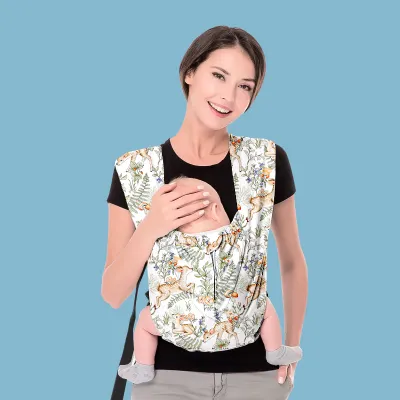

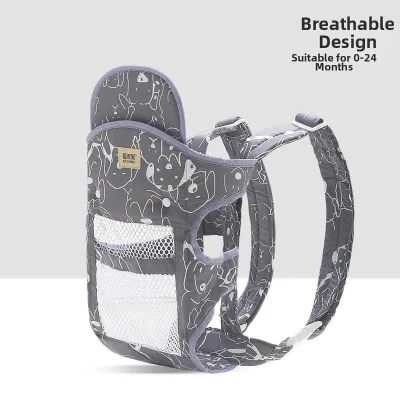
Prices are valid at publication and may change. Please refer to the product page for the latest price.
Evaluating Head, Neck, and Spine Support
A newborn’s spine is shaped like a gentle “C” curve, and their neck muscles are not yet strong enough to support the weight of their head. A safe newborn carrier must accommodate this natural anatomy rather than forcing the baby into an unnatural, straight posture. Look for a soft, flexible back panel that conforms to the baby’s curved spine, distributing their weight evenly and preventing any pressure points along the vertebrae. A rigid back panel can force the spine to straighten prematurely, which can interfere with healthy spinal development.
Equally critical is the positioning of the baby’s hips. The carrier must support the “M” position, where the baby’s bottom sits lower than their knees, and their thighs spread naturally around the caregiver’s torso. This position, often referred to as the frog-leg position, ensures that the hip joints are aligned correctly, reducing the risk of hip dysplasia. You can verify this by observing if the fabric extends fully from knee crease to knee crease, supporting the entire thigh. If the fabric is too narrow, the legs will dangle straight down, pulling the hip joints out of their sockets.
To protect the airway, the carrier must feature robust head and neck support. A newborn’s head can easily slump forward if unsupported, which can press their chin against their chest and restrict breathing. Look for carriers with adjustable, padded collars or integrated hoods that can be secured to hold the head gently in an upright, slightly tilted-back position. The support should be firm enough to prevent lateral movement while still allowing you to see your baby’s face at all times.
Adjustability is key when it comes to maintaining this ergonomic support as your baby grows. A carrier with an adjustable seat width allows you to customize the support based on your newborn’s current size. If the seat is too wide, it can force the baby’s legs to stretch too straight; if it is too narrow, their legs will dangle, putting strain on the hip joints. Check for adjustable tabs, buttons, or hook-and-loop fasteners that let you narrow the seat for a perfect knee-to-knee fit. This adjustability ensures that the carrier grows with your baby, providing continuous ergonomic support.
Checking Fastenings and Structural Integrity
The hardware and structural components of a baby carrier are what keep your newborn securely attached to your body. Before placing your baby in any carrier, you must thoroughly inspect the buckles, straps, and fasteners. Look for heavy-duty, high-quality plastic buckles that require a deliberate squeeze to release, minimizing the risk of accidental opening. Some carriers feature double-locking buckles or safety elastic loops that catch the strap if the buckle fails, providing an extra layer of security.

Strap redundancy and adjustment mechanisms should be smooth yet firm. The webbing of the straps must slide through the adjusters easily when you pull them, but they must lock tightly into place without slipping under tension. Check that the stitching at all major stress points, such as where the shoulder straps meet the body panel, is reinforced with multiple rows of stitching or box-X patterns. This ensures the carrier can withstand daily wear and the tension of supporting your baby’s weight.
Every carrier has a specific minimum weight requirement, which is crucial for newborn safety. Placing a baby who is below the minimum weight limit into a carrier can lead to them slipping through the leg openings or slumping down into the body of the carrier, creating a severe suffocation hazard. Always locate this weight limit on the product label or instruction manual and verify your baby’s current weight before use. Never assume a carrier is safe for a newborn just because it is labeled as a baby carrier.
Fabric durability is another essential factor in structural integrity. High-quality carriers use tightly woven fabrics like cotton canvas, linen, or specialized synthetic blends that do not stretch excessively or tear under pressure. Inspect the fabric for any signs of thinning, loose threads, or weak seams, especially if you are using a secondhand carrier. A sturdy fabric ensures that the carrier maintains its shape and continues to provide consistent support over time, keeping your baby secure.
Managing Breathability and Overheating Risks
In tropical environments like the Philippines, overheating is a significant safety concern for newborns. Babies cannot regulate their body temperature as effectively as adults, and being held close to a caregiver’s body generates substantial shared heat. To mitigate this risk, look for carriers that incorporate breathable mesh panels, lightweight cotton, or moisture-wicking fabrics that allow air to circulate freely around the baby. These materials help dissipate heat and keep both you and your baby comfortable during warm days.
When using a carrier, you must adjust your baby’s clothing layers accordingly. Because the carrier itself acts as a layer of clothing and your body heat acts as a natural heater, newborns usually only need a single layer of lightweight, breathable clothing, such as a cotton onesie. Avoid dressing your baby in heavy sleepsuits, thick socks, or hats when they are in the carrier, as this can quickly lead to heat exhaustion. Keep their head uncovered unless you need to protect them from direct sunlight.
To monitor your baby’s temperature accurately, do not rely on the temperature of their hands or feet, which naturally feel cooler. Instead, slide your hand inside the carrier and feel the back of their neck or their chest. If the skin feels hot, sweaty, or damp, your baby is likely overheating. In such cases, take the baby out of the carrier, move to a cooler or shaded area, and allow them to cool down before resuming use.
Airflow around the baby’s face is also vital for preventing carbon dioxide rebreathing. Ensure that the carrier’s fabric does not drape over the baby’s face and that there is at least a two-finger gap between their chin and chest. Keeping the top of the carrier open and clear of extra blankets or sunshades ensures a constant supply of fresh air, keeping your little one safe and comfortable even on warm afternoons.
Verifying Safety Labels and Manufacturer Guidelines
Before purchasing or using a newborn baby carrier, it is essential to verify its safety credentials. Legitimate manufacturers print clear safety labels directly onto the carrier fabric or attach them as permanent tags. These labels contain critical information, including the minimum and maximum weight limits, age recommendations, fiber content, and specific washing instructions. Take the time to read these labels thoroughly to ensure the product is appropriate for your newborn.
You should also cross-reference the carrier’s safety standards on the manufacturer’s official website. Look for indications that the carrier has undergone rigorous testing by recognized safety organizations. While you do not need to memorize specific certification codes, verifying that the manufacturer actively complies with international safety standards for soft infant carriers provides peace of mind regarding the materials and design. Avoid purchasing unbranded carriers from online marketplaces that lack clear safety labeling or manufacturer information.
Registering your baby carrier with the manufacturer is a simple yet often overlooked safety step. Most carriers come with a registration card or a link to an online registration form. By submitting your contact details and the product’s serial number, you ensure that the manufacturer can reach you directly in the event of a product safety recall or update. This proactive step is crucial for maintaining long-term safety and ensuring you are always aware of any potential issues with your gear.
Always follow the manufacturer’s guidelines for cleaning and maintenance. Washing a carrier incorrectly, such as using harsh bleach or drying it on high heat, can weaken the fabric fibers and degrade the plastic buckles. Use mild detergents, wash on a gentle cycle, and air dry the carrier in the shade to preserve its structural integrity. Regularly checking the manufacturer’s instructions ensures that you do not inadvertently compromise the safety features of your carrier.
Recognizing Red Flags and When to Stop Use
As a caregiver, you must remain vigilant and recognize when a carrier is no longer safe or comfortable for your newborn. One of the most critical red flags is a poor fit that leads to slumping. If your baby’s body curves forward so that their chin rests on their chest, or if they sink deep into the carrier where you cannot easily see their face, stop using the carrier immediately and readjust the straps or insert.
To help remember the key safety checks, many caregivers use the “T.I.C.K.S.” rule of babywearing. First, the carrier must be Tight enough to support your baby securely. Second, your baby must always be In view at all times by simply looking down. Third, they should be Close enough to kiss on the top of their head. Fourth, you must Keep chin off chest to ensure their airway remains open. Finally, their back must be Supported in its natural position so they do not slump.
Pay close attention to your baby’s physical cues and comfort. If you notice deep red marks on their thighs or underarms after a short period of use, the carrier or insert may be too tight, or the seat width may need adjustment. Additionally, any unusual breathing sounds, such as grunting, wheezing, or rapid breathing, are immediate indicators that the baby’s airway may be compromised or that they are overheating. Remove them from the carrier right away and consult a healthcare professional if you have concerns about their breathing.
Finally, perform regular inspections for visible wear and tear. Over time, constant washing and use can lead to fraying straps, cracked plastic buckles, or weakened seams. If you spot any damage to the load-bearing parts of the carrier, discontinue use immediately. Attempting to repair a damaged carrier yourself can compromise its safety; instead, contact the manufacturer or replace the carrier to ensure your baby’s safety is never compromised.
Frequently Asked Questions (FAQ)
Can I use a standard carrier for a newborn without an infant insert?
You should not use a standard carrier for a newborn without an infant insert unless the manufacturer explicitly states that the carrier is designed to adjust down to a newborn’s size without one. Standard carriers often have wide seats and tall back panels that can swallow a small newborn, leading to a slumped posture that can restrict their airway. An infant insert provides the necessary structural support, raising the baby so their head is clear of the panel and narrowing the seat to support their hips safely. Always check the manufacturer’s guidelines regarding weight and height requirements before omitting an insert.
How tight should the carrier straps be around a newborn?
The carrier straps should be tight enough to hold your newborn snugly against your body, mimicking the feel of a firm hug. A practical way to check this is to lean forward slightly; your baby’s body should not pull away from your chest. However, the straps must not be so tight that they restrict your baby’s chest expansion or make it difficult for them to breathe. You should be able to slide your hand easily between the carrier fabric and your baby’s back. Ensuring a snug yet comfortable fit keeps the baby secure while allowing them to breathe naturally and comfortably.

Community discussion
Share your experience or ask a question. Comments are reviewed before publication.