
Finding the right medium diaper among Moose Gear, Pampers, Huggies, and Equator depends heavily on your baby’s unique body shape, activity level, and skin sensitivity, as well as your household budget. Because individual experiences vary and product formulations update over time, there is no single universal winner. Instead, this guide provides a practical framework to help you evaluate fit, test absorbency, calculate true value, and make a condition-based decision that keeps your baby comfortable and dry.
Checking Medium Sizing and Physical Fit Across Brands
Medium diapers typically cater to babies who are starting to roll, sit, or crawl. This developmental shift means the diaper must accommodate more dynamic movement. Start by reviewing the manufacturer’s weight ranges printed on the packaging. While these ranges provide a helpful baseline, they are only guidelines. Babies of the same weight can have vastly different body shapes, meaning a diaper that fits a long, lean baby perfectly might pinch a rounder, chubbier baby.
Watch for physical signs that your baby is outgrowing their current size. If you notice red marks on their inner thighs, frequent waist leaks, or if the diaper sits too low on their hips, it is time to transition to a medium size. When comparing Moose Gear, Pampers, Huggies, and Equator, pay close attention to the physical cut and shape of each diaper. Some brands are known for a narrower, trimmer cut, which minimizes bulk between the legs but may offer less coverage for rounder babies. Other brands feature a wider, more generous cut that accommodates chubby thighs but might bunch up on a leaner infant.
Products mentioned in this guide
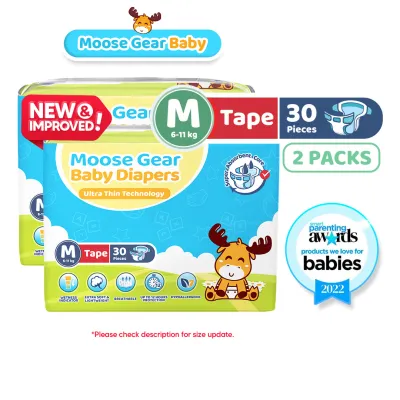
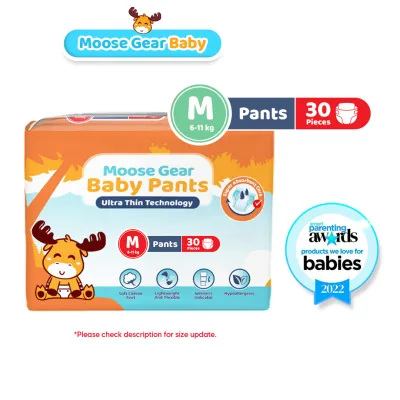
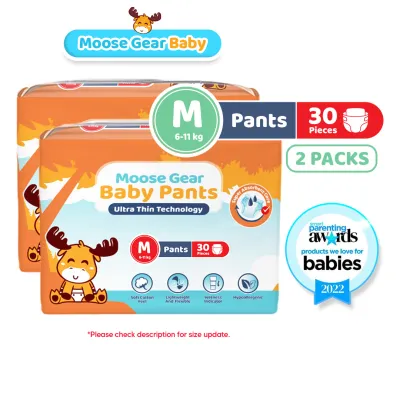
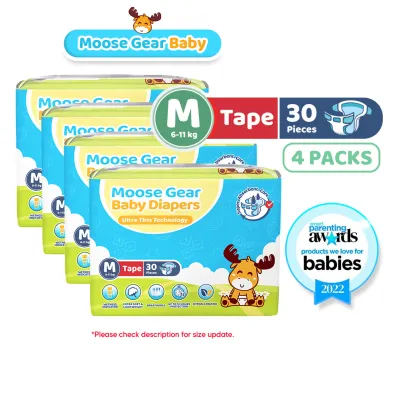
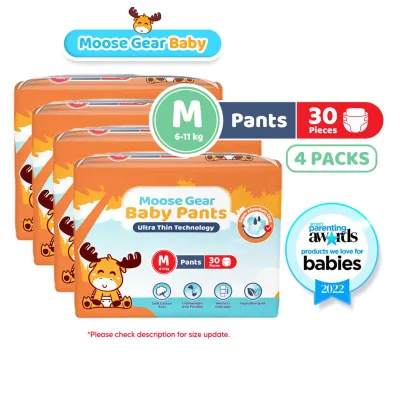
Prices are valid at publication and may change. Please refer to the product page for the latest price.
Inspect the leg cuff seals and waistband elasticity closely. High-quality leg cuffs should feature double elastic barriers that sit snugly in the groin crease without digging into the skin. Gently run your finger along the inside of the leg cuffs after fastening the diaper to ensure they are flared outward rather than tucked inward, as tucked cuffs are a primary cause of leaks. The waistband should offer enough stretch to allow two fingers to fit comfortably between the diaper and your baby’s belly, ensuring they can breathe and move freely without restriction.
Evaluating Absorbency and Leak Protection in Practice
Absorbency is the core function of any diaper, especially in tropical climates where trapped moisture can quickly lead to skin irritation. When evaluating these four brands, start by inspecting their physical design elements. Look for features like wetness indicators—lines that change color when wet—which help you monitor when a change is needed without opening the diaper. Examine the internal channeling layers, which are designed to distribute liquid evenly across the core rather than letting it pool in one spot. Note the thickness of the dry core; a thinner core often utilizes advanced superabsorbent polymers to lock away moisture without adding unnecessary bulk.

To compare performance in your daily routine, conduct a simple at-home observation. Note how each brand handles rapid fluid intake during active daytime play and how well it maintains dryness during prolonged wear, such as overnight sleep. After your baby has worn a diaper for a few hours, gently touch the inner lining with a dry tissue. If the tissue remains dry, the diaper’s core is successfully locking moisture away from your baby’s skin. If the tissue dampens, the material may be allowing wetness to sit on the surface.
Recognize the clear signs of inadequate absorbency. Heavy sagging, where the diaper hangs low between the baby’s legs even after minimal wetting, indicates that the core material lacks structural integrity when wet. Surface wetness on your baby’s skin during changes or frequent compression leaks—where liquid squeezes out of the leg cuffs when your baby sits down—are strong indicators that you need to adjust your changing frequency or switch to a brand with a more robust core design.
Calculating the True Cost and Value per Diaper
Managing a household budget requires looking past the initial sticker price of a diaper pack. To establish a fair comparison between Moose Gear, Pampers, Huggies, and Equator, you must calculate the exact cost per piece. Divide the total price of the pack by the number of diapers inside. Because pack sizes vary wildly—ranging from small travel packs to massive bulk boxes—this simple calculation is the only way to compare the financial value of each brand accurately. Keep a running log of these unit costs in Philippine Pesos (₱) to track price fluctuations.
However, the cheapest diaper on paper is not always the most economical in practice. You must factor in the hidden costs of poor diaper performance. If a budget-friendly diaper has lower absorbency, you may find yourself changing your baby twice as often, which doubles your diaper consumption. Furthermore, frequent leaks lead to increased laundry loads, higher water and electricity bills, and a greater consumption of baby wipes, clothing changes, and expensive diaper rash creams. A slightly more expensive diaper that keeps your baby dry for longer can often save you money over time.
When sourcing diapers, always check current pricing, bulk purchase options, and availability through official brand stores or authorized online retailers in the Philippines. Purchasing from official channels ensures you are receiving authentic products rather than counterfeit goods, which may use substandard materials that compromise both absorbency and baby safety. Bulk buying during official store promotions or subscription services can also significantly lower your overall cost per piece.
Checking Materials and Skin Sensitivity Factors
A baby’s skin is incredibly delicate, and the high humidity of a tropical climate can exacerbate sensitivity. To protect your baby’s skin barrier, carefully read the packaging labels of Moose Gear, Pampers, Huggies, and Equator. Check for the presence or absence of added lotions, artificial fragrances, and chlorine bleaching processes. Fragrances and elemental chlorine bleaching can sometimes trigger contact dermatitis in sensitive infants, so parents of rash-prone babies often prefer fragrance-free, elemental chlorine-free, or totally chlorine-free options.
When introducing any new diaper brand to your routine, closely monitor your baby’s skin. Look for localized redness, small bumps, or dry patches around the waistband, leg cuffs, and diaper area. Keep a simple log of when you switch brands and note any changes in skin condition. This helps you isolate whether a specific brand’s material composition or added lotion is causing an adverse reaction.
Regardless of a brand’s hypoallergenic or dermatologically tested claims, every baby’s skin chemistry is unique. If you observe persistent skin redness, broken skin, or a rash that does not improve with standard barrier creams within a few days, stop using the diaper brand immediately. Consult a qualified pediatrician to address the underlying irritation and receive professional guidance on the best skincare routine for your baby.
Decision Framework: Matching the Brand to Your Baby's Routine
Selecting the right medium diaper is not about finding a single “best” brand, but rather matching the specific characteristics of each diaper to your baby’s daily routine and physical needs. If your baby is highly active—constantly rolling, crawling, or pulling themselves up—prioritize brands that feature highly flexible waistbands and robust, double-layered leg cuffs. These features allow the diaper to move with your baby, preventing gaps from forming as they stretch and play.
For overnight sleep, your priority shifts entirely to maximum absorbency and moisture retention. Look for brands with high-capacity core designs and reliable leak barriers that can handle multiple wettings over an eight-to-twelve-hour period. Keeping your baby dry throughout the night is essential for uninterrupted sleep and preventing diaper rash caused by prolonged wetness.
To optimize your household budget without compromising on comfort, consider a hybrid approach. You can opt for cost-effective options like Moose Gear or Equator for frequent daytime changes, where diapers are replaced every few hours regardless of wetness level. Then, reserve premium, high-absorbency brands like Pampers or Huggies for nighttime use or long outings where immediate changes are more challenging.
Before committing to a large bulk purchase of any new brand, always verify your baby’s skin tolerance and physical fit by purchasing a small trial pack. This minimizes financial waste if the diaper shape does not suit your baby’s body type or if their skin reacts to the materials.
Frequently Asked Questions (FAQ)
Can I mix different diaper brands for daytime and nighttime use?
Yes, mixing different diaper brands is an excellent strategy to balance your household budget while maintaining high performance. During the day, babies are changed more frequently—often every two to three hours—making budget-friendly diapers like Moose Gear or Equator highly practical. At night, when you want to encourage longer sleep stretches, switching to a high-absorbency diaper like Pampers or Huggies can prevent wetness-induced wakeups. To manage this routine effectively, keep separate stacks of daytime and nighttime diapers on your changing table and track which brand performs best in each scenario to refine your purchasing habits.
How do I know if I need to size up from medium to large?
Knowing when to transition from a medium to a large diaper involves looking at physical fit rather than relying solely on the manufacturer’s weight limits. If the waistband feels tight and you cannot easily fit two fingers inside, or if the diaper leaves deep red marks on your baby’s thighs or tummy, it is time to size up. Other signs include frequent leaks, blowouts, or the diaper sitting well below your baby’s belly button. When transitioning, buy a small pack of the larger size first to ensure the leg cuffs fit snugly enough to prevent gaps, as a diaper that is too large can leak just as easily as one that is too small.

Community discussion
Share your experience or ask a question. Comments are reviewed before publication.