
Creating a cohesive nursery set does not require purchasing a pre-packaged furniture suite. You can easily pair a wooden crib with a separate changing table by coordinating their design lines, wood undertones, and hardware finishes. This approach allows you to design a personalized space that feels intentional, functional, and safe for your baby. By focusing on visual balance and practical layout flow, you can build a beautiful nursery that accommodates daily caregiving routines while keeping your baby secure.
Assess Your Wooden Crib's Baseline Style
Since the crib is typically the largest and most prominent piece of furniture in a nursery, it serves as the design anchor. Before searching for a changing table, take a close look at your crib’s architectural details. Note whether the spindles are round and tapered, flat and wide, or traditional and turned. A crib with clean, straight lines suggests a modern or minimalist aesthetic, while curved headboards or detailed carvings lean toward classic or vintage styles.
Look at the outer surface of the wood to determine its primary finish. Is it a clear, natural sealant that highlights the raw grain, a deep stain like walnut or cherry, or a solid paint finish like matte white or soft gray? Pay attention to the undertones of the wood, noting whether they lean warm with yellow and red hints, or cool with gray and ash tones. Also, inspect any visible hardware, such as metal brackets, bolts, or decorative caps, noting their color and texture.
Products mentioned in this guide
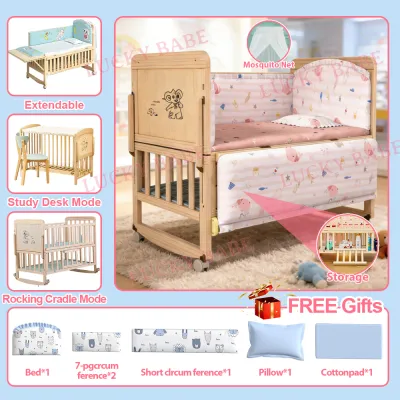







Prices are valid at publication and may change. Please refer to the product page for the latest price.
Grab a tape measure and record the crib’s exact height, width, and depth. A massive, solid-panel convertible crib can easily overwhelm a small, delicate changing table, making the set look mismatched. Conversely, a lightweight, minimalist crib might look dwarfed next to a heavy, double-dresser style changing table. Having these measurements on hand will help you select a changing table that scales proportionally within the room.
Choose a Changing Table Design That Complements the Crib
To create a cohesive look, aim for a shared design language between the two pieces. If your wooden crib features tapered legs and a low-profile frame characteristic of mid-century modern design, look for a changing table with similar angled legs or clean, handle-free drawer fronts. For a rustic or farmhouse-style crib, a changing table with subtle beadboard detailing or a slightly distressed finish can bridge the gap beautifully.

Consider how the structure of the changing table affects both storage and visual weight. Open-shelving changing tables offer quick, one-handed access to diapers, wipes, and swaddles, which is highly convenient during active changes. However, they also expose clutter and require neat organization. Closed-cabinet or drawer-style changing tables hide the mess and often transition better into standard bedroom dressers as your child grows, though they may feel visually heavier in a compact nursery.
While your furniture pieces do not need to be identical, they should not actively compete for attention. Pairing a highly ornate, traditional crib featuring curved scrollwork with an ultra-minimalist, blocky changing table can create visual friction. If your crib has a strong, dramatic silhouette, choose a simpler, more understated changing table that allows the crib to remain the focal point of the room.
Coordinate Wood Tones, Paints, and Hardware
You have two primary paths when coordinating finishes: exact matching or intentional contrasting. Exact matching is easiest when buying within the same manufacturer’s collection, ensuring the paint or stain is identical. If you are sourcing from different brands, achieving an exact match can be incredibly difficult due to variations in wood species and staining techniques. In this case, opting for an intentional contrast—such as pairing a natural oak crib with a painted white changing table—often looks more stylish and deliberate than a near-miss match.
If you decide to mix different wood stains, the secret to success lies in matching the undertones rather than the exact darkness of the wood. Warm woods like pine, cherry, and warm oak feature yellow, orange, or red undertones that pair well together. Cool woods like ash, maple, or gray-washed pine have blue or gray undertones. Mixing a warm honey-toned crib with a cool, ash-gray changing table can make the room feel disjointed, so try to keep your wood selections within the same temperature family.
When working with painted furniture, check the manufacturer’s specifications for the paint sheen. A high-gloss white crib paired with a flat, matte white changing table can look mismatched under nursery lighting. Additionally, look at the metal hardware. If your crib has brushed brass accents, swapping out the drawer pulls on your changing table to match that brass tone is a quick, inexpensive way to tie the two pieces together.
Plan the Nursery Layout for Safe and Efficient Flow
A cohesive nursery is not just about looks; it must also function seamlessly. When planning your layout, ensure there is ample clearance space between the crib and the changing table. You need enough room to stand comfortably in front of the changing table, open drawers fully, and move between the two pieces without bumping into sharp corners. In tropical climates like the Philippines, keeping a bit of open space between furniture pieces also promotes better airflow, helping to manage indoor humidity.
Position both the wooden crib and the changing table away from direct environmental hazards. Avoid placing either piece directly under a window where drafty air, direct tropical sunlight, or window blind cords could pose safety risks. Keep the furniture clear of direct air conditioning vents to prevent sudden temperature drops on your baby’s skin. Additionally, ensure that electrical outlets are completely out of reach from both the crib mattress and the changing pad surface.
The path between the nursery entrance, the crib, and the changing table should remain completely unobstructed. During late-night diaper changes, you want to be able to lift your baby from the crib and step directly to the changing table without navigating a maze of toys or tight furniture gaps. Ensure that neither the changing table nor its open drawers block the primary exit of the room, maintaining a clear escape route in case of emergencies.
Verify Safety Standards and Anchoring Requirements
Before finalizing your nursery setup, prioritize safety by thoroughly reviewing the documentation for both the crib and the changing table. Check the product labels, tags, and user manuals to verify compliance with recognized nursery furniture safety standards. Look for certifications that confirm the materials, paints, and finishes used are non-toxic and lead-free. Never rely solely on a product’s marketing name or aesthetic appeal to assume it is safe for your infant.
As babies grow, they quickly learn to pull themselves up, grasp at edges, and eventually climb. To prevent catastrophic tip-over accidents, plan to install heavy-duty anti-tip anchoring kits for both the changing table and the crib if recommended by the manufacturer. Secure these anchors directly into wall studs rather than relying on simple drywall anchors. Regularly inspect these connections to ensure they remain tight and secure over time.
Carefully verify the manufacturer’s stated weight limits, guardrail heights, and compatible changing pad dimensions for your specific changing table model. Ensure the guardrails are high enough to prevent a rolling baby from falling, and always use the safety strap provided with the changing pad. Remember that a changing table should only be used under direct, active caregiver supervision; never leave your baby unattended on the elevated surface, even for a brief second. If your baby approaches the manufacturer’s maximum weight limit or begins to roll actively, it is time to transition to changing them on a safe floor mat.
Frequently Asked Questions (FAQ)
Can I mix different wood types in the same nursery?
Yes, you can successfully mix different wood types in the same nursery by following a few simple design guidelines. To keep the space from looking cluttered, limit yourself to two or three distinct wood tones. Ensure these woods share similar warm or cool undertones so they harmonize visually. You can also use transitional elements, such as a neutral area rug, soft curtains, or woven storage baskets, to bridge the visual gap between a lighter wood crib and a darker wood changing table, making the combination feel intentional.
Do the crib and changing table need to be from the same brand?
No, the crib and changing table do not need to come from the same brand to create a beautiful, cohesive nursery. Mixing brands is a great way to customize your space, especially if a matching set is out of stock or outside your budget. To make different brands look unified, focus on matching the overall design style, aligning the hardware finishes, and ensuring the wood undertones complement each other. Always double-check the physical dimensions of both pieces to ensure they scale proportionally within your nursery layout.

Community discussion
Share your experience or ask a question. Comments are reviewed before publication.