
Finding the right diaper for your baby is rarely a one-size-fits-all decision, as no single brand can claim to be the absolute best choice for every infant. When comparing Little Rascals, Pampers, Huggies, and Equator, the ideal option depends heavily on your baby’s unique body shape, skin sensitivity, and your family’s monthly budget. Instead of relying on marketing slogans or generic recommendations, parents should make their decision based on verified label claims for absorbency, observed fit during daily movement, and a calculated price-per-diaper. By focusing on these objective, observable factors, you can find a diaper that keeps your baby dry and comfortable while keeping your household expenses manageable.
How to Evaluate Diaper Performance for Your Baby
To make an informed choice among the leading diaper brands, you must first establish a clear set of objective criteria. Every diaper’s performance rests on three core decision pillars: absorbency, comfort, and fit. Absorbency refers to how quickly the diaper draws fluid away from your baby’s skin and how effectively it locks that moisture inside the core to prevent rewetting. Comfort involves the breathability of the outer cover and the physical softness of the inner lining, which are particularly critical in warm, humid climates where trapped heat can quickly lead to skin irritation. Fit encompasses the elasticity of the waistband and the integrity of the leg cuff seals, both of which must work together to prevent leaks without binding or pinching.
A baby’s physical development and daily habits dictate which of these features require the most attention. For instance, a newborn who spends most of the day lying down requires a diaper with a secure back waistband to prevent blowouts, while an active toddler who is crawling or walking needs highly flexible side panels and robust leg cuffs that move with them. Thigh thickness also plays a major role; babies with chubbier thighs may experience chafing if the leg cuffs are too tight, whereas slender babies might experience leaks if the cuffs do not seal snugly.
Products mentioned in this guide
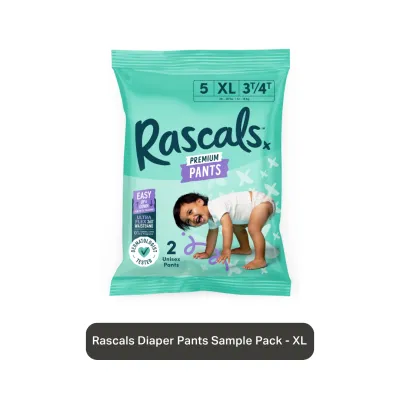
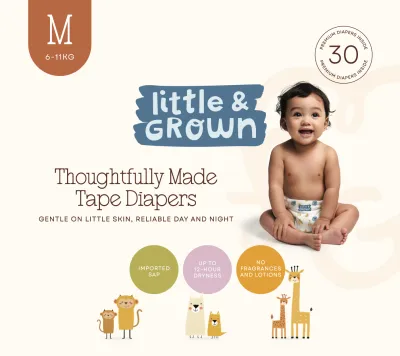
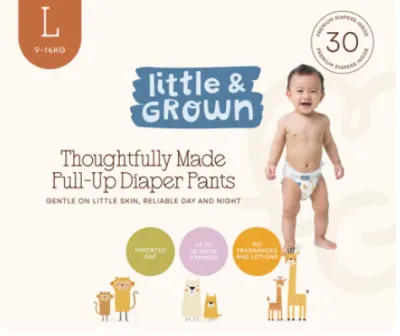
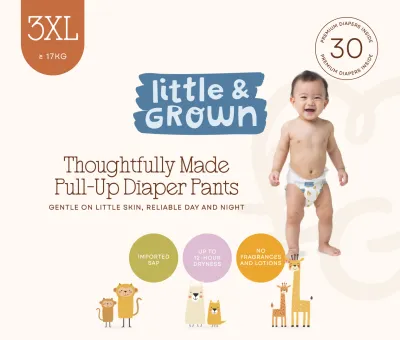
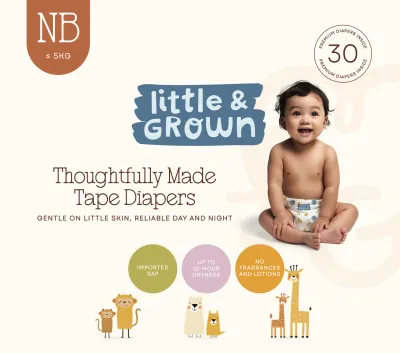
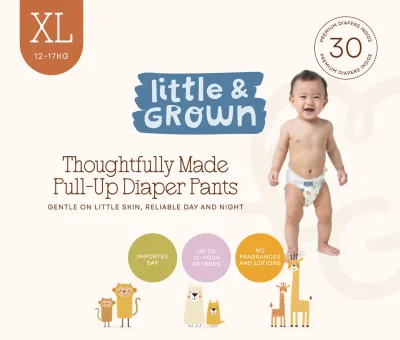
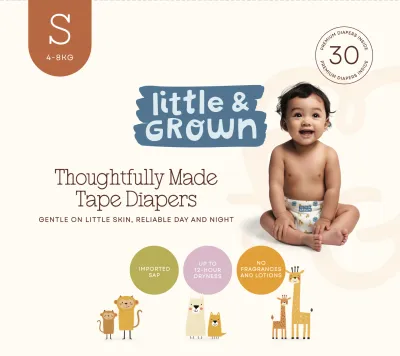
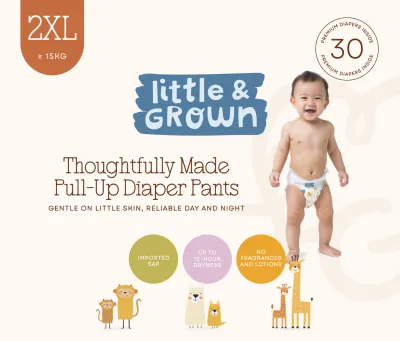
Prices are valid at publication and may change. Please refer to the product page for the latest price.
Rather than relying on unverified online reviews or subjective peer recommendations, parents should depend on physical checks and official manufacturer label claims. Every baby’s body shape is different, meaning a diaper that works perfectly for one child might fail completely for another. By learning to read packaging specifications and conducting simple hands-on inspections of diaper samples, you can accurately assess how well a specific product matches your baby’s current developmental stage and physical build.
Comparing the Contenders: Features to Verify on the Packaging
When evaluating Little Rascals, Pampers, Huggies, and Equator, your first line of research should always be the product packaging and official manufacturer documentation. These sources provide the essential specifications, size charts, and technology claims that allow you to make an accurate, side-by-side comparison before purchasing.

Little Rascals Diapers
When examining Little Rascals diapers, start by carefully reviewing the stated weight ranges and size charts printed on the packaging. Because sizing standards can vary significantly between brands, verifying these weight limits is crucial to ensuring a proper fit and avoiding premature leaks. Next, look for specific label claims regarding the core absorbency materials used in the diaper, as well as the presence of a wetness indicator, which can help you monitor when a change is needed. Finally, once you obtain a sample pack, physically test the stretch of the waistband and the flexibility of the leg cuffs. A high-quality diaper should offer a firm yet gentle stretch that accommodates your baby’s natural abdominal expansion after feeding.
Pampers
Pampers offers several distinct product lines, making it essential to verify the exact sub-variant you are considering to ensure an accurate comparison. Carefully inspect the packaging for dermatologist-tested, hypoallergenic, or skin-care related claims, which are particularly important if your baby has sensitive skin. Additionally, check the product descriptions for details regarding the diaper’s thickness and flexibility features. Some variants are specifically designed to be thinner and more streamlined to facilitate easier movement for active babies, while others focus on maximum overnight absorbency. Understanding these distinctions on the label will help you select the specific line that aligns with your baby’s daily routine.
Huggies
For Huggies diapers, your primary focus when reading the packaging should be on the structural leak-prevention features. Look for specific claims regarding leak-guard barriers, pocketed waistbands, and overall waistband elasticity, which are designed to trap messes and prevent upper-back blowouts. You should also verify the physical texture of the inner lining by checking if the packaging highlights specialized soft-textured materials or unique dry-touch layers. Furthermore, pay close attention to the size transition guidelines printed on the box. Many Huggies packs include visual indicators or weight recommendations that signal exactly when it is time to transition to the next size up, helping you avoid the common mistake of staying in a size too long.
Equator
When evaluating Equator diapers, begin by checking the packaging for detailed information regarding material composition and breathability claims. In tropical climates where humidity is consistently high, a highly breathable outer cover is essential for maintaining skin health. Next, verify the total piece count per package and the stated weight limits, as this data is critical for calculating your long-term diapering costs. When you have a physical diaper in hand, inspect the fastening tabs and the overall structural integrity of the diaper. Ensure the tabs are sturdy enough to withstand multiple adjustments and that the overall construction feels durable enough to handle your baby’s daily movements without tearing or shifting.
Absorbency, Comfort, and Fit: A Real-World Verification Checklist
While packaging claims provide an excellent starting point, the true test of any diaper occurs during daily wear. To determine if a brand is truly suitable for your baby, you can implement a practical, at-home testing protocol that focuses on real-world performance.
To perform an absorbency check, observe the diaper closely after a period of heavy wetting, such as first thing in the morning or after a long nap. Check for significant sagging, which indicates that the absorbent core is struggling to distribute fluid evenly. Touch the inner lining of the wet diaper with a dry tissue; if the tissue remains dry, the diaper is successfully locking moisture away. If the tissue dampens quickly, the diaper may be leaving your baby’s skin exposed to prolonged wetness, which can compromise skin health.
Next, conduct a thorough comfort and skin check every time you change your baby. Carefully inspect the skin around the waist and thighs for red marks, deep indentations, or chafing caused by tight leg cuffs or stiff waistbands. In warm and humid conditions, pay close attention to signs of trapped heat, such as localized sweat rashes or persistent dampness in the diaper area. A diaper that fits well should leave minimal to no marks on the skin and should keep the area feeling relatively dry and cool.
To verify the fit and prevent leaks, always apply the “two-finger rule” after fastening the diaper. You should be able to comfortably slide two fingers between the diaper’s waistband and your baby’s tummy. Additionally, run your finger along the inner leg cuffs to ensure they are fully pulled out and flared outward rather than tucked inward, as tucked cuffs are a primary cause of side leaks and blowouts.
Finally, establish clear stop conditions for any brand you test. If your baby develops a persistent diaper rash, shows signs of an allergic reaction to the materials, or experiences frequent structural failures like torn tabs or split seams, discontinue use of that specific brand immediately. Always consult a qualified pediatrician if skin irritation persists despite frequent diaper changes and the application of protective barrier creams.
Assessing Value: Calculating Price per Diaper and Bulk Considerations
Managing diapering costs requires looking past the initial price tag on the box and calculating the true cost of each individual diaper. Because package sizes and piece counts vary widely across brands and retailers, comparing box prices directly can be highly misleading.
To find the actual cost, use this simple formula: Total Package Price (₱) / Number of Diapers = Price per Diaper
For example, if a package of diapers costs ₱500 and contains 50 diapers, the price per diaper is ₱10. When performing this calculation, never compare different diaper sizes directly. As your baby grows and transitions to larger sizes, the number of diapers per pack decreases while the package price often remains the same, naturally driving up the price per diaper. Always calculate the unit price for the specific size your baby currently wears to maintain an accurate budget.
Long-term value is also heavily influenced by how and where you purchase your diapers. Buying in bulk on major ecommerce platforms or online marketplaces often yields significant savings, especially when combined with subscription discounts or promotional vouchers. However, parents must balance these savings against the risk of stockpiling. Babies grow rapidly, and purchasing too many boxes of a single size can leave you with leftover diapers that your baby has outgrown.
Additionally, when purchasing bulk quantities, always check the manufacturing or expiration dates printed on the packaging. Over time, prolonged storage in high-humidity environments can degrade the adhesive tabs and reduce the effectiveness of the absorbent materials. Ensuring that your bulk purchases are relatively fresh will help maintain the structural integrity and performance of the diapers.
Decision Framework: Which Brand Fits Your Baby's Needs?
To finalize your decision, synthesize your findings into a practical decision framework based on your baby’s physical needs and your household budget.
Choose Little Rascals if your monthly budget requires the cost efficiency of bulk purchasing, and your physical sample checks confirm that the diaper’s absorbency and fit are sufficient for your baby’s daily activity levels.
Choose Pampers if the specific product line you verified offers the advanced skin-care features, dermatologist testing, and thin, flexible profile that your baby’s skin sensitivity and physical mobility require.
Choose Huggies if the specialized waistband elasticity, pocketed back design, and robust leg cuff barriers on the packaging align perfectly with your baby’s body shape and your specific leak-prevention needs.
Choose Equator if the calculated price-per-diaper fits comfortably within your daily diapering budget, and your physical inspection of the material softness and fastening tabs meets your standards for daily comfort.
Regardless of which brand you lean toward, always prioritize your baby’s health and comfort. If your baby has highly sensitive skin, a history of severe diaper dermatitis, or any other specific medical conditions, verify the ingredients and materials first. Always consult a pediatrician before committing to a large bulk purchase of any new diaper brand.
Frequently Asked Questions (FAQ)
How do I know if a diaper brand is causing a rash?
Distinguishing between different types of diaper rash is essential for proper care. Contact dermatitis is typically a reaction to specific materials, dyes, or fragrances within the diaper itself, often appearing as a localized red rash that matches the shape of the diaper. In contrast, irritant diaper dermatitis is caused by prolonged exposure to moisture, friction, and heat, usually appearing in the skin folds. If you suspect a material reaction, check the packaging for fragrance-free or hypoallergenic claims and switch to a different brand. If the rash persists despite frequent changes and barrier creams, stop using the brand and consult a pediatrician.
Should I switch diaper brands as my baby grows?
Yes, transitioning to a different diaper brand or style is often necessary as your baby reaches new developmental milestones. An infant who is primarily lying down has very different structural diaper needs than a highly active toddler who is crawling, climbing, and walking. Increased mobility and changes in bladder capacity require more flexible waistbands, stronger fastening tabs, and faster fluid distribution. Before switching brands entirely, check if your current brand’s larger sizes offer enhanced stretch and leak guards. If you decide to try a new brand, always purchase a small trial pack to verify the fit before committing to a bulk order.

Community discussion
Share your experience or ask a question. Comments are reviewed before publication.