
Choosing the right growing-up milk for your preschooler is a significant decision for many families in the Philippines. As children transition from toddlerhood to their preschool years, their dietary needs shift to support rapid physical growth, cognitive development, and an increasingly active lifestyle. Both Lactum 3+ and Enfagrow A+ are prominent, trusted brands in the local market designed for children aged 3 to 6 years. While they share a common manufacturer, they are formulated and positioned differently to cater to distinct parental priorities, nutritional focuses, and household budgets.
To help you make an informed decision, it is helpful to look at how these two formulas compare across key areas. Your choice will ultimately depend on your child’s specific developmental needs, their taste preferences, and your long-term financial planning.
- Choose Lactum 3+ if: You are looking for a highly accessible, budget-friendly option that focuses on essential vitamins and minerals to support general immunity, bone development, and physical growth, and your child enjoys its flavor options.
- Choose Enfagrow A+ if: You prefer to invest in a premium-priced formula that places a heavy emphasis on specialized brain-development and eye-health nutrients, such as higher levels of DHA and lutein, and your child accepts its taste profile.
While this comparison provides a practical framework, your child’s pediatrician remains the ultimate authority on their nutritional needs. A doctor can help you assess whether your child requires a specific nutrient blend based on their growth chart and daily solid food intake.
Products mentioned in this guide
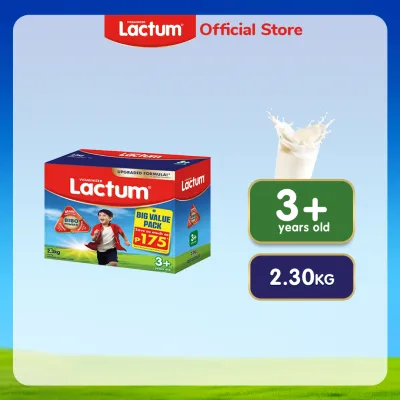
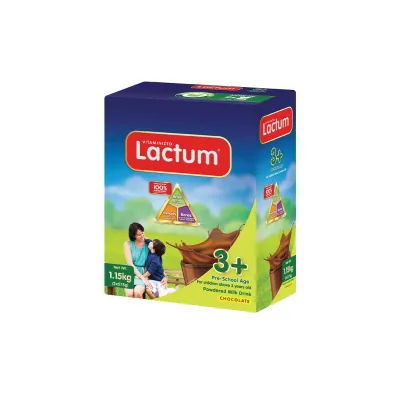
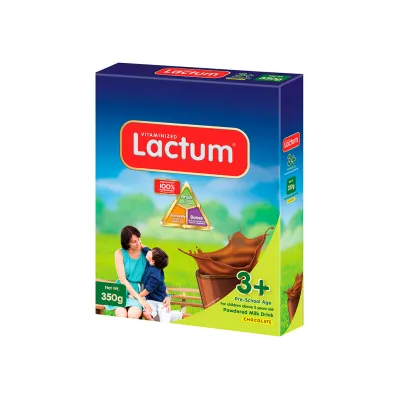
Prices are valid at publication and may change. Please refer to the product page for the latest price.
Nutritional Profile: What to Check on the Label
Preschoolers require a diverse range of nutrients to support their daily activities and developmental milestones. It is important to remember that growing-up milk is designed to supplement a balanced diet of solid foods, rather than replace it. When comparing Lactum 3+ and Enfagrow A+, reading the Nutrition Facts label on the back of the packaging is the most reliable way to understand what you are feeding your child.
Key Nutrients to Compare
When examining the labels, you will notice that each brand highlights different nutritional benefits. Enfagrow A+ is widely marketed for its brain-development nutrients. On its label, you will find specific levels of Docosahexaenoic Acid (DHA), an omega-3 fatty acid that serves as a primary structural component of the human brain and retina. It also contains ingredients like arachidonic acid (ARA) and lutein, which support visual development. If you are prioritizing cognitive support and want to ensure your child receives a concentrated source of these specific fatty acids, compare the exact milligrams of DHA per serving listed on the Enfagrow A+ label against other options.
Lactum 3+, on the other hand, is formulated around the concept of “all-around” physical health and immunity. Its label emphasizes essential vitamins and minerals such as zinc, iron, calcium, and vitamin C. These nutrients are fundamental for supporting a strong immune system, healthy bones, and steady physical growth. While Lactum 3+ may also contain DHA, the concentration is typically lower than that found in premium cognitive-focused formulas. Parents should compare the percentage of the Recommended Energy and Nutrient Intake (RENI) met by each serving of calcium, vitamin D, and zinc to see which product better aligns with their child’s physical growth requirements.
Another critical factor to compare is the sugar content. Carefully review the ingredient list for added sugars, which may appear under names such as sucrose, corn syrup solids, maltodextrin, or lactose. While lactose is the natural sugar found in cow’s milk, added sugars are often used to improve flavor and sweetness. A higher sweetness level can influence a preschooler’s dietary habits, potentially making them prefer sweet foods over savory, nutritious solid meals. Checking the total carbohydrates and identifying the types of sugars listed on the ingredient panel will help you manage your child’s daily sugar intake.
Finally, always compare the recommended serving sizes and scoop counts. One brand might require four scoops of powder per 200ml glass of water, while another might require three. This variation changes the nutrient density per prepared glass, meaning that a simple gram-for-gram comparison of the dry powder does not always reflect the actual nutrition your child receives in their cup.
Dietary Restrictions and Allergies
Both Lactum 3+ and Enfagrow A+ are formulated using cow’s milk as their primary base. Consequently, they naturally contain lactose and cow’s milk proteins. If your child has a diagnosed cow’s milk protein allergy (CMPA), standard versions of these formulas are not suitable and can cause adverse reactions.
If your child has lactose intolerance or a sensitive digestive system, they may experience symptoms such as bloating, gas, abdominal discomfort, or loose stools. Before introducing or switching between these brands, read the allergen information printed on the packaging. If your child displays any signs of digestive distress or allergic reactions, stop using the product immediately and consult a pediatrician to discuss alternative options, such as lactose-free or hypoallergenic formulas.
Taste and Mixability: Navigating Picky Eaters
Even the most nutritionally advanced formula will not benefit your child if they refuse to drink it. Preschoolers are notoriously selective about the taste, texture, and temperature of their food and drinks. Navigating these preferences requires patience and an understanding of how each brand appeals to a child’s palate.

Both brands are available in different flavor profiles in the Philippines, including plain, vanilla, and chocolate. Plain variants offer a mild, natural milk flavor that is closer to fresh milk, which is highly recommended for establishing healthy, low-sugar eating habits early in life. Vanilla and chocolate flavors are often sweeter and more fragrant, making them highly appealing to picky eaters who might otherwise reject plain milk. However, these flavored options typically contain more added sugars and flavorings, which is a trade-off parents must evaluate.
If you decide to switch your child from one brand to another, an abrupt transition can sometimes lead to rejection or minor digestive upset. A gradual transition strategy is usually the most successful approach. You can introduce the new formula by mixing it with the old one over the course of a week:
- Days 1 and 2: Prepare a glass using 75% of the old formula and 25% of the new formula.
- Days 3 and 4: Mix the two formulas in a 50/50 ratio.
- Days 5 and 6: Use 25% of the old formula and 75% of the new formula.
- Day 7 onwards: Serve 100% of the new formula.
Keep the water temperature consistent during this transition, matching whatever temperature your child is accustomed to drinking.
Mixability is another practical factor that directly affects your daily routine. In the hot and humid climate of the Philippines, milk powder can absorb moisture rapidly once the container is opened, which can lead to clumping. When preparing the milk, observe how easily the powder dissolves. Generally, using lukewarm water (around 40°C) helps the powder dissolve more smoothly than cold or room-temperature water. Stirring or shaking the mixture thoroughly ensures that no dry clumps remain at the bottom of the glass. Clumps can block cup spouts or bottle nipples, leading to frustration for your child and potential waste of the product.
To maintain optimal mixability and prevent spoilage in humid conditions, always store the opened tin or pouch in a cool, dry pantry. Ensure the lid is pressed down tightly after every use, and avoid storing the powder in the refrigerator, as the temperature change when brought out can cause condensation to form inside the container.
Price and Value: Calculating the True Cost per Serving
Because growing-up milk is consumed daily over several years, the cost can accumulate into a significant household expense. Evaluating the financial commitment of each option requires looking beyond the retail price of the tin and calculating the actual cost per serving.
To calculate the true cost per serving, do not rely solely on the weight of the packaging. Instead, use the following steps:
- Identify the net weight of the tin or box (e.g., 1.2kg or 1.8kg).
- Look at the nutritional label to find the recommended serving size in grams (e.g., 40g per serving).
- Divide the total net weight by the serving size to determine the total number of servings per container.
- Divide the retail price of the container by the total number of servings.
For example, if a 1.2kg (1,200g) tin costs ₱1,200 and the recommended serving size is 40g, the tin provides exactly 30 servings. This results in a cost of ₱40 per serving. Performing this calculation for both Lactum 3+ and Enfagrow A+ will reveal the actual daily cost difference, which is often more accurate than comparing shelf prices directly.
In the Philippines, both brands are widely distributed and can be purchased through various retail channels, including local supermarkets, drugstores, and official brand stores on major e-commerce platforms. Buying from official flagship stores online is a highly reliable way to ensure product authenticity, as counterfeit milk products can pose severe health risks to your child.
To maximize value, consider purchasing larger packaging sizes, such as 1.8kg or 2.4kg tins, which typically offer a lower cost per gram compared to smaller boxes. Many online marketplaces also offer bundle deals, subscription discounts, or promotional vouchers during monthly sales events. However, before buying in bulk, always check the expiration dates printed on the bottom of the tins to ensure your child can consume the milk before it expires. Additionally, make sure you have adequate dry storage space at home to protect the bulk stock from heat and humidity.
If you are introducing a brand for the first time, avoid buying large tins. Instead, look for smaller trial boxes or single-serve sachets. This allows you to test your child’s taste acceptance and digestive tolerance without making a large financial commitment upfront.
Final Verdict: How to Make Your Decision
There is no single “best” formula when comparing Lactum 3+ and Enfagrow A+. Both are high-quality growing-up milks manufactured under strict safety standards, but they serve different needs. Your decision should be guided by a balanced evaluation of your child’s nutritional requirements, their taste preferences, and your family’s monthly budget.
If your child eats a diverse, healthy diet of solid foods and you want an affordable, reliable milk supplement to support their general growth and immunity, Lactum 3+ is an excellent, cost-effective choice. It provides the essential vitamins and minerals needed for daily development without putting a heavy strain on your household finances.
Conversely, if you are particularly focused on providing maximum support for your child’s cognitive and visual development, and you have the financial flexibility to accommodate a premium product, Enfagrow A+ offers a specialized formulation rich in DHA, ARA, and lutein.
A practical testing strategy is highly recommended. Begin by purchasing the smallest available pack of your preferred brand. Observe how well your child accepts the taste, monitor their digestion and stool consistency over a week, and check for any signs of discomfort.
Most importantly, consult your child’s pediatrician or a registered nutritionist-dietitian before making a final decision. A healthcare professional can review your child’s growth chart, evaluate their actual dietary intake from solid foods, and provide personalized recommendations to ensure their nutritional needs are fully and safely met.
Frequently Asked Questions (FAQ)
Can I mix Lactum 3+ and Enfagrow A+ in the same bottle?
It is highly recommended that you do not mix two different formula brands in the same bottle or cup. Each brand is formulated with a precise powder-to-water ratio designed to create a safe, balanced concentration of nutrients. Mixing different powders can alter this ratio, resulting in a drink that is either too concentrated or too diluted. A mixture that is too concentrated can place unnecessary strain on your child’s developing kidneys and digestive system, potentially leading to dehydration or constipation. A mixture that is too diluted will not provide the intended nutritional value. If you are transitioning your child from one brand to another, it is safer to prepare them in separate cups or follow a gradual transition schedule where you slowly adjust the ratio of prepared milks over several days.
Is growing-up milk necessary for a 3-year-old who eats solid foods?
Growing-up milk is classified as a dietary supplement and is not strictly mandatory for every child. If a preschooler consumes a well-balanced, diverse diet that includes adequate amounts of calcium, iron, protein, and essential vitamins from fruits, vegetables, grains, and meats, they may not require a milk supplement. However, many toddlers and preschoolers go through phases of picky eating, which can lead to temporary nutritional gaps. In these cases, growing-up milk acts as a practical safety net to ensure they receive essential nutrients. You should consult your pediatrician to evaluate your child’s overall diet and determine whether a milk supplement is necessary for their specific growth and development.
How many servings per day are recommended for this age group?
For children aged 3 to 6 years, the general recommendation is typically one to two servings of growing-up milk per day, but you should always refer to the specific feeding guide printed on the product packaging. The ideal number of servings depends heavily on your child’s daily consumption of solid foods. Drinking too much milk can fill up a child’s small stomach, reducing their appetite for solid meals, which should be their primary source of nutrition at this age. Always discuss your child’s daily food and milk intake with their pediatrician to establish a balanced feeding routine that supports healthy weight gain and development.

Community discussion
Share your experience or ask a question. Comments are reviewed before publication.