
Preparing a nursery for your newborn is an exciting milestone, and choosing a wooden crib like the Kuna model is a popular choice for its classic aesthetic and sturdy build. However, before you lay your baby down for their first sleep, a thorough safety inspection is essential. Newborns spend up to 16 hours a day sleeping, making their crib the most critical environment to secure. In the tropical climate of the Philippines, factors like high humidity and temperature fluctuations can affect wooden furniture, making a detailed physical check even more vital. Taking the time to verify every joint, slat, and surface ensures a secure sleep space, giving you peace of mind during those precious quiet hours.
Structural Integrity and Assembly Verification
A wooden crib must serve as a stable sanctuary for your infant. First, evaluate the overall structural integrity of the frame by examining every joint where the wooden panels meet. All screws, bolts, and wooden dowels must be tightly fastened and sit completely flush with the wood. Protruding hardware is a significant hazard, as it can snag your baby’s clothing or scratch their delicate skin.
Next, perform a physical stability test. Place both hands on the top rails of the crib and shake it gently from side to side, then front to back. A properly assembled crib should feel solid and stationary. If you notice any wobbling, swaying, or if the frame produces squeaking or creaking sounds, this indicates structural weakness. Loose joints can worsen over time with the continuous movement of a growing baby, potentially leading to a partial collapse.
Products mentioned in this guide



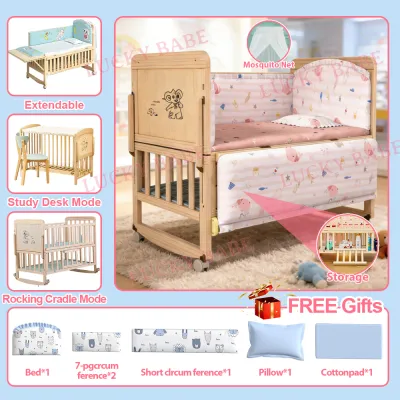



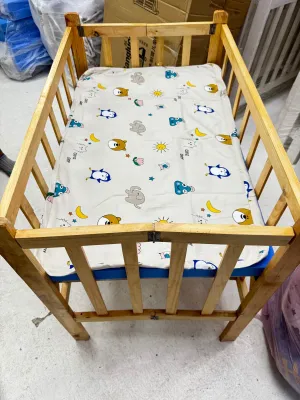
Prices are valid at publication and may change. Please refer to the product page for the latest price.
In the Philippines, high relative humidity can cause natural wood to expand and contract. This environmental factor can gradually loosen fasteners or cause wooden dowels to warp slightly over time. Therefore, even if the crib was assembled perfectly a few weeks ago, a re-tightening session is highly recommended before the baby’s arrival.
Always cross-reference your assembled crib with the manufacturer’s official instruction manual. Lay out all parts before assembly to confirm that no washers, brackets, or screws are missing. Never attempt to substitute missing specialized hardware with generic screws from a local hardware store, as improper thread sizes or lengths can damage the wood and compromise the crib’s structural safety. If you find any missing components, contact the manufacturer directly to obtain authorized replacement parts.
Slat Spacing and Mattress Fit Standards
The vertical slats of a wooden crib keep your baby safely inside while allowing proper airflow. However, if the gaps between these slats are too wide, they present a severe risk of head entrapment or limb strangulation. To verify that your crib meets safety standards, measure the distance between the slats. The gap between any two slats should not exceed 6 centimeters (approximately 2.375 inches). A practical home test is to see if a standard soda can fits through the slats; if it does, the gaps are too wide, and the crib is unsafe.

Equally important is the fit of the crib mattress. A mattress that is too small leaves dangerous gaps along the perimeter where a baby’s head or body could become wedged, leading to suffocation. To check this, place the mattress inside the crib and perform the “two-finger test.” Attempt to slide your index and middle fingers between the edge of the mattress and the wooden side rails. If you can easily fit more than two fingers into this gap, the mattress is too small for the crib frame. The mattress must fit snugly, with virtually no space for a baby to slip into.
Additionally, inspect the mattress support base beneath the mattress. This base must be securely bolted to the main frame at all four corners. For a newborn, set the support base to its highest position to make lifting your baby easier. However, verify that the support brackets are fully engaged and locked. As your baby grows and begins to roll over, sit up, or push up on their hands, proactively lower the mattress support to prevent falls.
Surface Finish and Wood Condition
The physical condition of the wood and its finish directly impacts your baby’s safety. Run your hands along every inch of the interior and exterior rails, slats, and corner posts. Feel carefully for any splinters, rough patches, or sharp wooden edges. Newborns have incredibly delicate skin, and even a tiny splinter can cause pain and lead to localized infections.
Examine the paint, varnish, or lacquer finish under bright lighting for any signs of peeling, cracking, bubbling, or flaking. As babies grow, they naturally explore their environment with their mouths, and the top rails of a crib are prime targets for chewing during teething. Any loose or flaking finish poses an immediate ingestion hazard. Ensure there are no signs of wear that could allow your baby to swallow paint chips.
New wooden furniture can sometimes undergo off-gassing, where finishes release volatile organic compounds (VOCs). If you detect a strong chemical or paint odor near the crib, do not use it immediately. Place the crib in a well-ventilated room with open windows and a fan running for several days to allow the odors to dissipate completely.
In tropical climates like the Philippines, persistent high humidity creates an ideal breeding ground for mold and mildew. Inspect the underside of the mattress support, the inner corners, and the bottom of the slats for any dark spots, discoloration, or musty smells. If mold is present, it must be thoroughly cleaned and dried, or the affected parts replaced, to protect your infant’s respiratory health. Always look for manufacturer labels or documentation confirming that the crib utilizes non-toxic, lead-free, and baby-safe finishes.
Hardware, Teething Rails, and Adjustable Features
Moving parts and protective accessories require close scrutiny to prevent pinching, choking, or accidental collapse. Many wooden cribs feature teething rails—protective plastic or silicone covers snapped onto the top edges of the long side rails. Inspect these covers thoroughly for any cracks, brittle sections, or loose edges. If a teething rail is damaged or can be easily pried loose by hand, a baby could bite off small plastic fragments, presenting a severe choking hazard. If the teething rail is compromised, remove it or replace it with a manufacturer-approved part.
Test the adjustable mattress height mechanisms to ensure they function correctly. These mechanisms must lock firmly into place and should never be prone to slipping. The locking system should require a deliberate, multi-step action or the use of tools to adjust, ensuring that the baby’s weight or movement cannot cause the mattress platform to drop suddenly.
Carefully inspect the interior of the crib for any small, detachable hardware. Ensure there are no exposed screw heads, plastic bolt caps, or decorative elements that could be loosened by a curious baby. Any small component that can be unscrewed or detached by hand must be removed or tightened securely. A newborn’s environment must be entirely free of small objects that could find their way into their mouth.
Safe Placement and Sleep Environment Setup
Once the crib itself is verified as safe, its placement within the nursery is the next critical step. Position the crib well away from windows, glass doors, and draperies. Window blind cords, curtain strings, and baby monitor cables are extreme strangulation hazards. A baby can easily reach out and pull these cords into the crib, creating a dangerous situation in a matter of seconds. Keep all cords and wires at least three feet away from any part of the crib.
Avoid placing the crib beneath wall-mounted shelves, heavy picture frames, mirrors, or hanging decorations. In the event of minor seismic activity or accidental bumps, these items could fall directly into the crib. The wall area directly above and surrounding the crib should remain completely clear.
Consider the room’s climate control and airflow. Do not place the crib directly under an air conditioning vent, next to a standing fan, or in the path of direct, harsh sunlight. In the Philippines, maintaining a balanced room temperature is essential for infant safety. Direct drafts can cause rapid temperature drops, while direct sunlight can quickly cause your baby to overheat, which is a significant risk factor associated with sleep-related infant deaths.
Keep the interior of the crib completely bare. A safe sleep environment for a newborn consists solely of a firm, flat mattress covered by a tight-fitting sheet. Do not place pillows, loose blankets, quilts, comforters, bumper pads, or stuffed toys inside the crib. While these items are often marketed as cozy nursery accessories, they pose severe suffocation, entrapment, and strangulation risks. Your baby does not require blankets to stay warm; instead, use a lightweight, wearable sleep sack suitable for the local climate to keep them comfortable and safe.
When to Stop Use and Verify Recalls
Before assembling or using any crib, it is vital to verify its safety history. Visit the manufacturer’s official website or consult local consumer protection databases to check for active safety recalls on your specific crib model. Recalls can occur due to design flaws, material failures, or unexpected hazards identified after the product has entered the market. If your crib model is subject to a recall, follow the manufacturer’s instructions immediately, which may involve obtaining a repair kit or replacing the unit entirely.
Establish clear criteria for when to stop using the crib. Inspect the wooden frame regularly for signs of structural degradation. If you notice cracked wood, split slats, or stripped screw holes that prevent hardware from tightening securely, discontinue use immediately. Do not attempt temporary DIY repairs with tape, glue, or non-standard brackets, as these quick fixes cannot withstand the dynamic forces of a growing, moving child.
Monitor your baby’s physical development closely to determine when they have outgrown the crib. Once your child can pull themselves up to a standing position, or when they reach the manufacturer’s specified height or weight limit, the crib is no longer a safe environment. At this stage, the risk of the child climbing over the rails and falling increases dramatically. Transitioning your child to a toddler bed or a safe floor bed setup is the necessary next step to ensure their ongoing safety.
Frequently Asked Questions (FAQ)
Is it safe to use a second-hand or hand-me-down wooden crib?
Using a second-hand or hand-me-down wooden crib carries significant safety risks and is generally not recommended unless you can verify its entire history. Older cribs may not comply with modern safety standards, such as those governing slat spacing or structural design. Over time, wood can warp, degrade, or develop hairline fractures, especially when stored in humid environments. Furthermore, essential hardware can easily be lost during moves, and substituting original bolts with non-standard parts compromises the crib’s stability. If you must use a second-hand crib, ensure you have the original assembly manual, verify that all original parts are present, check for active recalls, and confirm that the slat spacing and mattress fit meet current safety guidelines.
How often should I re-check the crib's safety features?
Crib safety is not a one-time check; it requires ongoing maintenance. You should perform a quick visual and physical inspection every time you change the crib sheets. Feel the slats to ensure they remain secure, and check that the mattress still fits snugly without gaps. Every few months, or whenever your baby reaches a new developmental milestone—such as rolling over, sitting, or pulling up—conduct a thorough inspection. Use a screwdriver to check that all bolts and screws remain tightly fastened, as the natural movement of the baby and changes in room humidity can gradually loosen hardware over time.

Community discussion
Share your experience or ask a question. Comments are reviewed before publication.