
Quick Guide: Essential Sippy Cup Features for 1-Year-Olds
At 12 months, your child reaches a pivotal developmental milestone where oral motor skills undergo rapid advancement. Transitioning away from the infant bottle is not just about changing vessels; it is a crucial step in supporting proper jaw alignment, tongue positioning, and swallowing mechanics. Introducing a cup at this stage helps your toddler learn to coordinate breathing and swallowing without relying on the continuous sucking reflex used for bottles.
When selecting a cup for this transition, three primary priorities should guide your decision: reliable spill resistance to handle inevitable drops, an ergonomic grip tailored to small hands, and safe, verifiable materials that withstand daily wear. A well-designed cup balances these features to encourage independent drinking while minimizing parental cleanup stress.
Before purchasing, observe how your child currently handles liquids. Some toddlers naturally try to sip from the edge of an open cup during bath time or family meals, while others still rely heavily on a strong sucking reflex. Identifying these subtle habits will help you decide whether to start with a soft spout, a straw, or a rimless design.
Products mentioned in this guide



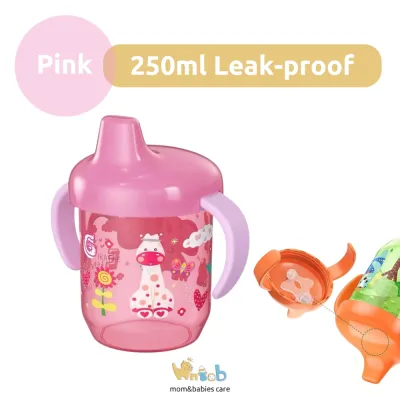
Prices are valid at publication and may change. Please refer to the product page for the latest price.
Spout and Valve Types: Matching Flow to Drinking Skills
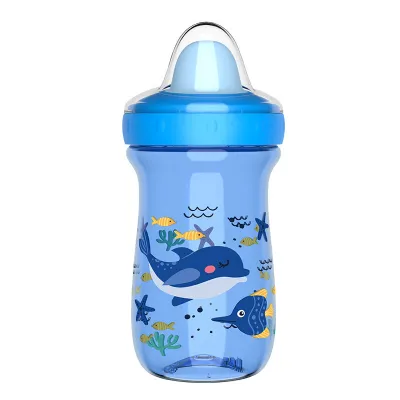
The drinking interface of a cup directly influences how your child uses their facial muscles and tongue. Soft spouts, typically made of flexible silicone, offer a familiar, nipple-like texture that can ease the initial transition from a bottle. These are gentle on sensitive, teething gums, but they may not hold up well if your toddler has a habit of biting down hard on everything they touch.

Hard spouts, usually constructed from durable, BPA-free plastic, provide excellent bite resistance for active teethers. However, because they do not yield to pressure, they require a slightly different angle of tilt and do not actively encourage the tongue to retract as an open cup would. If you choose a hard spout, look for designs that incorporate a slight contour to help your child position their lips correctly.
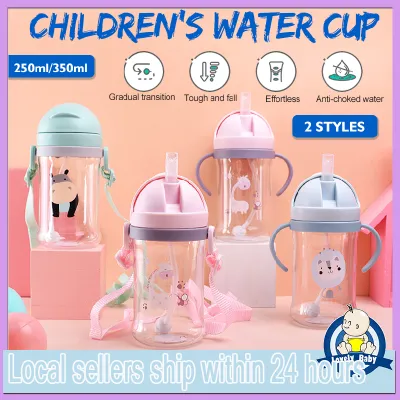
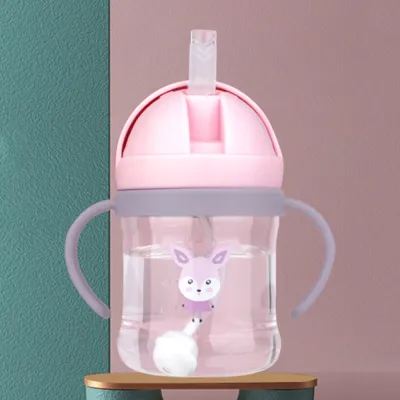
Straw cups are highly recommended by pediatric speech and language professionals because they promote excellent oral muscle development. Drinking from a straw forces the tongue to pull back and encourages the lips to seal tightly around the tip, which strengthens the muscles used for speech and mature swallowing patterns. Many straw cups also feature weighted bases, allowing your child to drink from any angle, even when tilted.
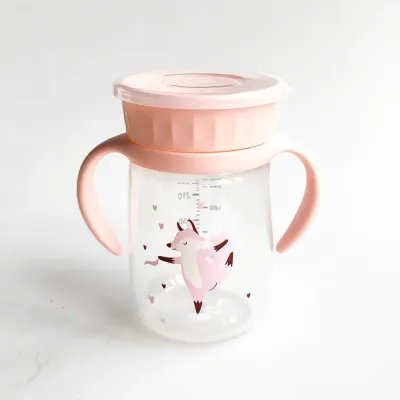
Another innovative option is the 360-degree rim cup, which allows your child to drink from any side of the edge, just like an open cup. The internal silicone seal releases liquid only when lip pressure is applied, effectively managing spills while teaching the natural tipping motion required for standard glassware. This design is highly effective for transitioning toddlers toward family-style dining.
When evaluating these designs, you must also choose between valved and valveless mechanisms. Valved cups are highly leak-proof, which is incredibly convenient for busy parents, but they require significant suction effort from the child. Valveless options flow freely with minimal effort, making them excellent for teaching the mechanics of drinking, though they will spill if tipped over or dropped.
Material and Safety: What to Verify on the Product Label
Sippy cups are manufactured from several common materials, each presenting distinct practical trade-offs. Food-grade silicone is highly flexible, virtually unbreakable, and soft to the touch, making it an excellent choice for drop-prone toddlers, though it can sometimes retain food odors if not washed promptly. Its natural slip resistance also makes it easier for small hands to hold securely.
Stainless steel offers exceptional durability and superior temperature retention, keeping milk or water cool during hot, humid afternoons in tropical climates. The primary trade-offs are its heavier weight, which can tire out a 1-year-old’s hands, and its higher initial cost compared to plastic alternatives. It is also highly resistant to scratches and does not retain odors.
BPA-free plastics remain a popular, lightweight, and budget-friendly option that allows you to easily monitor liquid levels. However, plastic is more prone to scratching over time, and these micro-scratches can become breeding grounds for bacteria if the cup is not cleaned meticulously. If choosing plastic, ensure it is durable enough to withstand repeated impacts on hard floors.
Rather than relying on vague marketing claims like “completely safe” or “non-toxic,” you should actively locate and verify safety certifications on the physical packaging or the manufacturer’s official website. Look for clear indications of compliance with international food-contact standards, such as FDA approval or European safety marks, and ensure the product explicitly states it is free from BPA, phthalates, and PVC.
Perform a thorough physical inspection of any cup before handing it to your child. Check for small detachable parts, such as tiny air valves, straw connectors, or decorative accessories, that could easily become loose and pose a serious choking hazard. Always verify that all components are securely fitted and cannot be easily pulled apart by a curious toddler.
Handle Design and Ergonomics for Little Hands
A 1-year-old’s motor skills are still developing, meaning the physical shape of the cup plays a massive role in their ability to drink independently. Dual handles are ideal for beginners, as they allow your toddler to use both hands to stabilize, lift, and guide the spout to their mouth with minimal frustration. Handles that are integrated into the lid or collar tend to be more stable than those that slide onto the cup body.
As your child’s grip strength and coordination improve, you can transition to single-handle designs or handle-free cups with contoured bases. Contoured bases are designed with a narrower middle section, allowing small hands to wrap around the body of the cup securely without needing protruding handles. This style is also easier to fit into standard stroller cup holders.
Consider the weight distribution and balance of the cup when it is filled to its maximum capacity. A cup that is bottom-heavy is much less likely to tip over when placed on a high-chair tray, and it helps your child maintain control as the liquid shifts inside during a sip. Lightweight materials are generally easier for younger toddlers to manage when full.
Pay close attention to the grip texture and handle thickness. Look for non-slip, rubberized, or textured surfaces that prevent the cup from slipping out of soapy or sweaty hands, and ensure the handle loop is wide enough for a 12-month-old’s hand span to slide through comfortably. Avoid handles with sharp plastic seams or narrow openings that could pinch small fingers.
Cleaning and Maintenance: Preventing Mold and Residue
In warm, humid tropical environments, mold and bacterial residue can develop rapidly inside damp, enclosed spaces. To minimize this risk, prioritize cup designs with simple structures and fewer deep crevices, and always verify which components are genuinely dishwasher-safe according to the manufacturer’s instructions. Complex valve systems often require specialized cleaning steps.
Establish a daily routine of completely disassembling every single part of the cup, including pulling out silicone valves, straws, and sealing rings. Perform a close visual and tactile inspection of these small components to check for hidden black spots, slimy residue, or discoloration that indicates mold growth. Leaving these parts assembled during washing often traps moisture and accelerates mold development.
Use specialized, slim cleaning brushes to scrub the inside of straws and narrow valve channels where standard sponges cannot reach. If you notice any persistent odor, stubborn discoloration, or physical wear like cracks or tears in the silicone, discard and replace those parts immediately. Regular sterilization in boiling water or a steam sterilizer can help, but check the manufacturer’s guidelines first to avoid warping the materials.
As a general rule, plan to replace silicone straws, bite valves, and sealing rings every three to six months, depending on the frequency of use and the types of liquids served. Keeping a stock of compatible, manufacturer-approved replacement parts on hand ensures you do not have to discard the entire cup when a single component wears out. If replacement parts are difficult to source, it may be wiser to choose a different cup brand.
Matching Cup Types to Daily Scenarios and Environments
Different daily activities call for different cup designs to balance skill development with practical convenience. During structured mealtimes at home, prioritize open-cup transition tools like 360-degree rim cups or small, open silicone cups to help your child build foundational oral motor skills under your direct supervision. Spills are easier to clean up on dining area floors, making this the perfect environment for practice.
For on-the-go activities, stroller rides, or car travel, switch to highly secure, leak-resistant options such as valved straw cups. These designs prevent messy spills when the cup is tossed into a diaper bag, dropped onto the pavement, or shaken upside down during a bumpy ride. Look for models with flip-top lids that cover the straw when not in use to keep the drinking surface clean.
When it comes to sleep spaces, establish strict safety boundaries by keeping cups out of cribs and beds. Pediatric guidelines advise against letting a child fall asleep with a cup of milk or juice, as prolonged exposure to sugars can lead to early childhood tooth decay, and drinking while lying down increases the risk of choking and ear infections. If your child needs hydration before bed, offer water in a supervised setting before they lie down.
Pre-Purchase Verification Checklist
Before finalizing your purchase at a local baby boutique or an online marketplace, run through a quick verification checklist to ensure the cup is a practical fit for your household. First, confirm that the manufacturer’s packaging explicitly lists age, weight, and developmental stage guidelines that align with your 1-year-old’s current abilities. Never assume suitability based on the product name alone.
Next, check the local availability and replacement cost of proprietary parts like valves, straws, and lids. A cup that costs ₱500 but requires a ₱300 replacement straw that is constantly out of stock may not be a sustainable long-term investment. Opt for brands that offer widely distributed, affordable replacement packs.
Finally, review the retailer’s return or exchange policy, especially when shopping online. Toddlers can be highly particular about the texture of a spout or the flow rate of a valve, and having the option to exchange an unused cup can save you from wasting money on a product your child flatly rejects. If your child shows persistent difficulty or frustration with multiple cup types, consult your pediatrician or a pediatric dentist for personalized guidance.
Frequently Asked Questions (FAQ)
Should a 1-year-old still use a bottle instead of a sippy cup?
Pediatricians and pediatric dentists generally recommend weaning children off baby bottles between 12 and 18 months of age. Prolonged bottle use can negatively impact dental alignment, increase the risk of cavities, and delay the development of mature chewing and swallowing patterns. To ease the transition, start by replacing one bottle feeding a day—usually the midday session—with a cup, gradually working your way toward the morning and bedtime feedings as your child becomes more comfortable. If your child struggles significantly with the transition, consult a healthcare professional for guidance.
How much liquid should a 1-year-old drink from a sippy cup daily?
While general guidelines suggest that toddlers aged 12 to 24 months need around 2 to 4 cups of water and milk daily, you should always consult your pediatrician for exact, individualized fluid requirements tailored to your child’s weight, diet, and health. To track intake accurately, use the volume markings printed on the side of the cup and keep a simple daily log of how much liquid is actually consumed versus how much is spilled or left behind. Adjust fluid offerings based on daily activity levels and environmental temperatures.
What should I do if my child refuses to use the sippy cup?
If your child resists the transition, try adjusting the flow rate or switching to a different spout material, such as moving from a hard plastic spout to a soft silicone straw. You can also temporarily remove the leak-proof valve to let the liquid flow freely, which helps your child understand that the cup contains a drink without requiring intense suction. Additionally, model the behavior by drinking from a similar cup yourself, offer familiar liquids like breast milk or formula, and let your child explore the empty cup as a toy during playtime to build positive familiarity.

Community discussion
Share your experience or ask a question. Comments are reviewed before publication.