
Deciding whether to use Tender Care baby powder on your newborn requires balancing the desire to keep your baby dry in a warm, humid climate with the critical need to protect their developing lungs and delicate skin. In the Philippines, where high humidity and tropical heat frequently cause babies to sweat, baby powder has long been a household staple passed down through generations to prevent prickly heat and diaper discomfort. However, modern pediatric guidelines urge parents to approach loose powders with extreme caution. Newborns possess highly sensitive, developing airways and an immature skin barrier, meaning that any airborne powder—regardless of its specific brand or soothing claims—presents a potential inhalation risk. To make an informed decision for your infant, it is essential to understand how baby powders interact with a newborn’s respiratory system and skin, how to evaluate product labels, and what safer alternatives exist to manage moisture.
Understanding Baby Powder Safety for Newborns
A newborn’s respiratory system is incredibly delicate and continues to develop rapidly during the first few months of life. Their airways are narrow, and their lungs are highly sensitive to environmental irritants, including fine airborne particles. When loose baby powder is shaken or applied, it easily disperses into the air, creating a cloud of microscopic dust that is easily inhaled by an infant lying nearby. Even if you cannot see a thick cloud, these tiny particles can travel deep into the baby’s respiratory tract, potentially causing airway irritation, coughing, or respiratory distress.
Because of these physiological vulnerabilities, major pediatric associations worldwide advise against the routine use of loose baby powders on infants. The primary concern is not necessarily how the powder behaves on the skin, but the physical hazard of inhalation. When a baby breathes in these fine particles, it can lead to immediate respiratory irritation or, in severe cases of chronic exposure, more serious lung complications.
Products mentioned in this guide
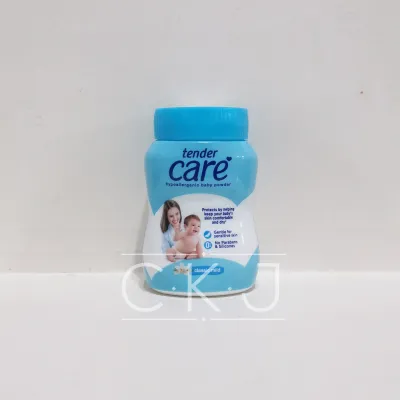
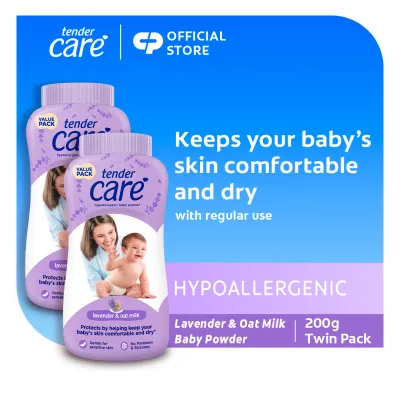
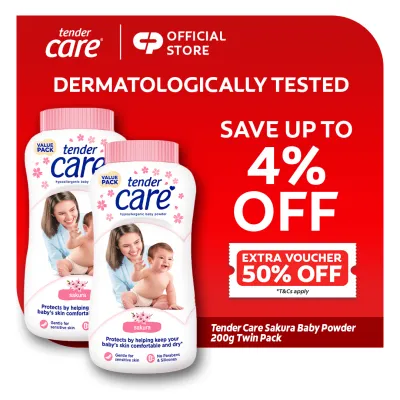
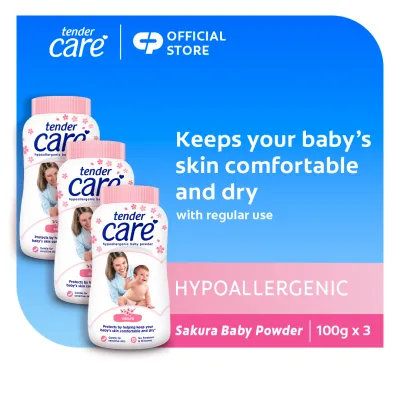
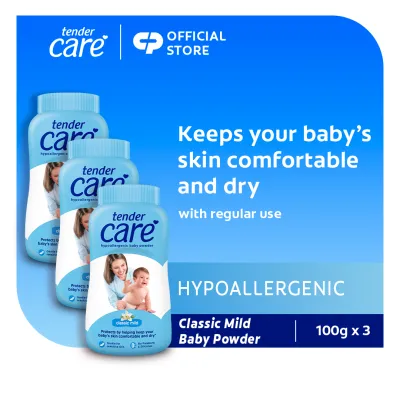
![[BUY 2 FREE 1] Tender Care Pink Soft Baby Powder - Hypoallergenic & Dermatologically Tested 100g Value Pack of 3](https://img.lazcdn.com/g/p/1a198013be52a2f9fc4725516f9fb01d.png_400x400q80.png_.webp)
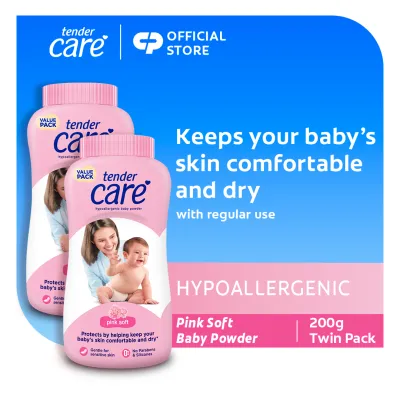
![[BUY 1 FREE 1] Tender Care Classic Mild Baby Powder - Hypoallergenic & Dermatologically Tested 200g x2](https://img.lazcdn.com/g/p/302bc979d85a5d59e97e49efef54084b.png_400x400q80.png_.webp)
Prices are valid at publication and may change. Please refer to the product page for the latest price.
It is crucial for caregivers to distinguish between skin contact safety and inhalation safety. A baby powder may be dermatologically tested, hypoallergenic, and perfectly safe for application on intact skin, yet still pose a significant risk to your baby’s lung health. While the product itself may not cause a chemical reaction on the skin, the physical act of dispersing loose powder into the air around a newborn is where the primary hazard lies. Therefore, evaluating safety requires looking beyond skin compatibility to consider how the product is delivered and applied.
How to Evaluate Tender Care Powder Ingredients
To determine the suitability of any baby powder, caregivers must carefully inspect the ingredient list printed on the product packaging. The base ingredient is the most critical component to identify. Historically, many traditional baby powders relied on talc, a naturally occurring mineral. However, modern formulations, including many variants of Tender Care, have transitioned to cornstarch-based formulas. Cornstarch is a plant-derived ingredient that is generally considered safer for skin contact because it does not carry the mineral-related concerns associated with talc. However, it is important to remember that cornstarch is still a fine particulate that poses similar inhalation risks if it becomes airborne.

Beyond the base ingredient, you should check the label for potential skin irritants that are commonly added to baby products. These include synthetic fragrances, parabens, and artificial dyes. Newborn skin is up to thirty percent thinner than adult skin, meaning its natural barrier is highly permeable and easily irritated by chemical additives. Fragrances, while appealing to parents who want their baby to smell fresh, are a leading cause of contact dermatitis and allergic skin reactions in infants. If your newborn has particularly sensitive skin or a family history of eczema, opting for fragrance-free skincare products is highly recommended.
Finally, always verify the manufacturer’s specific age recommendations, usage instructions, and safety warnings on the back of the bottle. Responsible manufacturers print clear guidelines on how to apply the product safely, such as keeping the powder away from the child’s face, nose, and mouth. Never assume a product is suitable for a newborn simply because of the brand name or the imagery on the front of the bottle; always read the fine print to ensure you are following the manufacturer’s intended use and safety protocols.
Minimizing Risks If You Choose to Use Baby Powder
If you decide that using baby powder is necessary to manage moisture and friction on your baby’s skin, you must take active steps to minimize the risks of inhalation and skin irritation. The most critical rule is to keep the powder strictly away from the baby’s respiratory zone, which includes their face, nose, and mouth. Never shake the powder bottle directly onto your baby’s body, as this action immediately releases a cloud of fine particles directly into their breathing space.
To apply the powder safely, use the “pour into hands first” method. Move a safe distance away from your baby—preferably in another part of the room—and gently shake a small amount of powder into your own palm. Slowly rub your hands together to distribute the powder and minimize the creation of airborne dust. Once the powder is settled on your hands, return to your baby and gently pat it onto the targeted areas of their skin. This method significantly reduces the amount of loose dust that enters the air around your infant’s face.
Additionally, you must be highly selective about where you apply the powder. Avoid applying loose powder to broken skin, open rashes, or deep skin folds, such as the neck, armpits, or groin. In the hot and humid climate of the Philippines, babies sweat frequently. When sweat mixes with loose powder in deep skin folds, the powder can clump into hard, pasty, and abrasive residues. This clumping traps moisture against the skin rather than absorbing it, leading to increased friction, chafing, and a higher risk of bacterial or fungal infections, such as yeast diaper rash.
Signs of Irritation and When to Stop Use
Even when applied with extreme care, baby powder can sometimes cause adverse reactions. Caregivers must actively monitor their newborn for any visual cues of skin irritation. These signs include unexpected redness, dry or flaky patches, raised red bumps, or a worsening diaper rash. If you notice that the powder is clumping in your baby’s skin folds and leaving the skin underneath raw or inflamed, this is a clear indication that the product is causing friction rather than preventing it.
Equally important is monitoring your baby for respiratory warning signs during or immediately after application. If your baby begins to cough, sneeze, wheeze, or show signs of rapid or labored breathing, they may have inhaled airborne powder particles. Other signs of respiratory distress include flared nostrils or the skin pulling in tightly around their ribs (retractions) as they breathe. These symptoms indicate that the fine particles have irritated their sensitive airways.
If you observe any of these skin or respiratory signs, you must stop using the powder immediately. Wash any remaining powder off your baby’s skin using lukewarm water and a gentle, fragrance-free cleanser, then pat the area completely dry. If the respiratory symptoms do not resolve quickly, or if the skin irritation worsens or shows signs of infection, consult a pediatrician or a qualified healthcare professional right away. Never attempt to treat breathing difficulties or severe skin rashes with home remedies or additional powders.
Powder-Free Alternatives for Newborn Skin Care
Managing moisture, sweat, and friction on a newborn’s skin in a tropical climate does not require the use of loose powders. There are several highly effective, powder-free alternatives that eliminate the risk of inhalation entirely. For preventing and managing diaper rash, barrier creams or ointments are excellent options. Products containing zinc oxide or petroleum jelly create a durable, physical shield on the skin that blocks moisture from urine and diapers while reducing friction, all without releasing any airborne particles.
For daily moisturizing and skin protection, gentle, fragrance-free liquid lotions or baby oils are preferred. These products absorb directly into the newborn’s thin skin, helping to strengthen the natural skin barrier without leaving a dusty residue that can clog pores or clump in skin folds. When choosing a lotion, look for simple, hypoallergenic formulas designed specifically for sensitive newborn skin.
Ultimately, the most effective defense against moisture-related skin issues is thorough, gentle drying. After bathing your baby or performing a diaper change, use a clean, soft cotton towel to gently pat—never rub—the skin completely dry. Pay close attention to the deep folds of the neck, thighs, and armpits. Allowing your baby’s skin to air-dry for a few minutes before putting on a fresh diaper or clothing is a simple, highly effective, and completely risk-free way to keep their skin healthy and dry.
Frequently Asked Questions (FAQ)
Can I use baby powder on my newborn's face or neck?
Applying baby powder to a newborn’s face or neck is strongly discouraged due to the immediate risk of inhalation. Because the neck and face are directly adjacent to the baby’s airway, any loose powder applied here is highly likely to be breathed into their developing lungs. Furthermore, the deep folds of a newborn’s neck naturally collect sweat and drool; applying powder to this area often results in pasty clumping, which increases friction and leads to painful skin chafing.
Is cornstarch-based powder completely safe for newborn lungs?
While cornstarch-based powder is a safer alternative to talc because it is free from mineral-related contaminants, it is still not completely safe for a newborn’s lungs. Cornstarch is made of fine organic particles that can easily become airborne. If inhaled, these microscopic particles can irritate an infant’s sensitive respiratory tract, trigger coughing, and cause breathing difficulties. No loose, airborne powder is considered entirely risk-free for a newborn’s respiratory system.

Community discussion
Share your experience or ask a question. Comments are reviewed before publication.