
Enfant powder can be used on newborns only if parents take strict safety precautions, verify the specific product formulation, and apply it in a way that prevents the baby from inhaling the fine particles. While baby powder is a traditional staple in many households to combat tropical heat and humidity, modern pediatric guidelines advise extreme caution. The safety of any baby powder, including those from the Enfant brand, depends heavily on its ingredients—specifically whether it is made from talc or cornstarch—and how carefully it is applied. To protect your newborn’s delicate respiratory system and sensitive skin, you must understand how to read the product labels, apply the powder safely, and recognize when to opt for liquid or cream-based alternatives.
Understanding Baby Powder Safety and Pediatric Guidelines
When evaluating the safety of baby powder, the primary distinction lies in the base ingredient: talc versus cornstarch. Talc is a fine mineral that easily becomes airborne when shaken. If a newborn inhales these tiny particles, they can travel deep into the lungs, causing immediate respiratory irritation, inflammation, or chronic pulmonary issues.
Cornstarch-based powders are made from corn grains. Their particles are larger and heavier than talc, meaning they settle more quickly. However, cornstarch is still a fine particulate matter that can irritate a newborn’s sensitive airways if puffed directly near their face.
Products mentioned in this guide
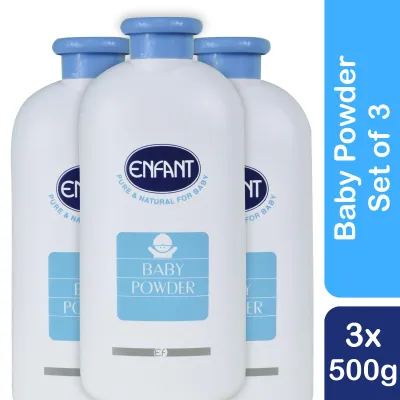
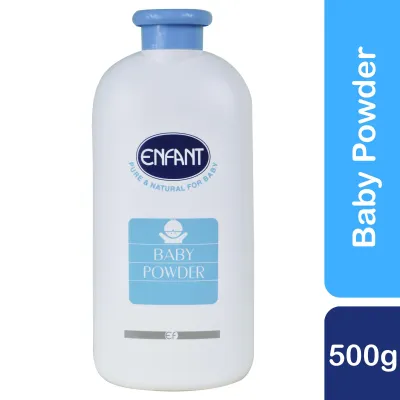
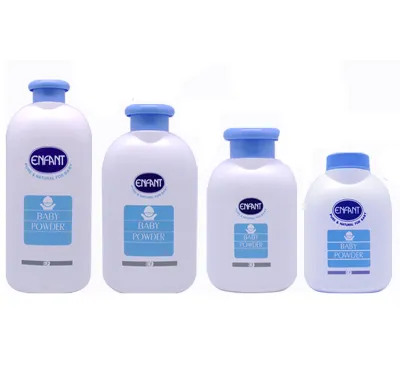
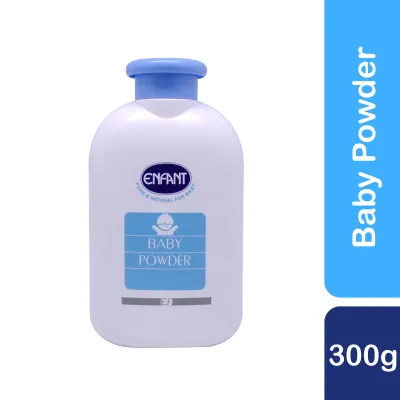
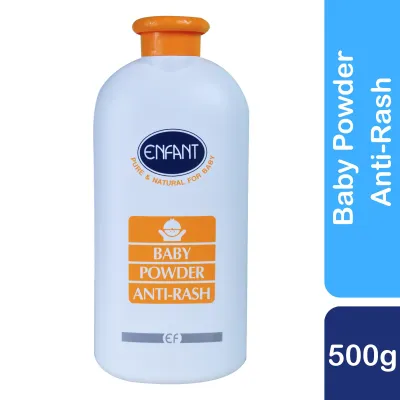
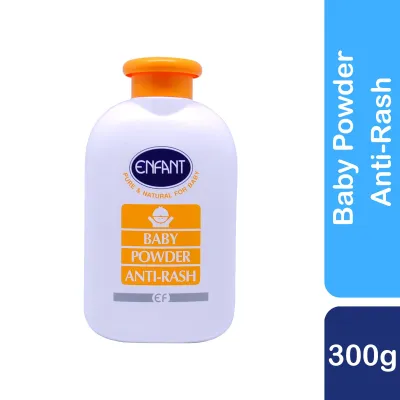
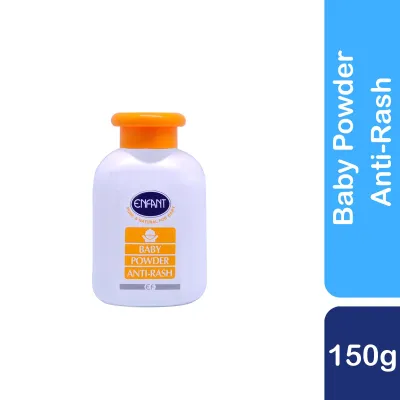
Prices are valid at publication and may change. Please refer to the product page for the latest price.
Pediatric guidelines globally and in the Philippines strongly advise parents to minimize or completely avoid the use of loose powders on newborns. The primary hazard is not skin contact, but the accidental inhalation of fine dust. Because a newborn’s respiratory system is still developing, their lungs are exceptionally vulnerable to airborne irritants.
Furthermore, parents must verify the specific ingredient list on their Enfant powder packaging, as formulations can vary significantly. A brand may offer multiple product lines, some containing talc and others containing cornstarch, depending on the specific variant and the region where it was manufactured. Never assume a product is talc-free based solely on the brand name; always inspect the physical label before purchasing or applying it to your baby.
How to Check Enfant Powder Labels for Newborn Use
To determine if a specific bottle of Enfant powder is appropriate for your newborn, you must perform a thorough label check. Start by turning the bottle over to locate the full ingredient list. Look closely for the primary base ingredient. If you see ‘talc,’ ‘talcum,’ or ‘magnesium silicate,’ you should exercise extreme caution or choose a cornstarch-based alternative instead. If the product is cornstarch-based, it will typically list ‘Zea mays starch’ or ‘cornstarch’ as the primary ingredient.

Next, look for specific product claims and certifications on the packaging. Claims like ‘hypoallergenic’ or ‘pediatrician-tested’ indicate the formulation minimizes skin irritation risks. However, these claims do not eliminate the physical risk of inhalation; a product can be perfectly gentle on the skin but still harmful if breathed into the lungs.
Verify the age recommendations on the packaging. Some powders contain added fragrances, menthol, or cooling agents for older children experiencing heat rash. These additives can irritate a newborn’s delicate skin barrier and sensitive eyes, so ensure the label explicitly states it is suitable for newborns.
Finally, inspect the physical product before every single use to ensure its integrity. Shake a tiny amount of powder onto your own hand first to check for any changes in color, unusual clumping, or an off-putting scent. In humid tropical climates, moisture can easily seep into the container, causing the powder to clump. Clumping is a sign of moisture ingress, which can promote the growth of bacteria or mold inside the bottle, making the powder unsafe for your newborn’s skin.
Safe Application Steps to Minimize Inhalation Risks
If you choose to use Enfant powder on your newborn, you must follow strict application steps to minimize the risk of inhalation and skin irritation. Never shake or pour the product directly onto your baby’s body. Doing so creates an immediate cloud of fine dust right in their breathing zone, making inhalation highly likely.
To apply it safely, ensure you are in a draft-free room by temporarily turning off fans. Step away from your baby’s face, shake a small amount into your own palm, and gently pat your hands together to settle the loose particles before bringing your hands near the baby.
Gently smooth the powder onto the baby’s skin folds using your hands. Apply only a very thin layer to areas prone to friction and sweat, such as the outer thigh creases, the back of the neck, or the underarms. Avoid applying powder directly to the genital area, especially for baby girls, as loose powder can cause localized irritation in sensitive mucosal tissues. Never apply powder to broken skin, open scratches, oozing rashes, or severe diaper dermatitis, as the powder can trap moisture in open wounds and lead to bacterial infections.
Never use a powder puff, sponge, or brush. These tools release large amounts of powder into the air. Instead, rely solely on your clean hands to apply a minimal, controlled amount.
Store the container securely out of your baby’s reach on a high shelf with the cap tightly closed. Accidental spills, where an infant or toddler grabs a bottle and shakes it, can lead to massive inhalation events.
When to Stop Using Powder and Seek Medical Advice
As a caregiver, you must monitor your newborn closely during and after applying any baby powder. Watch for immediate signs of respiratory irritation, such as coughing, sneezing, wheezing, rapid breathing, flaring nostrils, or chest retractions (where the skin pulls in tightly around the ribs). If you observe any of these symptoms, stop using the powder immediately and move the baby to fresh air.
Monitor your baby’s skin for adverse reactions like sudden redness, dry patches, tiny bumps, or a worsening diaper rash. In humid tropical climates, powder mixed with sweat can form a pasty residue in skin folds, chafing the skin and creating a breeding ground for yeast infections.
If you notice any persistent skin irritation, redness, or signs of a yeast infection—such as a bright red rash with small spots around the edges—discontinue all powder use immediately. Clean the area gently with lukewarm water, pat it dry, and consult a pediatrician or healthcare professional. Never attempt to treat a severe rash or respiratory symptom with home remedies or additional powder; always seek professional medical advice to ensure your baby’s safety.
Powder-Free Alternatives for Newborn Skin and Diaper Care
Managing moisture and friction without loose powders is highly recommended by modern pediatricians, especially in warm, humid environments. Fortunately, there are several safe, powder-free alternatives that can keep your newborn’s skin healthy and comfortable.
For diaper rash prevention and moisture protection, rely on barrier creams or ointments. Products containing zinc oxide or petroleum jelly create a physical shield on the skin that blocks moisture from urine and stool. Unlike loose powders, these creams do not pose any inhalation risks and are highly effective at soothing and protecting the diaper area.
For general skin moisturizing, opt for fragrance-free baby lotions or light baby oils formulated for newborns. Avoid products with strong perfumes or harsh chemicals that can trigger allergic reactions on sensitive skin.
The most effective way to prevent chafing and heat rash (bungang-araw) is keeping skin folds clean and dry. Gently wash neck folds, underarms, and thigh creases during bath time. Afterward, pat the skin completely dry with a soft cotton towel and allow your baby to air-dry for a few minutes before dressing them in loose, breathable cotton clothing.
Frequently Asked Questions (FAQ)
Can I use Enfant powder on my newborn's face?
No, never use baby powder on or near a newborn’s face. Applying powder near the nose and mouth makes inhalation almost inevitable. To manage drool rash or sweat on the face, gently wipe the area with a damp, soft cloth and pat it completely dry.
What should I do if my baby inhales baby powder?
If your baby inhales baby powder, immediately move them to fresh air and monitor their breathing. If they experience mild coughing that quickly resolves, keep a close watch. However, if you notice persistent coughing, wheezing, rapid breathing, blue-tinted lips, or difficulty breathing, seek emergency medical attention immediately.
Is it safe to use baby powder every diaper change?
Using baby powder at every diaper change is not recommended. Frequent use increases inhalation risks and causes powder buildup. When mixed with urine and sweat, powder can cake, trap moisture, and irritate the skin. It is safer to reserve powder for occasional use on fully dry skin, relying primarily on thorough cleaning, air-drying, and barrier creams.

Community discussion
Share your experience or ask a question. Comments are reviewed before publication.