
Deciding whether to add an anti-spill gyro bowl to your weaning essentials depends entirely on your baby’s current motor skills and mealtime behavior. While these bowls are designed to stay level when tilted, they are not a universal fix for every feeding challenge. This guide will help you evaluate your baby’s specific habits, understand the realistic limits of gyroscopic designs, and determine if this tool is a necessary investment or if a standard weaning bowl will suffice.
Introducing solids is an exciting milestone, but it often comes with a significant amount of cleanup. In tropical environments like the Philippines, where warm temperatures and high humidity can make spilled food spoil quickly or attract unwanted household pests, keeping the dining area clean is a top priority for parents. A gyroscopic bowl attempts to solve this by using a counterweighted inner bowl that rotates inside an outer ring, keeping the open side facing up even when your little one twists, turns, or flips the outer frame.
However, before purchasing one, it is essential to recognize that no single product can completely eliminate mealtime messes. Your baby’s unique approach to exploring food—whether they prefer to paint the high chair tray with their fingers or test gravity by throwing objects—will ultimately dictate whether this specialized bowl is a helpful addition to your kitchen cabinet or an unnecessary gadget.
Products mentioned in this guide
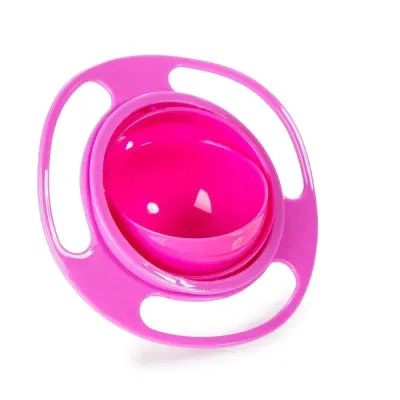
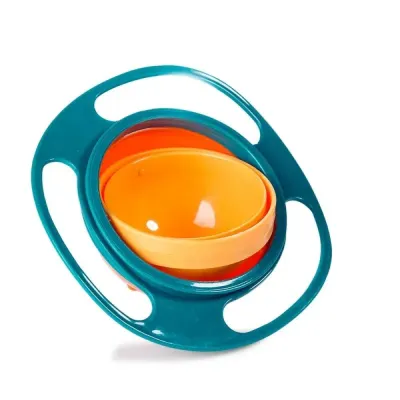
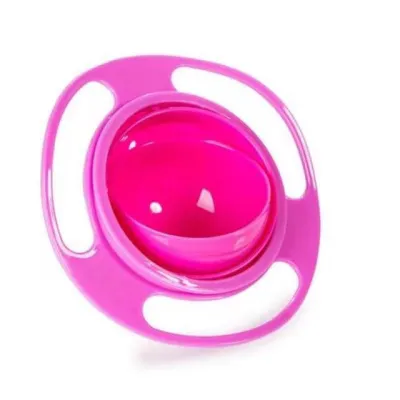
Prices are valid at publication and may change. Please refer to the product page for the latest price.
Signs Your Baby Might Benefit from a Gyro Bowl
Observing your baby’s physical development and behavior during meals is the first step in deciding if an anti-spill gyro bowl is worth trying. Around the middle of their first year, many babies begin to show a keen interest in feeding themselves. During this transitional phase, they are still developing their fine motor skills and hand-eye coordination, which means their movements can be erratic and unpredictable.
If your baby frequently flips, drops, or intentionally throws standard bowls during meals, a gyro bowl might offer some relief. At this stage, babies often grab whatever is in front of them with a full-fisted grip, leading to accidental spills as they try to bring the bowl closer. The rotating mechanism of a gyro bowl helps counteract these sudden tilts, keeping dry snacks or thicker purees inside the container rather than on the floor.
You should also check if your baby is in the early self-feeding stage where they have the desire to scoop food but lack the wrist control to keep a standard bowl upright. Developing the ability to rotate the wrist smoothly is a milestone that takes time to master. A gyro bowl acts as a physical buffer, compensating for their unsteady hands by keeping the food level while they practice holding the handles and navigating their spoon.
Additionally, note if mealtime cleanup has become overwhelmingly stressful due to constant spills of purees or soft foods. If you find yourself spending more time wiping down the high chair, sweeping the floor, and changing your baby’s clothes than actually enjoying the feeding process, a tool that minimizes accidental tipping can make a noticeable difference. Reducing the frequency of minor spills can help create a calmer, more positive feeding environment for both you and your child.
When a Standard Weaning Bowl is Enough
While the concept of a self-leveling bowl is appealing, there are many scenarios where a standard weaning bowl is perfectly adequate, saving you money and storage space. If your baby has already mastered basic bowl handling, shows improved wrist control, and rarely tips food over intentionally, the mechanical benefits of a gyro bowl become redundant. At this point, a simple, lightweight bowl is often the most practical choice.

The type of food your baby eats also plays a major role in this decision. If your weaning approach relies heavily on baby-led weaning with solid finger foods—such as steamed carrot sticks, broccoli florets, or slices of ripe mango—you do not need a deep, spill-proof container. Finger foods are typically placed directly on a clean high chair tray or a flat plate, making the rotating mechanism of a gyro bowl unnecessary.
Furthermore, heavy-bottomed standard bowls or bowls equipped with strong silicone suction bases already solve the tipping and throwing issues effectively. A high-quality suction bowl adheres firmly to the high chair tray, preventing your baby from picking up the bowl and tossing it. If your primary struggle is your baby lifting the entire dish to dump its contents, a strong suction base on a standard bowl is often a more reliable solution than a rotating inner bowl that can still be picked up and thrown if it lacks a secure base.
Understanding the Limits of Anti-Spill Gyro Bowls
To avoid disappointment, it is crucial to understand the mechanical limits of an anti-spill gyro bowl before making a purchase. The core design relies on an inner bowl suspended on a pivot inside an outer ring, using gravity to keep the opening upright when the outer frame is tilted. While this works well for slow, gentle tilts, it is not a foolproof shield against a determined toddler.
First, the gyroscopic design cannot prevent spills if your baby aggressively scoops food out with their hands or intentionally digs into the bowl to fling the contents. The self-leveling feature only keeps the container upright; it does not secure the food inside if your baby decides to use their fingers as a shovel. If your little one is in a phase of active sensory play where they enjoy squishing and throwing food, the bowl’s mechanism will not stop them.
Second, the bowl relies on smooth, unobstructed movement to function correctly. If the pivot points become clogged with sticky food residue, or if the bowl is overfilled, the inner container will not rotate freely. Overfilling shifts the center of gravity, which can cause the bowl to get stuck in a tilted position, leading to the very spills you are trying to avoid.
Finally, liquids, thin broths, or very runny purees are highly susceptible to splashing. If your baby shakes the bowl vigorously, spins it rapidly, or drops it from the high chair, the sudden kinetic energy will cause liquids to splash over the inner rim. The gyro bowl is primarily designed for dry snacks, dense purees, or thick mashes rather than soups or thin gruels.
What to Verify Before Choosing a Gyro Bowl
If you decide that a gyro bowl fits your baby’s current feeding stage, you must carefully verify several safety and structural specifications before buying. Because your baby will be eating directly from this container, material safety is paramount. Always verify food-grade material safety claims, such as BPA-free, phthalate-free, and PVC-free designations, directly on the product packaging or the manufacturer’s official specifications.
Next, examine the base of the gyro bowl. Many basic models feature a simple plastic ring base, which does not prevent a baby from picking up the entire unit and throwing it. To maximize the bowl’s effectiveness, look for a design that incorporates a reliable suction cup on the bottom. A strong suction base keeps the outer ring anchored to the table, allowing the inner gyroscopic bowl to do its job without the risk of the entire assembly being launched onto the floor.
Hygiene is another critical factor to check. Because these bowls consist of multiple moving parts and interlocking rings, they can easily trap food particles, moisture, and milk residue. Ensure the inner bowl is easily removable from the outer frame and features a smooth interior without hard-to-clean crevices. Inspect the pivot joints to confirm they can be thoroughly cleaned and dried to prevent the growth of mold and bacteria, which thrive in warm, humid climates.
Safe Usage and Cleaning Guidelines
Proper maintenance is essential to keep your baby’s gyro bowl hygienic and ensure the mechanical pivot continues to function smoothly. Always follow the manufacturer’s specific temperature limits for washing and sanitizing. Many gyroscopic bowls are made of specialized plastics that can warp if exposed to extreme heat, such as boiling water, high-temperature dishwasher cycles, or steam sterilizers. Warping even a fraction of a millimeter can ruin the alignment of the rings, rendering the self-leveling mechanism useless.
When cleaning, disassemble the rings carefully if the manufacturer’s instructions permit. Wash each component thoroughly with mild, baby-safe dishwashing liquid and a soft sponge to avoid scratching the plastic. Pay close attention to the pivot points where the rings connect, as dried food in these areas will restrict movement. After washing, allow all parts to dry completely in a well-ventilated area before reassembling them to prevent moisture from being trapped inside the joints.
Regularly inspect the bowl before each use. Stop using the bowl immediately and consult the manufacturer if the pivot mechanism becomes stiff, cracked, or shows any signs of mold growth that cannot be removed. A stiff pivot defeats the purpose of the bowl, while cracked plastic can pose a pinching hazard or harbor harmful bacteria. Remember that caregiver supervision is always required during meals; never leave your baby unattended with the bowl or any other feeding utensils.
Frequently Asked Questions (FAQ)
Can a gyro bowl be used for hot foods?
It is highly recommended to check the specific manufacturer’s heat tolerance label before serving hot foods in a gyro bowl. Many of these bowls are constructed from plastics that are not designed for high temperatures. Extreme heat can warp the plastic housing, compromise the gyroscopic pivot mechanism, or cause the material to degrade. For safety, let cooked foods cool down to a warm, baby-safe temperature before placing them in the bowl, and avoid using the bowl in the microwave unless the manufacturer explicitly states it is microwave-safe.
At what age should I introduce a gyro bowl?
You can consider introducing a gyro bowl when your baby is developmentally ready to sit upright unassisted and begins attempting to self-feed, which typically occurs around six months of age. However, rather than following a strict age rule, you should observe your baby’s individual milestones and coordination. Always consult your pediatrician or family doctor to ensure your baby is ready to start complementary feeding and to discuss the safest feeding practices for their specific developmental stage.

Community discussion
Share your experience or ask a question. Comments are reviewed before publication.